Baby Lemon Impossible Pies: Zesty No-Faff Individual Dessert Recipe
- The Magic of Crustless Baking: What is an Impossible Pie?
- Unlocking the Zest: Why These Baby Lemon Impossible Pies Are So Perfect
- Essential Ingredients for Zesty Little Wonders and Smart Swaps
- Mastering the Method: Step-by-Step Guide to Baby Lemon Impossible Pies
- Troubleshooting Your Bake: Chef’s Tips and Avoiding Impossible Pie Mistakes
- Extending Shelf Life: Storing and Freezing Baby Lemon Impossible Pies
- Perfect Pairings: What to Serve Alongside Your Zesty Treats
- Recipe FAQs
- 📝 Recipe Card
The Magic of Crustless Baking: What is an Impossible Pie?
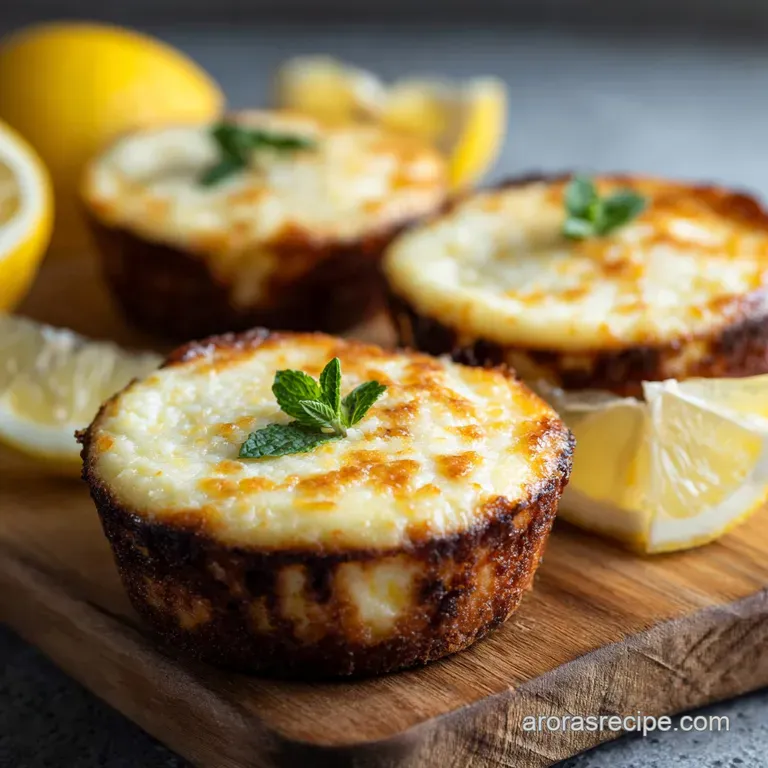
The moment these come out of the oven, your kitchen smells like pure sunshine and comfort. That sharp, bright lemon fragrance mingles perfectly with the subtle, toasty coconut base. They are surprisingly creamy and totally unforgettable, achieving that perfect balance between rich custard and light, chewy crust.
This recipe is my absolute lifesaver for last minute entertaining or when I just need a quick dessert fix. It requires zero fiddly pastry work, zero expertise, and barely any serious washing up.
It's truly impossible how something so simple tastes so unbelievably gourmet, which is exactly why they called it the "Impossible Pie" back in the day.
Forget everything you thought you knew about traditional lemon tarts; we're embracing the genius of this retro sweet treat. Grab your whisk, because these Baby Lemon Impossible Pies are about to become your new kitchen obsession.
Unlocking the Zest: Why These Baby Lemon Impossible Pies Are So Perfect
What even is an Impossible Pie? It’s a genius concept from those retro cookbooks that totally bypasses the need for making or buying pastry dough. You pour a thin, simple batter into a dish, and as it bakes, the heavier, dense custard ingredients sink while the lighter flour and fat rise to form a self crusting layer.
It’s brilliant, simple, and the results are always shockingly good.
The 'Impossible' Separation Explained: Science of the Self Crusting Base
The real magic happens because the ingredients have different densities and specific gravities. We use just enough flour to suspend the light shredded coconut, which floats upward during the baking process to create a slightly chewy, textured bottom layer.
Meanwhile, the rich dairy and eggs sink right down, transforming into that dense, tangy custard we crave.
From Retro Family Favorite to Individual Dessert
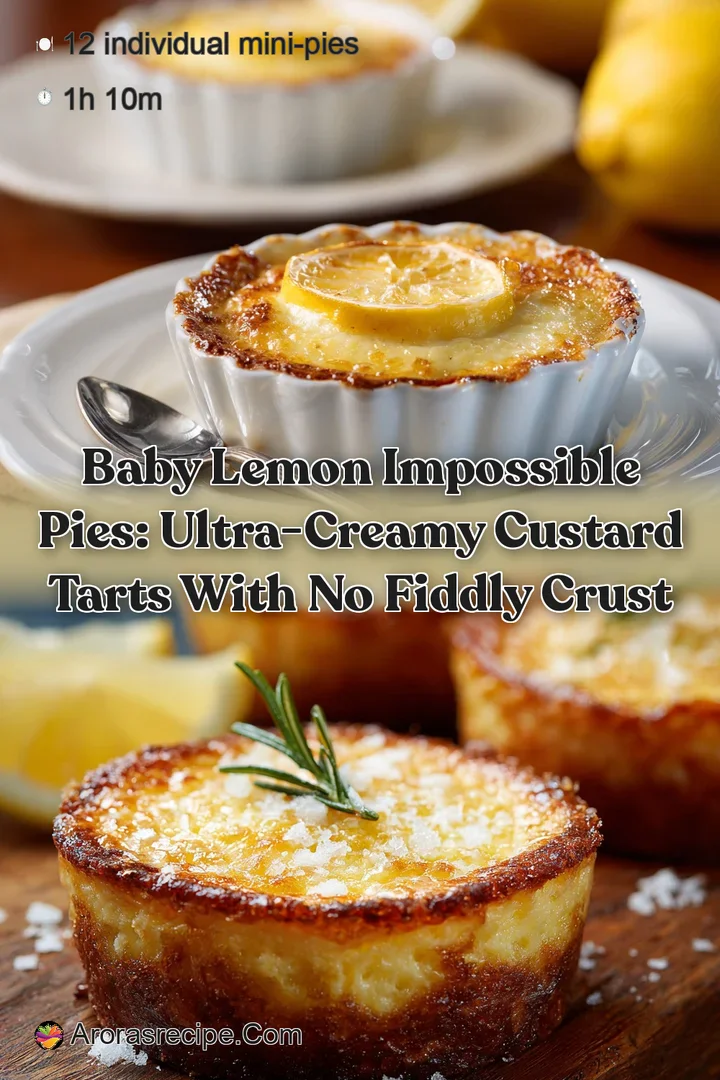
I truly adore the full sized Impossible Pie, but let’s be honest, trying to cut a messy, gooey wedge out of a deep dish can be rough. Baking them in small muffin tins or ramekins solves everything beautifully.
You get perfect, ready-to-serve portions every single time, which is essential for elegant dinner parties or picnics.
Why These Mini Pies are the Ultimate 'No-Faff' Dessert
Seriously, the preparation takes less than fifteen minutes; I timed myself on the first batch. We’re talking one bowl, a whisk, and zero complex steps or weird techniques. If you want truly impressive results without spending hours fussing over a hot stove, this Baby Lemon Impossible Pies Recipe is absolutely the winner.
The Essential Balance of Sweetness and Citrus Sharpness
Lemon pies live or die by their balance of sweet and sour. You need enough sugar to prevent painful puckering, but enough fresh juice and zest to make your cheeks tingle with brightness. Never use bottled lemon juice here; the synthetic flavor destroys that fresh, zesty finish we are aiming for.
Texture Triumph: Creamy Custard Meets Chewy Coconut Base
This is where the shredded coconut shines its brightest, providing a fantastic, pleasant chew that contrasts beautifully with the silky, smooth custard. If you skip the coconut, you'll still get the separation, but you’ll definitely miss that textural element that truly mimics a proper crust.
It’s what makes the impossible base so special and so irresistible.
Perfectly Portioned: The Advantage of Baking in Ramekins
Baking these in small muffin tins or ramekins provides excellent heat distribution, meaning they bake much faster and far more uniformly than a single deep pie. Plus, who doesn't love getting their own little pie? These individual Lemon Impossible Tarts are simply adorable and easy to serve.
Essential Ingredients for Zesty Little Wonders and Smart Swaps
| Ingredient | Why it Matters | Smart Swap/Alternative |
|---|---|---|
| Whole Milk | Crucial for the rich, creamy, sinking custard layer. | Try half and half or evaporated milk for extra richness. |
| Fresh Lemon Juice & Zest | Provides the essential sharp flavor and aromatic oils. | Use fresh lime juice and zest for a slightly more intense, floral profile. |
| All-Purpose Flour | Creates the self crusting matrix required for separation. | Use a 1:1 gluten-free blend containing xanthan gum. |
| Shredded Coconut | Essential texture and definition for the ‘crust.’ | If you truly despise coconut, you can try finely ground almond meal, though the texture will be much softer. |
Dairy Matters: Choosing the Right Milk for the Creamiest Custard
Full fat whole milk is basically non-negotiable if you want that truly rich, luxurious custard finish. I once tried using 2% milk thinking it would be fine, and the result was thin, somewhat watery, and totally lacked the necessary body. Don't make my mistake; embrace the richness of whole milk.
Lemon Zest vs. Juice: Maximizing Citrus Flavor
The zest carries those potent, fragrant oils, which is where 90% of the delicious lemon aroma comes from. The juice, conversely, provides the necessary sharp acidity that makes the pie taste bright and lively. You must use both to achieve a balanced, complex lemon flavor that isn't just sour.
Flour Power: Why All-Purpose is Key to the Crust Formation
The small, carefully measured amount of all-purpose flour is precisely what allows the structure to form and float up during baking. Too much flour, and the whole pie bakes up like a dense, heavy cake instead of separating into layers. It’s a delicate, truly magical balance, so measure carefully.
Allergy Friendly Adjustments: Butter and Dairy Alternatives
If you happen to need to avoid dairy, melted vegan butter sticks work perfectly well in place of traditional butter in this recipe. For the milk substitute, I recommend rich oat milk or canned full fat coconut milk (the kind you use for curry, not the thin beverage kind).
Mastering the Method: step-by-step Guide to Baby Lemon Impossible Pies
Prep Work: Greasing Your Ramekins for the Cleanest Release
These little pies are seriously notorious for sticking right at that coconut custard intersection. Grease your muffin tins aggressively using baking spray or melted butter, and then dust them lightly with flour or even powdered sugar before filling.
Trust me, that extra minute of prep saves you a lot of heartache and broken crusts later on.
The One-Bowl Technique: Whisking the Batter to Perfection
The secret to the perfect separation is actually under mixing the batter. You whisk your dry ingredients together thoroughly, then pour in your wet ingredients and whisk only until the flour streaks disappear that is absolutely it.
Over mixing develops gluten, which prevents the essential separation from happening and results in a cakey texture.
Achieving the Golden Top: Oven Temperature and Baking Time
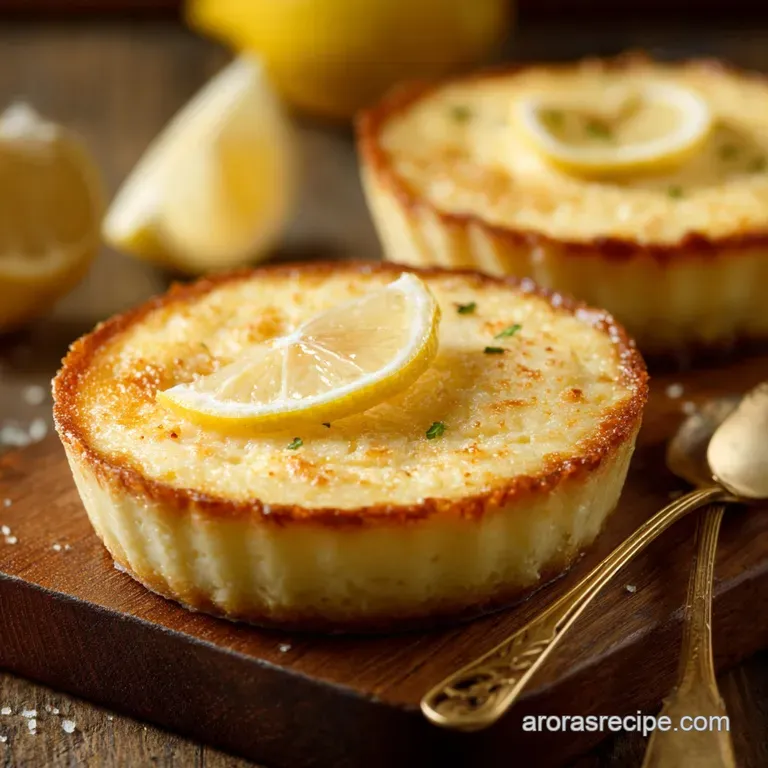
Baking at 350°F (180°C) is ideal for allowing the slow, gentle setting of the custard without burning the glorious coconut top. Check them around the 25 minute mark; they should look beautifully golden brown around the edges.
Chef’s Note: Use room temperature eggs! This ensures they emulsify smoothly into the thin batter and helps prevent the final custard texture from becoming grainy.
Mandatory Cooling: Ensuring the Impossible Pie Sets Properly
This is a critical, crucial step that people always try to rush. Custards must cool down to fully set up and become firm, or they will completely collapse the second you try to remove them from the tin.
Let the pies cool in the pan for a minimum of 15 minutes before transferring them gently to a wire rack for final cooling.
Troubleshooting Your Bake: Chef’s Tips and Avoiding Impossible Pie Mistakes
The Curdling Catastrophe: How to Avoid a Separated Batter
Curdling usually happens when the highly acidic lemon juice hits the cold milk or the eggs too aggressively, causing the proteins to seize up. Ensure your eggs are room temperature and that the melted butter has cooled slightly before you add them to the batter.
A smooth starting batter equals a wonderfully smooth, non-gritty final custard.
The Underbaked Wiggle: Knowing When Your Custard is Truly Set
You’re looking for a pie that is firm and beautifully golden on the entire perimeter. When you gently shake the tin, only the very center should have a slight, barely perceptible, gentle jiggle.
If the center looks like a liquid wave washing around, it definitely needs another 5- 10 minutes in the oven.
Enhancing Flavor: A Sprinkle of Nutmeg or Vanilla?
While lemon is definitely the star of these Baby Lemon Impossible Pies , a tiny dash of vanilla extract adds wonderful depth to the baked custard. I use about 1/2 teaspoon total in the batter.
Some people also love a whisper of freshly grated nutmeg over the top before baking; it adds a warm, spicy note that compliments the bright lemon surprisingly well.
Extending Shelf Life: Storing and Freezing Baby Lemon Impossible Pies
Refrigeration Rules: How Long Do Individual Lemon Impossible Pies Last?
Because they contain fresh dairy and eggs, these babies absolutely must be kept chilled at all times. Store them loosely covered (you don't want them completely airtight, as custards tend to sweat) in the refrigerator for up to 4 days.
They actually taste fantastically bright and satisfying served cold, straight from the fridge.
Can You Freeze Baked Impossible Pie?
You bet! They freeze beautifully, making them great for batch baking. Once completely cooled, wrap each individual pie tightly in plastic wrap, then place them inside a large, freezer safe bag or sturdy container. They will hold up perfectly well for about 2 months, waiting patiently for your next lemon craving.
Reheating and Serving Cold vs. Warm
I generally prefer serving these Baby Impossible Lemon Pies Recipe cold, dusted heavily with powdered sugar right before serving. If you absolutely must reheat them, warm them gently in a 300°F (150°C) oven for about 8– 10 minutes until just heated through.
Warning: microwaving risks making the delicate custard layer tough and rubbery so please avoid it!
Perfect Pairings: What to Serve Alongside Your Zesty Treats
Since these pies are already rich and incredibly zesty, they pair wonderfully with fresh berries or a light sauce. A simple, tart raspberry coulis cuts through the richness beautifully, making the lemon taste even brighter.
If you’re having a full lemon themed tea party (which is an excellent idea), try serving these alongside my amazing [Banana Bread with Lemon Juice: The Best, Moist Loaf Recipe] for a great mix of texture.
Or, for a sophisticated, lighter alternative, my recipe for [sugar-free Lemon Cake UltraMoist Drizzle Loaf for Diabetics] would make a wonderful sugar conscious counterpoint.
Recipe FAQs
Why didn't the crust form properly, or why is the bottom layer mushy?
The magic of the Impossible Pie relies on the ingredients separating in the heat, which happens best if the batter is not over mixed. If the bottom remains mushy, you may have pulled the pie too soon; the base structure often solidifies completely during the cooling process, not just in the oven.
Can I substitute the lemon for another citrus flavor, like lime or orange?
Absolutely! This recipe works beautifully with other citrus, allowing you to create different variations easily. Simply substitute the lemon juice and zest with the exact same quantities of fresh lime or orange, noting that orange zest has a milder flavor, which may benefit from a slight boost of extract.
How long do these Baby Lemon Impossible Pies keep, and should they be refrigerated?
Yes, due to the high content of eggs and dairy, these pies must be stored in the refrigerator immediately after cooling. When kept in an airtight container, they will remain delicious for 3 to 4 days, though the texture is crispest when eaten within the first 48 hours.
Can I use non-dairy milk (like almond or oat) instead of traditional milk/cream?
You can use non-dairy alternatives, but for the best texture and structure, use a full fat, thick variety like canned full fat coconut milk. Watery or skim non-dairy milks often result in a much softer set and inhibit the separation needed to form the crisp bottom layer.
Why did my pie filling crack or deflate after cooling?
Cracking is typically a sign that the pie was baked for too long or at too high a temperature, causing the outer edges to set before the center. Try lowering your oven temperature by 25°F and ensure the pie cools slowly, away from drafts, which helps prevent rapid shrinking and cracking.
Can I use a sugar substitute, or is regular granulated sugar essential?
Sugar is critical in this specific recipe, not just for sweetness but also for the caramelization that helps form the unique self crust. While you could use a 1:1 baking blend sugar substitute, be aware that the final texture may be slightly softer and the crust definition less pronounced.
Can I bake this recipe as one large pie instead of individual portions?
Certainly, this recipe scales up perfectly into a standard 9 inch pie dish. If baking as one large pie, you must significantly increase the baking time to approximately 50 60 minutes, ensuring the center is mostly set with only a very slight jiggle before removing it from the oven.
Baby Lemon Impossible Pies Easy Recipe
Ingredients:
Instructions:
Nutrition Facts:
| Calories | 235 kcal |
|---|---|
| Protein | 4.0 g |
| Fat | 16.0 g |
| Carbs | 19.0 g |
