Tuscan Zuppa: Hearty Sausage, Kale Soup Recipe

- Unlocking the True Flavor of Tuscan Zuppa
- Essential Components for Authentic Zuppa Toscana
- The Science Behind the Perfect Zuppa Texture
- Mastering the Zuppa: Step-by-Step Preparation Guide
- Professional Techniques and Troubleshooting Your Hearty Soup
- Storing and Reheating Leftover Tuscan Zuppa
- Completing the Meal: Perfect Pairings for Tuscan Zuppa
- Recipe FAQs
- 📝 Recipe Card
Unlocking the True Flavor of Tuscan Zuppa
When the weather turns aggressively cold, there is only one pot I want bubbling away on my stove: a ridiculously hearty, creamy bowl of Tuscan Zuppa . The aroma that fills your kitchen a blend of caramelized pork fat, sweet garlic, and the earthy whisper of kale is pure comfort.
Forget light soups; this is a meal that holds you tight.
I know what you’re thinking: soup is complicated, right? Absolutely not. This particular Tuscan Zuppa recipe is a brilliant weeknight savior because it relies on simple, robust ingredients that are cheap, easy to find, and require zero fancy technique.
It is the definition of peasant food elevated, transforming humble potatoes, savory sausage, and dark greens into something truly extraordinary in about an hour.
So, let's ditch the pre-made tubs and the watered down restaurant imitations. This Tuscan Zuppa is the real deal, relying on deep, rendered flavor rather than relying solely on heavy cream for satisfaction.
If you’ve ever loved the flavor profile of the popular Zuppa Olive Garden version, prepare yourself, because this authentic take blows it out of the water.
The Culinary History of Zuppa Toscana
Zuppa Toscana literally means ‘Tuscan Soup,’ and historically, it was a poverty dish. It used whatever was available stale bread, white beans, inexpensive greens, and maybe a little lard or pancetta to flavor the broth.
It’s far cry from the rich, cream laden bowls we know today, but the core idea remains: use simple ingredients and maximize their flavor potential. This is robust, rustic Italian cooking at its very best.
Why This Zuppa Recipe Isn't a Copycat
Many recipes you find online for Tuscan Zuppa focus purely on recreating that popular American chain flavor. My goal is different. We are building flavor from the ground up, starting with rendering pancetta and Italian sausage slowly to create a foundational richness.
We are also being careful not to overcook the greens or overwhelm the delicate spice of the salsiccia (Italian sausage) with too much cream. We aim for deep, savoury authenticity, not just a buttery, salty hit.
Defining Cavolo Nero (Black Kale) in Italian Cooking
If you are serious about making true Tuscan Zuppa , you need to talk about Cavolo Nero . This dark, bumpy, non-curly kale, sometimes called Dinosaur or Lacinato kale, is essential in Italian cooking.
It has a slightly sweeter, earthier flavor and a far more delicate texture than regular curly green kale. It is the green of choice for this recipe and for good reason: it holds up beautifully in the broth without getting overly mushy or tough.
Essential Components for Authentic Zuppa Toscana
To get that truly unforgettable bowl of soup, you need to treat the main components right. The simplicity of Tuscan Zuppa is deceiving; the magic is in the quality and preparation of three specific things: the pork, the potatoes, and the process.
Don't cheap out on the stock either it makes up 80% of the liquid!
The Science Behind the Perfect Zuppa Texture
The best part of this Tuscan Zuppa is the texture: creamy, yet light, with tender potatoes and slightly chewy sausage. How do we achieve this without dumping a whole carton of cream in? It’s all about the starch.
By thinly slicing the potatoes and simmering them for the right amount of time, they release starch into the broth. That starch slightly emulsifies the liquid, creating a natural body that truly enhances the richness of this Tuscan Zuppa soup recipe.
Choosing the Right Italian Sausage (Sweet vs. Hot)
This is a personal preference, but I always recommend a mix. Use mild Italian sausage if you have kids or guests who are sensitive to heat. However, the true depth and interest of a classic Tuscan Zuppa comes from the subtle fennel and red pepper notes in the hot sausage.
Pro Tip: If you can only find mild, just add a few extra red pepper flakes when you sauté the garlic.
Selecting Yukon Gold Potatoes for Best Results
I am adamant about using Yukon Golds or a similarly waxy, medium starch potato for this Easy Zuppa Toscana . Russets are too starchy and tend to turn into potato mush, while red potatoes are too waxy and refuse to break down at all.
Yukon Golds hit the sweet spot; they soften beautifully and release just enough starch to thicken the broth without dissolving entirely. Slice them thinly about the thickness of two dimes stacked up to ensure they cook quickly and evenly.
Swapping Out Cavolo Nero for Other Greens
Look, sometimes you can't find Cavolo Nero . It happens. If you need a swap, use standard curly kale, but remove the tough center ribs and chop it finely. You might need to simmer it 2- 3 minutes longer.
If you absolutely must use spinach, add it in the final minute of cooking, otherwise it will disintegrate into sad, slimy pieces. We want our Zuppa with kale and sausage to look vibrant!
Building the Umami Base: Rendering the Italian Sausage
This is the most critical flavor step for your Tuscan Zuppa . You aren't just browning the sausage; you are rendering the fat. Start with a little olive oil, then add the diced pancetta (or bacon) and the sausage.
Cook slowly over medium heat, breaking it up until it is crispy and deeply browned. The fat released is pure gold, which we will use to sauté the onions and garlic, making sure every drop of that savory flavor is soaked up by the aromatics.
Mastering the Zuppa: step-by-step Preparation Guide
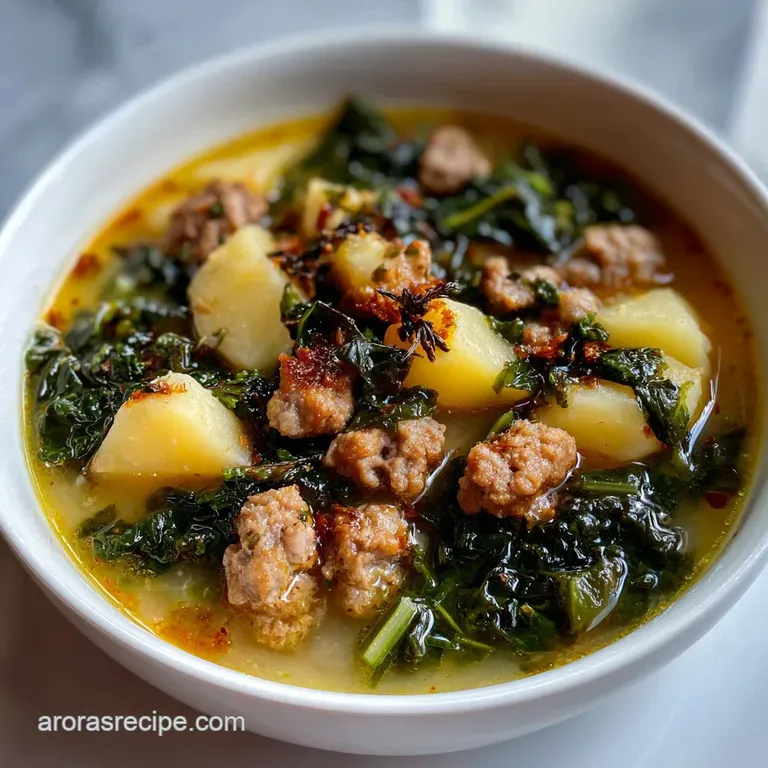
Sautéing Aromatics and Developing the Salsiccia Base
Once you've rendered that meat and set it aside, resist the urge to drain every bit of fat. You need about two tablespoons left in the pot. Now, throw in your diced yellow onion. You want to hear that satisfying sizzle as the onions hit the hot fat.
Sauté them until they are completely translucent, scraping up all those glorious browned bits from the bottom of the pot this process is called deglazing and it's essential for a rich tasting Tuscan Zuppa .
Then, add the garlic and pepper flakes for just 60 seconds; they must smell deeply fragrant, not burnt.
Simmering the Potatoes to Tender Perfection
This is the patience part of making the perfect Tuscan Zuppa . Add the stock, potatoes, and spices, and bring it to a boil. Immediately drop it down to a low simmer. We are looking for those potatoes to become so tender that you could easily smash them against the side of the pot with a spoon.
This should take about 20 minutes, and you'll notice the broth magically begin to thicken up as they cook down.
Incorporating the Cavolo Nero and Finishing the Broth
When the potatoes are tender, it’s time for the kale. Add the chopped Cavolo Nero and stir it into the hot broth. It will look like an overwhelming amount, but it will quickly wilt down. Simmer for about 5 minutes.
The kale should be tender crisp it should still have a little bite and retain its deep green colour. This timing is key when making any Tuscan Zuppa Toscana .
Achieving Creaminess Without Heavy Dairy
We already have a naturally thickened base thanks to the potatoes. Now, we add the heavy cream just one cup! Wait until the pot is off the heat or at a very low simmer before stirring in the cream and the reserved cooked meat.
Adding cream to a rapid boil can cause it to separate or become grainy, and we want a silky smooth finish. Heat through gently, letting the residual heat warm everything up, and you’ve got a dreamy, creamy base for your Creamy Tuscan soup .
Professional Techniques and Troubleshooting Your Hearty Soup
The path to the ultimate homemade soup is paved with a few minor potential errors. Trust me, I’ve made them all.
Chef’s Note: The biggest mistake I ever made was adding the cream too early. It curdled! If you want your Tuscan Zuppa to be truly decadent, always add the cream last, once the soup has finished its vigorous simmering.
Preventing Kale from Becoming Chewy
If your kale is stiff and chewy, you either left the tough center ribs in, or you didn't simmer it long enough. If you’ve removed the ribs and it’s still tough, you need to let it go another 5 minutes, or try the massage trick I mentioned earlier: rub the raw kale with a little oil before adding it.
Maximizing the Broth's Savoury Depth
If your broth tastes flat, you probably didn't scrape up the fonds (those brown bits) when sautéing the onions, or you were too aggressive about draining the fat. The rendered pork fat is where all that earthy flavor hides!
Another key is adding a small splash of white wine or lemon juice right after the garlic stage that acidity helps release every last bit of flavor stuck to the pot, giving your final Tuscan Zuppa a greater depth.
How to Adjust Seasoning Before Serving
Do not rush this step. Seasoning needs to be the absolute last thing you do before ladling out your Tuscan Zuppa . Start with black pepper, then taste for salt. Since the sausage and stock already contain salt, you likely won't need much.
If it still feels "flat," try adding a small pinch of sugar or a teaspoon of vinegar (like cider vinegar) to balance the flavors before reaching for more salt.
Storing and Reheating Leftover Tuscan Zuppa
This is one of those rare dishes that tastes even better the next day. All those gorgeous spices and the Tuscan Zuppa broth have time to really meld together in the fridge.
Best Practices for Refrigerated Storage
Once the Tuscan Zuppa has cooled completely, store it in an airtight container in the refrigerator. It is perfectly safe to keep for 3 to 4 days. If you find the broth has thickened too much overnight, simply add a splash of water or stock when reheating.
Does Zuppa Freeze Well? (Potato Consideration)
Yes, but with one major caveat regarding the potatoes. Potatoes, when frozen and thawed in soup, can sometimes adopt a grainy, slightly mealy texture. If you plan to freeze large batches of Italian soup recipes , I recommend cooking the broth, sausage, and kale completely, but leaving the potatoes and the cream out.
Freeze the base, and then add fresh potatoes and cream once you’ve thawed and brought the base to a simmer. This way, your texture stays perfect for the ultimate Tuscan Zuppa .
Completing the Meal: Perfect Pairings for Tuscan Zuppa
This hearty soup doesn't need much, but a little something crunchy on the side is non-negotiable.
Best Crusty Bread and Dipping Oil Combinations
You simply must have a thick slice of rustic, crusty bread. Sourdough is wonderful. Ciabatta is also fantastic. Toast it lightly and use it to mop up the remaining Tuscan Zuppa broth.
If you’re feeling ambitious, serve it with a side of dipping oil featuring good quality olive oil, a sprinkle of sea salt, and some dried oregano. This is the perfect finish to any robust Tuscan Zuppa dinner.
If you’re hosting a dinner party and want another hearty, crowd pleasing dish alongside this soup, you should definitely check out my Italian Sausage Orzo: Creamy One-Pot Tuscan Style Dinner . It shares that same rich, creamy profile and is just as easy to make. Enjoy your new favorite Tuscan Zuppa recipe!

Recipe FAQs
Can I freeze the Tuscan Zuppa?
Yes, but freezing highly starched or cream based soups can be tricky. The potatoes might become slightly mealy upon thawing, and the heavy cream can sometimes split. For best results, freeze the soup base (sausage, broth, spices) before adding the potatoes and cream; add those fresh when reheating.
How can I make this Zuppa vegetarian or vegan?
Substitute the Italian sausage with high-quality plant based Italian crumbles or deeply sautéed mushrooms seasoned with fennel and garlic. Use vegetable broth instead of chicken broth, and replace the heavy cream with full fat coconut milk (for richness) or a plant based unsweetened creamer like cashew milk.
My soup broth seems too thin. How can I thicken it?
The starch from the Yukon Gold potatoes should naturally thicken the broth as they cook. If the soup is still too thin, remove about half a cup of the cooked potatoes, mash them thoroughly, and stir them back into the soup. This adds body and creamy texture without requiring flour or cornstarch.
I can’t find Cavolo Nero (black kale). What is a good substitute?
Standard curly kale or even Swiss chard are excellent substitutes for Cavolo Nero. If using curly kale, ensure you remove the tough central rib completely, and let the greens simmer for an extra minute or two to ensure they wilt properly and lose their fibrous texture.
The cream seems to have split or curdled in the soup. What happened?
Cream usually splits if it is exposed to rapid, rolling boiling, or if it is added too quickly to an extremely hot liquid. To prevent this, always ensure the soup is simmering very gently (not boiling) when you incorporate the heavy cream.
You can also temper the cream by stirring a ladleful of the hot broth into it before adding it back to the main pot.
Can I use Russet potatoes instead of Yukon Gold?
While you can use Russets, they are much starchier and tend to break down rapidly when simmered, which might result in a much thicker, almost gluey soup consistency. Yukon Golds are preferred because they hold their shape better throughout the cooking process while still releasing enough starch for a creamy broth.
Can I make this soup ahead of time?
Absolutely, this Zuppa is wonderful made ahead, as the flavors deepen and meld overnight. To maintain the best texture and color, wait to stir in the fresh kale and heavy cream until about 30 minutes before you plan to reheat and serve. Store the base covered in the refrigerator for up to three days.
Chefs Tuscan Zuppa Soup
Ingredients:
Instructions:
Nutrition Facts:
| Calories | 291 kcal |
|---|---|
| Protein | 10.7 g |
| Fat | 25.3 g |
| Carbs | 3.6 g |
