Dashi the Perfect Umami Foundation for All Your Japanese Cooking
Moving Beyond Stock: Defining the Purity of Ichiban Dashi
Listen, if you're still relying on bone broth or sad bouillon cubes for your soups, stop. Just stop. We're moving to the good stuff. We are talking about Dashi, and it’s a total game changer, especially if you love the clean, layered flavours of Japanese cooking.
Dashi isn’t a stock in the Western sense. It’s not about reduction, fat, or simmering for 12 hours. It’s about purity. It’s an incredibly fast, highly calibrated flavour foundation. Think of it as liquid umami.
Once you grasp the simple science behind how to make dashi, your kitchen will never be the same.
Why Primary Dashi is the Gold Standard (The Culinary Foundation)
We are making Ichiban Dashi today. That translates literally to "First Dashi," and it means the primary, most pristine extraction. It’s light. It’s clear. It’s perfect.
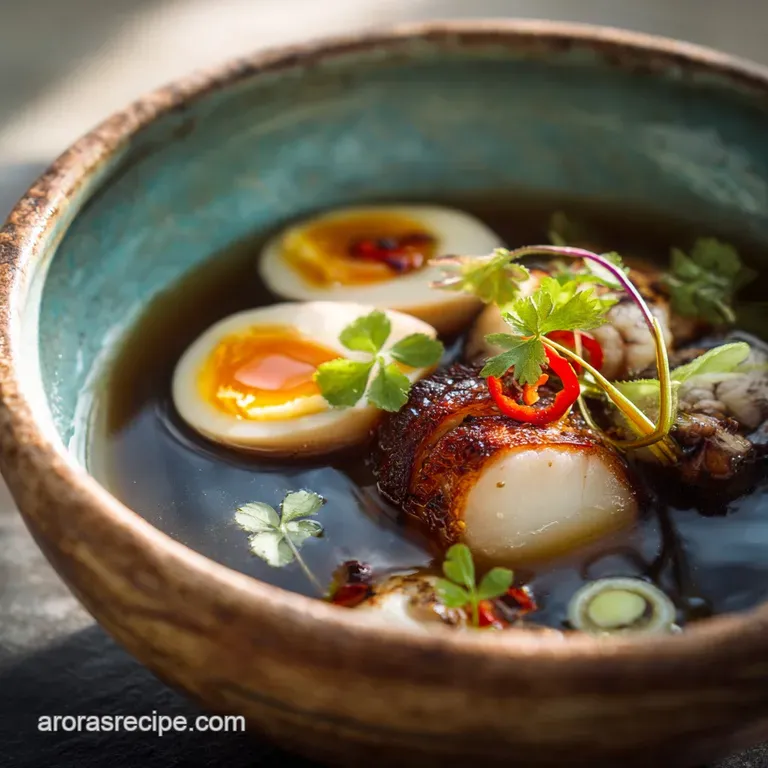
This is the broth you use when the flavour needs to be delicate and focused, like for a clear mushroom soup ( Suimono ) or a perfect Miso Soup.
If you’re whipping up a quick braise or maybe a robust ramen broth where the other ingredients are doing most of the heavy lifting, you could probably get away with the instant dashi powder substitute. But for true flavour depth? For that gorgeous, nuanced savoury note? We stick with Ichiban.
It’s the gold standard for a reason.
The Philosophy of Umami: Understanding the Two Essential Ingredients
The brilliance of Dashi lies in its minimalism. Just two things, really (plus water, obviously), that work together to create something much greater than their individual parts.
- Kombu (Dried Kelp): This is the quiet hero. Kombu is loaded with natural glutamates. You know, that savoury umami compound. We handle it gently to coax those flavours out slowly.
- Katsuobushi (Dried Bonito Flakes): These paper thin, smoky flakes bring inosinate, another essential umami compound. When you combine the glutamates from the kombu with the inosinate from the bonito, you get a synergistic effect. It’s flavour multiplication. That’s the entire secret.
Essential Components and Equipment for Achieving Clarity
Dashi is simple, which means every element has to pull its weight. This isn't the time for half measures.
Sourcing Quality: The Critical Difference of Premium Kombu and Katsuobushi
I once tried to save money and bought some dusty, pre-shredded bonito that looked like wood shavings. Terrible mistake. The resulting broth tasted fishy and flat.
For the cleanest flavour foundation in Japanese cooking, you must buy quality. Look for thick pieces of kombu (often labeled Ma-kombu or Rishiri ), and, here is the important part: see that white, crystalline powder on the surface? That’s glutamate. Do not wash it off!
Just gently wipe away any dust. For katsuobushi, look for thin, large flakes, sometimes called Hanakatsuo . They should smell faintly smoky and marine, not overly fishy.
Precision Matters: The Exact Ratio for Balanced Umami Extraction
Unlike Western stock, where you can eyeball your bones and veggies, Dashi demands ratios. If you use too much bonito, it becomes overwhelmingly fishy. Too much kombu, and it gets bitter and slimy.
We are aiming for a ratio of approximately 80 parts water to 1 part kombu and 1.3 parts bonito. It sounds fussy, but measure this out once, and you’ll nail it every time.
| Ingredient | Measurement | Why It Matters |
|---|---|---|
| Water | 1.2 Litres (5 cups) | Start with cold, filtered water for maximum flavour uptake. |
| Kombu | 15 grams | The right amount for subtle depth without bitterness. |
| Katsuobushi | 20 grams | Provides the smoky, savoury punch we need. |
Prepping Your Tools: Necessary Steps for Ultra Clean Filtering
A lot of the magic of dashi is its colourlessness. It should be perfectly translucent. You can’t achieve that with a cheap, wide holed sieve.
- The Best Filter: A fine mesh sieve lined with cheesecloth or muslin is the ultimate choice for the clearest broth.
- The Home Cook Hack: Don't have cheesecloth? Use a large, heavy duty paper towel (unscented, obviously) to line your sieve. It works almost as well.
- The Right Pot: Use a non-reactive saucepan. I prefer stainless steel. Avoid cast iron, as it can react with the minerals in the kombu.
- Temperature Control: If you have an instant read thermometer, use it. This is where precision pays off in spades.
Related Recipes Worth Trying
- Dashi The Ultimate Umami Stock Recipe Kombu Bonito — Dashi is the pure savoury foundation of Japanese cooking Learn how to make Dashi stock using our simple recipe for Ichiban Dashi turning just three...
- Master the Soul of Umami Foolproof Ichiban Dashi Recipe — Learn how to make authentic Ichiban Dashi stock This simple Dashi recipe uses the perfect temperature controls to create a light profound savoury umami base...
- Essential Dashi Broth Recipe Pure Umami Base for Miso Ramen — Master authentic Dashi broth Japanese soup stock in just 25 minutes This recipe is the clean foundational umami kick your miso and ramen bases need
Master the Technique: Extracting Maximum Flavour Without the Tannins
This process is mostly passive, which I love. It’s like brewing the most sophisticated cup of tea you've ever had.
The Cold Steep: Awakening the Glutamates in Kombu
We start cold. Always. Throwing cold kombu into hot water is a recipe for disaster. The sudden heat shocks the kelp and releases those bitter, undesirable compounds right away.
Instead, place the wiped kombu and cold water in the pot and let it sit. Minimum 30 minutes. You can even stick it in the fridge overnight. The cold temperature allows the glutamates to slowly, gently hydrate and dissolve, giving you a smooth, rounded umami profile when you eventually apply heat.
The Crucial Simmer: Hitting the Ideal Temperature for Kombu Extraction
Right, let's talk about the temperature drama. This is the moment where most people mess up their dashi and end up with something vaguely metallic and slimy.
Put the pot on medium low heat. We are slowly, slowly warming it. Keep an eye on the bottom. When you see tiny bubbles start to form like those little pearl necklaces along the bottom of the pan you are approaching the danger zone.
We want the water to reach maybe 82°C (180°F), definitely before it hits a boil.
This is the cardinal rule of making dashi: If the kombu boils rapidly, it releases mucilage (slime) and bitter tannins. You must, I repeat, MUST remove the kombu the instant you see large bubbles starting to break the surface. Pull it out immediately. Discard the kombu, or reserve it for Niban Dashi.
The Bonito Infusion: Proper Timing for the Katsuobushi Flakes
Once the kombu is out, crank the heat and bring the water to a rapid, rolling boil. Now kill the heat. Seriously, turn the burner off entirely.
Drop in all your bonito flakes. Give them a quick stir just to ensure they are fully submerged. That’s it. Do not touch the pot again. Let them steep for 3 to 5 minutes. The lingering heat of the water is enough to extract the inosinate from the flakes.
Steeping them for too long or boiling them violently makes them tough and releases bitter, astringent flavours. You’ll know they are done when most of them sink to the bottom of the pot.
The Gentle Strain: Filtering Your Finished Primary Dashi
Place your prepared, lined sieve over a large, clean bowl. Gently and slowly pour the dashi through.
Now, I know the urge. You have those saturated flakes sitting in the sieve, dripping liquid gold. You want to press them with a spoon to get every last drop. Fight the urge. Do not squeeze the bonito flakes! Squeezing releases fine particulates and muddy, bitter residue.
It will turn your beautiful, clear Ichiban Dashi cloudy. We are going for clarity here. Let gravity work its slow, perfect magic.
Elevating Your Culinary Game: Next Steps for Your Finished Broth
You now have a batch of gorgeous, incredibly clean primary dashi. Congratulations.
Maximizing Shelf Life: Proper Cooling and Freezing Techniques for Dashi
Dashi, being a clean broth, doesn’t last as long as a heavy bone stock. It’s delicate. You need to cool it down quickly if you aren't using it right away. Set the pot in an ice bath before refrigerating it.
Here’s the storage breakdown:
| Storage Location | Duration | Notes |
|---|---|---|
| Refrigerator | Up to 3 days | Keep in an airtight container for freshness. |
| Freezer | Up to 3 months | Freeze in 1-cup portions or ice cube trays for easy use. |
I keep dashi ice cubes stocked up at all times. They melt quickly into perfect small amounts for glazing vegetables or adding to scrambled eggs.
Waste Not, Want Not: Creating Niban Dashi (Secondary Broth)
I hate waste. After making Ichiban Dashi, you have perfectly usable spent kombu and bonito flakes. Don't throw them out!
Gather the residual kombu and bonito and return them to the pot. Add another 4 cups of fresh water (1 litre). This time, you can heat it up and bring it to a simmer for about 10 minutes.
This secondary extraction, or Niban Dashi , is cloudier and less intensely flavoured, but it’s still fantastic. It makes a perfect liquid for simmering root vegetables, adding depth to rice, or making a quick sauce. It’s efficient.
Immediate Application: Suggested Recipes Using Your Fresh Ichiban
You made this pristine broth. Don’t dilute it with terrible ingredients. Use it wisely!
My first suggestion is always Miso Soup. It’s the perfect showcase. The clean dashi shines through the savory paste. The second best use? Tamagoyaki. Using Dashi in the egg mixture creates a Japanese rolled omelette that is moist, light, and full of subtle flavour. It’s truly sublime.
This flavour foundation will revolutionize your approach to cooking Asian cuisine at home.

Recipe FAQs
Why is boiling the kombu such a culinary cardinal sin?
Boiling kombu releases mucilage and bitter oils, turning your beautiful, clean broth into something slimy and overpowering a true tragedy, akin to over brewing builder's tea! You must remove the kelp just before the water hits a proper simmer to ensure that crisp, pure umami flavour.
I've made a big batch; how long will my fresh Dashi keep in the fridge?
Fresh Dashi is best used within three days, maximum, as its delicate umami profile degrades quickly. If you have leftovers, treat it like gold and freeze it immediately in ice cube trays for convenient little flavour boosts later.
Can I make a proper vegetarian Dashi without the bonito flakes?
Yes, absolutely! The traditional method for a vegetarian broth is Shiitake Dashi, where you replace the bonito with dried shiitake mushrooms soak them overnight with the kombu for a rich, earthy, deeply savoury vegetarian version.
My Dashi looks cloudy or tastes slightly bitter. Where did I go wrong?
Cloudy or bitter Dashi is usually down to one of two slip ups: either you let the kombu boil or you squeezed the bonito flakes when straining. Remember the golden rule: let the flakes steep gently and strain them without pressure for that crystal clear, elegant finish.
What’s the deal with ‘Niban Dashi’ and using the leftover bits?
Making Niban Dashi (Secondary Broth) from the spent bonito and kombu is a brilliant, zero waste practice that ensures you squeeze every drop of flavour out of your ingredients. This secondary stock is perfect for simmering root vegetables or creating cooking liquid where the flavour doesn’t need to be quite so pristine.
Classic Ichiban Dashi Umami Foundation
Ingredients:
Instructions:
Nutrition Facts:
| Calories | 6661 kcal |
|---|---|
| Protein | 38.3 g |
| Fat | 93.4 g |
| Carbs | 166.1 g |
| Fiber | 10.8 g |
| Sodium | 1094 mg |
