Easy Pot Roast Slow Cooker: Tender and Savory
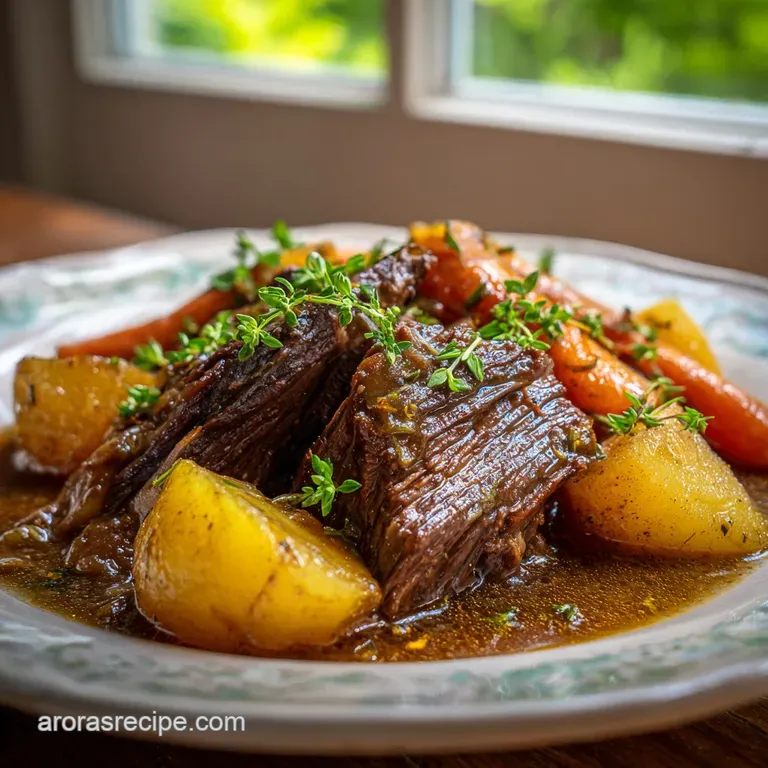
- Time: Active 20 minutes, Passive 8 hours, Total 8 hours 20 minutes
- Flavor/Texture Hook: Velvety beef that yields to a fork, paired with melt in-the mouth carrots and potatoes.
- Perfect for: Stress free Sunday family suppers or easy weeknight meal prep for busy Midwestern families.
- Creating the easy pot roast slow cooker
- Why this recipe works so well
- Essential items for your hearty meal
- Tools for a stress free supper
- Master the step-by-step cooking process
- Fixing common pot roast mistakes
- Flavor variations for your slow cooker
- Storing and reheating your leftovers
- Plating tips for a beautiful meal
- Recipe FAQs
- 📝 Recipe Card
Creating the easy pot roast slow cooker
The heavy cast iron skillet sizzles as the marbled beef hits the hot oil, sending a cloud of savory, peppery aroma through the kitchen that brings everyone running. There is something truly special about the way a chuck roast transforms after sitting in a crock pot all day; it goes from a stubborn, tough cut of meat to a velvety pile of beef that basically falls apart if you look at it sideways.
This is the ultimate comfort food I grew up with in the Midwest, where a hearty meal was the only way to survive those biting winter winds.
I used to think you could just toss everything into the pot and hit start, but I learned the hard way that a little bit of prep goes a long way. If you skip the sear, you lose that deep, mahogany crust that defines a truly great roast. The real hero here is the chuck roast itself specifically the collagen.
While leaner cuts would turn into dry shoe leather after eight hours, the chuck roast has that beautiful internal marbling that melts down into a silky sauce, keeping every fiber of the meat moist and tender.
You are going to love how the house smells around hour six, when the rosemary and thyme start mingling with the beef bone broth. It is the kind of scent that makes a house feel like a home.
This recipe is all about working smarter, not harder, using a few simple techniques like deglazing the pan to ensure your sauce has more depth than a store-bought packet ever could. Let's get into why this works and how you can nail it every single time without any stress.
Why this recipe works so well
- Collagen Breakdown: Low heat over 8 hours converts tough connective tissue into gelatin, creating a velvety mouthfeel.
- Deglazing Depth: Using red wine to scrape up the browned bits (fond) from the skillet transfers concentrated beef flavor into the slow cooker liquid.
- Aromatic Infusion: Nestling fresh herbs directly into the broth allows the oils to slowly permeate the meat fibers rather than just sitting on top.
- Starch Protection: Yukon Gold potatoes hold their shape better than Russets during long cook times, preventing a grainy or mushy texture in the final dish.
| Meat Thickness | Cook Time (Low) | Internal Temp | Visual Cue |
|---|---|---|---|
| 2 Inches | 6 hours | 195°F | Beef resists slightly when pulled |
| 3.5 Inches | 8 hours | 205°F | Beef shreds easily with two forks |
| 5 Inches | 10 hours | 205°F | Bone (if present) slides out clean |
Choosing the right cut of meat is the first step toward success. While some folks try to save a few pennies with a round roast, it simply lacks the fat content needed for this long journey. If you find yourself wanting to try different methods for other cuts, you might enjoy learning how to cook tri tip for a faster beef fix. However, for the slow cooker, chuck is the undisputed king because it thrives under the pressure of time and low heat.
Essential items for your hearty meal
| Component | Science Role | Pro Secret |
|---|---|---|
| Tomato Paste | Umami Booster | Sauté it until it turns rust colored to remove the raw metallic tang. |
| Red Wine | Acid & Tannins | The acid helps break down muscle fibers while adding a sophisticated dark fruit note. |
| Bone Broth | Liquid Base | Higher gelatin content than standard broth leads to a much richer, glossier sauce. |
Tools for a stress free supper
To keep things truly simple, we are sticking to the basics that every home cook likely has in their cupboard. You'll need a large cast iron skillet for that initial sear because it holds heat better than stainless steel, ensuring you get a dark crust without boiling the meat in its own juices.
A set of sturdy tongs is a must for flipping a 3.5 lb roast without splashing hot oil everywhere.
Of course, the star of the show is your slow cooker. I prefer a 6 quart or larger oval model so the roast and vegetables can sit in a relatively even layer. If you use a smaller pot, you might find the vegetables on top don't get as tender because they aren't submerged in the liquid.
A sharp chef's knife for chunking the carrots and a vegetable peeler are the only other tools standing between you and a homestyle feast.
Ingredient Deep Dive
- 3.5 lb beef chuck roast: Look for heavy white marbling throughout. Why this? The fat renders down to baste the meat from the inside out.
- 2 cups beef bone broth: Richer than standard stock. Why this? It provides the body and "lip smacking" quality to the gravy.
- 1 cup dry red wine: Such as Cabernet or Merlot. Why this? Adds acidity to cut through the heavy fat of the beef.
- 1.5 lb Yukon Gold potatoes: Halved. Why this? They stay creamy and intact whereas Russets often dissolve into mush.
- 1 lb large carrots: Cut into 2 inch chunks. Why this? Large pieces survive the 8 hour cook time without becoming baby food.
- 2 tbsp tomato paste: For depth. Why this? It adds a subtle sweetness and helps thicken the liquid slightly.
- Fresh Herbs: Thyme and rosemary sprigs. Why this? Fresh oils provide a much brighter flavor than dried "dust" from a jar.
| Original Ingredient | Substitute | Why It Works |
|---|---|---|
| Dry Red Wine | Extra Beef Broth + 1 tbsp Balsamic | Provides the necessary acidity and liquid volume without the alcohol. |
| Grapeseed Oil | Avocado Oil | Both have high smoke points, allowing for a hard sear without burning. |
| Yukon Gold Potatoes | Red Bliss Potatoes | Both are waxy varieties that hold their shape during long cooking cycles. |
Master the step-by-step cooking process
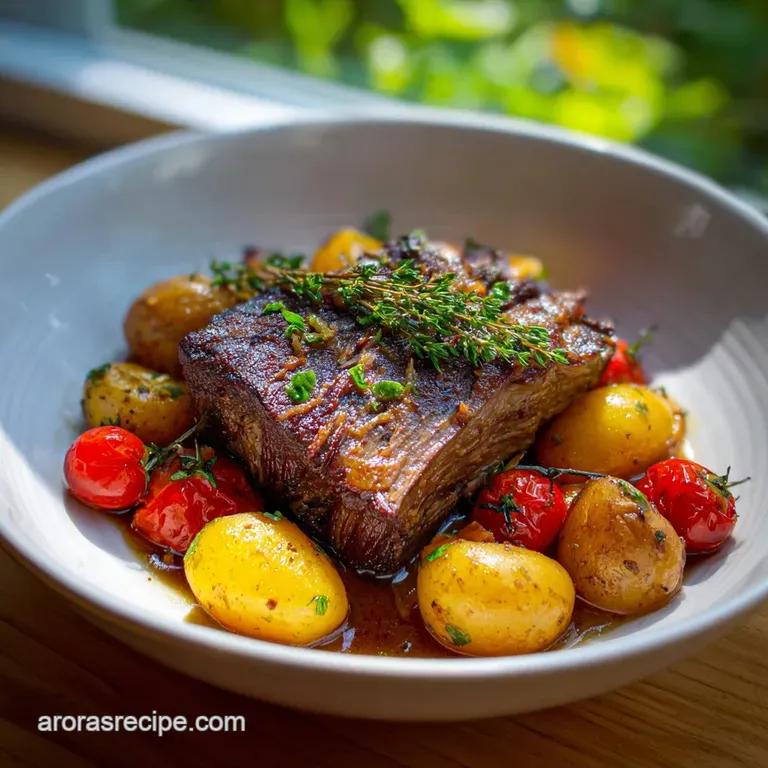
- Pat the 3.5 lb chuck roast completely dry with paper towels. Note: Moisture is the enemy of a good sear; wet meat steams instead of browning.
- Season all sides aggressively with 2 tsp kosher salt and 1 tsp black pepper.
- Heat 2 tbsp grapeseed oil in a large cast iron skillet over medium high heat.
- Sear the roast for 4–5 minutes per side until a dark, mahogany colored crust forms. Transfer the roast to the slow cooker.
- In the same skillet, add the thick onion wedges and 2 tbsp tomato paste. Sauté for 2 minutes until the paste turns a deep brick red.
- Add 3 smashed garlic cloves and cook for 30 seconds until the aroma fills the room.
- Deglaze the skillet with 1 cup dry red wine, scraping up the browned bits from the bottom. Pour this entire mixture into the slow cooker.
- Add the 2 cups beef bone broth, 2 tbsp Worcestershire sauce, halved Yukon Gold potatoes, and 2 inch carrot chunks.
- Nestle the 3 thyme sprigs and 2 rosemary sprigs into the liquid.
- Cover and cook on LOW for 8 hours until the beef shreds easily with a fork.
- Remove the beef and vegetables to a platter. Skim any excess fat from the liquid and pour it over the meat as a natural jus.
Fixing common pot roast mistakes
Why the meat is tough
If your beef feels like a rubber ball even after several hours, it usually means you haven't cooked it long enough. In the world of slow cooking, "tough" meat is almost always undercooked meat. Collagen needs time and a specific temperature to melt.
If you try to rush it on the High setting, the muscle fibers might tighten up before the collagen can liquefy. Always stick to the Low setting for a full 8 hours for the best results.
The sauce is too thin
Sometimes the liquid in the pot looks more like a watery tea than a rich gravy. This happens because the vegetables and meat release their own juices as they cook. If you want a thicker sauce, you can whisk a little cornstarch with cold water and stir it into the pot during the last 30 minutes. Alternatively, you can serve it with a homemade brown gravy on the side if you prefer a very thick, traditional pub style topping.
The vegetables are mushy
Mushy vegetables are the result of cutting them too small. A carrot sliced into thin rounds will disappear by hour four. By keeping your carrots in 2 inch chunks and only halving your potatoes, you ensure they have enough mass to withstand the heat.
Also, ensure you are using waxy potatoes like Yukon Golds; floury potatoes like Russets are designed to fall apart, which is great for mash but terrible for pot roast.
| Problem | Root Cause | Solution |
|---|---|---|
| Meat is dry/stringy | Used a lean cut (like Sirloin) | Always use Chuck Roast for the high fat and collagen content. |
| Liquid tastes bitter | Garlic burned in the skillet | Only sauté garlic for 30 seconds; add liquid immediately after. |
| Bland flavor | Not enough salt or no sear | Salt the meat heavily before searing to build a flavor foundation. |
Common Mistakes Checklist
- ✓ Never skip the searing step; it is where 80% of your flavor comes from.
- ✓ Don't open the lid! Every time you "peek," you lose 15-20 minutes of heat.
- ✓ Avoid the "High" setting if you have the time; Low produces a much better texture.
- ✓ Ensure the liquid covers at least half of the roast to prevent the top from drying out.
- ✓ Trim only the massive chunks of hard white fat; leave the rest for flavor.
Flavor variations for your slow cooker
Scaling this recipe for a larger crowd is fairly straightforward, but you have to be careful with the seasonings. If you are doubling the roast to 7 lbs, do not simply double the salt and spices; instead, use about 1.5 times the original amount and taste the liquid at the end.
For the liquids, you only need to increase them by about 10% because the slow cooker is a closed system and doesn't allow for much evaporation.
If you are cooking for just two people, you can halve the roast. I recommend still using a small splash of wine and broth, but you can reduce the cook time by about 20%. However, most folks find that making the full 3.5 lb roast is better because the leftovers are even more flavorful the next day.
You can use the shredded beef for tacos, sandwiches, or even a quick beef ragu over pasta.
| Feature | Stovetop Braising | Slow Cooker Method |
|---|---|---|
| Hands on Time | High (monitoring heat) | Low (set and forget) |
| Liquid Loss | Significant evaporation | Almost zero evaporation |
| Texture | Darker, roasted exterior | Uniformly tender and moist |
Storing and reheating your leftovers
This pot roast is a meal prep dream. It will stay fresh in the fridge for up to 4 days if kept in an airtight container. In fact, many people (myself included) think it tastes better on day two because the flavors have had more time to mingle and penetrate the meat.
When you refrigerate it, the fat will rise to the top and solidify into a white layer. You can easily scrape this off and discard it before reheating for a leaner meal.
For freezing, this dish holds up remarkably well. Place the shredded beef and vegetables in a freezer safe bag with plenty of the cooking liquid. It will last for up to 3 months. When you're ready to eat it, thaw it in the fridge overnight. To reheat, I recommend using a small saucepan over low heat.
Adding a splash of water or extra broth helps keep the meat from drying out during the second round of heating.
Don't let those scraps go to waste! The leftover cooking liquid is essentially a highly concentrated beef stock. I like to save it in ice cube trays and pop a few into my next batch of vegetable soup or use it as a base for a quick pan sauce for steak.
Even the onion wedges that have softened into nothing can be blended into the liquid to create a naturally thickened gravy.
Plating tips for a beautiful meal
Presentation might seem like a "fancy" word, but in my Midwestern kitchen, it just means making the food look as good as it tastes. Instead of serving everything in one big jumble, I like to place the potatoes and carrots around the perimeter of a large warmed platter.
Place the roast in the center and use two forks to gently pull it into large, steaming chunks. This looks much more appetizing than a pre shredded pile of meat.
- Brighten with Green: A sprinkle of fresh parsley or even a few more fresh thyme leaves right before serving adds a pop of color to the otherwise brown and orange palette.
- The Acid Touch: If the dish feels a little too heavy or "flat," a tiny squeeze of fresh lemon juice or a teaspoon of balsamic vinegar stirred into the sauce right at the end can wake up all the other flavors.
- Warm Your Plates: Since this is a slow cooked meal, it can lose heat quickly once it hits a cold ceramic plate. Running your dinner plates under hot water for a minute makes a huge difference in keeping the meal cozy.
Debunking Searing Myths
There is a common myth that searing meat "seals in the juices." That is actually not true at all. Moisture is lost during the searing process because of the high heat. However, we sear the beef for the flavor that wonderful crust is the result of proteins and sugars reacting to heat.
Without that step, your roast will taste "boiled" rather than "braised," and you'll miss out on that deep complexity we all crave in a winter supper.
Another myth is that you need to submerge the entire roast in liquid. If you do that, you are essentially poaching the beef. You only need the liquid to come up about halfway. The top half of the roast will cook in the trapped steam, which creates a different, slightly firmer texture on the top that provides a nice contrast to the submerged, ultra soft bottom.
Trust the process and resist the urge to add more broth!
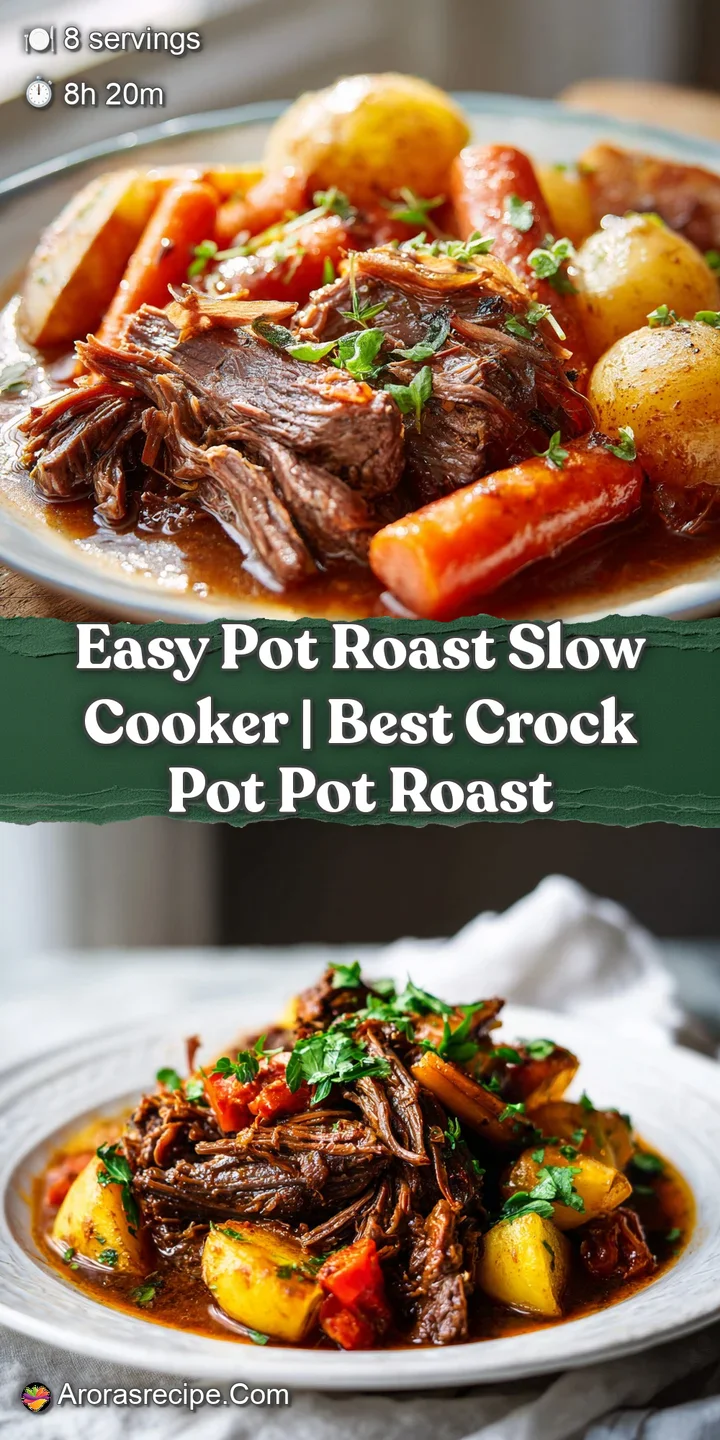
This easy pot roast slow cooker recipe is the one I turn to every time the leaves start to turn or the snow starts to fall. It is reliable, hearty, and reminds me of the simple joy of a home cooked meal shared with people I love.
Give it a try this weekend your kitchen will smell incredible, and your family will definitely thank you.
Decision Shortcut
- If you want a richer sauce: Replace the red wine with a dark stout beer for a malty, deep flavor profile.
- If you want to save time: Buy "stew meat" instead of a whole roast, though be warned it may dry out faster than a whole chuck.
- If you want it keto friendly: Swap the potatoes for large chunks of cauliflower or radishes (they lose their "bite" and taste surprisingly like potatoes when slow cooked).
Recipe FAQs
What liquid is best for a pot roast?
A combination of dry red wine and beef bone broth provides the best results. The wine deglazes the pan to pick up deep, savory flavors, while the bone broth adds richness and body to the final sauce.
How to cook a pot roast in a slow cooker easily?
Pat your beef chuck roast dry and sear it in a hot skillet before transferring it to the slow cooker. Add your aromatics, wine, and broth, then cook on low heat for exactly 8 hours until the meat is fork tender.
Is it necessary to brown a roast before putting it in the crockpot?
Yes, searing is essential for flavor. Cooking the roast for 4 5 minutes per side until a dark, mahogany crust forms creates the foundation for a complex, restaurant quality gravy.
What is the secret to a good pot roast?
The secret is patience and proper deglazing. If you enjoyed mastering the velvety gravy technique here, you know that scraping the browned bits, or fond, from your skillet into the slow cooker is what elevates the broth from simple liquid to a rich, flavor packed sauce.
Is it true I can substitute the beef chuck for a leaner cut like sirloin?
No, this is a common misconception. Chuck roast contains the high collagen content necessary for long, slow braising; leaner cuts will become tough and dry during the 8-hour cooking time.
How to store leftovers for the best taste?
Keep leftovers in an airtight container in the refrigerator for up to 4 days. Many find the flavor improves by the second day as the ingredients mingle, and you can easily scrape off any solidified fat from the top before reheating.
How to tell when the roast is finished cooking?
Use your fork to test for tenderness. The beef is perfectly cooked when the collagen has fully converted to gelatin and the meat yields to the slightest pressure without resistance.
Easy Slow Cooker Pot Roast
Ingredients:
Instructions:
Nutrition Facts:
| Calories | 672 calories |
|---|---|
| Protein | 40 g |
| Fat | 39 g |
| Carbs | 23 g |
| Fiber | 3.2 g |
| Sugar | 4.1 g |
| Sodium | 765 mg |
