The Liquid Gold Standard Classic Japanese Ichiban Dashi Primary Stock
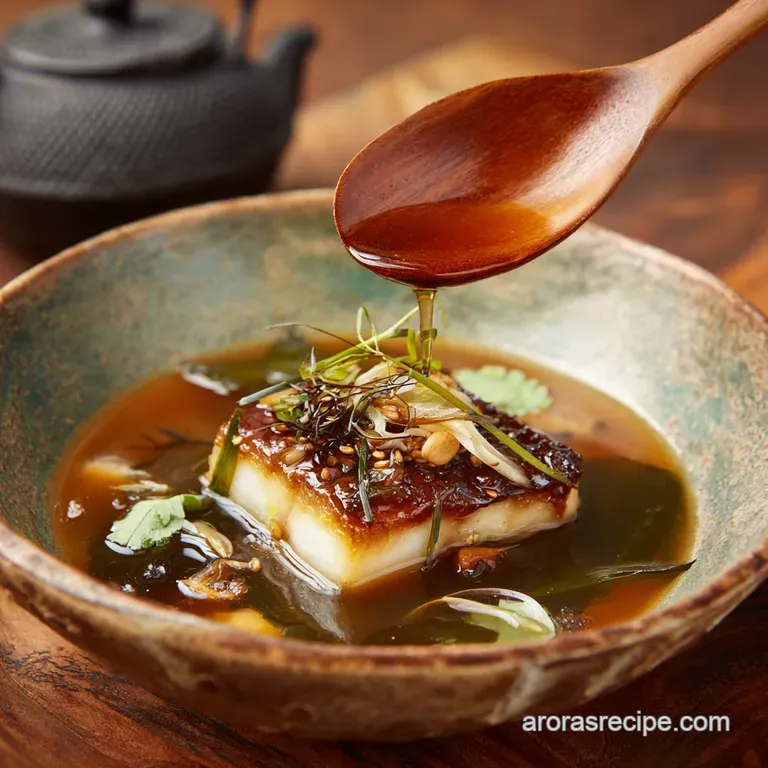
Decoding Umami: Why This Dashi Stock is the Soul of Japanese Cooking
If you’ve ever tasted authentic Japanese food a comforting bowl of clear soup, a perfectly simmered vegetable, or a light tempura dipping sauce you’ve experienced the quiet genius of dashi stock.
It isn't just broth; it is the culinary equivalent of a baseline note in music, the subtle, profound foundation that allows all other flavors to shine. Dashi is the pure, crystallized essence of umami, the fifth taste. Without it, Japanese cooking loses its soul, becoming flat and one-dimensional.
The Critical Difference: Ichiban vs. Niban Dashi
When we talk about traditional dashi stock, we usually mean Ichiban Dashi , or "first stock." This is the pinnacle crystal clear, fragrant, and delicate. It demands the best ingredients and the most precise timing because its purity is paramount.
Ichiban Dashi is typically reserved for dishes where the flavor profile needs to remain light and elegant, such as clear soups (Sui-mono) or premium dipping sauces.
Niban Dashi , or "second stock," is the practical home cook's secret. It’s made by reusing the ingredients from the first batch the spent kombu and bonito flakes and simmering them longer in fresh water.
While Niban Dashi is cloudier and possesses a stronger, slightly earthier taste, it’s perfect for heavy duty applications like braising dishes ( Nimono ) or making miso soup, where the robustness won't clash with stronger seasonings.
It’s a wonderful way to honor the ingredients and minimize waste.
Understanding the Essence of Kombu and Katsuobushi
The magic of dashi is truly a miracle of two distinct ingredients. Kombu, the dried kelp, provides the glutamic acid the foundational glutamate that defines umami. When you gently heat kombu, you are slowly coaxing out these savory compounds without releasing the bitter, slimy polysaccharides that ruin the broth if boiled.
The second component, Katsuobushi (shaved dried bonito flakes), provides inosinate, another essential umami compound. When the flakes hit the near boiling water, they bloom and quickly release a smoky, mineral rich flavour that perfectly complements the earthiness of the kombu.
The synergy between glutamate (from kelp) and inosinate (from fish) is what creates that uniquely deep, addictive taste known as synergistic umami .
The Myth of Complexity: How Fast Ichiban Dashi Truly Is
Many home cooks shy away from making dashi, assuming anything so foundational must be complicated or take hours, like traditional Western stocks. I’m here to tell you that this is absolutely not the case. Ichiban Dashi is incredibly fast.
We are talking about active cooking time of about 10 minutes, plus a brief initial soak.
Unlike beef or chicken stock, which extracts flavor through long, aggressive simmering, dashi relies on a gentle, rapid infusion. You are essentially brewing a sophisticated tea. Once you grasp the simple rule of temperature control which I promise is easy with a basic thermometer you'll realize this is one of the quickest, highest impact techniques you can add to your repertoire.
The Minimalist Toolkit: Essential Ingredients and Equipment

When your recipe relies on only two primary ingredients, the quality of those ingredients stops being optional and becomes absolutely critical. You cannot fake flavor purity. This stock will only ever taste as good as the kombu and bonito you use.
Sourcing Supreme Flavor: Selecting Premium Kombu and Bonito
Finding good quality ingredients is the biggest hurdle for new dashi makers. Look for well regarded Japanese brands. For kombu, seek out thick, dark pieces, ideally from Hokkaido, and remember that the fine white powder on the surface is the desired mannitol don't scrub it off!
For bonito, choose flakes that are thin, pale pink, and smell faintly of sea salt and smoke. If the flakes are dusty or look like sawdust, you'll get muddy dashi.
| Component | What to Look For | Why It Matters |
|---|---|---|
| Kombu | Thick, dark strips; labeled Rishiri or Ma-kombu | Higher concentration of glutamates and clean flavor. |
| Bonito Flakes | Thinly shaved (not broken dust); vibrant pink/tan | Thin flakes infuse quickly and cleanly; no heavy residue. |
| Water | Filtered or soft tap water | Hard water minerals can dull the fragile umami taste. |
Precision Matters: Accurate Water and Component Ratios
Dashi is a study in subtlety, which is why ratios matter so much. We are aiming for balance enough kombu to provide the deep, earthy Umami base, and enough bonito to give it lift and smokiness. For Ichiban Dashi, the ratio of water to components is high because we want a thin, elegant extraction.
Don't be tempted to overcrowd the pot with extra kelp or flakes, thinking it will yield a stronger stock. Over concentrating the ingredients actually results in bitter, fishy, and murky stock because you start extracting undesirable compounds.
Measure your 1-liter of water and stick closely to the 20g/30g ratio for the cleanest results.
Beyond the Pot: Recommended Gear for Flawless Dashi Making
You don't need fancy equipment, but a few key tools will drastically improve your consistency, which is the hallmark of great home cooking.
- Thermometer: This is non-negotiable for foolproof dashi. An instant read thermometer ensures you pull the kombu before the water hits that crucial boiling point, guaranteeing a clean flavour every time.
- Fine Mesh Sieve (or Chinois): A wide, fine sieve is necessary to separate the liquid from the bonito quickly.
- Cheesecloth: Line your sieve with a double layer of cheesecloth. This acts as a filter, removing the finest bonito sediment and resulting in a sparkling clear stock. It’s a small step that yields huge visual and flavour improvements.
Related Recipes Worth Trying
- Foolproof Dashi Stock Preparation Crystal Clear Japanese Umami Broth — Master Dashi Stock Preparation with this easy recipe Learn how to make traditional Japanese soup base Ichiban Dashi without the bitterness This liquid gold...
The Delicacy of Infusion: step-by-step Dashi Stock Preparation
We are going to approach this with patience. Remember, we are not cooking the kelp or the fish; we are infusing their unique flavor molecules into the water.
The Gentle Soak: Hydrating Kombu for Maximum Flavor Extraction
The longest part of this process is the initial soak, but it’s the easiest. By soaking the kombu in the water for at least 30 minutes (or ideally, hours in the fridge), you gently begin the process of flavor extraction even before the heat is applied.
This slow hydration process allows the glutamates to leach out gradually, ensuring a deep flavor without the need for aggressive heat, which saves you from that unpleasant, slimy texture.
The Moment of Truth: Timing the Kombu Removal to Prevent Sliminess
This is the single most important technique in dashi making. We place the pot over very low heat and watch it like a hawk. The temperature should rise slowly over 10 to 15 minutes.
Crucial Warning: The second you see large, rapid bubbles forming around the edge of the pan usually around 82°C (180°F) you must lift the kombu out.
If you let the kelp boil, the stock will become cloudy, acquire a bitter vegetal taste, and develop a slimy, undesirable texture due to the released polysaccharides. Trust your thermometer, or trust your eyes; pull the kombu just before the simmer begins.
The Bonito Bloom: Perfecting the Steep and Strain
Once the kombu is out, we bring the liquid to a brief, full boil to stabilize the stock. Then, remove the pan from the heat entirely and wait about 30 seconds for the turbulence to subside. Now, sprinkle those delicate bonito flakes over the surface. They should immediately bloom and flutter before starting to sink.
Let the flakes steep for about 30 to 60 seconds. They release their inosinate almost instantly into the super hot water. Speed is key here; prolonged soaking causes the bonito to become waterlogged and bitter. Finally, pour the liquid gently through your lined sieve.
Remember my cardinal rule: do not press, squeeze, or mash the bonito. Just let the liquid drain naturally. That crystal clear, pale golden liquid? That's your liquid gold, Ichiban Dashi.
Elevating Your Culinary Game: Storage, Usage, and Variations
Congratulations you have mastered the foundation of Japanese cooking! Now that you know how to make this essential umami foundation, let’s talk about keeping it fresh and exploring its vast potential.
Maximizing Longevity: Proper Storage Techniques for Fresh Dashi
Because Dashi is a delicate infusion and not a heavily boiled, preserved stock, its freshness window is shorter than that of Western broths. The purest flavour is always immediate, but proper storage gives you a great window.
Once cooled completely, fresh dashi stock can be kept in an airtight container in the refrigerator for up to five days. If you've made a large batch, don't worry about waste. Dashi freezes beautifully. I like to pour excess stock into large ice cube trays. When frozen, I transfer the cubes into a zipper bag.
These little flavour bombs are perfect for instantly enriching glazes, sauces, or quick vegetable sautes.
The Next Level: Using Niboshi (Dried Sardines) for a Richer Broth
While Ichiban Dashi provides a delicate, clean profile, sometimes a dish calls for more assertiveness. That’s where Niboshi Dashi comes in. This variation replaces the bonito flakes with small, dried anchovies or sardines.
Using niboshi yields a significantly stronger, fishier, and sometimes slightly more bitter stock. To prepare it, you typically remove the heads and entrails of the small fish (to reduce bitterness), soak them overnight, and then simmer them gently.
This robust flavor stands up beautifully in rustic miso soups or stews that include root vegetables, providing a depth that the classic Ichiban dashi might lose.
Flavor Impact and Health Facts: Nutritional Breakdown of Clear Dashi Stock
One of the beautiful things about Dashi is its clean composition. It provides massive flavor without the caloric or sodium baggage often found in conventional broths. It’s essentially pure flavor derived from amino acids.
Dashi provides complex savoriness to a dish without requiring salt or fat. This makes it an invaluable tool for building satisfying, healthy meals. When you use homemade dashi as a cooking medium, you are instantly cutting down on the need for highly seasoned fats or commercial bouillon, allowing the natural goodness of your vegetables, seafood, or meat to shine through, underpinned by that magnificent umami kick.
Recipe FAQs
Why bother making Dashi stock from scratch when I can just buy granules?
Homemade Dashi is the real deal it's cleaner, lighter, and provides that pure Umami kick without the excess salt or MSG found in instant granules, which are a handy cheat but lack the fresh, refined flavour of the classic method.
I’ve made a big batch how long does my fresh Dashi keep, and can I freeze it?
Treat Dashi like fresh milk; it keeps for about 5 days in the fridge, but for longer storage, freeze it immediately in ice cube trays perfect for adding a little flavour bomb to sauces or stir fries when you’re in a pinch.
My Dashi is cloudy and tastes a bit slimy or bitter. Where did I go wrong?
Ah, the classic beginner's folly! You likely boiled the kombu (which releases bitterness and slime) or squeezed the bonito flakes when straining; remember, the key is a gentle, low simmer for the kombu and letting gravity do the work for the flakes.
I need a completely plant based version; what can I use instead of bonito flakes?
Absolutely, you can ditch the fish! The best vegan variation is Shiitake Dashi, made by soaking dried mushrooms overnight, which provides a deep, earthy Umami richness that still acts as a superb, light base for vegetarian soups and braises.
What is Niban Dashi, and should I really use the spent ingredients again?
Yes, don't waste those bits! Niban Dashi (Secondary Stock) is made by re-simmering the used kombu and bonito for a longer period, resulting in a less refined but perfectly usable stock that is excellent for less delicate cooking, like cooking rice or braising tough root vegetables.
Does Dashi provide any actual nutritional benefit or is it just flavour?
Dashi is fantastically low in calories and virtually fat-free, making it a great base for diets, but its real benefit is in the abundance of amino acids (Umami), which enhance flavour greatly without requiring loads of added salt.
Essential Japanese Dashi Stock

Ingredients:
Instructions:
Nutrition Facts:
| Calories | 1158 kcal |
|---|---|
| Protein | 9.1 g |
| Fat | 9.1 g |
| Carbs | 46.6 g |
| Fiber | 2.0 g |
| Sodium | 252 mg |
