Gruyere French Onion Soup Recipe

- Time: Active 20 minutes, Passive 1 hours 15 mins, Total 1 hours 35 mins
- Flavor/Texture Hook: Velvety, rich broth paired with a shattering Gruyere cheese crust
- Perfect for: Cozy weekend dinners or a comforting winter meal prep
- Perfect Gruyere French Onion Soup Guide
- Why This Rich Soup Works
- Vital Numbers for Best Results
- Essential Ingredients for Deep Flavor
- Simple Tools for Better Cooking
- Building Flavor Layer by Layer
- Fixing Your Onion Soup Hurdles
- Smart Ways to Customize Flavor
- Storing and Warming Your Soup
- Best Sides for Your Soup
- Very High in Sodium
- Recipe FAQs
- 📝 Recipe Card
Perfect Gruyere French Onion Soup Guide
Imagine walking into a kitchen where the air is thick with the scent of butter and slow roasting onions. It’s that deep, savory aroma that wraps around you like a warm blanket on a rainy Nashville evening.
Last winter, I tried to rush this process, turning the heat up too high, and ended up with bitter, burnt bits instead of that jammy sweetness we all crave. I learned the hard way that you can't bully an onion into caramelizing; you have to coax it.
This recipe is my tribute to the slow lane. We aren't using fancy gadgets or complex techniques, just a heavy pot and a little bit of time. It’s about the sound of the sizzle when the white wine hits the hot pan and the way the kitchen smells once that brandy begins to mingle with the thyme.
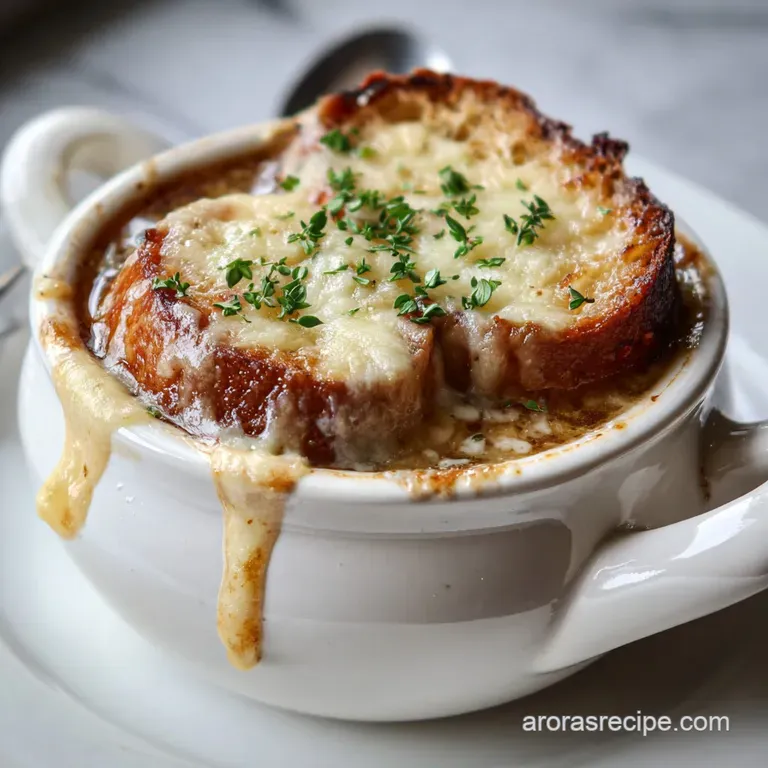
I promise you, once you see that first spoonful of cheese pull away from the bowl, you’ll know every minute was worth it.
We are going for a broth that is velvety and dark, balanced by the sharp, nutty bite of melted Gruyere. It’s the kind of meal that reminds you why homemade is always better. Let’s get our pots ready and transform these simple yellow onions into something truly special.
Why This Rich Soup Works
- Maillard Magic: Slow heat breaks down onion sugars into hundreds of new flavor compounds, creating that signature dark color and savory depth without needing artificial additives.
- Alcohol Solubility: Using brandy and white wine releases flavor molecules in the onions that are not water soluble, ensuring every bit of hidden taste ends up in your spoon.
- Starch Suspension: A tiny amount of flour binds the fat from the butter to the beef stock, preventing an oily surface and giving the broth a silky mouthfeel.
- Enzymatic Browning: Adding a pinch of granulated sugar early on speeds up the breakdown of the onion cell walls, helping them soften and brown more evenly.
| Method | Total Time | Texture | Best For |
|---|---|---|---|
| Traditional Stovetop | 1 hours 35 mins | Silky, deep jammy onions | Weekend comfort cooking |
| Pressure Cooker | 45 minutes | Soft but less caramelized | Quick weeknight cravings |
| Slow Cooker | 8 hours | Very soft, mild flavor | Hands off meal prepping |
While the traditional stovetop method takes the longest, it provides the most control over the "fond" those brown bits at the bottom of the pot that hold all the flavor. If you find yourself in a rush, the pressure cooker is a decent shortcut, but you'll miss that specific concentrated sweetness.
The Chemistry of the Caramelized Onion
The key to this dish is the Maillard reaction, which is a chemical dance between amino acids and reducing sugars. In this soup, the low and steady heat ensures the onions don't just cook, but actually transform into a complex base.
| Component | Science Role | Pro Secret |
|---|---|---|
| Yellow Onions | Sugar Source | Slice from root to stem to help them keep some structure during the long simmer. |
| Gruyere Cheese | High Fat Emulsion | Grate it yourself; pre shredded cheese has potato starch that prevents a smooth melt. |
| Beef Stock | Umami Foundation | Use a low sodium version so you can control the saltiness as the soup reduces. |
Adding the stock slowly is vital because it allows the flavors to integrate rather than diluting the hard work you did with the onions. This is similar to the patience needed for a great Vegetable Ground Beef recipe, where the layering of flavors is the secret to a rich result.
Vital Numbers for Best Results
- 1.5 Kilograms: The total weight of sliced onions needed to ensure enough bulk after they shrink during cooking.
- 45 Minutes: The minimum time onions should spend in the pan before you even think about adding the liquid.
- 165°F (74°C): The ideal temperature for the beef stock when it's added to the pot to prevent shocking the onions.
Essential Ingredients for Deep Flavor
- 6 large yellow onions (1.5kg): These provide the bulk and sweetness. Why this? Yellow onions have the highest sugar content for perfect caramelization. (Sub: White onions, but add an extra pinch of sugar).
- 3 tbsp unsalted butter: Used for sautéing. Why this? Adds a creamy, rich mouthfeel to the base. (Sub: Ghee for a higher smoke point).
- 1 tbsp extra virgin olive oil: Prevents the butter from burning too quickly. (Sub: Avocado oil).
- 1 tsp sea salt: Draws moisture out of the onions. (Sub: Kosher salt).
- 1/2 tsp granulated sugar: Aids in the browning process. (Sub: Brown sugar for a molasses hint).
- 1 tbsp all purpose flour: Thickens the broth slightly. (Sub: Cornstarch slurry, but it changes the texture).
- 1/2 cup dry white wine: Deglazes the pan. (Sub: Extra beef stock with a teaspoon of lemon juice).
- 6 cups beef stock: The liquid body of the soup. (Sub: Chicken stock for a lighter flavor).
- 2 tbsp brandy: Adds a sophisticated punch. (Sub: Cognac or omit for a milder taste).
- 2 sprigs fresh thyme: Earthy herb notes. (Sub: 1/2 tsp dried thyme).
- 1 dried bay leaf: Adds a subtle floral background. (Sub: Omit if necessary).
- 1 French baguette: The vessel for the cheese. (Sub: Sourdough slices).
- 2 cups Gruyere cheese: The star topping. Why this? It has the perfect melt to pull ratio and a nutty finish. (Sub: Swiss or Emmental).
- 1/4 cup Parmigiano Reggiano: For a salty, sharp kick. (Sub: Pecorino Romano).
- 1 clove garlic: To rub on the toasted bread. (Sub: Garlic powder).
Simple Tools for Better Cooking
You don't need a kitchen full of gadgets for this. A heavy bottomed pot, like a Dutch oven (Lodge is a great affordable choice), is non negotiable because it distributes heat evenly, preventing hot spots that burn your onions.
You’ll also need a sturdy wooden spoon to scrape the bottom of the pan don't use plastic, as we need to really get in there and lift that caramelized fond.
Finally, ensure you have oven safe crocks or bowls. Since we are finishing this under the broiler to get that bubbly cheese, standard ceramic bowls might crack under the intense heat.
If you don't have crocks, you can melt the cheese on the baguette slices on a baking sheet and float them on the soup afterward, though you'll miss the iconic "cheese seal" around the rim.
Building Flavor Layer by Layer
- Prep the onions. Peel and thinly slice all 1.5kg of onions into uniform half moons. Note: Uniformity ensures they all finish caramelizing at the same time.
- Sauté the base. Melt the 3 tbsp butter with 1 tbsp olive oil in your heavy pot over medium heat until the butter foam subsides and sizzles.
- Softening phase. Toss in the onions and coat them in the fat. Cook for 15 minutes, stirring occasionally, until they are soft and translucent.
- Caramelize slowly. Stir in the 1 tsp salt and 1/2 tsp sugar. Lower the heat and cook for 40 minutes, stirring every 5 minutes until the onions are a deep, rich brown.
- Add the flour. Sprinkle the 1 tbsp flour over the onions and cook for 2 minutes until the raw flour smell disappears.
- Deglaze the pan. Pour in the 1/2 cup white wine. Use your wooden spoon to scrape all the brown bits off the bottom until the liquid has mostly evaporated.
- Simmer the broth. Add the 6 cups beef stock, 2 tbsp brandy, thyme sprigs, and bay leaf. Bring to a boil, then simmer for 20 minutes until the flavors are unified and bold.
- Toast the baguette. While the soup simmers, toast your baguette slices in the oven. Once golden, rub each slice with the peeled garlic clove until the aroma is fragrant.
- Assemble the bowls. Remove the thyme and bay leaf. Ladle the soup into oven safe crocks, place a toasted baguette slice on top, and pile on the 2 cups of grated Gruyere and 1/4 cup Parmigiano Reggiano.
- Broil to finish. Place the crocks on a baking sheet and broil for 3 minutes until the cheese is bubbly and brown spotted.
Chef's Tip: To prevent the bread from becoming a soggy sponge, bake the baguette slices at a low temperature (300°F) for 15 minutes before the final broil. This dehydrates the bread so it stands up to the broth longer.
Fixing Your Onion Soup Hurdles
Onions Browning Too Fast
If your onions are looking dark after only 10 minutes, your heat is too high. This leads to a bitter taste rather than sweetness. Immediately add a splash of water to the pan to lower the temperature and scrape up the bits, then turn your burner down to low.
Bread Sinking into Soup
This usually happens if the baguette slices are too thin or if the soup isn't filled high enough. Make sure your bread is at least 1 inch thick and that the soup level is just below the rim so the bread rests on the surface and the cheese can anchor to the sides of the bowl.
The Broth Feels Thin
A classic French onion soup should have some body. If it feels watery, it’s likely the flour didn't hydrate properly or the stock was too thin. You can simmer it uncovered for an extra 10 minutes to reduce it further and concentrate the proteins and sugars.
| Problem | Root Cause | Solution |
|---|---|---|
| Bitter Aftertaste | Onions burned rather than caramelized | Add a teaspoon of balsamic vinegar to mask the bitterness. |
| Cheese is Clumpy | Used pre shredded cheese | Always grate Gruyere from a block for a smooth melt. |
| Soup is Over Salted | Stock reduced too much | Add a splash of unsalted water or a pinch more sugar to balance. |
Common Mistakes Checklist
- ✓ Never skip the deglazing step; those brown bits are the "soul" of the soup.
- ✓ Don't rush the onions if they haven't turned brown in 40 minutes, keep going.
- ✓ Use a heavy pot to prevent scorching in the center of the pan.
- ✓ Always toast the bread before adding it to the soup to prevent immediate sogginess.
- ✓ Rub the garlic on the bread after toasting for maximum flavor impact.
Smart Ways to Customize Flavor
If you want a deeper, more complex color without the wait, add a teaspoon of balsamic vinegar during the last 10 minutes of caramelization. It provides a hit of acidity that cuts through the richness of the beef stock and butter.
For those who enjoy a bit of heat, a pinch of red pepper flakes added with the thyme can provide a Southern "Nashville" twist to this French classic.
Best Gruyere Substitute Options
While Gruyere is the gold standard for its melt ability, sometimes the grocery store lets us down. You want a cheese with a high fat content and a bit of funk. Comté is the closest cousin, offering a similar nutty profile.
If you're on a budget, a sharp Swiss cheese mixed with a little bit of Mozzarella will give you that iconic cheese pull without the high price tag.
A Simple Vegetarian Transformation
You can easily swap the beef stock for a rich mushroom broth. To get that deep umami flavor, sauté some dried porcini mushrooms and add their soaking liquid to the soup. It provides the same "meaty" backbone that the beef stock usually offers.
This transition is much like choosing a dairy-free Gluten recipe it’s about finding the right substitute that doesn't sacrifice the comforting texture you expect.
Storing and Warming Your Soup
You can store the soup base (without the bread and cheese) in the fridge for up to 4 days. In fact, many people think it tastes even better the next day because the flavors have had more time to marry. If you want to freeze it, place the cooled soup in airtight containers for up to 3 months.
Just leave about an inch of space at the top for expansion.
When you're ready to eat, reheat the soup on the stovetop over medium heat until it's steaming. Avoid the microwave if possible, as it can heat the onions unevenly. Once hot, follow the bread and cheese steps as usual. For a zero waste tip, don't throw away your onion peels!
You can simmer them in water to create a quick veggie stock base for future recipes.
Best Sides for Your Soup
Since this soup is quite heavy on the cheese and bread, I usually lean toward something bright and crisp for a side. A simple green salad with a sharp lemon vinaigrette is the perfect palate cleanser. If you're hosting a big family dinner and want to keep the comfort theme going, serving this alongside a Homemade Stuffing recipe during the holidays is a guaranteed crowd pleaser.
Don't be afraid to keep the sides simple. A few roasted stalks of asparagus or even just a glass of the same white wine you used in the soup can elevate the meal. The goal is to let the Gruyere and those jammy onions remain the stars of the show.
Enjoy the process, take your time with the browning, and your kitchen will be the best smelling place in town.

Very High in Sodium
1150 mg mg of sodium per serving (50% of daily value)
The American Heart Association recommends limiting sodium intake to no more than 2,300mg per day for overall cardiovascular health.
Sodium Reduction Tips for French Onion Soup
-
Low-Sodium Broth-30%
Substitute the high sodium beef stock with a low-sodium or no-sodium added beef broth. This can significantly reduce the sodium content of the soup.
-
Reduce Cheese Quantity-20%
Reduce the amount of Gruyere and Parmigiano Reggiano cheese used for topping. Alternatively, use a lower sodium cheese option. Consider Swiss or Emmental, which are naturally lower in sodium.
-
Control Salt Added-15%
Omit the added sea salt entirely or reduce the amount to 1/4 teaspoon and taste as you go. You can always add more, but you can't take it away!
-
Unsalted Bread-10%
Use an unsalted or low-sodium baguette for the topping. The bread can contribute to overall sodium levels, and this adjustment can help lower it.
-
Flavor Boost
Experiment with using other herbs and spices like black pepper, garlic powder (instead of garlic salt!), and a pinch of red pepper flakes to enhance the flavor without adding sodium.
Recipe FAQs
Is Gruyère cheese the best for French onion soup?
Yes, Gruyère is the traditional and best choice. It has a high fat content, melts beautifully without becoming oily, and provides a complex, nutty flavor that perfectly balances the sweetness of the caramelized onions.
What's the best cheese to put on French onion soup?
Gruyère, Comté, or a blend of Swiss and Provolone are the best options. The ideal cheese must offer a salty, sharp flavor profile and melt smoothly to create a crisp, browned crust over the broth.
Does Gruyère melt well in soup?
Yes, Gruyère melts exceptionally well under high heat. When grated finely and placed on toasted bread under a broiler, it forms a cohesive, bubbly blanket that seals the soup, especially when anchored by a little Parmigiano Reggiano.
How do you deepen the flavor of French onion soup?
Caramelize the onions low and slow for at least 40 minutes until they are deep mahogany brown. Deglaze the pan with dry white wine or brandy to lift all the fond (browned bits) from the bottom of the pot, locking in complex savory notes.
Is it necessary to use beef stock, or can I substitute chicken stock?
No, beef stock is strongly recommended for traditional depth. While you can substitute chicken stock, it yields a lighter flavor. For a vegan option, use a rich mushroom or vegetable stock simmered with dried porcini for umami depth.
What is the secret to achieving that intense, savory sweetness in the onions?
The secret is using low, steady heat and a touch of sugar to catalyze the Maillard reaction. Rushing this process by using high heat causes the onions to burn before the sugars can fully convert, resulting in bitterness.
How can I prevent the toasted bread from immediately dissolving into the broth?
Toast the baguette slices thoroughly until they are crisp and dehydrated before placing them on the soup. This stability helps them hold their structure under the cheese while you broil, similar to how we manage hydration levels in a high hydration dough like in our Instant Pot Beef Bourguignon recipe.
Gruyere French Onion Soup
Ingredients:
Instructions:
Nutrition Facts:
| Calories | 474 kcal |
|---|---|
| Protein | 18.6 g |
| Fat | 19.8 g |
| Carbs | 41.2 g |
| Fiber | 5.1 g |
| Sugar | 11.8 g |
| Sodium | 1150 mg |
