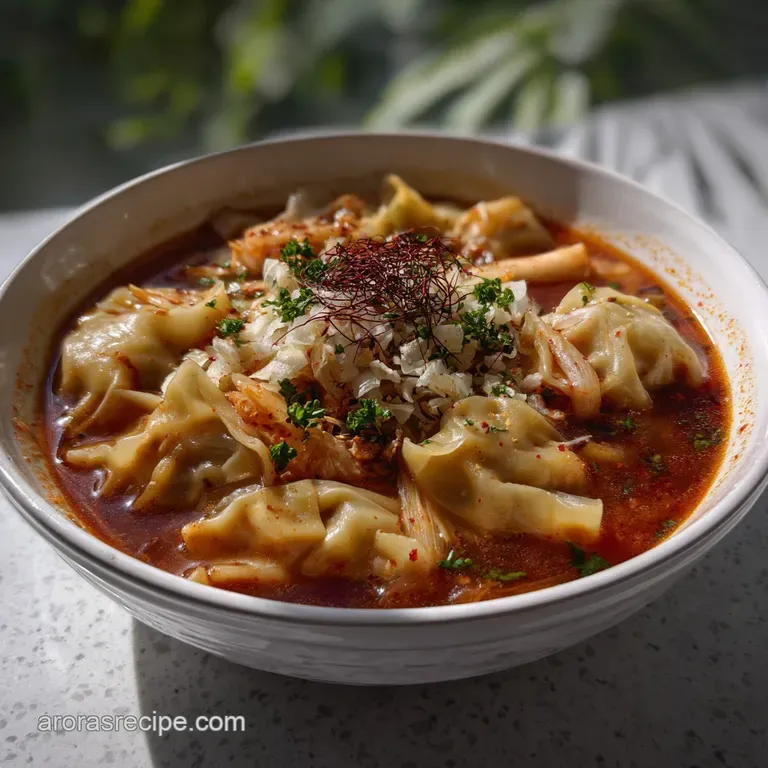
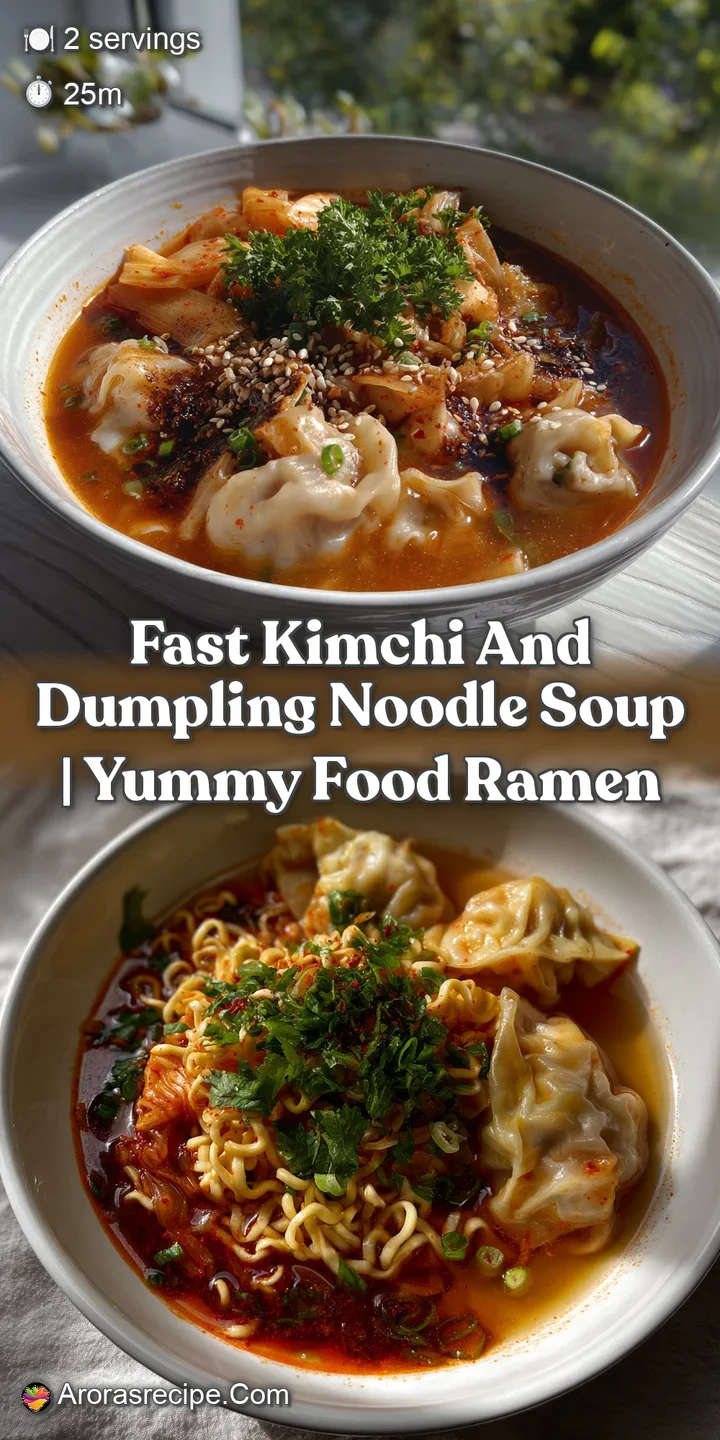
Kimchi and Dumpling Noodle Soup | Pungent & Unctuous Broth
- Effort/Time: Low-effort, 25 minutes total.
- Flavor Hook: Sharp, pungent, and unctuous with a spicy finish.
- Perfect for: Cold-weather recovery and weeknight-speed cravings.
- Unlocking the Depths of Fermented Flavor and Texture
- The Molecular Synergy of Acid and Fat
- Precision Timing and Yield Metrics
- The Alchemy of Umami: Selecting Your Elements
- Essential Tools for Thermal Efficiency
- Step-by-Step Thermal Assembly Protocol
- Troubleshooting the Soup Profile
- ⚗️ The Scaling Lab: Physics of Quantity
- Debunking Common Soup Myths
- Storage, Reheating, and Zero Waste
- Flavor Architecture: Creative Variations
- Final Assembly and Aesthetic Cues
- Recipe FAQs
- 📝 Recipe Card
Unlocking the Depths of Fermented Flavor and Texture
There is nothing more frustrating than spending money on high-quality frozen mandu and fresh pork only to have them submerged in a broth that tastes like watered down chili flakes.
I’ve seen countless home cooks toss these ingredients into a pot, resulting in a thin, one-dimensional liquid where the dumplings turn into soggy, water logged bags of mush. This failure usually stems from a lack of "base building," where the aromatics aren't properly bloomed in fat, leaving the soup tasting metallic and hollow rather than deeply integrated.
I remember my first attempt at a Kimchi and Dumpling Noodle Soup years ago; I used "fresh" kimchi that hadn't fermented enough. The result was a bowl of hot cabbage water that lacked any soul or punch.
I ended up dumping the whole batch because it lacked that essential "funk" and acidity required to balance the starch of the noodles. It was a humble reminder that in Korean inspired cooking, the age of your ingredients dictates the complexity of your final dish.
The secret to a world class Kimchi and Dumpling Noodle Soup lies in the science of the Maillard reaction and the emulsification of kimchi juices. By searing the pork tenderloin and sautéing the kimchi before adding the liquid, we create a complex foundation of sugars and amino acids.
This process, combined with the starch release from the mandu, transforms a simple broth into a velvety, full bodied experience that coats the noodles rather than just wetting them.
The Molecular Synergy of Acid and Fat
- Maillard Induced Umami: Searing the 1/2 cup pork tenderloin in neutral oil creates melanoidins, which provide the savory "backbone" of the soup.
- Lactic Acid Brightness: The 2 tbsp kimchi juice acts as a surfactant, breaking down heavy fats to create a clean, sharp finish on the palate.
- Starch Gelatinization: As the 200 g noodles and mandu simmer, they release amylose into the broth, thickening the liquid into a silky consistency.
- Capsaicin Extraction: Sautéing 1 tsp gochugaru in oil (fat-soluble) ensures the heat is distributed evenly rather than floating in bitter clumps on the surface.
Precision Timing and Yield Metrics
Understanding the logistics of the Kimchi and Dumpling Noodle Soup ensures every component reaches peak texture simultaneously.
- Prep Time: 10 minutes
- Cook Time: 15 minutes
- Total Time: 25 minutes
- Yield: 2 servings
The Alchemy of Umami: Selecting Your Elements
Selecting the right components for your Kimchi and Dumpling Noodle Soup is the difference between a mid-day snack and a masterclass meal. For the pork, I highly recommend using a lean but tender cut to ensure it cooks through the 15 minutes without becoming rubbery. If you are a fan of rich, creamy bases like my Chicken Gnocchi Soup recipe, you’ll appreciate how the dumplings in this dish provide a similar pillowy satisfaction.
Ingredient Chemistry Breakdown
| Ingredient | Chemical/Physical Role (Science) | The Pro Secret (Why This Matters) |
|---|---|---|
| Well fermented Kimchi | High lactic acid and microbial complexity | Provides the "tang" that cuts through the starch and pork fat. |
| Pork Tenderloin | Myofibrillar protein denaturation | Slicing thin ensures rapid cooking while maintaining a tender, non-chewy texture. |
| Frozen Mandu | Thermal mass and starch release | Acts as a thickener for the broth while the filling steams inside the wrapper. |
| Gochugaru | Fat-soluble flavor compounds | Sautéing in oil first unlocks the smoky aroma that water cannot extract. |
The Components List:
- 1 tbsp Grapeseed Oil: Why this? High smoke point prevents acrid flavors during the initial pork sear.
- 2 cloves Garlic, minced: Adds sulfurous depth to the aromatic base.
- 1 tsp Fresh Ginger, grated: Why this? Contains zingibain, which can lightly tenderize the pork surface.
- 2 Green Onions: Whites for the sauté; greens for the fresh, sharp finish.
- 1/2 cup Pork Tenderloin, thinly sliced: Provides the primary protein and savory fat.
- 1 cup Well fermented Kimchi, chopped: The older and "funkier," the better.
- 2 tbsp Kimchi juice: Concentrated acid and salt for instant seasoning.
- 4 cups Low-sodium Chicken Broth: Why this? Control the sodium levels; you can always add salt, but you can't remove it.
- 1 tbsp Lee Kum Kee Soy Sauce: Adds fermented saltiness and dark color.
- 1 tsp Gochugaru (Korean chili flakes): Provides the signature red hue and gentle heat.
- 1 tsp Toasted Sesame Oil: Why this? High aromatic volatility; add at the end to prevent the flavor from evaporating.
- 10 Frozen Bibigo Mandu (pork or vegetable): These hold their shape better during the boil.
- 200 g Fresh Ramen Noodles: Why this? High alkaline content creates a springy, "snap" texture.
- 2 cups Fresh Baby Spinach: Wilts instantly for a nutritional and color contrast.
- 1 tsp Toasted Sesame Seeds: Adds a subtle crunch and nutty finish.
Essential Tools for Thermal Efficiency
- Lodge 3 quart Enameled Cast Iron Dutch Oven: The heavy bottom prevents the kimchi sugars from scorching during the sauté phase.
- Microplane Grater: Essential for turning the ginger into a paste, ensuring even distribution.
- Global G-2 Chef's Knife: A sharp blade is required to slice the pork tenderloin into translucent, even strips.
- Spider Strainer: Best for lifting the mandu and noodles without damaging the delicate wrappers.
step-by-step Thermal Assembly Protocol
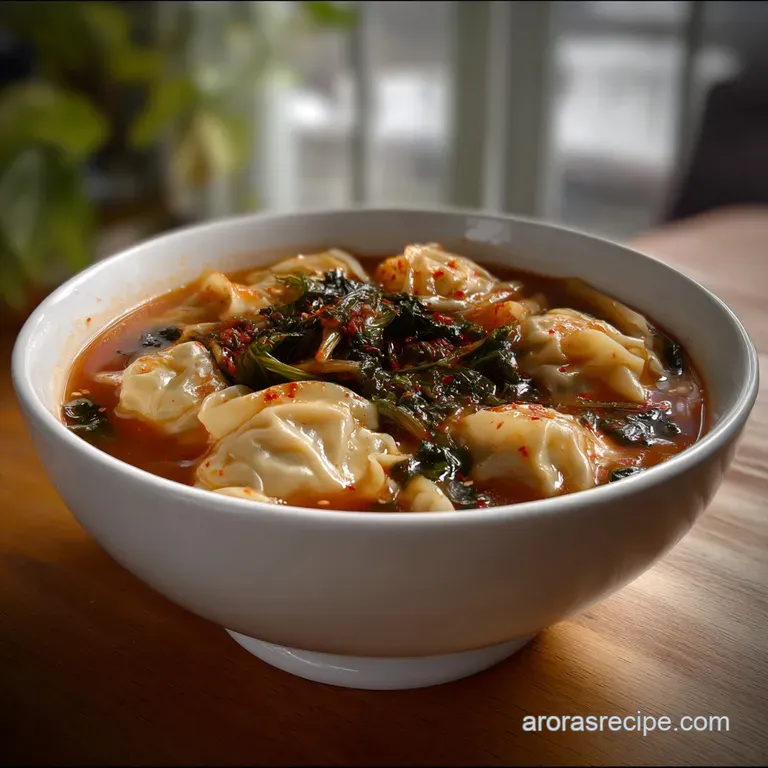
Follow these steps with precision to ensure your Kimchi and Dumpling Noodle Soup achieves a professional balance of texture and heat.
- Heat the 1 tbsp neutral oil in a Dutch oven over medium high heat until it shimmers and wisps of smoke appear.
- Sear the sliced pork tenderloin for 2 minutes until the edges turn mahogany and the sizzle intensifies. Note: This triggers the Maillard reaction for deep umami.
- Add the minced garlic, ginger, and green onion whites, stirring for 1 minute until a nutty, pungent aroma fills the kitchen.
- Incorporate the chopped kimchi and gochugaru, sautéing for 3 minutes until the kimchi edges translucent and the oil turns a vibrant red.
- Deglaze the pot with 4 cups chicken broth and 2 tbsp kimchi juice, scraping the bottom until all browned bits (fond) are dissolved into the liquid.
- Season with 1 tbsp soy sauce and bring to a rolling boil until large bubbles break the surface rapidly.
- Submerge the 10 frozen mandu into the boiling liquid and cook for 5 minutes until they float and the skins appear translucent.
- Drop in the 200 g noodles and cook for 3 minutes (or per package instructions) until they are "al dente" and spring back when pulled.
- Fold in the 2 cups baby spinach and 1 tsp sesame oil, stirring for 30 seconds until the greens wilt into a deep emerald.
- Garnish with sesame seeds and green onion tops until the surface is speckled with texture.
Troubleshooting the Soup Profile
Why Your Broth Tastes Flat
If the soup lacks "punch," it is likely due to low acidity or under sautéed aromatics. Much like the flavor building required for a Steak and Mushrooms recipe, the initial sear determines the final depth.
| Problem | Root Cause | The Fix | Pro Protocol |
|---|---|---|---|
| Mushy Dumplings | Over boiling or "soaking" | Add mandu only when broth is at a full boil. | Pull the pot off heat the moment they float. |
| Bitter Broth | Burnt gochugaru or garlic | Sauté spices for no more than 60 seconds. | If burnt, discard and restart; bitterness cannot be masked. |
| Watery Consistency | Not enough starch release | Increase heat to a vigorous boil during noodle addition. | Mash one dumpling into the broth to release its filling as a thickener. |
⚗️ The Scaling Lab: Physics of Quantity
When doubling this Kimchi and Dumpling Noodle Soup for a crowd, you cannot simply double everything and expect the same result.
- The Evaporation Paradox: If using a wider pot, you have more surface area. Reduce the chicken broth by 10% to account for the increased evaporation rate, or your soup will taste diluted.
- Pan Crowding (The Sizzle Killer): Doubling the 1/2 cup pork in a single pot will drop the oil temperature instantly. This causes the meat to steam in its own juices (turning gray) rather than searing. Mandatory instruction: Sear the pork in two separate batches.
- Thermal Mass Recovery: Adding 20 frozen mandu instead of 10 will kill the boil. It may take 3 4 minutes just to return to temperature. Fix: Let the frozen dumplings sit at room temperature for 10 minutes before adding to minimize thermal shock.
- Flavor Saturation: Scale the gochugaru and ginger to 1.5x, not 2x. These aromatics become exponentially more potent in larger volumes of liquid.
Debunking Common Soup Myths
- Myth: You must thaw frozen dumplings before cooking.
Truth: Cooking from frozen preserves the structural integrity of the wrapper. Thawing leads to a "gummy" exterior and structural collapse.
Myth: "Fresh" kimchi is better for soup.
- Truth: Fresh kimchi lacks the lactic acid and fermented sugars needed for depth. Only aged, sour kimchi provides the necessary chemical complexity for a traditional Dumpling Noodle Soup.
Storage, Reheating, and Zero Waste
Preservation Protocols
- Fridge: Store in an airtight container for up to 2 days. Warning: Noodles will continue to absorb liquid and become "bloated."
- Freezing: Do not freeze the assembled soup. However, you can freeze the kimchi pork broth base (without noodles/dumplings) for up to 3 months.
- Reheating: Heat on the stovetop over medium heat. Add a splash of water or broth to loosen the consistency as the starch will have thickened it overnight.
Zero Waste Philosophy
- Kimchi Scraps?Transform: Save the very bottom of the jar (the "sludge"). Science: This is a probiotic and umami goldmine; whisk it into mayo for a spicy sandwich spread.
- Spinach Stems?Transform: Finely chop and sauté with the garlic. Science: Stems contain more cellulose/fiber and provide a distinct crunch that leaves don't have.
Flavor Architecture: Creative Variations
While the Kimchi and Dumpling Noodle Soup is a complete meal, you can adjust the profile based on dietary needs or available pantry staples. If you enjoy the spice profile here, you might also find the flavor complexity of a Crock Pot Jambalaya recipe appealing, as both rely on a "holy trinity" of aromatics.
Kimchi Ramen Noodle Soup Recipe (Twist)
Substitute the fresh noodles for instant ramen cakes. Discard the flavor packet and use the broth method described above. The crimped texture of ramen noodles creates more surface area for the kimchi juice to cling to, providing a more intense spice experience per bite.
Simple Kimchi Soup Recipe (Diet Swap)
For a lower carb version, omit the noodles and double the baby spinach and pork. This focuses the dish on the Kimchi Noodle Soup with Wilted Greens aspect, highlighting the protein and fermented vegetables without the heavy starch load.
Final Assembly and Aesthetic Cues
When serving your Kimchi and Dumpling Noodle Soup, presentation is as much about temperature as it is about visuals. Use pre-warmed ceramic bowls to maintain the 180°F (82°C) serving temperature.
The contrast of the bright red broth against the deep emerald spinach and the pale, translucent dumplings creates a visual promise of the flavors to come.
Ensure each bowl gets exactly five mandu and an even distribution of the pork slices. The first bite should be a combination of the springy noodles and the sharp, acidic broth, followed by the velvety, rich center of a dumpling.
This is a meal designed for speed, but built on the slow, scientific process of fermentation. Enjoy the sizzle, the heat, and the restorative power of a bowl done right. Keep cooking, keep experimenting, and trust the science behind the steam.
Recipe FAQs
What is kimchi dumplings?
Kimchi dumplings (Mandu) are pockets of dough filled with ground meat and aged, chopped kimchi. The fermented cabbage provides a signature sour spicy tang that contrasts the savory filling. This combination cuts through the richness of the soup broth beautifully.
Can I use low-sodium broth if I use regular kimchi?
Yes, always use low-sodium broth for control. Well fermented kimchi already contains significant sodium and lactic acid, requiring less added salt later. You must control the sodium input from the broth to prevent the final soup from tasting aggressively salty.
Why did my noodles turn mushy immediately?
Overcooking the high starch ramen noodles caused cellular breakdown. Ramen noodles absorb liquid rapidly due to their high alkaline content, gelatinizing the starch quickly if left simmering too long.
- Add noodles last
- Cook only to al dente
- Remove pan from heat immediately after adding spinach
Should I use fresh or aged kimchi?
Aged, very sour kimchi provides superior flavor depth. Fresh kimchi lacks the necessary lactic acid concentration, resulting in a flat, watery broth lacking necessary cutting acidity. If you are exploring fermentation techniques, mastering this acid balance is key, similar to how we manage acid balance in our Dashi Soup Stock How to Make UmamiRich Japanese Broth in 15 Minutes.
Is this recipe suitable for batch cooking and freezing?
Freeze the base broth only, omitting noodles and dumplings. Noodles and dumplings suffer texture degradation during freezing and thawing, becoming mushy or tough. Separating these components allows the broth base to retain its optimal viscosity.
Myth: You should sauté the kimchi briefly just for color.
Myth: You should sauté the kimchi briefly just for color. Reality: Sautéing the kimchi for 3 minutes in fat unlocks fat-soluble flavor compounds, especially capsaicin from the chili paste. This deepens the umami profile beyond what water alone can achieve.
Comparison: Pork Tenderloin vs. Pork Belly for this Soup
Pork Tenderloin for fast cooking precision. Tenderloin remains lean and tender when seared quickly, integrating easily into a 25-minute soup timeline without excessive rendering time.
Pork belly requires a longer simmer to render its substantial fat reserves, fundamentally changing the recipe’s texture and required cooking duration.
Kimchi Dumpling Noodle Soup
Ingredients:
Instructions:
Nutrition Facts:
| Calories | 724 kcal |
|---|---|
| Protein | 33 g |
| Fat | 21.5 g |
| Carbs | 94 g |
| Fiber | 5.5 g |
| Sugar | 6 g |
| Sodium | 1940 mg |
