Parmesan Roasted Potatoes Recipe
- Time: Active 10 minutes, Passive 25 minutes, Total 35 minutes
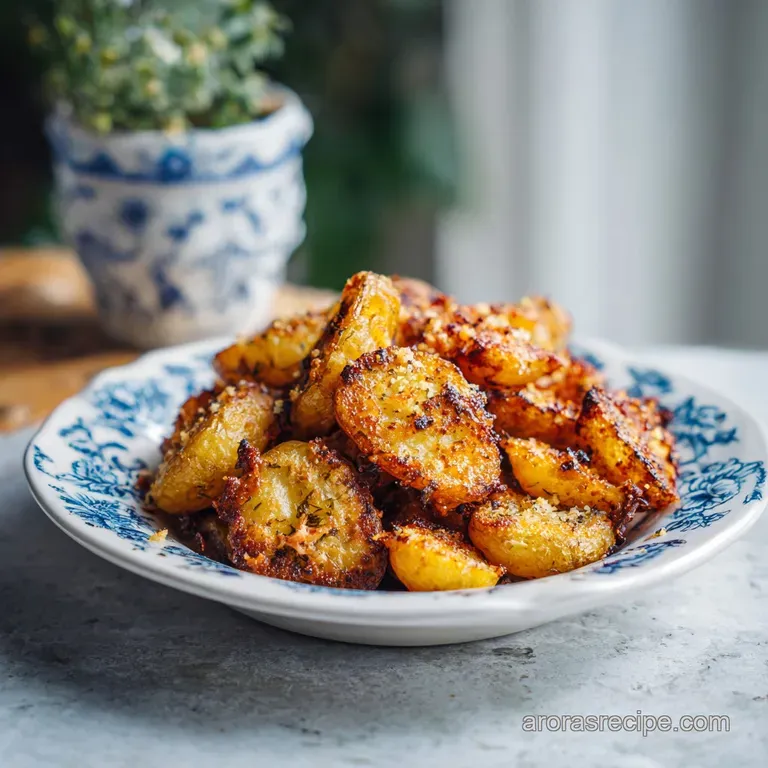
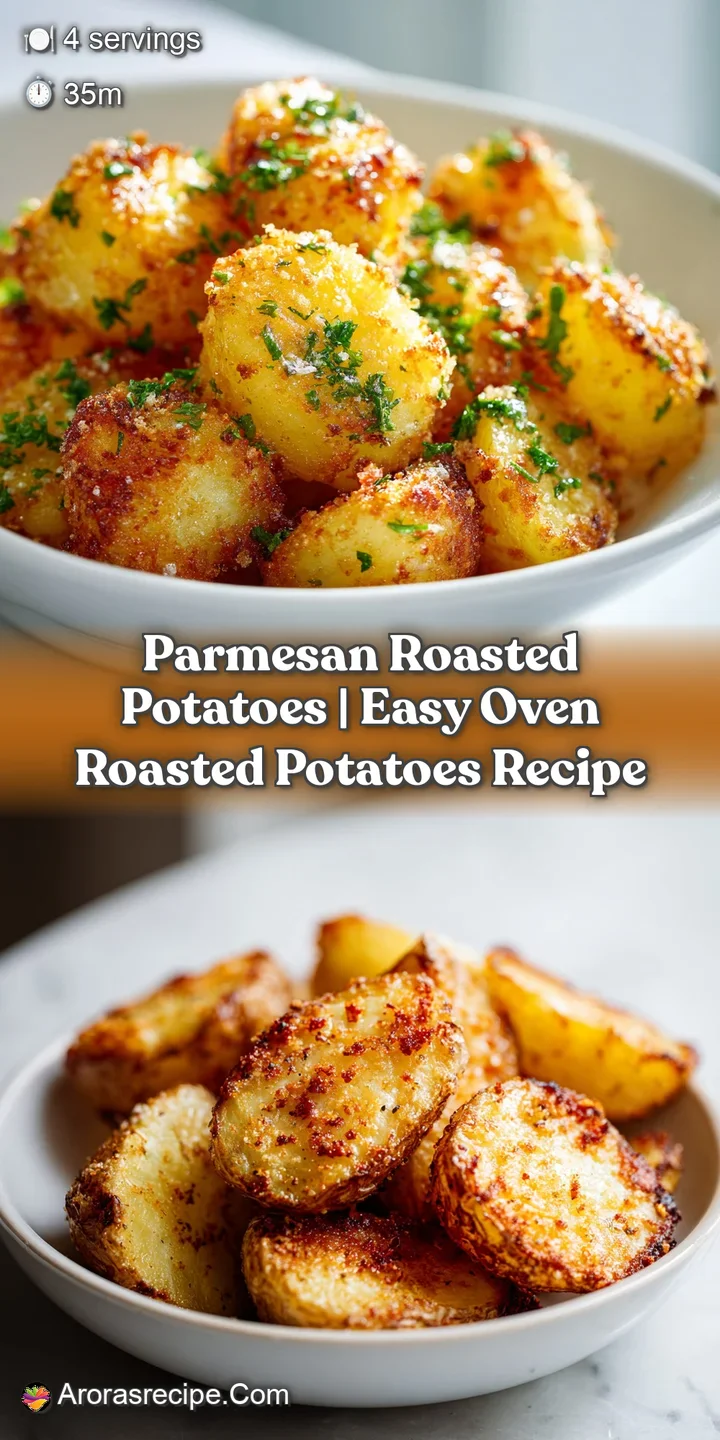
- Flavor/Texture Hook: Shatter crisp parmesan crust with a buttery, velvety interior
- Perfect for: Stress free weeknight dinners or a crowd-pleasing holiday side dish
- Master the Best Crispy Parmesan Roasted Potatoes
- The Science of the Lace Crust
- Essential Specs for Success
- Understanding Your Savory Components
- Selecting the Best Ingredients
- Necessary Tools for Results
- Steps for a Perfect Roast
- Troubleshooting for a Crispy Finish
- Adjusting Batch Sizes for Crowds
- Flavor Twists and Easy Swaps
- Debunking Common Roasting Myths
- Storage and Zero Waste Tips
- Perfect Pairing Ideas
- Parmesan Roasted Potatoes FAQs
- 📝 Recipe Card
Master the Best Crispy Parmesan Roasted Potatoes
The first time I heard that specific "crack" of a fork hitting a perfectly roasted potato, I knew my kitchen game had changed forever. There is a certain magic that happens when high heat meets a sheet pan dusted with cheese, and the aroma of toasted garlic and oregano begins to waft through the house.
It’s that deep, nutty scent that brings everyone wandering into the kitchen, leaning over the counter to see when the timer will finally go off.
I spent years making soggy, sad potatoes that stuck to the pan or came out limp and uninspired. I realized the mistake was treating the cheese like a garnish rather than a structural component.
When you get this right, the parmesan doesn't just sit on top; it creates a lacy, salty foundation that grips the potato, giving you a crunch that sounds like a dry leaf crunching under a boot in a Tennessee autumn.
We’re going for a texture that is shatter crisp on the bottom and almost creamy in the center. This isn't just another side dish; it’s the kind of comfort food that usually disappears before the main course even hits the table.
I’ve learned the hard way that you can’t rush the crust, but once you see those golden brown edges peeking out, you’ll know you’ve hit the jackpot.
The Science of the Lace Crust
Protein Cohesion: The proteins in grated parmesan dehydrate rapidly in the oven, bonding with the potato's surface starch to create a rigid, crispy lattice.
Maillard Reaction: The combination of dairy solids and heat produces hundreds of flavor compounds, resulting in that distinct nutty, savory profile.
Starch Gelatinization: High heat turns the internal potato moisture into steam, breaking down starch granules into a velvety, mash like consistency inside the skin.
| Fresh Approach | Shortcut Method | Texture Impact | Kitchen Time |
|---|---|---|---|
| Freshly grated block Parmesan | Pre shaken canned cheese | Fresh yields a lacy, "shatter" crunch; canned is sandy | Adds 3 minutes |
| Hand chopped garlic cloves | high-quality garlic powder | Powder distributes more evenly for a consistent crust | Saves 5 minutes |
| Soaking potatoes 20 mins | Straight to the roasting pan | Soaking removes surface starch for a cleaner sear | Adds 20 minutes |
While many folks think fresh is always better, I’ve found that the fine texture of garlic powder actually works wonders here. It mixes with the cheese to create a "paste" that coats every nook and cranny. If you use fresh garlic, it often burns at the high temperatures needed to crisp the cheese, leaving a bitter taste. For another great texture experience, you might want to try my Roasted Red Potatoes recipe which uses a slightly different seasoning blend.
Essential Specs for Success
Achieving the legendary crunch requires hitting specific numerical benchmarks. I’ve ruined enough batches to know that "eyeballing it" is a recipe for disaster.
- Temperature Check: Your oven must be at a steady 200°C (400°F). Anything lower and the cheese melts into a puddle; anything higher and the paprika scorches.
- The Weight Factor: Use exactly 680g (1.5 lbs) of baby Yukon Golds. If you overcrowd the pan with more, you’ll steam the potatoes instead of roasting them.
- The Press: When placing the potatoes, apply roughly 2 lbs of downward pressure with your palm to ensure the flesh makes direct contact with the cheese oil mixture.
Understanding Your Savory Components
| Ingredient | Science Role | Pro Secret |
|---|---|---|
| Baby Yukon Gold Potatoes | High starch, low moisture | Their thin skins don't require peeling and crisp up instantly |
| Grated Parmesan Cheese | Binding agent and fat source | Use the "sandy" grated version for the most even coverage |
| Smoked Paprika | Color and depth | Provides a visual "doneness" cue while adding a campfire hum |
| Extra Virgin Olive Oil | Heat conductor | Ensures the spices don't burn before the cheese sets |
Selecting the Best Ingredients
- 1.5 lbs Baby Yukon Gold or Red potatoes: I prefer Yukons for their buttery flavor. Why this? They hold their shape and have a natural creaminess that contrasts with the crust.
- 2 tbsp Extra virgin olive oil: Use a brand you’d eat on bread. Why this? It carries the fat soluble flavors of the spices into the potato flesh.
- 0.5 tsp Sea salt: Fine grain is best. Why this? It dissolves into the oil paste better than chunky kosher salt.
- 0.5 cup Grated Parmesan cheese: The hard, dry kind. Why this? This is the "glue" that creates the iconic shatter crisp bottom.
- 1 tsp Garlic powder: Standard pantry staple. Why this? It provides a punchy flavor without the risk of burning fresh cloves.
- 0.5 tsp Smoked paprika: Look for pimentón. Why this? It gives the potatoes a gorgeous mahogany hue.
- 0.5 tsp Dried oregano: Earthy and aromatic. Why this? It cuts through the richness of the cheese with a herbal note.
- 0.25 tsp Cracked black pepper: Freshly ground if possible. Why this? The coarse bits add tiny pops of heat.
Necessary Tools for Results
You don't need a high end kitchen to pull this off, but the right pan makes a world of difference. I’m a big fan of using a heavy rimmed baking sheet. A thin, cheap pan will warp at 200°C, causing your oil and cheese to pool in one corner.
I also recommend a sharp chef's knife. Cutting the baby potatoes into perfectly even halves is crucial. If some are chunks and others are slivers, the small ones will turn to charcoal before the big ones are even soft. If you find yourself enjoying the process of prepping these, you'll definitely love the simplicity of my Sweet Potato Casserole recipe when the holidays roll around.
Chef's Tip: Freeze your block of parmesan for 10 minutes before grating it. This makes it firmer and prevents it from turning into a clump, allowing for a much more even "cheese bed" on the tray.
Steps for a Perfect Roast
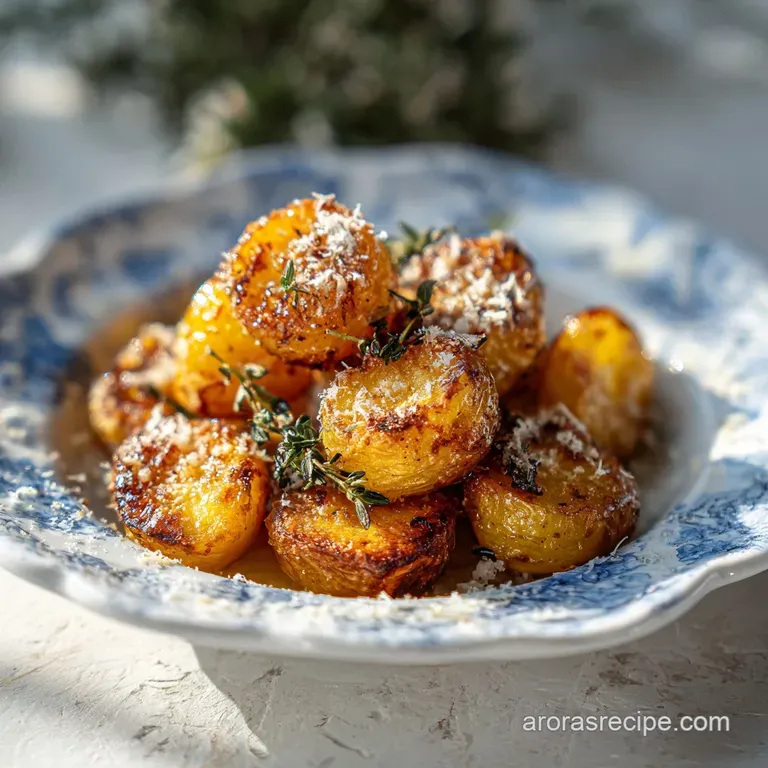
- Preheat oven. Set your oven to 200°C and place the rack in the lower middle position. Note: This ensures the bottom of the pan gets the most direct heat for a better crust.
- Wash and dry. Clean the 680g of baby potatoes and pat them bone dry with a clean kitchen towel. Until the skins feel tacky, not wet.
- Halve the potatoes. Slice each potato lengthwise to maximize the surface area for the cheese.
- Whisk the paste. In a small bowl, combine the olive oil, parmesan, garlic powder, paprika, oregano, salt, and pepper. Until it forms a thick, gritty slurry.
- Spread the mixture. Pour the slurry onto your baking sheet and spread it into an even layer with a spatula.
- Position the spuds. Place each potato half cut side down directly onto the cheese mixture. Until the entire tray is tiled with potatoes.
- Apply pressure. Give each potato a firm press to ensure the oil cheese paste is trapped underneath the flesh.
- Roast the batch. Slide the tray into the oven for 25 minutes. Until the edges look dark golden and the cheese is bubbling.
- The crucial rest. Remove the pan from the oven and let it sit for 5 minutes. Note: This allows the cheese to firm up and release naturally from the metal.
- Flip and serve. Use a thin metal spatula to lift the potatoes, ensuring the crust stays attached to the spud.
Troubleshooting for a Crispy Finish
The Soggy Bottom Syndrome
There’s nothing worse than expecting a crunch and getting a mushy, oil soaked potato. This usually happens because the potatoes weren't dry enough when they went into the oven. Water is the enemy of a good roast; it creates steam, and steam prevents the Maillard reaction.
Always use a lint free towel to get every drop of moisture off those skins.
The Burnt Garlic Bitterness
If your kitchen smells like scorched tires, you likely swapped the garlic powder for fresh minced garlic or put the pan too close to the heating element. Fresh garlic has a high sugar content and burns at a much lower temperature than the cheese takes to crisp. Stick with the powder for this specific method.
The Cheese Ghost
This is when you go to lift the potato and the beautiful crust stays stuck to the pan like a ghost of what could have been. This is almost always caused by impatience. You must let the pan rest for at least 5 minutes. As the cheese cools slightly, it contracts and pulls away from the metal.
| Problem | Root Cause | Solution |
|---|---|---|
| Cheese is pale and soft | Oven temperature too low | Crank it to 200°C and move the rack lower |
| Crust is bitter | Burnt spices/paprika | Decrease cook time or check oven calibration |
| Interior is hard | Potatoes were too large | Cut them into smaller, uniform halves |
Common Mistakes Checklist
- ✓ Pat potatoes completely dry before slicing (prevents steaming)
- ✓ Don't use a silicone mat - the cheese needs direct metal contact for the best sear
- ✓ Spread the cheese paste in a thin, even layer rather than big clumps
- ✓ Resist the urge to peek; opening the oven door drops the temperature significantly
- ✓ Use a metal spatula to scrape the potatoes up; plastic is too thick to get under the crust
Adjusting Batch Sizes for Crowds
Scaling this recipe is fairly straightforward, but there are a few traps to avoid. If you're cooking for a big Nashville style family gathering and want to double the recipe, don't just pile everything onto one pan.
Downscaling (1-2 people): Use a small toaster oven tray or a cast iron skillet. Reduce the cook time by about 5 minutes, as smaller pans heat up faster. You can use half an egg white in the cheese mixture if you want an extra firm bind for a smaller batch.
Upscaling (8+ people): Use two separate baking sheets. Do not try to squeeze 3 lbs of potatoes onto one tray. If the potatoes are touching sides, they will steam each other, and you’ll lose that lacy edge.
Rotate the pans halfway through the 25 minutes to ensure both sheets get equal heat. For the spices, only increase them to 1.5x rather than a full 2x to keep the salt levels balanced.
Flavor Twists and Easy Swaps
| Original Ingredient | Substitute | Why It Works |
|---|---|---|
| Parmesan Cheese | Nutritional Yeast | Adds a similar nutty, cheesy funk. Note: Great for vegan adaptations |
| Smoked Paprika | Cayenne Pepper | Increases the heat significantly. Note: Use only 1/8 tsp as it's much stronger |
| Extra Virgin Olive Oil | Ghee (clarified butter) | Higher smoke point and adds a rich, movie theater popcorn finish |
If you're feeling adventurous, you can swap the oregano for dried rosemary and add a bit of lemon zest to the oil paste. This gives it a bright, Mediterranean vibe that pairs beautifully with roasted chicken. But honestly, don't even bother with low-fat cheese.
It doesn't have the fat content required to fry the potato surface, and you'll end up with a rubbery mess.
Debunking Common Roasting Myths
One myth I hear all the time is that you need to boil the potatoes first. While parboiling is great for thick cut fries, for these baby Yukons, it’s a waste of time. The high moisture content of a boiled potato actually makes it harder to get that fused cheese crust.
The raw potato's starch is what helps the cheese stick.
Another misconception is that you need to flip the potatoes halfway through. If you flip them, you break the seal between the cheese and the potato flesh. The whole point of this recipe is the "face down" method. Let them sit, let them sizzle, and let the oven do the work.
Storage and Zero Waste Tips
Storage: These are best eaten immediately, but if you have leftovers, they’ll keep in the fridge for up to 3 days. Do not microwave them! They will turn into rubber. Instead, throw them back into a hot pan or an air fryer for 4 minutes to bring that crunch back to life.
Freezing: You can freeze these for up to 2 months. To reheat, go straight from the freezer to a 200°C oven for 10-12 minutes. They won't be quite as shatter crisp as day one, but they're still miles better than store-bought frozen spuds.
Zero Waste: Don't toss the tiny potato scraps or the leftover bits of cheese crust on the pan. I like to toss them into a morning omelet or sprinkle them over a salad like croutons. If you have extra oil paste, it makes an incredible base for a quick garlic bread.
Perfect Pairing Ideas
Right then, let's talk about what to serve alongside these beauties. Since these Parmesan Roasted Potatoes are so savory and rich, they need something with a bit of acid or a clean protein to balance the plate. I usually serve them with a simple grilled lemon herb chicken or a juicy steak.
If you're looking for a vegetable side that won't compete for oven space, a fresh green salad with a sharp vinaigrette is the way to go. The acidity cuts right through the parmesan fat. For a full comfort meal, you might even pair these with a creamy vegetable dish. Check out how I balance textures in my Roasted Sweet Potatoes recipe for more inspiration on building a cohesive menu. Trust me, once you master this potato crust, it becomes a permanent resident in your weekly rotation. Let's crack on and get roasting!
Parmesan Roasted Potatoes FAQs
Can I substitute regular potatoes for Yukon Golds?
No, stick with Yukon Golds or small Reds. Their low moisture and thin skin are crucial for achieving the crispy bottom crust without pre-boiling.
How to ensure the parmesan crust doesn't stick to the pan?
Allow the pan to rest for five minutes after removing from the oven. The slight cooling contracts the cheese, allowing it to release cleanly from the metal surface.
What is the ideal oven temperature for this recipe?
Preheat the oven to exactly 200°C (400°F). Too low, and the cheese melts into a soft puddle; too high, and the spices will scorch before the potato cooks through.
Is it necessary to press the potatoes cut-side down onto the cheese?
Yes, firm pressure is required for adhesion. You must ensure direct, even contact between the starch on the potato flesh and the cheese mixture to form the cohesive, lacy layer.
How to prevent the center of the potato from staying hard?
Ensure all potato halves are cut to a uniform size. Uneven pieces lead to varied cooking times, leaving the larger pieces undercooked; consistency is key for even texture.
Can I use a silicone baking mat instead of the direct metal tray?
No, using a silicone mat will prevent the crust from setting properly. The cheese needs direct contact with the hot metal to dehydrate rapidly and achieve that desired shatter texture, unlike when preparing something like a Ground Turkey Sweet recipe.
How do I revive the crispness if I have leftovers?
Reheat them in a hot oven or air fryer, not the microwave. A quick blast at 200°C for about 4 to 5 minutes will re-crisp the exterior, unlike microwaving which introduces too much steam.
Parmesan Roasted Potatoes
Ingredients:
Instructions:
Nutrition Facts:
| Calories | 247 kcal |
|---|---|
| Protein | 8.2 g |
| Fat | 10.4 g |
| Carbs | 31.2 g |
| Fiber | 3.8 g |
| Sugar | 1.4 g |
| Sodium | 488 mg |
