Thanksgiving Stuffing: Proper Sourdough, Sausage, and Sage Casserole
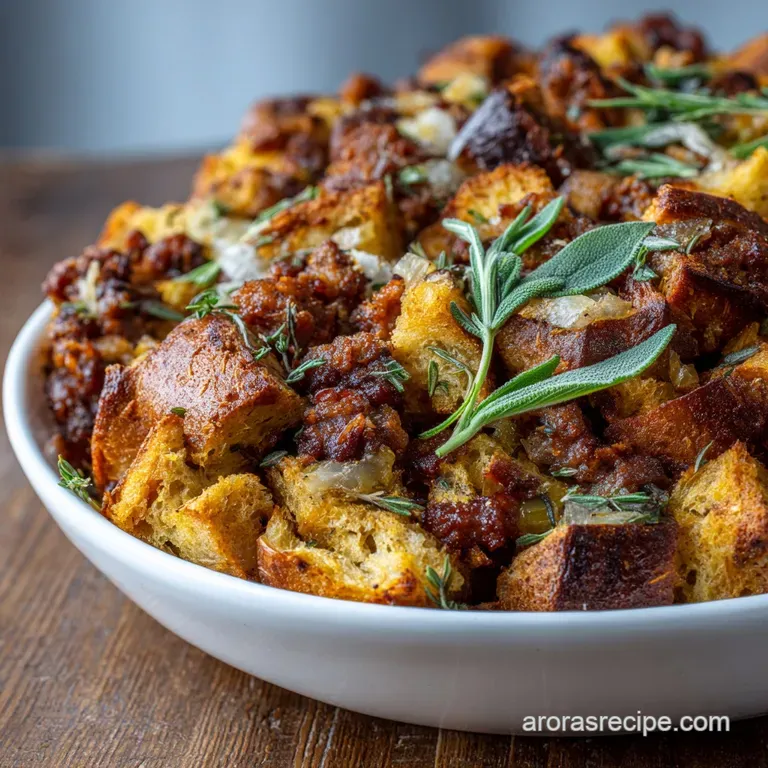
- The Definitive Thanksgiving Stuffing Recipe: Sourdough, Sage, and Sausage
- Mastering the Stuffing Science: Achieving Ideal Texture and Depth
- Essential Ingredients for the Proper Stuffing
- How to Make Sourdough, Sage, and Sausage Stuffing (Step-by-Step Method)
- Troubleshooting and Expert Secrets for Moist Stuffing
- Make-Ahead Strategies and Safe Storage
- Serving the King of Thanksgiving Stuffing
- Recipe FAQs
- 📝 Recipe Card
The Definitive Thanksgiving Stuffing Recipe: Sourdough, Sage, and Sausage
You know that smell that instantly means the holidays are here? It’s the deep, savoury perfume of sage and browned sausage mixing with sweet, softened onions wafting from the oven.
This homemade Thanksgiving dressing is crispy on the outside, thanks to the sourdough base, but remains impossibly moist and rich inside. The texture contrast is absolute perfection.
Honestly, the Thanksgiving meal is stressful enough without fighting a dry turkey or a soggy, flavourless side dish. This recipe is your lifesaver, delivering maximum flavour with surprisingly little effort.
It utilizes ingredients you probably already have, proving that the best moist stuffing recipes for Thanksgiving don't need fancy additions they just need technique.
Forget everything you thought you knew about traditional stuffing; we are building serious flavour from the ground up. Ready to banish the bland box mix forever and make the absolute King of Stuffings? Let’s crack on.
Mastering the Stuffing Science: Achieving Ideal Texture and Depth
Why This Stuffing Earned the Title of 'King'
Stuffing fails when people skip the crucial first steps. This recipe guarantees success because we focus on structure and fat content. We use enough butter and sausage fat to build richness, meaning every single cube of bread is coated in flavour before the stock even touches it. That’s the secret.
Recipe Difficulty and Prep Time Overview
I categorize this as medium difficulty, mainly because drying the bread takes time, and you cannot rush the browning of the sausage. Active prep is around 30 minutes, which is super quick for the reward.
Trust me, spending the extra time getting the ingredients prepped correctly makes the mixing and baking feel like a total breeze.
The Sourdough Advantage: Achieving a Crisp Exterior
This is where many people go wrong, using soft sandwich bread that disintegrates instantly into mush. Sourdough is incredibly sturdy, and its open crumb structure means it absorbs all that beautiful butter and stock without collapsing.
When baked, those sturdy edges crisp up gorgeously, giving you that satisfying crunch.
Building the Flavor Base with Browned Sausage and Butter
The browned sausage does triple duty: it provides salt, texture, and rendered fat. We use that fat, combined with a full stick of butter, to sauté our aromatics. This process ensures the base of your homemade stuffing for turkey is rich and deeply savoury.
Skipping the browning step results in dull, pale flavours don’t do it!
Balancing Savory Notes with Fresh Apple and Sage
We aren't aiming for a sweet stuffing, but the addition of a finely diced Granny Smith apple is a game changer. The apple melts down and provides a subtle acidity that cuts through the intense richness of the sausage and butter.
Fresh sage is non-negotiable here; it gives that iconic Thanksgiving aroma that everyone craves.
Essential Ingredients for the Proper Stuffing
If you want this Thanksgiving Stuffing Recipe to sing, quality ingredients matter. Here are the core components and my favourite swaps if you’re in a pinch.
Why Sourdough Bread is Non-Negotiable (And How to Prep It)
Sourdough is the backbone of this recipe; its density means it holds its shape even when saturated with stock. If you don't have time to dry it overnight, you must use the oven method described below. Moist bread equals mushy stuffing.
| Ingredient | Viable Substitute | Notes |
|---|---|---|
| Sourdough Bread | Sturdy French Boule or Challah | Avoid thin sliced sandwich bread entirely. |
| Unsalted Butter | Salted Butter (adjust added salt) | Always better than margarine for flavour depth. |
| Pork Sausage | Mild Italian Sausage or Pancetta | If using pancetta, you might need to add a bit more stock as it tends to be leaner. |
| Granny Smith Apple | Diced Water Chestnuts | They provide the required crunch if you absolutely hate apples in savoury dishes. |
Choosing the Right Sausage: Fat Content Matters
I prefer a mild breakfast sausage or a proper English sausage meat. Why? They have a higher fat content than lean turkey sausage. That rendered fat is essential for carrying the herb and sage flavour throughout the whole stuffing casserole .
The Power Duo: Fresh Sage vs. Dried
I cannot stress this enough: use fresh herbs. Dried sage is dusty and flat. We need that bright, intense, slightly peppery flavour that only fresh, finely chopped sage provides. If you absolutely must use dried, use only 1 teaspoon, but prepare to be disappointed.
Stock Selection: Achieving Optimal Moisture
Use low-sodium chicken or turkey stock. If you use regular stock, your final dish will be too salty when combined with the sausage. Also, make sure it’s warm; warm stock absorbs into the bread far more effectively than cold stock does.
Chef's Note: I once tried to save time by skipping the apple. Big mistake. The resulting stuffing was heavy and rich, lacking the bright finish needed to balance the fat. Don't skip the apple!
How to Make Sourdough, Sage, and Sausage Stuffing (step-by-step Method)
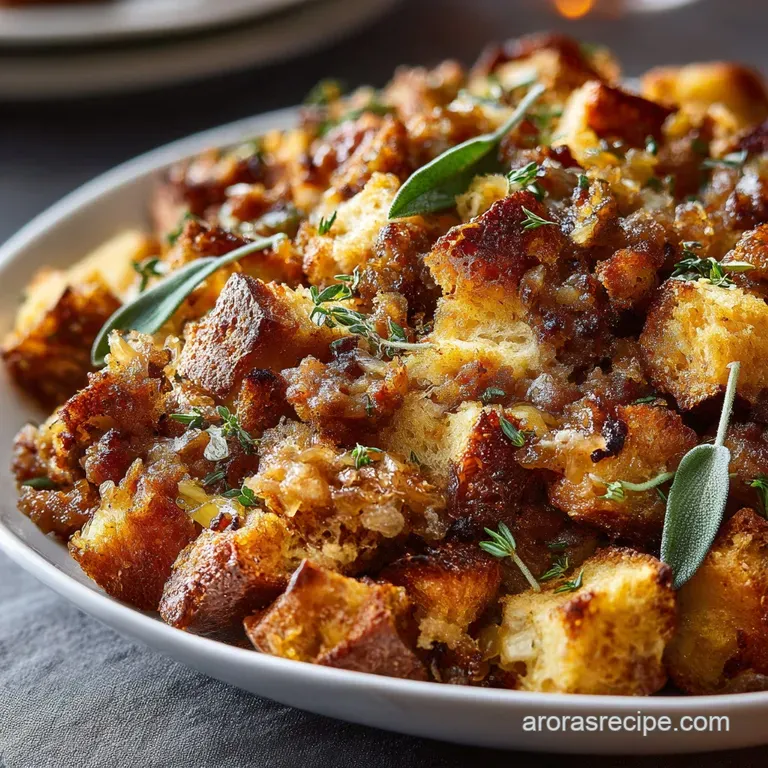
This is the process I use every single year for my family. Follow these steps for perfect results every time you make homemade Thanksgiving dressing.
Drying and Cubing the Bread Base Properly
First, cube your sourdough into even 1 inch pieces. Spread them out on a large baking sheet. Baking them at 300°F (150°C) for 15– 20 minutes, until they feel dry and crisp, is the fastest method.
Once dried, toss those cubes with melted butter this helps waterproof them slightly, controlling the final moisture level brilliantly.
Preparing the Aromatics and Browning the Sausage
Melt half the butter in your skillet and add the loose sausage. Break it up well and cook until it's deeply browned and crispy. Remove the sausage to the bread bowl, leaving the rendered fat behind. Now add the remaining butter, the celery, and the onion.
Cook these until they are soft and translucent, smelling sweet and fragrant this takes about six minutes.
Tossing the Bread for Maximum Absorption
Stir in the garlic, sage, thyme, and diced apple with the sautéed vegetables; cook for just two minutes until you get a lovely, nutty aroma. Pour this entire mixture, fat and all, over the dried bread cubes and sausage.
Toss gently to combine, ensuring the bread is evenly coated with the flavour base before adding the liquid.
The Two Essential Ways to Bake Your Stuffing (Casserole vs. In the Bird)
For safety and texture, I always prefer baking my Thanksgiving stuffing casserole in a separate dish. If you absolutely must bake it inside the bird, stuff it loosely right before roasting and ensure the internal temperature reaches 165°F (74°C).
The separate baking method (covered then uncovered) guarantees a crisp top and prevents any risk of foodborne illness.
Troubleshooting and Expert Secrets for Moist Stuffing
Avoiding the Dreaded Soggy Middle
People often fail because they pour in too much stock too fast. The bread should be moist, but not saturated it should still look chunky, not like oatmeal. The fix: Add the stock slowly, tossing after each addition, and stop just before you think it’s wet enough.
It absorbs more as it rests.
The Crucial Importance of Resting Time Before Baking
Once you mix the stuffing, let it sit for about 10– 15 minutes before transferring it to the baking dish. This rest allows the dried bread to fully absorb the liquid and the flavours to meld together.
Skipping this step often results in the bottom layer staying too dry while the top layer steams excessively.
Achieving the Golden Brown Crumb Topping
We bake covered first ( 30 minutes) to steam the interior and keep it moist. Then, we remove the foil for the final 15– 20 minutes. This allows direct heat to hit the top layer, transforming the soaked bread cubes into that desired golden brown, crispy crumb.
Don't pull it out until the top has some real colour!
make-ahead Strategies and Safe Storage
Safely Cooling and Reheating Leftover Stuffing
Baked stuffing will keep beautifully in the fridge for 3 to 4 days. If you've got lots of leftovers, you can always repurpose it into something quick and creamy, like a Chicken Stuffing Bake: The Ultimate Creamy, Crispy Comfort Casserole . When reheating, cover it loosely with foil and bake at 350°F (175°C) until heated through (about 20 minutes) to prevent drying out.
Freezing Raw vs. Cooked Stuffing for Future Use
This is great news for meal preppers: Stuffing freezes extremely well!
- Cooked: Cool completely, wrap tightly in foil, and place in a freezer bag. It keeps for up to 3 months. Thaw overnight in the fridge and reheat as described above.
- Unbaked (Raw): You can assemble the entire recipe (Steps 1 3) up to 2 months ahead, placing the mixture in the greased baking dish, covering it tightly, and freezing. Thaw overnight and bake as directed, though you may need an extra 5– 10 minutes of covered baking time.
Serving the King of Thanksgiving Stuffing
Sauces and Gravies that Complement Sage and Sausage
A rich, proper pan gravy made from the turkey drippings is mandatory. The deep, savoury sauce marries perfectly with the herb heavy stuffing. Also, serving a side of tart cranberry sauce is essential.
The brightness of the cranberry cuts through the fat and richness of the sausage and butter, providing the perfect counterpoint.
Avoiding the Dreaded Soggy Middle
If you find that your stuffing is still too dense, remember to simply spoon it into the dish don't press down hard! Air pockets are your friend, ensuring the whole thing bakes up light and fluffy instead of compact and heavy. If you love a slightly sweeter, denser filling, you might also like the related, highly rated Thanksgiving Stuffing Recipe: The Crispy Sourdough Sausage Dressing .

Recipe FAQs
Why is my stuffing dry and crumbly, even though I used the recommended amount of broth?
Stuffing often dries out due to over baking or if the bread cubes were not sufficiently toasted before mixing. Ensure you cover the stuffing with foil for the initial 40 minutes of baking to trap steam and moisture, only uncovering for the final 15 minutes to achieve that desired crispy crust.
If your stuffing is already too dry, you can gently drizzle 1/4 cup of warm chicken or vegetable broth over the top before reheating.
Can I assemble this sourdough stuffing the day before Thanksgiving?
Yes, assembling ahead is highly recommended to save time on the holiday. You can mix all ingredients (sausage, bread, sautéed vegetables, and liquid) and place the mixture in your baking dish, covering it tightly with plastic wrap before refrigerating.
Just before baking, check the consistency and splash in a couple more tablespoons of broth, as the dried bread absorbs liquid overnight.
I don't eat pork. What is a good substitute for the sausage in this recipe?
A ground chicken or turkey sausage, especially one that includes fennel or sage seasoning, makes an excellent substitution while maintaining the savory flavor profile. Alternatively, you can use high-quality vegetarian ground beef substitute and ensure you add extra aromatic herbs like marjoram and thyme to achieve depth.
How long can I store leftover stuffing, and what is the best way to reheat it?
Leftover stuffing should be stored in an airtight container in the refrigerator and consumed within 3 to 4 days. The best way to reheat it is to pan-fry small portions in butter or oil until the edges are crispy and the center is piping hot.
If reheating the whole dish, bake covered at 350°F (175°C) until heated through, removing the foil for the last few minutes.
Does using sourdough bread really matter, or can I use regular sandwich bread?
The type of bread is critical for achieving the ideal texture in this recipe; sourdough is recommended for its sturdy structure and slight tang that cuts through the richness of the sausage and butter. Using soft sandwich bread will likely result in a soggy, collapsed stuffing.
If substituting, choose a robust, day-old artisan loaf, such as Italian or French bread, that has been properly dried or toasted.
Is it safe to cook this stuffing inside the turkey cavity?
For food safety and texture quality, it is strongly recommended that you always bake stuffing separately in a casserole dish. Stuffing cooked inside the turkey must reach an internal temperature of 165°F (74°C) to kill bacteria, which often results in overcooking the turkey breast before the stuffing is fully safe.
Baking it separately ensures proper temperature control and guarantees that crispy top crust.
How can I adapt this "King of Stuffings" recipe to be vegetarian?
To make this recipe vegetarian, replace the pork sausage with a generous mix of sautéed mushrooms (like cremini and shiitake) cooked until deeply browned to provide an umami anchor.
Ensure you use high-quality vegetable broth instead of chicken broth, and if you require it to be vegan, simply swap out the butter for olive oil or a plant based butter substitute.
Proper Sourdough Sausage Stuffing
Ingredients:
Instructions:
Nutrition Facts:
| Calories | 1079 kcal |
|---|---|
| Protein | 37.2 g |
| Fat | 69.5 g |
| Carbs | 65.0 g |
