Sausage Hashbrown Casserole: Crispy Baked
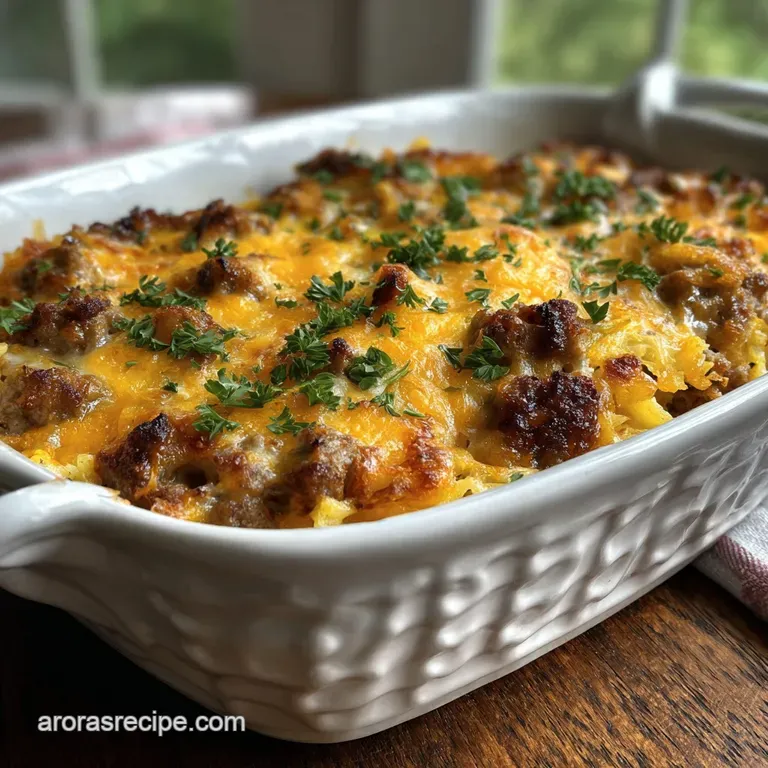
- Time: Active 15 minutes, Passive 45 minutes, Total 1 hours
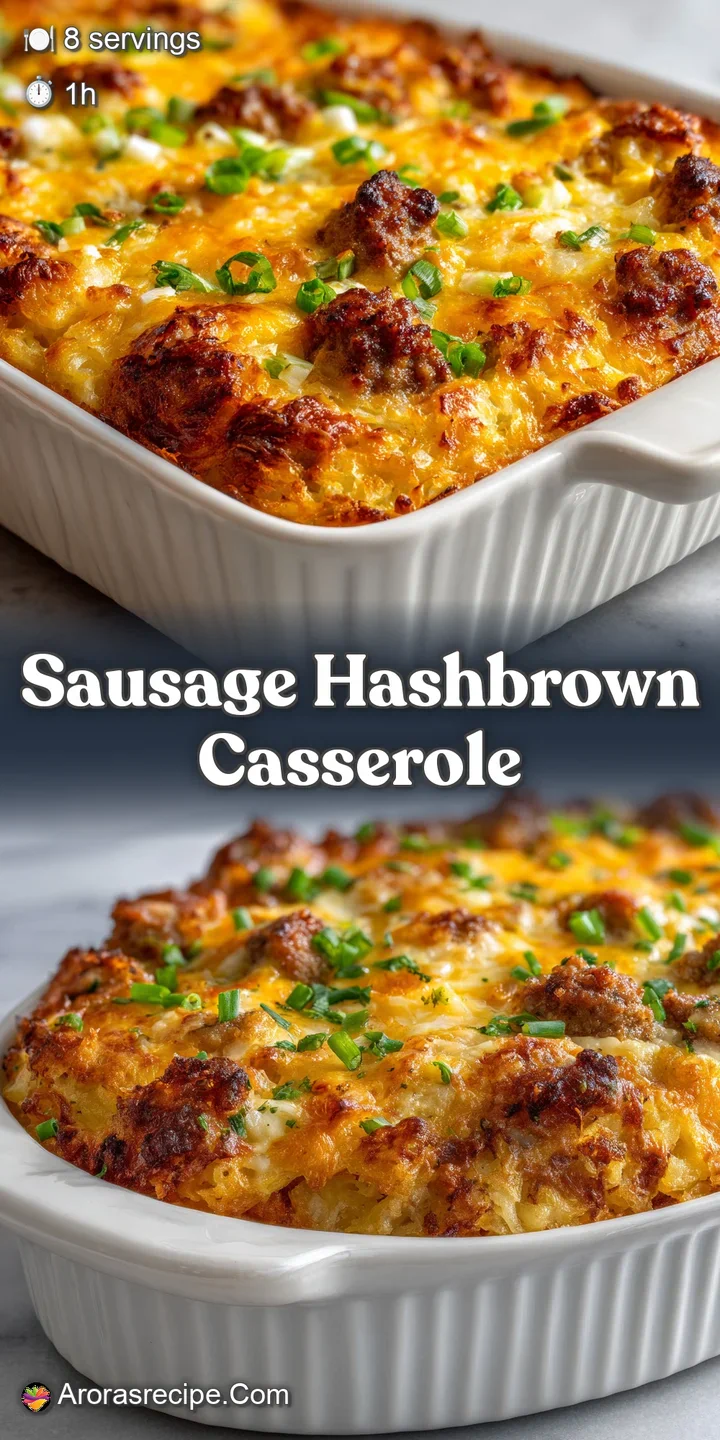
- Flavor/Texture Hook: Shatter crisp edges with a silky, cheesy center
- Perfect for: Holiday brunches, weekend meal prep, or a cozy Nashville style family breakfast
- Create the Ultimate Sausage Hashbrown Casserole
- Why This Southern Recipe Works
- Essential Ingredients and Smart Substitutes
- Required Tools for Success
- Step-by-Step Cooking Instructions
- Troubleshooting Your Breakfast Bake
- Flavor Variations for Everyone
- Scaling This Recipe Down or Up
- Proper Kitchen Wisdom
- Storage and Zero Waste Tips
- Common Questions (Auto generated)
- Recipe FAQs
- 📝 Recipe Card
Create the Ultimate Sausage Hashbrown Casserole
There is a specific sound that defines a successful Saturday morning in my kitchen: the aggressive sizzle of breakfast sausage hitting a hot skillet. It is a smoky, peppery aroma that drifts upstairs and acts better than any alarm clock ever could.
I remember the first time I tried to make a Sausage Hashbrown Casserole for a bunch of hungry friends in Nashville. I followed a vague recipe from a magazine, threw everything in a bowl, and hoped for the best. What came out was a sad, grey, mushy mess that tasted more like wet cardboard than comfort food.
It was a total flop, but it taught me everything I needed to know about potato hydration and fat ratios.
We have all been there, staring at a casserole that looks great on top but is a swamp underneath. The secret to a truly great Sausage Hashbrown Casserole isn't a fancy ingredient or a secret spice mix, it's about managing the physics of the potato.
If you don't treat those hash browns with respect, they will release all their starch and water into your eggs, turning your brunch into a sponge. I've spent years tweaking this method, failing more times than I care to admit, just so you don't have to.
Right then, let's crack on with what actually works. This isn't just another dump and bake recipe that leaves you feeling heavy and disappointed. We are going to focus on building layers of texture, from the deeply browned sausage to the sharp bite of cheddar and the cooling tang of sour cream.
You'll get that golden, crispy exterior that everyone fights over, while the inside stays tender and rich. Trust me on this, once you nail the moisture control, you'll never go back to the "easy" way again.
Why This Southern Recipe Works
Maillard Reaction: Searing the meat and aromatics before baking creates complex flavor molecules that raw meat simply cannot provide.
Protein Coagulation: The specific ratio of 6 large eggs to 60 ml of milk ensures the custard sets firmly without becoming rubbery or weeping liquid.
Starch Retrogradation: Thawing and drying the 850 g of hash browns prevents the starch from turning into a gummy paste during the baking process.
Emulsification Stability: Using 120 g of sour cream adds fat and acidity, which stabilizes the egg proteins and prevents the fats from separating into an oily mess.
| Thickness | Internal Temp | Rest Time | Visual Cue |
|---|---|---|---|
| 5 cm (standard) | 74°C | 10 minutes | Edges pull away slightly from the pan |
| 7.5 cm (deep dish) | 74°C | 15 minutes | Center does not jiggle when shaken |
| 2.5 cm (sheet pan) | 71°C | 5 minutes | Golden brown crust across the entire surface |
This table helps you decide exactly when to pull your bake out of the oven. Since egg dishes continue to cook after they leave the heat, that rest time is absolutely non negotiable for a silky texture.
The Science of Why it Works
The magic here lies in protein denaturation and lipid suspension. As the eggs heat, their proteins unfold and bond together, trapping the milk and sour cream in a delicate matrix that stays velvety rather than curdling.
Essential Ingredients and Smart Substitutes
The Foundation
The base of this dish relies on 850 g of frozen shredded hash browns. I’ve found that the shredded variety offers much more surface area for crisping compared to the cubed style.
If you really want to go the extra mile, you can use fresh potatoes, but the prep time jumps significantly because you have to soak and dry them yourself. For most of us, a high-quality frozen bag is the way to go, provided you pat them bone dry.
The Velvety Custard
We are using a blend of 6 large eggs, 120 g of low-fat sour cream, and 60 ml of 2% milk. This combination creates a rich, tangy binder that isn't as heavy as heavy cream but still feels luxurious.
The sour cream is the "secret" here it adds a subtle brightness that cuts through the richness of the 450 g of breakfast sausage and the 230 g of combined cheeses.
The Garden Aromatics
Yellow onion and bell pepper (120 g each) aren't just there for color; they provide the essential "soffritto" base of a good Southern casserole. When these hit the pan with the sausage, they soften and release sugars that caramelize beautifully. It’s a similar flavor building technique to what I use in my Chicken and Sausage Stew recipe, where the fat from the meat carries the flavor of the vegetables throughout the whole dish.
| Component | Science Role | Pro Secret |
|---|---|---|
| Breakfast Sausage | Fat & Umami | Brown it until it's almost "too" dark for maximum depth |
| Sour Cream | Acidic Stabilizer | Use full fat if you want an even silkier mouthfeel |
| Hash Browns | Structural Bulk | Thaw them completely to avoid a temperature "cold spot" in the middle |
It's vital to remember that these ingredients work as a team. If you change one, the timing of the set might shift, so keep an eye on that center jiggle!
Ingredient List and Swaps
- 850 g Frozen shredded hash browns: Substitute with 850 g of tater tots for a "tater tot hotdish" style texture. Why this? Shredded potatoes offer the best ratio of crispy edges to tender centers.
- 450 g Lean breakfast sausage: Use spicy chorizo or Italian sausage if you want more kick. Why this? Lean sausage prevents the casserole from becoming an oil slick while baking.
- 115 g Sharp cheddar cheese: Swap with Gruyère for a nuttier, more sophisticated flavor profile. Why this? Sharp cheddar provides the necessary punch to stand up to the potatoes.
- 115 g Monterey Jack cheese: Use Pepper Jack for extra heat. Why this? It melts beautifully, providing that "cheese pull" we all love.
- 6 Large eggs: No substitute recommended for the structure. Why this? Eggs provide the essential protein structure that holds the bake together.
- 120 g low-fat sour cream: Greek yogurt works well but is slightly more tangy. Why this? Sour cream keeps the custard moist without making it runny.
- 60 ml 2% milk: Use whole milk or almond milk (unsweetened). Why this? Thins the egg mixture just enough to seep into all the potato crevices.
- Spices (Paprika, Garlic, Pepper, Salt): Adjust to your preference. Why this? Smoked paprika adds a "cooked over fire" depth that is irresistible.
- Aromatics (Onion, Bell Pepper): Shallots and leeks are great alternatives. Why this? These add sweetness and crunch to balance the soft eggs.
Required Tools for Success
Essential Cooking Vessels
You will need a large 30 cm skillet (preferably cast iron or a heavy bottom stainless steel) to brown your sausage and vegetables. For the actual baking, a 23x33 cm ceramic or glass baking dish is the standard.
I prefer ceramic because it holds heat more evenly, which helps the bottom of the casserole brown without burning.
Proper Searing Tools
A sturdy wooden spoon or a stiff silicone spatula is your best friend here. You need something that can scrape up the "fond" those little brown bits stuck to the bottom of the pan after browning the meat. That’s where the real flavor lives. Don't leave it behind!
Mixing and Blending
A large mixing bowl and a balloon whisk are necessary for the custard. You want to beat the eggs until no streaks of white remain, ensuring the 60 ml of milk and 120 g of sour cream are fully integrated. A small offset spatula can also be helpful for smoothing the top of the casserole before it goes into the oven.
step-by-step Cooking Instructions
Searing and Softening
- Preheat oven. Set your oven to 190°C. Note: A hot oven is crucial for creating that initial steam lift in the eggs.
- Brown the meat. Add 450 g of breakfast sausage to your skillet over medium high heat. Cook 6 minutes until deeply browned and crumbled.
- Sauté aromatics. Toss in the 120 g of diced onion and 120 g of bell pepper. Cook 4 minutes until onions are translucent and peppers have softened.
- Drain the fat. Remove the mixture from the heat and tilt the pan to drain excess grease. Note: This prevents the final bake from being too heavy.
Custard Construction Steps
- Whisk the eggs. In a large bowl, crack the 6 large eggs. Whisk 1 minutes until light and frothy.
- Incorporate dairy. Fold in 120 g of sour cream, 60 ml of milk, and all the dry spices (paprika, garlic powder, salt, pepper). Whisk until the mixture is velvety and smooth.
- Combine ingredients. Add the browned sausage mixture and 170 g of the total cheese (reserve 60 g for the top) to the egg bowl. Stir gently.
Final Assembly Techniques
- Prepare potatoes. Ensure your 850 g of hash browns are completely thawed and patted dry with paper towels. Press them into the bottom of the greased baking dish.
- Pour and top. Pour the egg and sausage mixture over the potatoes. Top with the remaining 60 g of cheese.
- Bake. Place in the oven for 45 minutes until the top is bubbling and the edges are golden brown.
Troubleshooting Your Breakfast Bake
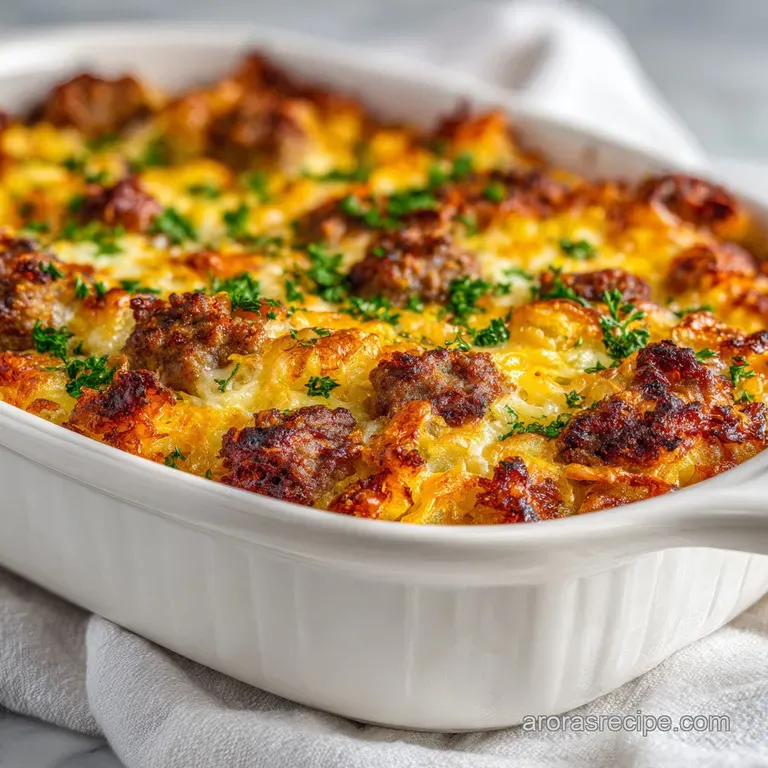
Fix Soggy Bottoms
If your casserole is watery at the bottom, the primary culprit is almost always the potatoes. Frozen hash browns act like tiny ice cubes; if they aren't thawed and dried, they release that moisture directly into the dish.
| Problem | Root Cause | Solution |
|---|---|---|
| Liquid pooling | Frozen potatoes or watery vegetables | Pat hash browns dry and sauté veggies until moisture evaporates |
| Rubbery eggs | Overcooking or high heat | Check temp at 40 minutes and use a water bath if oven runs hot |
| Bland flavor | Under seasoning the potatoes | Season the potato layer directly with salt before adding the eggs |
Always remember that potatoes are like sponges they need a lot of seasoning and zero extra water to shine. If you're looking for another way to use these flavors, my Sausage Herb Stuffing Recipe uses similar seasoning techniques to manage moisture in bread.
Common Mistakes Checklist
- ✓ Never add frozen hash browns directly to the dish (results in uneven cooking)
- ✓ Pat the sausage dry if it seems overly oily after browning
- ✓ Grate your own cheese from a block (pre shredded has starch that prevents melting)
- ✓ Let the casserole rest for at least 10 minutes before slicing
- ✓ Don't skip the sour cream; it's the insurance policy against dry eggs
Seasoning the Spuds
The biggest mistake I see is people seasoning only the egg mixture. You have 850 g of potatoes that are naturally quite bland. I like to sprinkle a little extra salt and pepper directly onto the hash brown layer before pouring the custard over the top. This ensures every single bite is seasoned from the ground up.
Flavor Variations for Everyone
Spicy Southwest Twist
If you want to take this South of the border, swap the breakfast sausage for spicy chorizo. Add a small can of diced green chiles to the sauté step and use Pepper Jack cheese instead of Monterey Jack. Serve it with a dollop of fresh salsa and some sliced avocado on top.
It’s a complete departure from the Nashville classic but equally satisfying.
Vegetarian Protein Options
You can easily make this meat free by using a plant based sausage crumble or simply doubling the vegetables. I love adding sautéed mushrooms and spinach to the mix. Just make sure to cook the mushrooms until they've released all their liquid and are starting to brown, otherwise, they will contribute to the "soggy bottom" syndrome we talked about earlier.
| Method | Time | Texture | Best For |
|---|---|---|---|
| Standard Oven | 45 minutes | Classic, even bake | Large family gatherings |
| Air Fryer (Half Batch) | 20 minutes | Extra crispy top | Quick weeknight dinner |
| Slow Cooker | 4 hours (Low) | Soft, strata like | Set it and forget it brunch |
This comparison helps you choose the right tool for your schedule. Personally, nothing beats the classic oven bake for that specific golden brown crust.
Scaling This Recipe Down or Up
Reducing the Batch
If you are cooking for just two or three people, you can easily halve this recipe. Use a 20 cm square baking dish or even a large cast iron skillet. Reduce the bake time by about 10 to 15 minutes, and check for doneness around the 30 minute mark.
For the eggs, if you are halving and end up with 3 eggs, that's perfect. If you want to go smaller, beat an egg and use half of it by weight.
Feeding a Crowd
To double the recipe, use two 23x33 cm pans rather than one giant one. This ensures the heat can reach the center of the bake efficiently. For spices and salt, I usually only increase them by 1.5x rather than a full 2x to avoid over seasoning.
You’ll want to rotate the pans in the oven halfway through the 45 minutes to ensure both get even browning.
Proper Kitchen Wisdom
Debunking Casserole Myths
One common myth is that you need to cook the hash browns before putting them in the casserole. While you can do this for extra crunch, it's not strictly necessary if you've dried them properly and bake at 190°C. The heat of the oven is sufficient to cook them through while the egg sets.
Another misconception is that more eggs make a better casserole. If you go beyond the 6 large eggs for this amount of potato, you end up with a dish that is too "eggy" and starts to resemble a frittata more than a hearty bake. The ratio provided here is the sweet spot for a balanced bite.
Storage and Zero Waste Tips
Keeping it Fresh
Store any leftovers in an airtight container in the fridge for up to 4 days. When reheating, I highly recommend using a toaster oven or an air fryer rather than a microwave. A microwave will make the potatoes soft and the eggs rubbery, while a dry heat source will help restore some of that original crispiness.
Freezing and Beyond
This Sausage Hashbrown Casserole freezes beautifully. You can freeze it before or after baking. If freezing before, thaw it completely in the fridge for 24 hours before putting it in the oven.
If you have leftover bits that aren't enough for a full meal, scramble them into fresh eggs the next morning for a "leftover hash" that is honestly just as good as the original. Don't throw away those onion peels either; toss them into a freezer bag for your next batch of vegetable stock!
Reheating for Crunch
To get that "just baked" texture on day two, place a slice in a non stick skillet over medium heat with a tiny bit of butter. Cover it for 2 minutes to heat through, then remove the lid and let the bottom crisp up for another minute. It's a game changer for weekday breakfasts.
Common Questions (Auto generated)
[PHP will insert FAQ schema here]
Recipe FAQs
What is the best way to prevent a soggy bottom in my sausage hashbrown casserole?
Thaw and thoroughly dry your hash browns. Frozen hash browns release significant moisture; squeezing out excess water before assembly is key to achieving crispiness.
Can I use fresh potatoes instead of frozen hash browns?
Yes, but it requires extra prep. You'll need to grate fresh potatoes, then soak and thoroughly dry them to remove excess starch and moisture, much like managing the moisture in this Sourdough Stuffing Recipe.
How do I make sure my casserole is cooked through without being rubbery?
Bake at the correct temperature and avoid overcooking. The casserole is done when the center is just set and doesn't jiggle. Resting time after baking allows the eggs to finish cooking gently.
Can I prepare this casserole ahead of time?
Yes, assemble up to 24 hours in advance. Cover the unbaked casserole tightly and refrigerate; allow it to sit at room temperature for about 30 minutes before baking to ensure even cooking.
What kind of sausage works best for this casserole?
Lean breakfast sausage is ideal. It provides savory flavor without making the casserole overly greasy. You can substitute spicy chorizo or Italian sausage for a different flavor profile.
Is it true that I have to brown the sausage and vegetables before assembling?
No, this is a common misconception for some casseroles. However, browning the sausage and vegetables creates a depth of flavor and removes excess moisture, which is crucial for this recipe's success. It's a similar flavor building principle to what is used in my Steak and Mushrooms: Pan-Seared Ribeye with Garlic Thyme Sauce recipe.
How do I reheat leftover sausage hashbrown casserole?
Reheat in a skillet or oven for best results. Avoid the microwave, as it can make the potatoes soggy and eggs rubbery. A toaster oven or a non-stick skillet over medium heat will help restore crispiness.
Sausage Hashbrown Casserole
Ingredients:
Instructions:
Nutrition Facts:
| Calories | 398 calories |
|---|---|
| Protein | 24.2 g |
| Fat | 22.4 g |
| Carbs | 22.8 g |
| Fiber | 1.9 g |
| Sugar | 2.1 g |
| Sodium | 645 mg |
