Thanksgiving Sourdough Stuffing: the Ultimate Recipe for a Crispy Crust
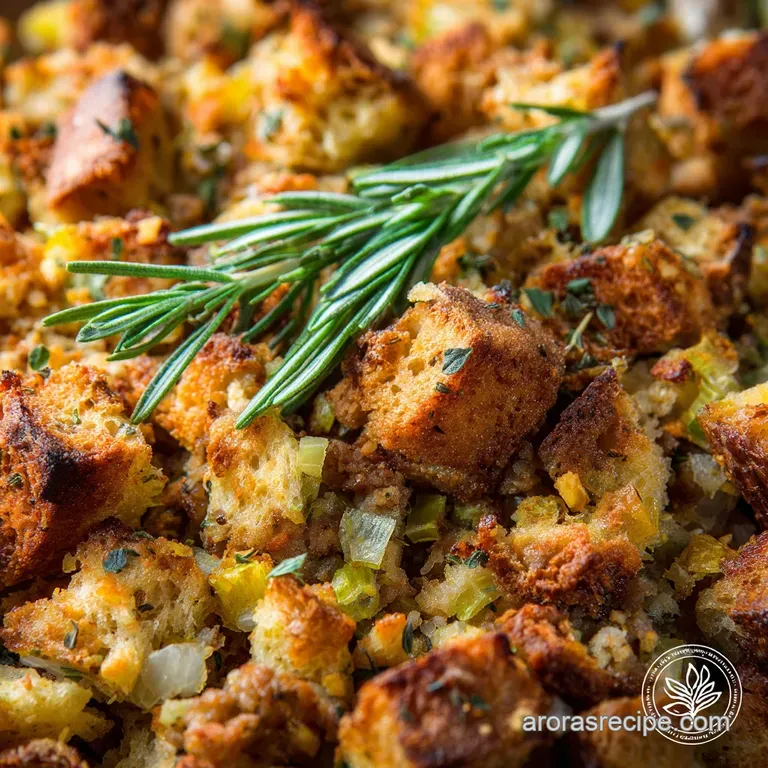
- The Ultimate Thanksgiving Sourdough Stuffing: A Tangy Holiday Anchor
- Flavor Science: Achieving the Perfect Crisp-to-Moist Stuffing Ratio
- Gather Your Components: Essential Ingredients and Strategic Substitutions
- How to Make Perfect Thanksgiving Sourdough Stuffing: Step-by-Step Directions
- Troubleshooting Your Stuffing: Expert Tips and Common Mistakes
- Making Ahead and Storage Guide for Thanksgiving Sourdough Stuffing
- Elevating the Plate: The Best Pairings for Sourdough Stuffing
- Recipe FAQs
- 📝 Recipe Card
The Ultimate Thanksgiving Sourdough Stuffing: A Tangy Holiday Anchor
Okay, stop what you’re doing and just imagine that smell. It’s Thanksgiving morning, and the scent of crispy, tangy sourdough bread mingling with fresh sage and deeply browned sausage is taking over the entire house.
This isn't just a side dish; it's the absolute anchor of the entire holiday feast, offering a texture combination that is genuinely addictive.
I love this recipe because it’s surprisingly low-stress, which is a total lifesaver when you’re dealing with a chaotic holiday timeline. You can prep nearly everything two days ahead, and because we bake this outside the bird, the cooking time is fast and the cleanup relatively simple.
It also uses up day-old sourdough, which is always a win for the budget and for flavor depth.
We are absolutely diving into the details today, focusing on how that specific sourdough tang cuts through all the richness, balancing the savoury sausage and herbs perfectly. Trust me, once you master the crisp-to-fluff ratio, you’ll never bother with those boxed mixes ever again.
Flavor Science: Achieving the Perfect Crisp-to-Moist Stuffing Ratio
The Tangy Difference: Why Sourdough Excels Over White Bread
Standard white bread stuffing can often taste flat, becoming a sponge for fat and broth. Sourdough is different. Its dense crumb resists turning immediately mushy, and the natural lactic acid provides an essential counterpoint to the buttery richness of the sausage and vegetables.
This tanginess ensures the final dish feels bright, not heavy.
Stuffing vs. Dressing: Defining Our Out-of-the-Bird Method
Let’s settle this classic argument once and for all. If it’s cooked inside the turkey cavity, it is traditionally called stuffing. If it’s baked in a casserole dish separately, it’s dressing. We are making a dressing, technically, but I still call it stuffing because that’s what my grandma called it. Baking it outside the bird is much safer, guarantees a better crust, and simplifies temperature control. If you prefer the softer texture of a classic stovetop preparation, like my old-school Homemade Stuffing: Classic Sage Onion with a Crispy Crust , this method might surprise you with its superior texture.
What Makes This Stuffing an Ultimate Holiday Statement?
It truly comes down to balancing moisture and texture. We dry the bread until it’s crunchy, allowing it to soak up just the right amount of butter and stock without collapsing. The browned Italian sausage provides deep savoury notes, perfectly complemented by mountains of fresh sage and thyme.
Leveraging Sourdough's Acidity for Richness Control
Sourdough’s slight sourness performs the same job that lemon juice does on a rich sauce. It prevents the overall flavour profile from becoming dense or overwhelmingly fatty. This is crucial when you are pairing it with rich dark meat turkey and gravy.
The Importance of Drying Your Bread Cubes Properly
This step is non-negotiable, seriously. If you skip drying the bread, you are simply guaranteeing a gummy, wet mess. We need those cubes to be firm and crunchy so they can absorb the flavorful stock slowly and hold their shape during baking.
Why Baking Outside the Bird Guarantees Superior Texture
Baking separately means we can control the heat distribution perfectly. We bake it covered first to steam the inside and keep it moist, then uncover it at the end to create that deep, glorious golden brown crust. You get soft, moist stuffing in the center and crunchy bits on top pure holiday magic!
Gather Your Components: Essential Ingredients and Strategic Substitutions
The quality of your ingredients really shines through here, especially the herbs. Don't skimp on the butter, either. It’s Thanksgiving, darling.
| Ingredient | Role | Substitution Tip |
|---|---|---|
| Rustic Sourdough Loaf | Structure, Texture, Tang | Crusty French loaf, or day-old Ciabatta. |
| Sweet Italian Sausage | Savoury fat and depth | Hot Italian sausage for a kick, or diced pancetta. |
| Yellow Onion & Celery | Aromatic base (The Holy Trinity) | Shallots (for a finer flavour), or leeks (white parts only). |
| Fresh Sage & Thyme | Essential holiday flavour | Use 1/3 the amount if using dried herbs. |
| Chicken/Turkey Stock | The binding moisture | Vegetable broth for a lighter flavour. |
| Butter | Moisture and richness | Use high-quality olive oil for a dairy-free option. |
Selecting the Right Sourdough Loaf (Stale is Essential)
You need a hearty, rustic loaf with a thick crust. Avoid soft, fluffy sandwich style sourdough. The bread should be at least one day old two days is even better. Stale bread cubes are your best friend here.
Sausage Selection: Balancing Savoury Flavor and Fat Content
I always go for sweet Italian sausage; it has the right fat content and beautiful fennel seasoning. If you like heat, use hot Italian sausage instead. Just ensure you remove the casings, please, unless you bought it loose!
Herb Profile: Choosing Fresh vs. Dried Aromatics
Fresh herbs are vital for Thanksgiving Sourdough Stuffing. They smell incredible, and the flavour is far brighter than dried. Yes, chopping fresh sage and thyme is a bit of a fiddle, but it’s absolutely worth the effort for that intense, festive punch.
Liquid Binder Notes: Achieving Optimal Moisture with Quality Broth
Use low-sodium stock, whether it's chicken or turkey, so you control the salt level. Warm your stock slightly before adding it to the bread. Warm liquid soaks into dried bread much faster and more evenly than cold liquid does.
How to Make Perfect Thanksgiving Sourdough Stuffing: step-by-step Directions
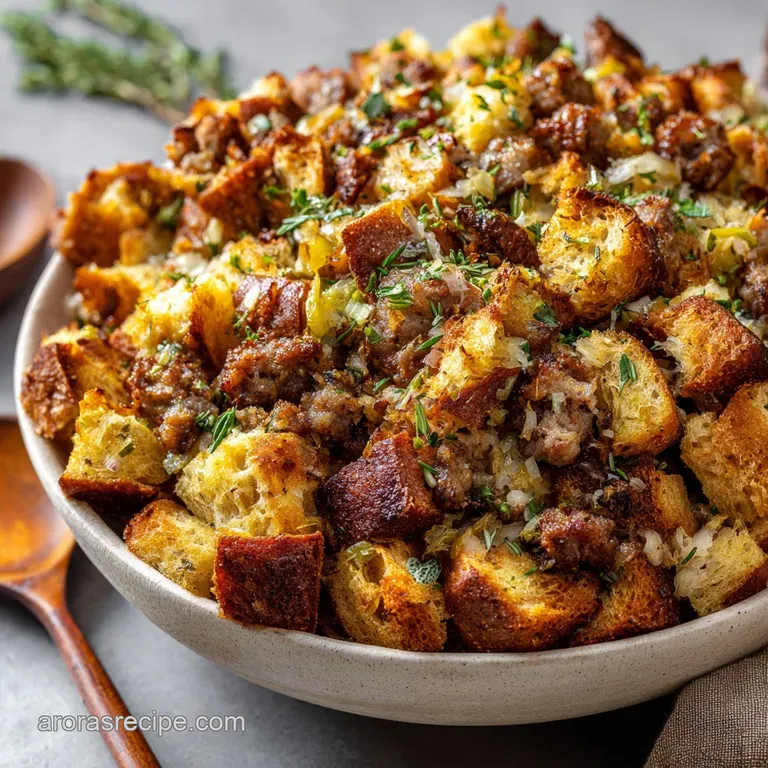
Phase 1: Prepping the Sourdough Base (Drying the Cubes)
Preheat your oven to 325°F (160°C). Cut your day-old sourdough into even 1 inch cubes. Toss them gently with 3 tablespoons of melted butter and spread them onto a large baking sheet. Bake for 25– 30 minutes, tossing halfway, until they are dried out and lightly golden.
They must feel like firm croutons. Transfer them immediately to your largest mixing bowl; you’ll need the space.
Phase 2: Sautéing Aromatics and Browning the Sausage
Use a large, heavy skillet. Heat a little olive oil and brown your sausage meat, breaking it up as you go. You want it deeply caramelized for maximum flavour. Drain off nearly all the rendered fat, reserving the sausage meat. Next, melt the remaining 8 tablespoons of butter in the same pan.
Add your diced onion and celery. Cook them slowly over medium heat for 8– 10 minutes until they soften completely and become translucent, not browned. Now add the minced garlic, fresh sage, and thyme; cook for just one minute until that incredible nutty aroma releases.
Phase 3: The Gentle Assembly and Hydration Check
Pour the sautéed vegetable mixture and the browned sausage over the dried sourdough in the big bowl. Add the chopped fresh parsley, salt, and pepper. Gently fold everything together until the bread is coated. Next, pour in the lightly beaten eggs and toss again.
Start adding the warm stock, pouring in 2 cups first and tossing immediately. Stop adding liquid when the bread is moist but still slightly resistant, like a dense sponge. You should see some liquid gathered at the bottom, but the bread should not be floating in a soup.
Chef's Note: I once made the mistake of adding all the stock at once, resulting in stuffing soup. Always add the stock slowly. If it looks right, stop, even if you have a little stock left over.
Phase 4: Baking for Maximum Crust Development and Doneness
Lightly grease a 13x9-inch baking dish. Spoon the stuffing mixture into the dish, spreading it evenly but do not compact it —keep it airy. Cover the dish tightly with foil and bake at 375°F (190°C) for 30 minutes.
Remove the foil and bake for another 15– 20 minutes until the top is beautifully crisp and golden brown. The internal temperature must reach 165°F (74°C).
Troubleshooting Your Stuffing: Expert Tips and Common Mistakes
The Cardinal Sin: Preventing an Over Saturated, Mushy Stuffing
The number one mistake is using bread that wasn't dry enough or adding too much liquid. If your stuffing looks too wet before it goes into the oven, try adding 1/2 cup of plain dried breadcrumbs (Panko works well) to help absorb the excess moisture. If you are aiming for a crispy top, like in my other holiday bakes like Broccoli Cheese Casserole With Stuffing: Ultra Creamy Crispy Topping , you must monitor the moisture carefully.
Adjusting Seasoning Before the Bake: Tasting the Raw Mix Safely
Since we are using raw sausage and raw egg, you can’t taste the mix directly for seasoning. So, here’s the trick: microwave a small spoonful of the stuffing mix (about 1 tablespoon) for 20 seconds until cooked through. Taste that small cooked sample and adjust the salt and pepper in the main bowl as needed.
Dealing with Undercooked Sausage (If Using Fresh Sausage)
If you chose fresh Italian sausage, you must ensure it’s fully cooked and browned before you add it to the bread. If the sausage is still pale, it will render watery fat into the mix, making the bread soggy and unappealing.
Making Ahead and Storage Guide for Thanksgiving Sourdough Stuffing
Prep Timeline: Optimizing Stuffing Assembly Two Days Ahead
This stuffing is fantastic for making ahead. You can complete Phases 1, 2, and 3 (up to adding the stock) and store the dry mix and the stock separately. Or, you can mix the entire stuffing, transfer it to the baking dish, cover it tightly, and refrigerate it for up to 48 hours.
If chilling raw, let it sit on the counter for 30 minutes before baking and add 10 minutes to the total covered baking time.
Safe Reheating Instructions for Holiday Leftovers
Stuffing reheats beautifully. Cover leftovers tightly with foil and reheat in a 325°F (160°C) oven for 15– 20 minutes. If you want to crisp the top again, remove the foil for the last five minutes.
You can also easily microwave individual portions, though you will lose some of the crust.
Freezing Raw vs. Baked Stuffing: Which Method Works Best?
Baked stuffing freezes better than raw. Once cooled completely, cut the stuffing into portions and wrap them tightly in plastic wrap, followed by foil. It keeps well for up to 3 months. To reheat, thaw overnight in the fridge and follow the reheating instructions above.
The texture might be slightly softer than fresh, but the flavour is still there.
Elevating the Plate: The Best Pairings for Sourdough Stuffing
The tangy nature of this Sourdough Stuffing makes it an ideal partner for almost anything rich on the holiday table. It perfectly cuts through the fat of a classic butter roasted turkey.
The absolute must have pairing? A luxurious, homemade turkey gravy, poured directly over the top to soak into that crisp crust. For something dramatically different, you might consider contrasting it with the deep, earthy tones of a richer, more complex dish, like Thanksgiving Stuffing: Properly Posh Sage and Wild Mushroom Casserole . Don't forget the cranberry sauce! That tartness is essential.

Recipe FAQs
Why must I use stale or dried out sourdough bread cubes?
Stale bread is crucial because fresh bread holds too much inherent moisture and will result in a dense, gluey stuffing once mixed with the broth. Drying the bread cubes ensures they properly soak up the rich butter and stock mixture without turning mushy, which allows the stuffing to hold its desirable shape and texture.
My stuffing came out dry and crumbly. How can I ensure a moist stuffing next time?
Stuffing often dries out from insufficient liquid or simple over baking. Ensure you add enough stock (sometimes slightly more than the initial recommendation) until the mixture is thoroughly moist but not soaking wet before baking.
Crucially, cover the dish with foil for the first 30 minutes to trap steam, removing it only for the final 10 to 15 minutes to achieve that signature crispy top crust.
Can I prepare this Sourdough Stuffing a day or two in advance?
Absolutely; this recipe is excellent for make-ahead preparation to ease Thanksgiving timing. You can fully assemble the stuffing mixture combining all solids and liquids up to 24 hours ahead of time, ensuring it is refrigerated promptly after mixing.
Remember to let the dish come close to room temperature for 30 minutes before baking and add 10-15 minutes to the total bake time.
I need to make this vegetarian or vegan. How should I adjust the rich elements?
For a vegetarian version, replace the sausage with sautéed wild mushrooms, finely diced apples, or high-quality plant based sausage alternatives, adjusting seasoning as needed.
To make the recipe completely vegan, substitute the butter with olive oil or a preferred plant based butter substitute, and ensure you are using a robust vegetable stock.
Is it safe to bake this stuffing inside the turkey instead of in a separate dish?
While traditional, baking stuffing inside the bird is generally not recommended by safety experts, as the stuffing must reach an internal temperature of 165°F (74°C) to be safe, which can overcook the bird.
Baking separately guarantees food safety, and it ensures a much better textural result with a crispy, golden brown crust.
What is the recommended way to store and reheat leftover stuffing?
Store cooled leftovers in an airtight container in the refrigerator for up to 3 to 4 days. To reheat, place the desired portion in an oven safe dish, sprinkle a tablespoon of stock or water over the top, and cover it loosely with foil.
Bake at 350°F (175°C) until heated through, which prevents the edges from drying out excessively.
I don't have sourdough. Can I substitute another type of bread?
Yes, while sourdough's natural tang cuts through the richness beautifully, you can substitute it with French baguettes, ciabatta, or hearty country white bread. The most important factor is ensuring the bread is rustic and firm, as soft sandwich breads tend to absorb too much liquid and turn mushy.
Ultimate Tangy Sourdough Stuffing
Ingredients:
Instructions:
Nutrition Facts:
| Calories | 1435 kcal |
|---|---|
| Protein | 18.0 g |
| Fat | 94.0 g |
| Carbs | 130.0 g |
