Sourdough Stuffing: the Ultimate Tangy Herb Stuffing Recipe
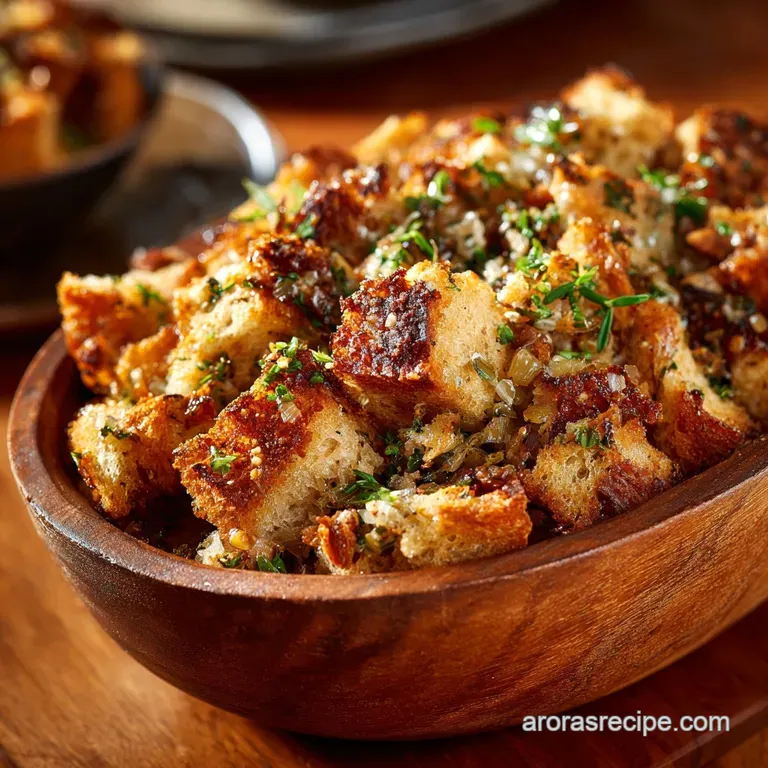
- The Sunday Roast Hero: Ultimate Tangy Sourdough and Fresh Herb Stuffing
- Capturing the Essence of Superior Stuffing: Why Sourdough Reigns
- The Science of Texture: Achieving the Golden-Crisp Crust and Moist Core
- Essential Components for the Ultimate Sourdough Stuffing
- The Preparation Method: A Step-by-Step Guide
- Troubleshooting Your Stuffing: Expert Tips and FAQs
- Recipe FAQs
- 📝 Recipe Card
The Sunday Roast Hero: Ultimate Tangy Sourdough and Fresh Herb Stuffing
Stop scrolling right now because you can practically smell this crust crackling. The aroma of rich, earthy sage and thyme hits you first, then that gorgeous deep tang that only a robust sourdough loaf can deliver.
This is not the mushy side dish your Aunt Mildred used to serve; this is textural heaven.
People often assume stuffing is one of the hardest holiday tasks, but it’s actually incredibly fast if you nail the prep steps. Drying the bread is the secret sauce, preventing that porridge texture everyone fears.
Once you master the dry-to-wet ratio, this recipe is forgiving, flavourful, and easily the most requested dish on my table every single year.
I've made all the mistakes I once added cold broth and ended up with brick like stuffing so you don't have to. We are going to lock in the perfect golden brown crust and a profoundly moist, aromatic interior. Let’s crack on and make some truly superior Sourdough Stuffing.
Capturing the Essence of Superior Stuffing: Why Sourdough Reigns
Moving Beyond Traditional White Bread Stuffing
Most classic stuffing recipes rely on squishy white sandwich bread, which tends to absorb liquid too quickly and collapses during baking. But not our sourdough. Sourdough bread has a much denser structure and an open crumb, meaning it holds its shape far better, even when soaked in stock.
This ensures you get proper pockets of flavour instead of a homogenous paste.
The Flavor Dynamics: How Sourdough’s Acidity Elevates Holiday Dishes
The magic of sourdough lies in its subtle, naturally developed acidity. This tang acts like a hidden seasoning, beautifully cutting through the richness of the butter and the stock. That slight sour note is exactly why this stuffing stands up so well to gravy; it’s complex without being heavy. If you’re usually reaching for a simpler, less robust base like in my Homemade Stuffing: Classic Sage Onion with a Crispy Crust , you'll be amazed by the depth of flavour the sourdough adds.
What Makes This Sourdough Stuffing Recipe Unique?
We aren't just pouring hot stock over bread and calling it a day. This recipe uses melted butter not just for flavour, but for moisture distribution, coating the bread cubes to prevent rapid saturation.
We also introduce a two-stage baking process (covered then uncovered) which ensures the inside steams into tenderness while the outside develops that non-negotiable, glorious crunch.
The Science of Texture: Achieving the Golden Crisp Crust and Moist Core
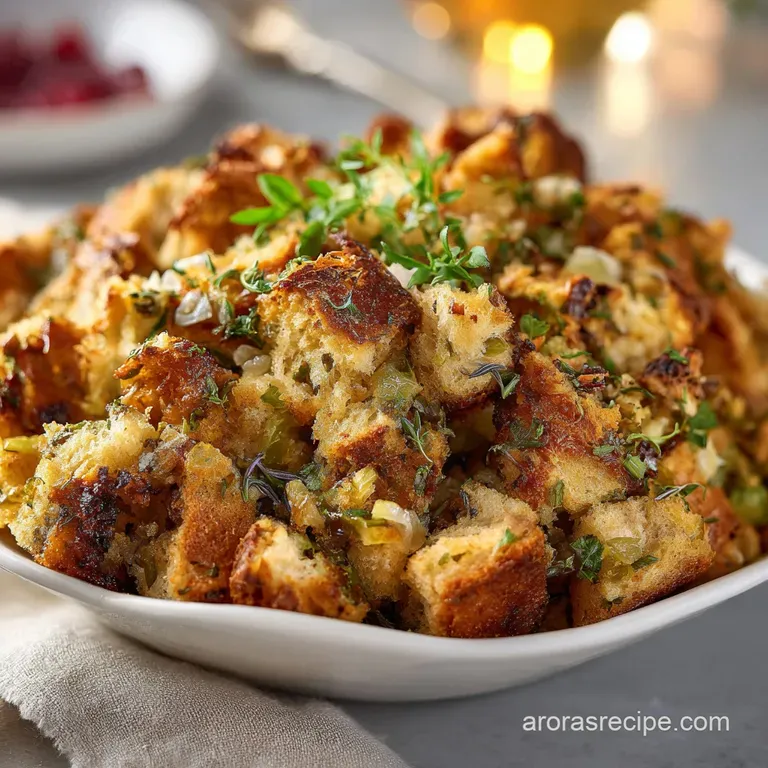
The Crucial Role of Properly Dried Sourdough Cubes
This is the non-negotiable secret to great stuffing. If your bread is still soft, it will simply turn to mush when it hits the liquid. We need that bread bone dry, almost like croutons, so it absorbs the stock slowly and evenly during baking. If your cubes feel spongy, they are not ready yet.
I know, waiting is the worst.
Balancing Fat and Liquid for Optimal Moisture Retention
We use a generous amount of butter here, half of it used to sauté the aromatics and the other half reserved for coating the baking dish. That fat layer, combined with the two eggs in the binder, helps hold the moisture inside the bread cubes during baking.
It prevents evaporation, giving you that incredibly moist, fudgy interior while the crust is completely crisp.
The Power of Fresh Herbs: Maximizing Aromatic Impact
Please, I beg you, use fresh herbs for this. Dried herbs simply cannot compare to the bright, earthy flavour profile delivered by fresh sage, thyme, and rosemary. We bloom them briefly in the butter and sautéed vegetables, which is key; heating them gently releases their essential oils, maxing out the aromatic impact of the stuffing.
Essential Components for the Ultimate Sourdough Stuffing
Selecting the Best Sourdough Loaf (Stale vs. Fresh)
Go for a rustic, artisan style sourdough loaf, one with a thick crust and robust structure. Day-old bread is ideal because it already has less moisture, but if all you have is fresh, just cut it up and proceed straight to the drying process.
Do not use super soft sliced sandwich loaves ; they will betray you.
Detailed Ingredient List and Prep Notes
| Ingredient | Amount | Notes & Prep |
|---|---|---|
| Sourdough Bread (rustic, day-old) | 1.5 lbs / 680g | Cut into 1 inch (2.5 cm) cubes. |
| Unsalted Butter (Divided) | 1/2 cup / 115g | Divided for sautéing and greasing. |
| Yellow Onion & Celery | 1 large & 4 stalks | Finely diced. This is your flavour base. |
| Garlic Cloves | 3 large | Finely minced. |
| Fresh Herbs (Sage, Thyme, Rosemary) | 2 Tbsp, 1 Tbsp, 1 tsp | Use fresh! Finely chop the sage and rosemary. |
| Low-Sodium Stock (Turkey or Chicken) | 3 cups / 710 ml | Crucial: Must be warmed slightly. |
| Large Eggs | 2 | Lightly beaten. |
Herb Substitutions: Fresh vs. Dried Ratios
If you truly cannot get fresh herbs (I understand, sometimes the store is out!), you can substitute dried, but reduce the amount drastically.
| Fresh Herb | Dried Substitute (Rule of Thumb: 3:1) |
|---|---|
| 2 Tbsp Fresh Sage | 2 tsp Dried Rubbed Sage |
| 1 Tbsp Fresh Thyme | 1 tsp Dried Thyme Leaves |
| 1 tsp Fresh Rosemary | 1/3 tsp Dried Rosemary (crush before adding) |
Achieving Richness: Butter, Broth, and Binding Agents
We use melted butter instead of oil because it provides that depth of flavour that screams "holiday feast." For the liquid, stick to a good quality low-sodium broth (turkey or chicken works best). The eggs are our binding agents.
They not only hold the stuffing together but also add structure and help the mixture rise slightly, preventing density.
Chef's Note: If you need a fully dairy-free stuffing, swap the butter for an equal amount of good quality olive oil or a dairy-free stick butter alternative. The flavour will be slightly different but the texture will remain perfect.
The Preparation Method: A step-by-step Guide
Stage 1: Toasting and Drying the Sourdough Bread Cubes
- Cube and spread: Cut your sourdough into 1 inch cubes; uniformity matters here for even cooking. Spread the cubes across a large baking sheet, making sure they are in a single layer.
- Dry them out: Bake the bread in a 300°F (150°C) oven for 45– 60 minutes. They should feel hard and dry, not yielding at all, when they are done. Toss them around halfway through to ensure every side gets crispy. Set them aside in your largest mixing bowl.
Stage 2: Sautéing Aromatics for the Flavor Base
- Melt the butter: In a large skillet or Dutch oven, melt 1/4 cup of the butter over medium heat. Wait until it foams slightly.
- Softening the veg: Add the diced onion and celery. Cook them gently for about 8– 10 minutes until they look translucent and soft. We are not looking for browning here, just sweet tenderness.
- Blooming the herbs: Stir in the minced garlic, salt, pepper, and all the chopped fresh sage, thyme, and rosemary. Cook for just 60 seconds until you get that incredible, intense herbal aroma. Do not burn the garlic!
- Combine: Scrape this aromatic mixture immediately into the large bowl with the dried sourdough cubes. Toss everything lightly until the bread is coated with the fragrant butter mixture.
Stage 3: Combining, Soaking, and Resting the Mix
- Whip the binder: In a separate bowl, whisk together the warmed stock and the two lightly beaten eggs. Warm stock helps the butter stay emulsified and absorbs better into the dried bread.
- Moisten: Pour the liquid mixture evenly over the bread and vegetables.
- Fold gently: Use a rubber spatula to gently fold the mixture until everything is moistened. Crucial Warning: Stop folding as soon as the bread looks damp. If you over mix, you crush the bread cubes and lose all your hard earned texture.
- Rest: Let the stuffing rest in the bowl for 5– 10 minutes. This gives the liquid time to soak in, ensuring a moist core.
Stage 4: Baking Times, Temperature Control, and When to Cover
- Prepare the dish: Use the remaining 1/4 cup of melted butter to generously grease your 9x13 inch baking dish. Sourdough Stuffing is very high reward, but it does hate sticking to the pan.
- Fill the dish: Lightly spoon the mixture into the prepared dish. Seriously, don't press it down. Just let it sit loosely.
- Initial covered bake: Cover the dish tightly with foil. Bake in a preheated 375°F (190°C) oven for 30 minutes. The foil traps steam, cooking the stuffing thoroughly and keeping the interior moist.
- Final uncovered bake: Remove the foil and bake for another 15– 20 minutes, or until the top is deeply golden brown and crispy. The internal temperature should be 165°F (74°C).
- Serve: Let it rest for 10 minutes before scooping it out. That resting time allows the stuffing to set slightly, making it easier to serve.
Troubleshooting Your Stuffing: Expert Tips and FAQs
How to Prevent Soggy Stuffing Syndrome
This is the number one fear! You prevent sogginess in two ways: drying the bread completely and not over mixing the wet ingredients. If your bread is still soft when you add the liquid, you are making bread pudding, not stuffing.
If you press the mixture into the baking dish, you compact it, preventing steam from escaping and guaranteeing a dense, gummy result. Just spoon it lightly.
Ensuring Safety When Baking Inside or Outside the Bird
I always bake stuffing outside the turkey for guaranteed safety and crispiness. While baking inside the bird adds flavour, it requires the stuffing to reach 165°F (74°C), which often means the bird itself is overcooked. Stick to baking this beautiful side dish separately.
This recipe is designed to be a standalone casserole.
Adjusting for Consistency: Too Dry or Too Wet?
If, after resting, your mixture looks too dry, you can add up to 1/2 cup more warm stock. Add it slowly, folding gently. If it looks too wet and you accidentally added too much liquid, the fix is trickier.
You can try mixing in a handful of more freshly dried sourdough cubes, or stir in one tablespoon of dried breadcrumbs to soak up excess moisture.
Storage and Reheating Instructions for Leftovers
Sourdough stuffing keeps brilliantly! Store any leftovers tightly covered in the refrigerator for up to 4 days.
To reheat, the best way to get that crispy top back is to use the oven. Preheat to 350°F (175°C). Cover the stuffing with foil and bake for 15 minutes. Then, remove the foil and bake for another 5– 10 minutes to crisp up the edges.
Microwaving works in a pinch, but you lose all the glorious texture.
Can You Freeze Sourdough Stuffing? (A make-ahead Guide)
You bet you can. Stuffing freezes beautifully, making it an excellent make-ahead holiday helper. Prepare the recipe up to the point of baking (Step 12). Cover the baking dish tightly with plastic wrap, then foil, and freeze for up to 3 months. Thaw overnight in the fridge.
Bake as directed, adding an extra 10– 15 minutes to the initial covered baking time since it will start cold.
Serving Suggestions: Ideal Gravies and Complementary Sides
This tangy Sourdough Stuffing is robust enough to handle the richest sauces. Serve it piping hot with lots of homemade gravy turkey, beef, or even a vegetarian onion gravy works perfectly. For a quick appetizer while the turkey is resting, you could turn these flavours into Stuffing Sausage Balls: Ultimate Savoury Thanksgiving Appetizers .
Need a green side? Something bright and acidic is ideal to cut through the richness. A simple green bean almondine or a shaved Brussels sprout salad is a perfect foil. If you are looking for a creamy, cheesy bake that uses a stuffing topping, but for a weeknight, you might want to try my Broccoli Cheese Casserole With Stuffing: Ultra Creamy Crispy Topping .

Recipe FAQs
Why did my Sourdough Stuffing turn out dry?
Dry stuffing is usually a result of insufficient liquid or over baking. Ensure you use the full amount of broth specified, as sourdough is very absorbent, and remember that some moisture evaporates during baking.
To combat dryness, always tent the baking dish loosely with foil for the majority of the cooking time, only removing it for the last 15 minutes to crisp the top.
Is it essential to dry out the sourdough bread cubes before mixing?
Absolutely; this step is crucial for achieving the perfect stuffing texture. Drying the bread prevents the final mixture from becoming a dense, wet mass by allowing the cubes to soak up the flavourful broth while retaining structural integrity.
If your bread is fresh, toss the cubes with a little oil and toast them in the oven until brittle before starting the recipe.
Can I prepare this sourdough stuffing mixture ahead of time?
Yes, the stuffing is an excellent candidate for advance preparation. You can assemble all ingredients, place them in the baking dish, and store the uncooked stuffing, covered tightly, in the refrigerator for up to 24 hours.
When ready to bake, allow it to sit at room temperature for about 30 minutes before placing it in the oven to ensure even cooking throughout.
Can I substitute regular white bread or brioche for the sourdough?
While you can technically use other breads, substituting sourdough will fundamentally change the character of the dish. The robust structure and signature tang of the sourdough are what allow this recipe to stand up against rich gravies and poultry fat.
If substituting, use a hearty, crusty loaf like pain de campagne to maintain some structural integrity.
How do I make this sourdough stuffing vegetarian or vegan?
To make the stuffing vegetarian, simply substitute the chicken or turkey broth with a high-quality, rich vegetable stock. For a fully vegan version, replace the butter used for sautéing the aromatics and moistening the bread with olive oil or a plant based butter alternative.
Ensure your vegetable stock is also fully plant based.
Should I bake the stuffing inside the turkey or separately?
For superior texture and food safety, culinary experts strongly recommend baking the stuffing in a separate casserole dish. When baked separately, the stuffing develops a crispy exterior while remaining moist inside, and you avoid the risk of bacterial contamination.
If you choose to stuff the bird, the stuffing must reach an internal temperature of 165°F (74°C) before serving.
What is the best way to store and reheat leftover stuffing?
Cool any leftover stuffing completely before transferring it to an airtight container and storing it in the refrigerator for up to four days. To reheat, sprinkle the stuffing with a teaspoon of extra broth, cover it with foil, and warm it in a 350°F (175°C) oven until piping hot.
The foil helps steam the moisture back into the bread, preventing it from drying out.
Ultimate Tangy Sourdough Stuffing Recipe

Ingredients:
Instructions:
Nutrition Facts:
| Calories | 324 kcal |
|---|---|
| Protein | 12.0 g |
| Fat | 19.0 g |
| Carbs | 26.0 g |
