Velvet-Textured Chicken Leg Soup | Rich Broth
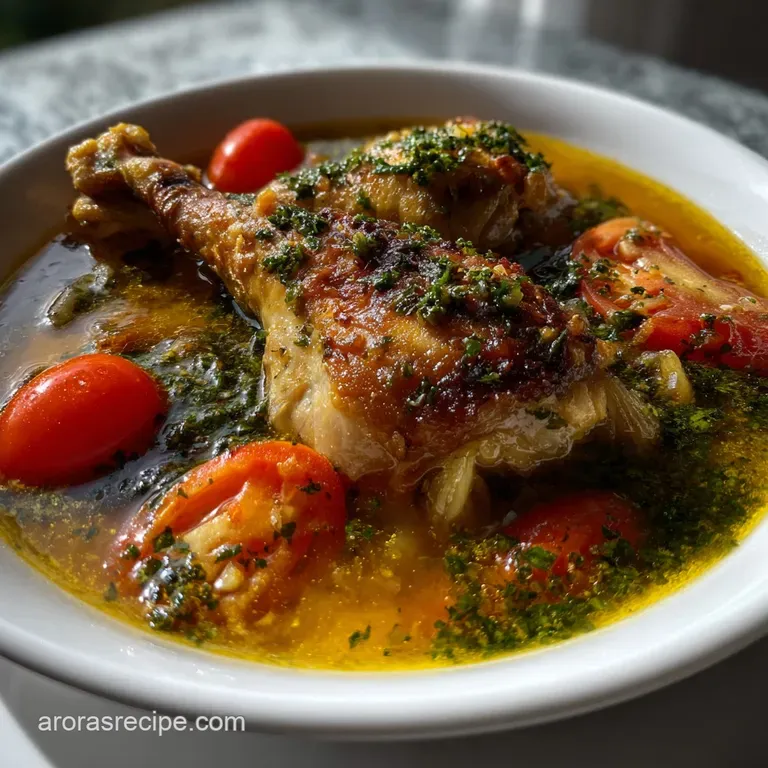
- Effort/Time: Low-effort prep, 1 hour 15 mins total.
- Flavor Hook: Rich, savory umami balanced by bright citric acidity.
- Perfect for: Cold-weather recovery or high-protein make-ahead lunches.
Why Your Homemade Broth Often Feels Thin
We’ve all been there: you spend an hour hovering over the stove only to end up with a bowl of "chicken water" that lacks any real soul. I used to think more salt was the answer, but the real culprit is a lack of gelatinous body.
This chicken leg soup solves that by leveraging bone-in, skin-on cuts that release collagen during the simmering phase.
The secret isn't just in the meat; it’s in the layering of fats. Most people toss everything into the pot at once, which results in boiled, grey aromatics. By searing the 1.2 kg whole chicken legs first in 2 tbsp Lucini Extra Virgin Olive Oil, we initiate the Maillard reaction.
This creates a foundation of complex flavor molecules that a simple boil can never replicate.
Trust me, once you see those brown bits (the fond) at the bottom of your Lodge Enameled Cast Iron Dutch Oven, you’re halfway to a masterclass level chicken leg soup.
It’s the difference between a flat, one-dimensional liquid and a rich, lip-smacking broth that actually satisfies.
The Scientific Power of Gelatin and Starch
- Collagen Conversion: Simmering bone-in legs transforms tough collagen into gelatin, providing a "velvety" mouthfeel and structural body.
- Amylopectin Release: Yukon Gold potatoes release specific starches that act as a natural thickener without turning the broth grainy or "gluey."
- Aromatic Volatilization: Sautéing 200g yellow onion and 4 garlic cloves in fat (rather than water) extracts fat-soluble flavor compounds that remain stable during the long simmer.
The Molecular Chemistry of Your Ingredients
The Science Behind 1.2 kg Whole Chicken Legs
- What They Do
- Provide the primary protein source and the structural backbone of the broth's texture.
- The Chemistry
- During the 1 hour cook time, protein denaturation occurs. Specifically, the triple helix structure of collagen in the leg joints and skin unwinds into individual gelatin strands at temperatures between 71°C and 82°C.
- Why This Matters
- This creates a viscous, body rich liquid that coats the tongue, significantly increasing the "perceived richness" without adding heavy cream.
The Science Behind 400g Yukon Gold Potatoes
- What They Do
- Act as a texture stabilizer and carbohydrate base.
- The Chemistry
- Unlike Russets, Yukon Golds have a medium starch content. During starch gelatinization, the granules absorb the 2 liters of high-quality chicken stock and swell until they partially burst, releasing amylose.
- Why This Matters
- This creates a creamy consistency while the potato cubes maintain their physical integrity, preventing the chicken leg soup from becoming a mash.
The Science Behind 1 tbsp Fresh Lemon Juice
- What They Do
- Acts as a flavor brightener and "finishing" acid.
- The Chemistry
- Citric acid molecules interact with the taste buds to block the perception of heavy fats while enhancing the "brightness" of the 1 tbsp Diamond Crystal Sea Salt.
- Why This Matters
- It provides a necessary contrast to the savory density, ensuring the chicken leg soup tastes fresh rather than stagnant.
Essential Components for the Ultimate Chicken Leg Soup
| Original Ingredient | Substitute | Why It Works |
|---|---|---|
| 1.2 kg Whole Chicken Legs | Bone-in Thighs | Similar collagen content; remains juicy during the 1 hour simmer. |
| 2 liters Chicken Stock | Bone Broth | Note: Higher protein/gelatin content; creates a much thicker, richer finish. |
| 400g Yukon Gold Potatoes | Red Bliss Potatoes | Waxy texture ensures they don't disintegrate. Note: Lower starch release. |
| 4 sprigs Fresh Thyme | 1 tsp Dried Thyme | Concentrated oils provide similar earthy notes; use 1/3 volume of fresh. |
| 250g Carrots | Parsnips | Adds a peppery, earthy sweetness that mimics carrot sugar levels. |
- 1.2 kg Whole chicken legs: Why this? High connective tissue ratio is vital for broth viscosity and satiety.
- 2 tbsp Extra virgin olive oil: Why this? High monounsaturated fats provide a clean base for the initial over high heat sear.
- 400g Yukon Gold potatoes: Why this? Medium starch profile provides creaminess without the "chalky" breakdown of Russets.
- 2 liters high-quality chicken stock: Why this? Provides the sodium-to-liquid ratio necessary for deep mineral extraction.
Mastering the Thermal Layering: step-by-step Instructions
- Pat the 1.2 kg chicken legs dry with paper towels. Note: Surface moisture prevents the Maillard reaction, leading to steaming instead of searing.
- Season the poultry evenly with 1 tbsp sea salt and 1 tsp cracked black pepper.
- Heat 2 tbsp olive oil in a large pot over medium high heat for 3 minutes until a faint wisp of smoke appears.
- Sear chicken legs for 5 minutes per side until the skin is mahogany brown and releases easily from the pan.
- Remove chicken and add 200g diced onion, 250g sliced carrots, and 150g sliced celery.
- Sauté for 6 minutes until onions are translucent and the "mirepoix" aroma shifts from pungent to sweet.
- Stir in 4 minced garlic cloves for 60 seconds until fragrant but not browned.
- Deglaze by pouring in 2 liters chicken stock, scraping the bottom with a wooden spoon until all brown bits (fond) are incorporated.
- Return chicken to the pot along with 400g cubed potatoes, 2 bay leaves, and 4 sprigs of thyme.
- Simmer on low for 45 minutes until chicken meat pulls away from the bone with a fork and potatoes are fork tender.
- Stir in 1 tbsp lemon juice and 30g chopped parsley just before serving until the green color pops and the aroma brightens.
Troubleshooting the Clarity and Consistency of Your Chicken Leg Soup
If your chicken leg soup looks cloudy or tastes flat, don't panic. These are common issues caused by heat management and ingredient timing. If you're looking for a different texture profile, you might enjoy the velvety base of my Chicken Gnocchi Soup recipe, but for this classic version, we focus on clarity.
The "Greasy Surface" problem is a natural result of using skin-on legs. While some fat is essential for flavor, an oily slick can be unappealing. This happens when the fat doesn't emulsify with the stock.
| Problem | Root Cause | The Fix | Pro Protocol |
|---|---|---|---|
| Cloudy Broth | Violent Boiling | Reduce heat immediately to a bare simmer. | Never let the soup reach a rolling boil; keep it at a "lazy bubble." |
| Greasy Surface | Excess Fat Rendered | Use a wide spoon to skim the surface. | Chill the soup; the fat will solidify on top for easy 100% removal. |
| Mushy Potatoes | Overcooking/Type | Use Yukon Gold or Red potatoes only. | Add potatoes only during the final 20 25 minutes of the simmer. |
Why Your Chicken Leg Soup Broth is Cloudy
Cloudiness in a chicken leg soup is caused by the rapid agitation of fat and proteins. When you boil the liquid too hard, the fat emulsifies into the water, creating an opaque look.
By maintaining a gentle simmer (around 85°C-90°C), the impurities coagulate and float to the top, where they can be skimmed, leaving you with a crystal clear, amber liquid.
Scaling Laws and Thermal Mass Dynamics
When doubling this chicken leg soup to 10 servings, you cannot simply double everything and expect the same results. Physics dictates that as volume increases (cubic), surface area increases slower (squared), meaning heat retention is much higher in a larger pot.
- Liquid Evaporation: In a larger batch, less liquid evaporates relative to the total volume. Use 3.5 liters of stock instead of 4 liters to maintain flavor concentration.
- Thermal Recovery: Adding 2.4 kg of cold chicken legs to your pot will drop the temperature significantly. Expect a 15 minute delay in reaching the simmer point compared to the standard batch.
- Spice Scaling: Aromatics like bay leaves and thyme have a non-linear impact. Use 3 bay leaves for a double batch, rather than 4, to avoid a medicinal "piney" aftertaste.
Common Culinary Myths Regarding Poultry Soups
Myth: Boiling the chicken on high heat makes it cook faster and stay juicy. Truth: High heat causes protein denaturation to happen too quickly, squeezing the moisture out of the muscle fibers and resulting in "rubbery" meat.
A low simmer is non-negotiable for tenderness.
Myth: You must peel the potatoes for the best texture. Truth: Yukon Gold skins are incredibly thin and contain pectin, which helps slightly thicken the chicken leg soup while adding earthy flavor notes.
Storage, Freezing, and Reheating Protocols
Yes, chicken leg soup freezes beautifully for up to 3 months when stored in heavy duty, airtight containers. The potatoes may slightly soften upon thawing, but the broth flavor actually improves over time as the aromatics continue to infuse.
- Fridge: Store in an airtight container for up to 4 days. The liquid will likely turn to a jelly like consistency when cold this is the sign of a high gelatin, high-quality chicken leg soup.
- Reheating: Heat on the stovetop over medium low. Add a splash of water or stock to loosen the gelatin. Avoid the microwave to prevent the chicken from becoming "rubbery" due to uneven electromagnetic heating.
- Freezing: Leave 1 inch of headspace in your container to allow for liquid expansion. Thaw overnight in the refrigerator before reheating.
Global Flavor Architecture and Variations
If you want to move away from the "country style" profile, this chicken leg soup is a perfect canvas for global tweaks. If you prefer a crispier chicken texture, you might want to try my Honey Chipotle Chicken Crispers recipe, but for soup variations, keep the bone-in base.
- Mexican Style: Replace thyme/parsley with cilantro and lime. Add a pinch of cumin and garnish with avocado.
- Chinese Style: Replace olive oil with toasted sesame oil. Add 3 slices of fresh ginger and 1 tbsp of soy sauce to the simmering liquid.
- Creamy Variation: For a texture similar to my Chicken and Sausage Pasta recipe, stir in 100ml of heavy cream at the very end.
💡 Zero Waste Tip: Don't discard the parsley stems. Parsley Stems: Tie them with twine and simmer them with the bay leaves. Why: The stems contain more concentrated essential oils than the leaves, providing a deeper herbal foundation for your chicken leg soup.
Whether you're making this for a weeknight meal or a weekend meal prep, the key is the 1.2 kg of bone-in legs and that 1 hour gentle simmer. This isn't just a meal; it's a technical exercise in extracting the maximum flavor from simple ingredients.
Enjoy your chicken leg soup with a side of crusty sourdough to soak up every drop of that gelatin rich broth.

Recipe FAQs
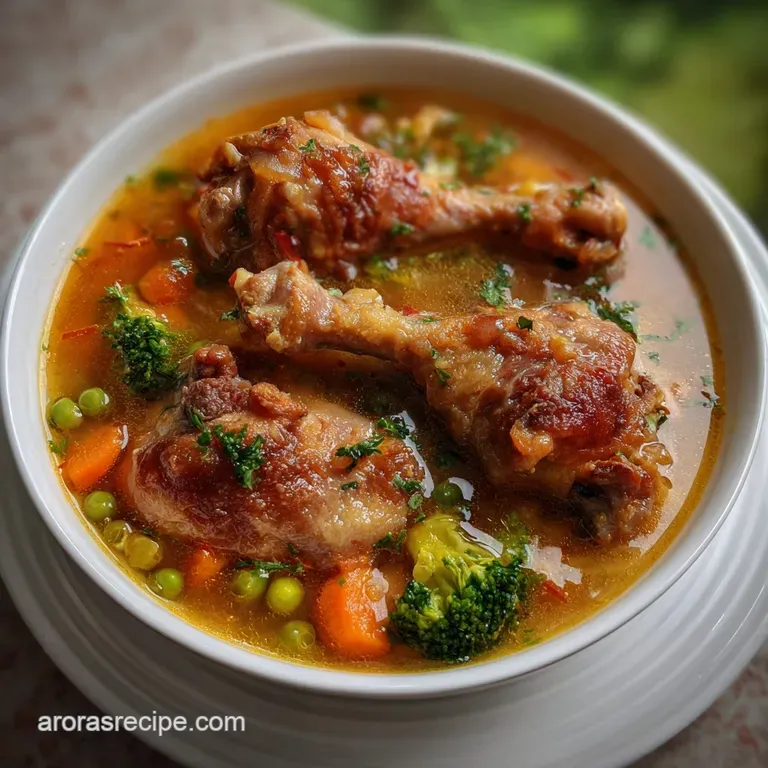
Why is the broth cloudy instead of clear?
The strategic release of potato starches. This cloudiness is intentional, derived from the breakdown of potato starch granules during simmering, which thickens the final broth to a velvety consistency rather than a thin liquid.
This controlled starch release builds body often missing in simple chicken soups.
- Do not rinse potatoes before dicing
- Simmer, do not rapidly boil
- Introduce acidic elements last
Can I skip browning the chicken legs?
No. Browning maximizes savory depth. The Maillard reaction creates hundreds of flavor compounds unavailable through simple boiling alone. Skipping this step results in a flatter, less complex umami base crucial for a restorative broth.
How do I ensure the broth has that deep, savory flavor?
Use bone-in, skin-on legs for maximum gelatin extraction. The breakdown of collagen in the skin and connective tissue releases gelatin, which coats the mouth and delivers the rich mouthfeel described. If you enjoyed mastering the flavor depth in this simmer process, see how the same principle of slow connective tissue breakdown applies when making Creamy Chicken Tortellini Soup: Easy 20-Minute Comfort.
Is chicken stock necessary if I’m using bone-in legs?
No. Stock is redundant when simmering bones for hours. The long simmer time effectively creates fresh, concentrated stock in situ from the raw chicken bones and cartilage, yielding superior freshness.
Myth: Overcooking the chicken makes it dry.
Myth: Overcooking the chicken makes it dry. Reality: While muscle fibers tighten, the long simmer breaks down collagen into gelatin, adding moisture and body to the meat fibers that keeps them tender in a stew environment.
Should I use fresh or dried herbs?
Dried herbs are superior for long simmering times. Fresh herbs release volatile oils too quickly, dissipating flavor before the broth fully develops its depth. Dried herbs release flavors gradually, integrating better over the required 60-minute cook time.
Should I use brown or white onions?
White onions for a cleaner, brighter stock base. Yellow or brown onions contain more sulfur compounds that can dominate delicate poultry flavors, whereas white onions offer a sweeter, milder aromatic foundation crucial for balancing the final citric tang.
Velvety Chicken Leg Soup
Ingredients:
Instructions:
Nutrition Facts:
| Calories | 519 kcal |
|---|---|
| Protein | 32 g |
| Fat | 26 g |
| Carbs | 22 g |
| Fiber | 4 g |
| Sugar | 5 g |
| Sodium | 1260 mg |
