35 Best Appetizer Recipes Ever: Party Gold Standard
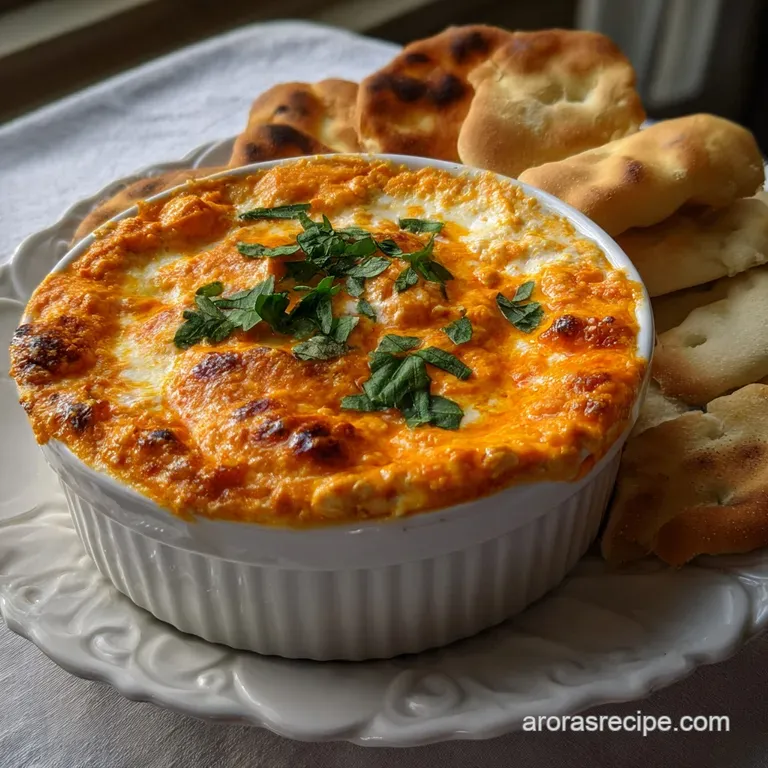
- Effort/Time: 40 minutes total (intermediate skill)
- Flavor Hook: Tangy Buffalo heat balanced by cooled-down creamy fats.
- Perfect for: Game-day tailgates, Southern potlucks, and high-energy housewarmings.
- The Culinary Physics Behind the 35 Best Appetizer Recipes Ever
- Precision Temperature Protocol and Batch Logistics
- The Alchemy of Umami: Selecting Your Elements
- Essential Hardware for Consistent Thermal Distribution
- Phase-Based Execution: From Protein Denaturation to Golden Emulsion
- Common Pitfalls and Restoring Your Emulsion Stability
- Flavor Architecture and Decision Shortcuts for Variety
- ⚗️ The Scaling Lab: The Physics of Quantity
- Deciphering Common Appetizer Myths
- Zero Waste Philosophy and Cryogenic Preservation Rules
- The Final Finish: Aesthetic Presentation and Pairing
- Recipe FAQs
- 📝 Recipe Card
The sharp hiss of a cold chicken thigh hitting a hot Lodge Cast Iron Skillet is the heartbeat of a great party. There is absolutely nothing more heartbreaking than spending $40 on premium cheeses and organic poultry only to pull a greasy, separated mess out of the oven thirty minutes before guests arrive.
I’ve lived that nightmare watching a pool of orange oil sit on top of grainy proteins while my friends politely reached for the store-bought crackers instead. It’s an expensive, frustrating failure that usually stems from a misunderstanding of how fats and proteins interact under heat.
I’ll admit it: I used to be the person who thought "more heat equals more flavor." I once destroyed three consecutive batches of this dip by trying to boil the hot sauce and cream cheese together on high heat, thinking I could rush the process.
Instead of a luscious dip, I created a curdled disaster because I ignored the physics of dairy stability. That humbled me real quick, and I spent the next four Nashville winters tweaking the ratios until the emulsion was bulletproof.
If you've ever struggled with "broken" sauces, trust me, it’s not you it’s the chemistry.
The breakthrough came when I stopped treating this as a "dump and stir" recipe and started viewing it through the lens of protein denaturation and fat stabilization. The secret to the 35 Best Appetizer Recipes Ever isn't just the spice; it's the way the Philadelphia Cream Cheese acts as a powerful emulsifier, wrapping around the sharper fats of the cheddar to keep them from leaching out.
You’re looking for a finish that provides a "shattering" crispness on the toasted top and a velvety, heavy cream-like interior. This recipe provides that exact sensory payoff: the olfactory punch of vinegar based heat followed by the cooling, savory depth of melted Monterey Jack.
The Culinary Physics Behind the 35 Best Appetizer Recipes Ever
This recipe succeeds because it leverages specific chemical reactions to prevent the common "oily dip" syndrome found in lesser versions of the 35 Best Appetizer Recipes Ever. By understanding these mechanisms, you can replicate professional results in a home kitchen every single time.
- Emulsion Stability: The high lecithin content in full fat cream cheese acts as a bridge between the water based hot sauce and the oil-based fats in the cheddar cheese.
- Protein Denaturation Control: Cooking 1.5 lbs chicken thighs at a controlled rate prevents the muscle fibers from tightening too much, ensuring the meat remains tender rather than stringy or "woody."
- Maillard Reaction Optimization: Searing the chicken first creates complex flavor compounds (melanoidins) that raw or boiled chicken simply cannot provide.
- Casein Buffer: The proteins in the Hidden Valley Ranch dressing provide a chemical buffer that rounds out the acidic "bite" of the buffalo sauce, preventing the flavor from becoming one-dimensional.
Precision Temperature Protocol and Batch Logistics
Executing the 35 Best Appetizer Recipes Ever requires a focus on thermal mass and internal checkpoints to ensure the dip is safe, hot, and structurally sound.
- Prep Time: 15 minutes
- Cook Time: 25 minutes
- Total Time: 40 minutes
- Yield: 10 servings (approx. 1/2 cup per serving)
| Checkpoint | Target Metric | Purpose |
|---|---|---|
| Chicken Internal Temp | 165°F (74°C) | Ensures food safety and optimal moisture retention in thighs. |
| Oven Temperature | 375°F (190°C) | Ideal for Maillard browning without breaking the dairy emulsion. |
| Cheese Weight | 3.0 cups total (grated) | Precise ratio to ensure a scoopable consistency vs. a solid block. |
The Alchemy of Umami: Selecting Your Elements
Choosing the right components for the 35 Best Appetizer Recipes Ever is a lesson in fat content and moisture balance. Every ingredient in this list serves a specific structural or chemical purpose.
Ingredient Chemistry Breakdown
| Ingredient | Chemical/Physical Role (Science) | The Pro Secret (Why This Matters) |
|---|---|---|
| Chicken Thighs | Collagen hydrolysis during the bake | Thighs stay juicy at high temps while breasts turn dry and fibrous. |
| Full fat Cream Cheese | Lipid water emulsification | Prevents the cheddar from separating into a pool of orange oil. |
| Sharp White Cheddar | Proteolysis driven flavor depth | Aged cheddar has lower moisture, providing a concentrated savory "punch." |
| Buffalo Hot Sauce | Acidic denaturation | The vinegar breaks down surface proteins for better sauce adhesion. |
- 1.5 lbs boneless, skinless chicken thighs: Why this? High fat and collagen content prevent drying during the secondary oven bake. (Substitute: 1.5 lbs chicken breast - Note: result will be significantly drier/leaner)
- 1 tsp Diamond Crystal Kosher Salt: For seasoning the protein during the initial sear.
- 16 oz Philadelphia Cream Cheese, softened: Why this? High fat-to-protein ratio creates a stable, non-grainy base. (Substitute: 16 oz Neufchatel - Note: less creamy, slightly tangier finish)
- 1 cup Frank’s RedHot Buffalo style hot sauce: The standard for authentic tang.
- 1 cup high-quality Ranch or Blue Cheese dressing: Use a refrigerated brand for better emulsion.
- 1.5 cups Sharp White Cheddar cheese, freshly grated: Why this? Pre-shredded cheese contains potato starch which makes the dip gritty. (Substitute: 1.5 cups Mild Cheddar - Note: less flavor depth)
- 1.5 cups Monterey Jack cheese, freshly grated: Why this? High melt ability (low melting point) for that "cheese pull" effect.
- 0.5 cup Blue cheese crumbles: Adds a funky, salty counterpoint to the heat.
- 0.25 cup Fresh chives, finely chopped: For a bright, onion like aromatic finish.
- 1 tsp Smoked Paprika: Adds a "Nashville" wood fired aroma without the grill.
Essential Hardware for Consistent Thermal Distribution
The 35 Best Appetizer Recipes Ever rely on tools that can hold heat steadily to prevent the dairy from "shocking" and curdling.
- Lodge 12 inch Cast Iron Skillet: The heavy thermal mass of cast iron ensures the chicken sears evenly without dropping the pan temperature.
- KitchenAid Stand Mixer (or hand mixer): Essential for "whipping" the cream cheese and hot sauce into a stable aeration before adding the meat.
- Pyrex 9x13-inch Glass Baking Dish: Glass heats more slowly than metal, which protects the delicate cheese fats from over boiling at the edges.
- Microplane Grater: For the cheddar and Monterey Jack to ensure the finest possible "shred" for instant melting.
Phase Based Execution: From Protein Denaturation to Golden Emulsion
Follow these steps exactly to master the cornerstone of the 35 Best Appetizer Recipes Ever. Each action is designed to build layers of flavor while maintaining a stable texture.
- Preheat the oven to 375°F (190°C) until the internal sensor chimes.
- Season 1.5 lbs chicken thighs with 1 tsp kosher salt.
- Sear chicken in a Lodge Cast Iron Skillet for 6 minutes per side until the exterior is mahogany brown and the centers are no longer pink. Note: This creates the Maillard reaction base.
- Shred the warm chicken using two forks until the pieces are uniform, bite sized "shards."
- Whisk 16 oz softened cream cheese and 1 cup buffalo sauce in a large bowl until the mixture is a smooth, pale orange with no white lumps.
- Fold in 1 cup ranch dressing and 1 tsp smoked paprika until the aroma shifts from sharp vinegar to a creamy, smoky fragrance.
- Incorporate the shredded chicken, 1 cup of cheddar, and 1 cup of Monterey Jack until the protein is fully coated in the emulsion.
- Transfer the mixture to a Pyrex baking dish, spreading it until the surface is level and reaches the corners.
- Top with the remaining 0.5 cup cheddar, 0.5 cup Monterey Jack, and 0.5 cup blue cheese crumbles until the surface is completely obscured.
- Bake for 25 minutes until the edges are bubbling vigorously and the cheese top has developed golden brown "freckles."
- Garnish with 0.25 cup fresh chives until the heat from the dip releases a bright, grassy aroma.
Common Pitfalls and Restoring Your Emulsion Stability
Even when making the 35 Best Appetizer Recipes Ever, physics can sometimes work against you. Understanding why things go wrong is the mark of a "Masterclass" cook.
Why Your Appetizer Base Separates
When cheese is heated too quickly or too high, the protein clumps together and squeezes out the fat (the oil). This is called "breaking" the sauce. If you see a pool of oil, the temperature of the dairy likely exceeded 160°F too fast, or you used pre-shredded cheese with anti caking agents that disrupted the gluten like protein bonds of the cheese.
| Problem | Root Cause | The Fix | Pro Protocol |
|---|---|---|---|
| Oily surface | Fat separation from high heat | Stir in 1 tbsp warm heavy cream | Always use full fat blocks; low-fat cheese breaks faster. |
| Gritty texture | Pre-shredded cheese starch | None (prevention only) | Hand grate your cheese 10 mins before use. |
| Dry chicken | Overcooking in Phase 1 | Fold in 2 tbsp extra Ranch | Use thighs; they have the fat content to survive the double cook. |
Quick Fix Table
| Problem | Cause | Fix |
|---|---|---|
| Too spicy | Capsaicin overload | Add 1/2 cup sour cream |
| Too salty | Salinity accumulation | Add 1 tsp lemon juice (acid balances salt) |
| Dip is runny | low-fat dairy usage | Bake 5 mins longer or add more Jack cheese |
Flavor Architecture and Decision Shortcuts for Variety
The 35 Best Appetizer Recipes Ever should be adaptable. While the base recipe is a Southern classic, you can adjust the "architecture" based on who is coming to dinner.
- If you want a smoky "Nashville" kick, add 1 tsp of liquid smoke or use smoked cheddar in place of the sharp white cheddar.
- If you want a lighter profile, serve with cucumber slices and bell pepper spears instead of tortilla chips, similar to the logic in these 75 Healthy Dinner Recipes.
- If you want maximum "crunch", top the dip with crushed panko breadcrumbs tossed in melted butter before the final bake.
For a unique dinner party starter, you might even consider serving small portions of this dip alongside a heavier main like a Classic Hyderabadi Chicken recipe, though usually, this dip stands alone as the star of the pre-game show.
⚗️ The Scaling Lab: The Physics of Quantity
When you decide to double this recipe for a massive crowd, you cannot simply multiply every factor by two. The physics of the kitchen change as the mass increases.
- The Evaporation Paradox: If you double the recipe in a larger dish, you have more surface area. This means more moisture evaporates. Reduce the Buffalo sauce by 2 tablespoons per doubled batch to prevent the dip from becoming too salty as it reduces.
- Thermal Mass Delay: Doubling the volume in one dish increases the "cold core" significantly. A double batch in a deep dish will take 45 50 minutes to heat through, which risks burning the edges. The Fix: Drop the oven temp to 350°F and bake longer, or use two separate 9x13 dishes.
- Carry Over Cooking: A larger mass of cheese and chicken holds heat longer. Pull the dip when the center jiggles slightly; the residual heat will finish the set while it rests on the counter.
- Flavor Saturation: Scale the salt and smoked paprika to 1.5x, not 2x. Spices can become overwhelming when the volume of fat increases, as fat carries flavor molecules more efficiently in large batches.
Deciphering Common Appetizer Myths
Myth: You must use chicken breast for the "best" flavor. Truth: Chicken breast lacks the connective tissue (collagen) needed to stay moist during a 25 minute bake. Thighs provide a superior, velvety mouthfeel that defines the 35 Best Appetizer Recipes Ever.
Myth: Pre-shredded cheese saves time with no trade off. Truth: Pre-shredded cheese is coated in cellulose or potato starch. This starch prevents the cheese from fusing into a smooth emulsion, resulting in a grainy, "sandy" texture once melted.
Zero Waste Philosophy and Cryogenic Preservation Rules
The 35 Best Appetizer Recipes Ever are even better the next day because the flavors have time to undergo "cold fusion," where the aromatics penetrate the protein deeper.
- Fridge: Store in an airtight container for up to 4 days. The fat will solidify, so it will look firm until reheated.
- Freezer: You can freeze this dip for up to 2 months. Science: The high fat content in the cream cheese protects the protein from freezer burn, though the emulsion may look slightly "broken" when thawed.
- Reheating: Avoid the microwave if possible. Reheat in a 325°F oven for 15 minutes until it sizzles. If it looks dry, stir in a splash of milk to restore the moisture-to-fat ratio.
💡 ZERO WASTE TIP: Don't discard the chicken skins if your thighs came with them! Transform: Fry them in the skillet until they are "shattering" crisp.
Science: The rendered fat adds incredible depth, and the skins can be crumbled on top of the dip as a high protein "crouton" for the 35 Best Appetizer Recipes Ever.
The Final Finish: Aesthetic Presentation and Pairing
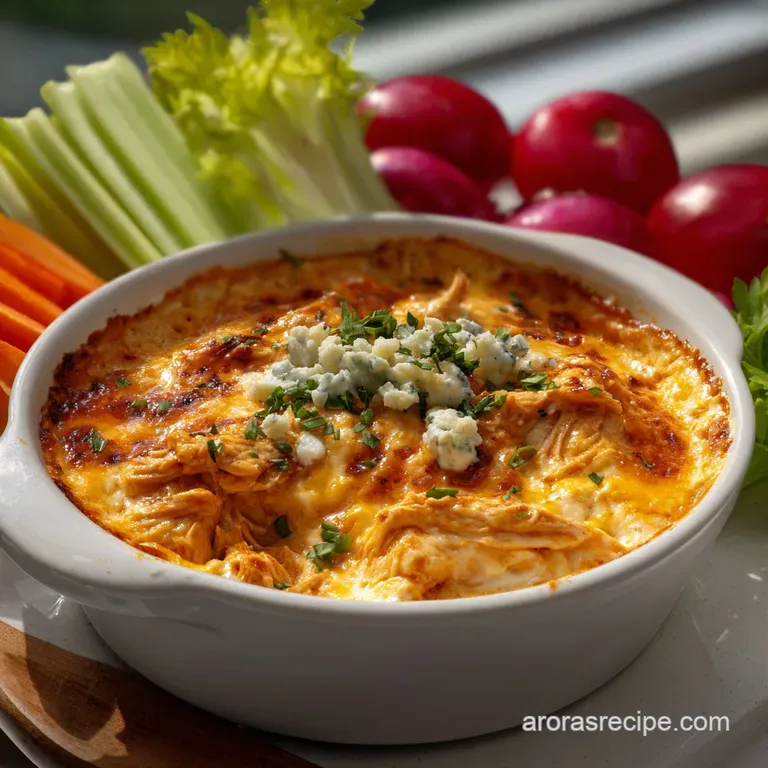
To truly master the 35 Best Appetizer Recipes Ever, the presentation must match the technical execution. Serve the dip while it is still bubbling and hissing from the oven. The contrast between the mahogany brown cheese crust and the bright green chives is visually arresting.
Pair this with sturdy "vessels" that won't snap under the weight of the thick dip. Thick cut tortilla chips, toasted sourdough points, or celery stalks are the traditional choices.
For a sophisticated twist, try serving it with sea-salt dusted pita chips or even hollowed out mini bell peppers for a "Healthy Starters Appetizers Easy" variation. The goal is to provide a neutral, crunchy base that allows the complex, scientifically balanced flavors of your Buffalo chicken to shine.
Trust the process, watch your temperatures, and get ready for your friends to ask for the recipe before the first quarter is even over.

Recipe FAQs
What is the ideal internal temperature for the chicken before shredding?
165°F (74°C) is the required minimum internal temperature. This temperature ensures full pathogen destruction while still allowing the muscle fibers to retain significant moisture due to the high collagen content in thighs.
- Check temp at thickest point
- Pull at 163°F for carryover cooking
- Use thighs over breasts for juiciness
Can I substitute Neufchatel cheese for the full fat cream cheese?
Use full fat cream cheese for best results. Neufchatel has significantly less fat, which destabilizes the emulsion when combined with the hot sauce. Lower fat content leads to a higher probability of the sauce separating into oil and solids during baking.
Must I sear the chicken thighs before baking?
Searing develops critical flavor compounds via Maillard reaction. Searing the exterior protein structure creates hundreds of new aromatic compounds that boiling or baking alone cannot achieve. This foundational flavor is essential for professional results, much like the foundational fat rendering needed for great steak, as seen in Top Sirloin Recipes: Pan-Seared Steak with Garlic Thyme Butter.
Why does my dip look greasy and separated after coming out of the oven?
Cold cheese added to hot liquid causes protein clumping. Temperature shock denatures casein proteins, creating grainy texture instead of smooth emulsion.
- Remove pan from heat first
- Add cheese in small handfuls
- Use fresh grated Gruyère (pre-shredded has cellulose coating)
Should I use unsalted butter if substituting fat in a similar appetizer recipe?
Unsalted butter allows for precision control over sodium levels. Pre-salted butters vary widely in sodium content, making standardization difficult when managing multiple salty components like cheese and hot sauce. Unsalted ensures you build the flavor profile from zero, maintaining recipe integrity.
Is it true that a faster bake yields a creamier result?
Myth: A faster bake equals a creamier result. High oven temperatures rush the melting process, causing the milk proteins to seize and eject the fat rapidly. Aim for moderate heat (375°F) to allow the cream cheese emulsion to stabilize evenly.
How does the heat balance in this dip compare to a cheesy baked pasta?
This dip emphasizes fat stabilization over starch binding. Unlike a baked pasta which relies on starch (flour/roux) to bind liquids, this appetizer is a pure fat/protein emulsion reliant on cream cheese structure. Mastering this stable emulsion transfers directly to other recipes, such as cookie making where fat dispersion controls spread, like in the Sugar Cookie: Best Cut-Out Recipe for Decorating.
Best Appetizer Recipes Ever
Ingredients:
Instructions:
Nutrition Facts:
| Calories | 506 kcal |
|---|---|
| Protein | 25 g |
| Fat | 43 g |
| Carbs | 4 g |
| Fiber | 0 g |
| Sugar | 2 g |
| Sodium | 940 mg |
