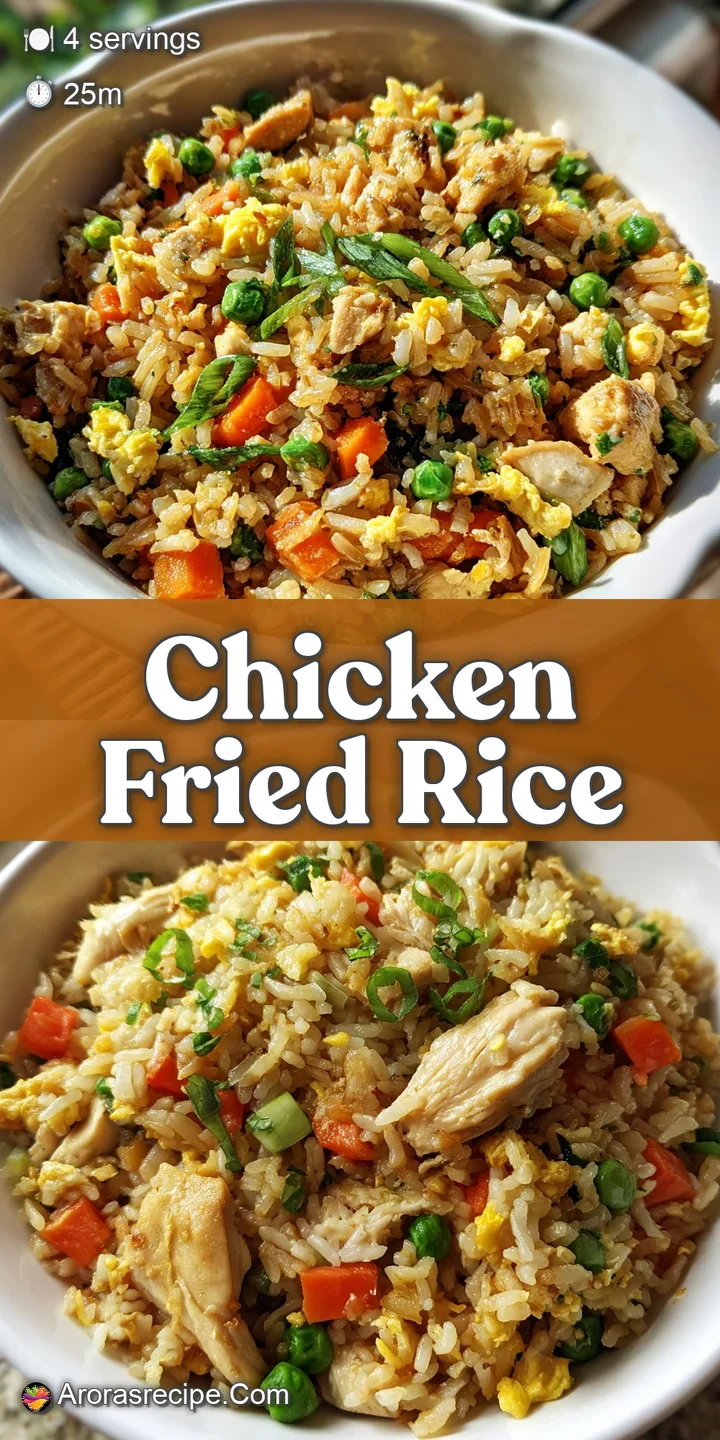
Chicken Fried Rice: Flavorful Homemade
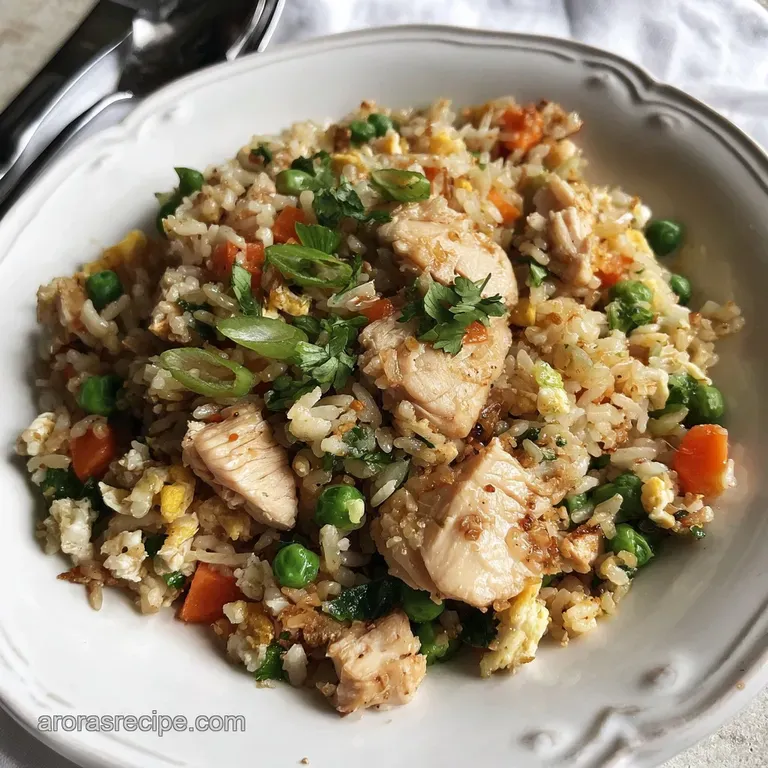
- Time: Active 15 minutes, Passive 10 minutes, Total 25 minutes
- Flavor/Texture Hook: Savory, umami rich grains with shatter crisp edges and velvety chicken.
- Perfect for: Busy weeknight dinners, using up leftover rice, or beginner meal prep.
- Master the Ultimate Quick Chicken Fried Rice
- The Science Behind Perfect Textures and Flavor
- Component Analysis and Ingredient Roles
- Gathering Your Essential Fresh and Pantry Ingredients
- Basic Kitchen Tools for Professional Style Results
- The Simple Step-By-Step Easy Cooking Process
- Fixing Common Cooking Mistakes and Texture Issues
- Creative Recipe Variations and Smart Ingredient Swaps
- Safe Food Storage and Kitchen Zero Waste
- Delicious Sides and Perfect Pairings
- Very High in Sodium
- Recipe FAQs
- 📝 Recipe Card
Master the Ultimate Quick Chicken Fried Rice
That unmistakable sizzle when a scoop of cold rice hits a shimmering, hot pan is music to my ears. We've all been there standing in the kitchen at 6:00 PM, staring at a container of leftover white rice from last night's takeout, wondering if we can turn it into something special.
I used to think I needed a commercial grade jet engine burner and a seasoned carbon steel wok to get that restaurant quality flavor. Honestly, I was wrong.
You don't need fancy gadgets to make an incredible, comforting meal that beats the greasy box version every time. I’ve spent years making mistakes like using fresh, steamy rice that turned into a gummy porridge, or overcrowding the pan and steaming my chicken instead of searing it.
Through all those soggy experiments, I learned that the secret isn't in the equipment; it's in the preparation of the ingredients.
This recipe is my go to when I want something fast, filling, and packed with that savory Nashville style soul. We're going to treat the chicken with a quick "velveting" trick to keep it tender, and we'll use a specific sauce ratio that balances salt, sweetness, and depth.
Whether you're a pro or just starting your cooking journey, this method works every single time because it's built on solid, simple techniques that I've refined in my own kitchen.
The Science Behind Perfect Textures and Flavor
Retrograded Starch: Cooling cooked rice for 24 hours allows the starch molecules to reform into a crystalline structure, making the grains firm enough to withstand over high heat stir frying without breaking.
Maillard Reaction: High heat triggers a chemical reaction between amino acids and reducing sugars, creating the brown, toasted crust on the rice and chicken that provides deep umami flavor.
Protein Denaturation: Adding cornstarch to the chicken marinade creates a protective barrier that slows down the tightening of protein fibers, keeping the meat silky even at high temperatures.
Emulsification: Whisking the soy sauce, oyster sauce, and sesame oil ensures the fat and water based liquids coat the rice evenly instead of pooling at the bottom of the pan.
| Cook Method | Prep Time | Texture Result | Best For |
|---|---|---|---|
| Classic Skillet | 15 minutes | Crispy, toasted edges | Daily home cooking |
| Traditional Wok | 12 minutes | Smoky "Wok Hei" flavor | over High heat enthusiasts |
| Sheet Pan | 5 minutes | Evenly browned, less oil | Large batch meal prep |
Choosing the right approach depends on your tools, but for most of us, a heavy bottomed skillet provides the best heat retention for that signature sear. If you’re looking for more ways to use tender poultry, you might love the crunch in my Honey Chipotle Chicken Crispers recipe.
Component Analysis and Ingredient Roles
| Ingredient | Science Role | Pro Secret |
|---|---|---|
| Jasmine Rice | High amylopectin content | Must be thoroughly chilled to prevent a "mushy" disaster. |
| Cornstarch | Moisture barrier | It binds the marinade to the chicken, creating a "velvet" texture. |
| Large Eggs | Fat and protein binder | Scramble them separately so they don't coat the rice in a yellow film. |
| Oyster Sauce | Umami booster | Adds a thick, syrupy depth that soy sauce alone cannot provide. |
Using the right rice is non negotiable for that distinct grain separation we all love. While we're focusing on this quick stir fry today, the layering techniques remind me of the precision needed for a Classic Hyderabadi Chicken recipe, where every grain of rice is treated like gold.
Gathering Your Essential Fresh and Pantry Ingredients
- 1 lb (450g) chicken breast: Diced into 1/2 inch pieces. Why this? Small pieces cook fast and maximize surface area for browning.
- Substitute: Chicken thighs for more fat and moisture.
- 1 tbsp soy sauce: For the marinade. Why this? Seasons the meat from the inside out.
- Substitute: Tamari for a gluten-free option.
- 1 tsp cornstarch: To velvet the meat. Why this? Keeps the chicken tender under high heat.
- Substitute: Potato starch or arrowroot powder.
- 1/2 tsp black pepper: For a subtle floral heat.
- Substitute: White pepper for a more traditional Chinese flavor profile.
- 4 cups cooked jasmine rice: Refrigerated for 24 hours. Why this? Dry grains are the only way to avoid sogginess.
- Substitute: Long grain white rice or brown rice (slightly toothier).
- 3 large eggs: Lightly beaten. Why this? Adds richness and essential protein texture.
- Substitute: Silken tofu crumbled for a vegan style scramble.
- 2 tbsp neutral oil: Like canola or grapeseed. Why this? High smoke point is crucial for stir frying.
- Substitute: Avocado oil or peanut oil.
- 1/2 cup white onion: Small dice.
- Substitute: Yellow onion or shallots for more sweetness.
- 3 cloves garlic: Minced.
- 1 tbsp fresh ginger: Grated. Why this? Provides a bright, zesty contrast to the salty sauce.
- 1/2 cup frozen peas and carrots: Thawed.
- Substitute: Small diced bell peppers or edamame.
- 3 tbsp low sodium soy sauce: For the main sauce.
- Substitute: Coconut aminos for less sodium and more sweetness.
- 1 tbsp oyster sauce: For depth.
- 1 tsp toasted sesame oil: For the finishing aroma.
- 2 scallions: Thinly sliced for garnish.
Basic Kitchen Tools for Professional Style Results
You don't need a pantry full of specialized equipment to make this. A large, heavy bottomed non stick skillet or a cast iron pan (like a Lodge skillet) is actually better for most home stoves than a wok because it has more surface area in direct contact with the burner.
You'll also want a sturdy spatula I prefer a wide silicone one or a metal fish spatula if I'm using cast iron to toss the rice without crushing the grains.
A microplane is my secret weapon for the ginger; it turns it into a paste that melts into the oil. Finally, make sure you have a couple of small bowls ready for your "mise en place." Stir frying happens so fast that if you're chopping onions while the garlic is burning, it's game over.
The Simple step-by-step Easy Cooking Process
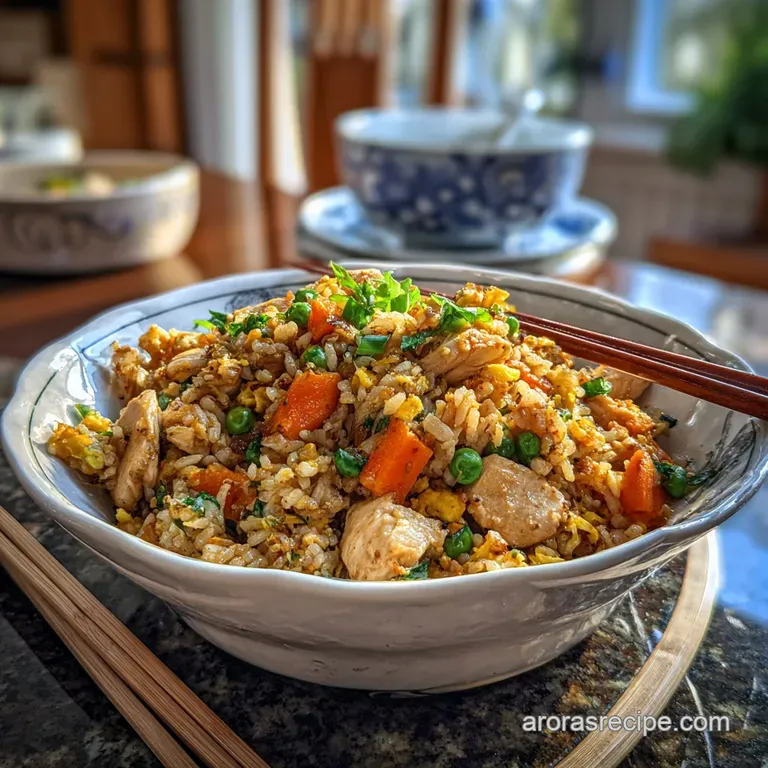
1. Searing the Velveted Chicken
Toss the 1 lb diced chicken with 1 tbsp soy sauce, 1 tsp cornstarch, and 1/2 tsp black pepper. Heat 1 tbsp oil in your skillet over high heat until it ripples. Add the chicken in a single layer and let it sit for 2 minutes until a golden brown crust forms.
Flip and cook for another 2 minutes. Remove and set aside. Note: Don't crowd the pan or the meat will steam instead of searing.
2. Scrambling the Fluffy Eggs
Wipe the pan quickly if needed, then add a splash of oil. Pour in the 3 beaten eggs. Use your spatula to gently push the eggs toward the center until they form soft, velvety curds. They should be slightly undercooked. Remove and set aside with the chicken.
3. Sautéing the Aromatic Base
Add the remaining oil to the pan. Toss in the 1/2 cup diced onion and sauté for 2 minutes until translucent and soft. Add the 3 cloves minced garlic, 1 tbsp grated ginger, and 1/2 cup thawed peas and carrots. Cook for 1 minute until the aroma fills the kitchen.
4. Toasting the Grains and Finishing
Turn the heat to its highest setting. Add the 4 cups of cold rice. Use your spatula to break up any large clumps. Let the rice sit undisturbed for 30 seconds to toast. Pour in the 3 tbsp soy sauce and 1 tbsp oyster sauce.
Stir vigorously for 2 minutes until every grain is coated in a dark, glossy brown.
5. The Final Toss
Add the cooked chicken and eggs back into the pan. Drizzle with 1 tsp toasted sesame oil. Toss everything together for 1 minute until steaming hot and well combined.
6. Garnish and Serve
Turn off the heat. Stir in the 2 sliced scallions. Serve immediately while the rice is at its peak crispness.
Fixing Common Cooking Mistakes and Texture Issues
Why Your Fried Rice Is Soggy
The most common culprit is using fresh, warm rice. Fresh rice has too much surface moisture. When it hits the hot oil, that moisture turns to steam, softening the starch and creating a sticky mess.
If you must use fresh rice, spread it out on a baking sheet and put it in front of a fan for 30 minutes to dehydrate the surface.
| Problem | Root Cause | Solution |
|---|---|---|
| Grains clumping together | High moisture in rice | Use day old, refrigerated rice and break clumps by hand before cooking. |
| Burnt garlic flavor | Garlic added too early | Add aromatics only after onions are soft; cook for just 30-60 seconds. |
| Pale, bland rice | Not enough heat or sauce | Ensure pan is smoking hot before adding rice and use oyster sauce for color. |
Common Mistakes Checklist
- ✓ Dry your chicken: Pat the meat dry before adding the marinade to ensure the cornstarch sticks.
- ✓ Preheat like you mean it: Let the pan get hot for at least 2 minutes before adding the first drop of oil.
- ✓ Cold rice is king: Never use rice that hasn't been chilled for at least 4 hours (24 is better).
- ✓ Don't over stir: Let the rice sit against the hot metal for a few seconds at a time to develop "socarrat" or crispy bits.
- ✓ Season in stages: We season the chicken, the eggs, and the rice separately to build layers of flavor.
Creative Recipe Variations and Smart Ingredient Swaps
If you want to change things up, this recipe is incredibly forgiving. For a "Supreme" version, add some diced ham or shrimp along with the chicken. If you're looking for a spicy kick, a tablespoon of Sambal Oelek or Szechuan chili crisp added with the soy sauce will transform the dish.
If you want X, do Y
- If you want a smoky flavor, let the rice sit undisturbed on high heat for 60 seconds to slightly char the bottom.
- If you want a healthier twist, swap half the jasmine rice for cauliflower rice, but add the cauliflower at the very end so it doesn't get mushy.
- If you want a "Hibachi" style, add 2 tablespoons of unsalted butter at the very end along with a squeeze of fresh lemon juice.
Safe Food Storage and Kitchen Zero Waste
Storage: Store leftovers in an airtight container in the fridge for up to 3 days. When reheating, add a teaspoon of water or a splash of chicken broth to the bowl to help "re steam" the grains in the microwave.
Freezing: This dish freezes surprisingly well! Place cooled rice in a freezer bag, press out all the air, and freeze for up to 2 months. Reheat directly from frozen in a hot skillet with a little oil.
Zero Waste Tip: Don't throw away those scallion whites or the woody ends of your ginger. Throw them into a bag in your freezer to make a quick aromatic broth later.
Also, if you have random vegetable scraps like the stems of broccoli or the heart of a cabbage, dice them tiny and toss them in with the onions!
Delicious Sides and Perfect Pairings
While this is a complete meal on its own, I love serving it with a side of smashed cucumber salad with plenty of vinegar to cut through the richness. If you're hosting a dinner party, a plate of crispy spring rolls or even a simple miso soup makes it feel like a full spread.
Chef's Tip: For the most intense flavor, freeze your ginger for 10 minutes before grating. It makes the fibers much easier to break down, resulting in a smooth paste rather than stringy bits.
Don't be afraid to get that pan hot! The sound of the "crackle" is your best friend in this recipe. Once you master the timing of the rice toasting, you'll never look at a takeout menu the same way again. Happy cooking!
Very High in Sodium
1145 mg of sodium per serving (50% of daily value)
American Heart Association recommendation: limit sodium intake to about 2,300mg per day.
Tips to Reduce Sodium in Your Fried Rice
-
Reduce Soy Sauce-25%
Soy sauce is a major source of sodium. Reduce the 3 tbsp of low-sodium soy sauce in the recipe to 1 tbsp and consider using coconut aminos for a portion. This can reduce sodium significantly.
-
Omit Oyster Sauce-20%
Oyster sauce is very high in sodium. Eliminating it entirely will lower the overall sodium content without significantly altering the flavor profile, especially if you use other seasonings.
-
Marinade Modification-15%
Reduce the soy sauce in the chicken marinade to 1/2 tbsp, and add garlic powder, ginger powder or white pepper to enhance the flavor instead. This helps control sodium levels from the start.
-
Unsalted Rice-10%
Ensure the cooked rice is prepared without any added salt. Many recipes call for salting the water while cooking rice which adds a significant amount of sodium.
-
Flavor Boost
Use fresh herbs and spices like garlic, ginger, black pepper, and a squeeze of lemon or lime to boost flavor without adding sodium. Experiment with different combinations to find what you like best.
Recipe FAQs
What is the secret to non-soggy fried rice?
Use day-old, refrigerated rice. Cold, dry grains are essential because their starch molecules have recrystallized, making them firm enough to withstand high heat without breaking down into a mushy texture.
How do I keep the chicken tender in fried rice?
Velvet the chicken before cooking. Marinating diced chicken with cornstarch creates a protective barrier that keeps the meat silky and moist even when cooked quickly over high heat.
Can I use fresh rice for chicken fried rice?
No, fresh rice will result in soggy fried rice. Freshly cooked rice contains too much surface moisture, which steams rather than fries when it hits the hot pan, leading to clumpy, mushy grains.
How can I get a good sear on the rice?
Ensure your pan is smoking hot and don't overcrowd it. High heat is crucial for the Maillard reaction, creating those desirable crispy, toasted edges and deep umami flavors on the rice grains.
What's the best way to mix the sauce into the rice?
Whisk sauce ingredients together before adding to the pan. This ensures the oil and water based liquids emulsify properly, allowing them to coat every grain of rice evenly for consistent flavor.
Can I substitute chicken thighs for breast in fried rice?
Yes, chicken thighs are a great substitute. They contain more fat, which can add extra moisture and richness to the dish, offering a more forgiving texture compared to leaner chicken breast. If you enjoy tender poultry, you might also like the crunch in my Honey Chipotle Chicken Crispers recipe.
How should I reheat leftover chicken fried rice?
Reheat in a hot skillet with a little oil or a splash of liquid. This helps to re-steam the grains and restore some of their crispness, preventing a dry or rubbery texture. For a quick method, add a teaspoon of water or broth when microwaving.
Chicken Fried Rice
Ingredients:
Instructions:
Nutrition Facts:
| Calories | 532 kcal |
|---|---|
| Protein | 43.6 g |
| Fat | 17.1 g |
| Carbs | 45.8 g |
| Fiber | 2.4 g |
| Sugar | 2.1 g |
| Sodium | 1145 mg |
