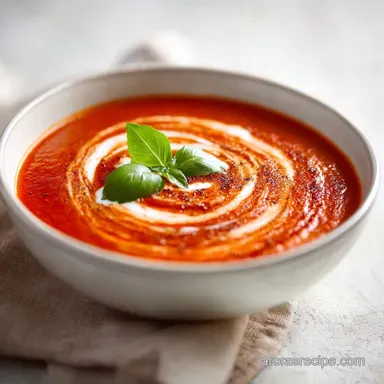
20-Minute Creamy Tomato Soup with Fresh Basil

- Time: 5 min active + 15 min cook = Total 20 minutes
- Flavor/Texture Hook: Silky smooth texture with a bright, tangy finish
- Perfect for: Rainy weeknight dinners or a quick lunch pairing with grilled cheese
- Easy 20 Minute Creamy Tomato Soup with Fresh Basil
- Why This Soup Works
- The Essential Component Breakdown
- Gear For The Job
- Steps To Silky Soup
- Fixing Common Soup Flubs
- Adjusting The Batch Size
- Debunking Common Soup Myths
- Adapting For Every Diet
- Saving Your Leftovers
- The Final Flourish
- Recipe FAQs
- 📝 Recipe Card
Easy 20 Minute Creamy Tomato Soup with Fresh Basil
The smell of butter hitting a hot pot and the immediate sizzle of onions is basically a hug for your brain. I remember one rainy Tuesday in New Orleans where the humidity was thick and I just wanted something that tasted like home but didn't require me to stand over a stove for half the night.
I had a can of fire roasted tomatoes and some fresh basil wilting on the counter, and that's how this version came to be.
This 20 Minute Creamy Tomato Soup with Fresh Basil is the ultimate quick comfort meal. We're playing with a heavy contrast here: the sharp, bright acidity of the tomatoes crashing right into the rich, velvety weight of heavy cream.
It's that balance of sweet, savory, and tangy that makes it feel like it's been simmering since dawn, even though it only takes twenty minutes.
You can expect a soup that's thick enough to coat a spoon but light enough that you don't feel weighed down. It's a soulful, bold bowl of warmth that proves you don't need a weekend of prep to get a gourmet result. Right then, let's crack on and get this on the table.
Why This Soup Works
I've spent way too much time making soups that tasted "flat," and I realized the secret isn't more ingredients, but how you treat the ones you have.
- The Nutty Shift: Sautéing the tomato paste until it turns brick red removes the raw, metallic taste and introduces a savory, concentrated depth.
- Acid Balancing: A tiny pinch of sugar doesn't make the soup sweet, but it cancels out the harsh edges of the canned tomatoes.
- Fat Emulsification: Adding heavy cream at the very end creates a stable, silky texture that keeps the soup from separating.
- Fresh Herb Finish: Stirring in basil after the heat is off prevents the leaves from turning brown and keeps the flavor bright.
| Method | Time | Texture | Best For |
|---|---|---|---|
| Stovetop | 20 min | Velvety & Consistent | Quick weeknight meals |
| oven-roasted | 60 min | Chunky & Charred | Sunday dinner prep |
Trust me on this: the stovetop method is the way to go when you're starving. You get that immediate gratification without sacrificing the depth of flavor.
The Essential Component Breakdown
Before we start tossing things in the pot, let's look at what's actually happening with these ingredients. It's not just a list; it's a flavor map.
| Ingredient | Science Role | Pro Secret |
|---|---|---|
| Tomato Paste | Umami Base | Fry it until it's deep red for more depth |
| Heavy Cream | Texture Modifier | Stir in last to avoid curdling |
| Fire Roasted Tomatoes | Flavor Foundation | Use "fire roasted" for a subtle smoky note |
| Fresh Basil | Aromatic Lift | Chiffonade the leaves for better distribution |
When you're picking your tomatoes, don't just grab the cheapest can. The fire roasted ones have a charred quality that mimics a long roast in the oven. It's a little shortcut that makes the whole dish feel more soulful.
Gear For The Job
You don't need a professional kitchen for this, but a few specific tools make the process a breeze. I prefer a heavy bottomed Dutch oven because it distributes heat evenly and prevents the tomato paste from scorching.
For the texture, an immersion blender is your best friend. It lets you blend everything right in the pot, meaning fewer dishes and no risk of "soup explosions" in a traditional blender. If you don't have one, a standard blender works, just remember to vent the lid to let the steam escape.
Finally, get a sharp chef's knife for that basil. You want a clean cut, not bruised leaves, to keep the color vibrant and the taste fresh.
Steps To Silky Soup
Let's get into the flow. Keep your ingredients prepped and ready so you can move quickly.
- Melt the butter over medium heat in a large pot or Dutch oven. Add the diced onion and cook until translucent (about 3-4 minutes). Note: Don't brown them; we want sweetness, not char.
- Stir in the minced garlic and tomato paste. Cook for another 2 minutes, stirring constantly, until the paste turns a deep brick red and smells slightly nutty.
- Whisk in the sugar, salt, pepper, crushed tomatoes, and broth. Bring the mixture to a gentle bubble.
- Reduce heat to low and simmer for 10 minutes until the aroma is rich and cohesive.
- Remove the pot from heat completely.
- Use an immersion blender directly in the pot until the texture is completely smooth and no chunks remain.
- Stir in the heavy cream and fresh basil leaves.
- Taste the soup and add an extra pinch of salt if needed.
Chef's Tip: If you want an even deeper flavor, add a tiny squeeze of lemon juice right at the end. It wakes up the basil and makes the tomatoes pop.
Fixing Common Soup Flubs

Even the best of us mess up sometimes. Maybe the soup is too tart, or it looks more like a sauce than a soup. Don't panic; it's an easy fix.
The Soup Tastes Too Acidic
This usually happens if the canned tomatoes are particularly sharp. The sugar in the recipe helps, but if it's still too tart, add a knob of cold butter. The fat coats the tongue and mellows out the acid.
The Consistency is Too Thin
If you prefer a thicker, more bisque like feel, you can simmer it for an extra 5 minutes before blending, or stir in a tablespoon of Greek yogurt for added body.
The Basil Lost Its Color
If your basil looks grey or brown, it's likely because it was added while the soup was boiling. Always remove the pot from the heat before stirring in fresh herbs.
| Problem | Root Cause | Solution |
|---|---|---|
| Metallic Taste | Low quality paste | Sauté paste longer until deep red |
| Grainy Texture | Undercooked onions | Sauté onions until fully translucent |
| Separated Cream | Boiling too hard | Stir cream in after removing from heat |
To make sure your soup comes out velvety every time, keep this checklist in mind before you start:
- ✓ Finely dice onions so they melt into the base
- ✓ Sauté tomato paste for the full 2 minutes
- ✓ Simmer on low heat, never a rolling boil
- ✓ Remove from heat before blending and adding cream
- ✓ Use a chiffonade cut for the basil leaves
Adjusting The Batch Size
Sometimes you're cooking for a crowd, and sometimes it's just you and a grilled cheese.
Scaling Down (½ Batch): Use 1 tbsp butter and half a medium onion. Reduce the simmering time by about 20%, as smaller volumes heat and reduce faster. If the recipe calls for an egg (though not here), beat it first and use half.
Scaling Up (2x-4x Batch): When doubling the recipe, be careful with the salt and pepper. Start with 1.5x the seasonings and taste before adding more. Liquids can be scaled 1:1, but you may need to simmer slightly longer to get the same thickness.
Work in batches if your pot is too small to blend safely.
Debunking Common Soup Myths
There are a few things people tell you about tomato soup that just aren't true. Let's set the record straight.
Myth: Canned tomatoes have no flavor. Truth: Actually, high-quality canned tomatoes, especially fire roasted ones, often have more consistent flavor and depth than "fresh" supermarket tomatoes that were picked green and gassed to turn red.
Myth: You must boil the cream to make it thick. Truth: Boiling cream can actually cause it to break or curdle. The thickness comes from the reduction of the tomato base and the fat content of the cream itself, not from boiling.
Adapting For Every Diet
This recipe is a great base, but you can easily tweak it to fit your needs. For those who want something even heartier, this pairs beautifully with a Lasagna Soup for a full on Italian dinner night.
The dairy-free Swap
Replace the butter with olive oil and the heavy cream with full fat coconut milk or cashew cream. Coconut milk adds a slight tropical note, while cashew cream is more neutral.
The Fresh Tomato Version
If you have a garden full of ripe tomatoes, roast them with garlic and olive oil at 400°F for 30 minutes. Blend them and use them in place of the canned crushed tomatoes.
The Vegan Alternative
Use vegan butter or oil and swap the heavy cream for a blend of coconut milk and a teaspoon of nutritional yeast for a cheesy, savory depth.
Saving Your Leftovers
Tomato soup is one of those rare dishes that actually tastes better the next day because the flavors have more time to mingle.
Fridge: Store in an airtight container for up to 4 days. Freezer: You can freeze the soup for up to 3 months. Note: I recommend freezing the soup before adding the heavy cream. Dairy can sometimes separate during freezing and thawing.
Reheating: Warm gently on the stovetop over medium low heat. If you froze it without cream, stir the cream in after the soup has reheated.
Zero Waste Tip: Don't throw away your onion skins or garlic ends. Toss them in a freezer bag and use them to make a homemade vegetable broth for your next batch of soup.
The Final Flourish
The difference between a "home meal" and a "restaurant meal" is usually just the garnish. Since we're dealing with a silky, bright red base, we want a visual contrast.
Drizzle a small amount of extra virgin olive oil or a swirl of heavy cream on top of the bowl. Add a few whole, tiny basil leaves and a crack of fresh black pepper. If you're serving this with a grilled cheese, cut the sandwich into strips and perch them across the top of the bowl.
For an extra kick, serve this with a side of Homemade Creamy Horseradish Sauce for dipping the sandwich. The spicy bite of the horseradish cuts through the richness of the tomato and cheese perfectly. It's a bold move, but trust me, it works.
Recipe FAQs
Can I substitute heavy cream with milk or half and-half?
Yes, but the consistency will be thinner. Half and half is a closer match, while milk will make the soup less rich and creamy.
How do I prevent the heavy cream from splitting when added?
Remove the pot from heat before stirring in the cream. Adding dairy to a boiling liquid can cause the fats to separate and break.
What is the best type of tomato to use for authentic flavor?
Use crushed fire-roasted tomatoes. They provide a concentrated, smoky depth that mimics the flavor of slow-roasted fresh tomatoes.
How to make this soup vegan or dairy-free?
Swap the butter for oil and use coconut cream or cashew cream. Follow the same ratios as the original dairy ingredients to maintain the creamy texture.
Is it true that adding basil stems makes the soup taste bitter?
No, this is a common misconception. Basil stems are flavorful, but they do not blend smoothly, which is why chiffonade leaves are used instead.
How can I boost the umami depth without adding meat broth?
Sauté the tomato paste until it turns a deep brick red. This caramelization process concentrates the natural glutamates in the tomatoes for a richer flavor.
What is the secret to achieving a truly velvety, non-chunky texture?
Use an immersion blender directly in the pot. Blending until completely smooth ensures no onion or garlic bits remain. If you enjoyed achieving this consistency, see how we create a similar velvet sauce for our gnocchi.
Creamy Tomato Basil Soup in 20 Minutes: Smooth and Silky