Duck and Dumpling: Classic Braised Stew with Fluffy Herb Drop Dumplings
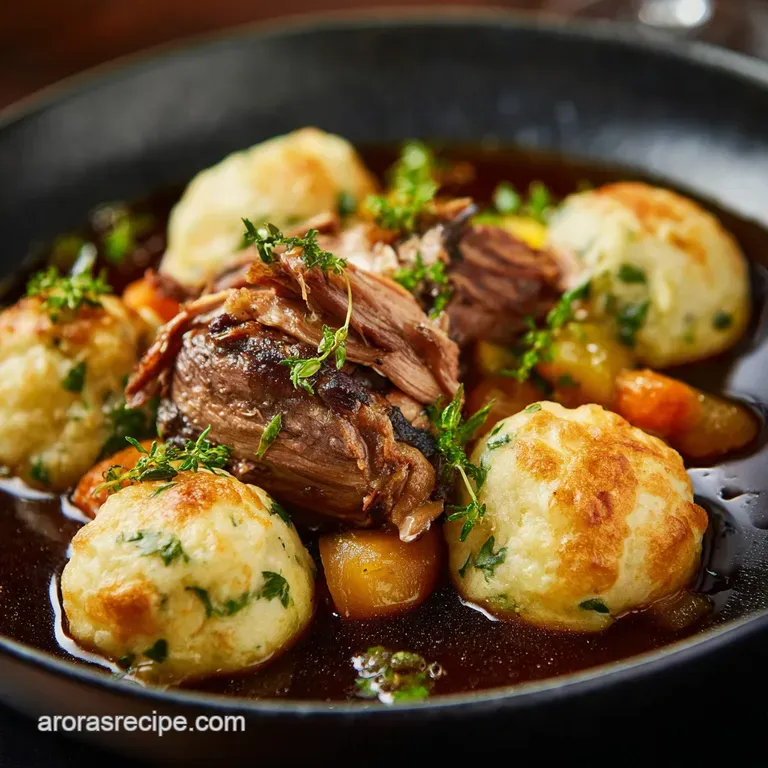
- The Ultimate Comfort Food Upgrade: Mastering Duck and Dumpling
- The Science of Succulence: Why Braised Duck Legs are Ideal
- Essential Components for Your Hearty Duck and Dumpling Recipe
- The Method: Cooking Your Classic Braised Duck and Dumpling Stew
- Expert Tips and Troubleshooting Your Braised Duck Dish
- Storage, Reheating, and Make-Ahead Guide
- What to Serve with Duck and Dumpling
- Recipe FAQs
- 📝 Recipe Card
The Ultimate Comfort Food Upgrade: Mastering Duck and Dumpling
When the air turns crisp and the calendar screams for real comfort, this is the dish I turn to every time. That deep, earthy smell of slowly braised duck leg filling the house, mixing with the sharp scent of thyme and savory gravy? Forget about it the aroma alone is a hug you can feel in your soul.
This classic duck and dumplings recipe is not exactly fast food, but it is one of the easiest "wow" meals you can master. You simply sear everything, dump the braising liquid in the pot, and then walk away for two hours while the magic happens.
It tastes ridiculously complex and rich, yet your active kitchen time is surprisingly minimal.
So, are you ready to ditch the standard weeknight routine and finally learn the secret to impossibly tender duck and impossibly light dumplings? Grab your biggest Dutch oven because we’re making something truly spectacular today.
The Science of Succulence: Why Braised Duck Legs are Ideal
Beyond Chicken: Why Duck Elevates the Stew Base
Look, I love chicken and dumplings, but duck brings a depth of flavor that is simply unmatched by leaner poultry. Duck legs (specifically the thigh and drumstick combo) are packed with connective tissue and fat.
This means they actually benefit from long, slow cooking, transforming tough fibers into meltingly tender meat. It’s not just an ingredient swap; it’s a flavour foundation upgrade.
When that rich duck fat renders and mixes with the red wine and vegetables, it creates a velvety, luxurious sauce you just can't replicate.
What Makes Fluffy Herb Drop Dumplings Different?
These aren't those dense, rolled dumplings you find sometimes; these are classic English drop dumplings. The difference is the technique. We use cold fat cut into the flour, combined with a quick mix using cold milk. This creates a dough with plenty of air pockets.
They don’t boil and get dense; they steam gently right on top of the simmering stew, puffing up beautifully as they absorb the fragrant vapors.
A Deep Dive into English Braising Tradition
Braising is pure genius because it uses moist heat to break down tough cuts, like duck legs, over time. The trick here is patience; don't rush the process, or the duck will be chewy.
By keeping the heat low and the pot covered, we ensure the meat stays moist and eventually becomes fork tender enough to pull apart easily.
Rendering the Duck Fat for Maximum Depth
This step is non-negotiable for the best flavour. We start the duck legs skin side down in a cold pot, gradually increasing the heat. This slow process allows the fat to melt out slowly without burning the skin. That beautiful rendered fat is gold, providing the necessary richness to sauté the vegetables and start building the stew base. We use that fat instead of olive oil, and trust me, it makes all the difference. (It’s the same logic I use when searing other rich duck preparations, like when I make Seared Foie Gras Recipe: Get the Perfect Crisp Crust and Melting Center . Fat equals flavor!)
The Maillard Reaction and Developing the Stew Base
Before we add any liquid, we sear the meat and sauté the vegetables until they caramelize and darken. This is the Maillard reaction doing its magic. We use tomato paste, too, cooking it until it turns a deeper, slightly brick red colour.
That little bit of searing depth and tomato concentration is the backbone of your stew. Skip this, and you end up with a pale, flat sauce.
Achieving the Perfect, Light Dumpling Texture
The real secret? Cold ingredients and minimal handling. Just like making great pie crust, you want the fat (butter or, traditionally, suet) to stay cold so it melts only when steamed. Mix the dough just until it barely comes together, resulting in a shaggy mass.
Overmixing develops the gluten, and that’s how you get those heavy, leaden lumps that sink to the bottom of the bowl. We want clouds, people!
Essential Components for Your Hearty Duck and Dumpling Recipe
The Foundation: Shopping List for the Braised Duck Stew
This recipe relies on simple, quality ingredients. Don't skimp on the aromatics! The carrots, celery, and onions (the mirepoix) cook down and essentially dissolve into the sauce, giving it body and sweetness.
| Ingredient | My Top Tip | Viable Substitution |
|---|---|---|
| Duck Legs (Bone-in) | Pat them completely dry for the crispiest skin. | Swap for 4 bone-in, skin-on chicken quarters. |
| Dry Red Wine | Use a wine you would actually drink no cooking wine! | Use all beef or duck stock with 2 Tbsp of balsamic vinegar for acidity. |
| Duck or Chicken Stock | Low sodium is best so you control the salt level. | high-quality vegetable stock works in a pinch. |
| Tomato Paste | Look for the double concentrated stuff in a tube. | None this is crucial for colour and acid! |
Building the Dumplings: Flours, Fats, and Fresh Herbs
Flour quality matters here, but the type of fat is really where the texture magic lies. Using a mix of fresh herbs parsley and chives keeps the flavour bright and stops the rich stew from becoming too heavy.
| Ingredient | My Top Tip | Viable Substitution |
|---|---|---|
| All-Purpose Flour | Sift it! This adds air right away. | Whole wheat pastry flour if you must, but A.P. is superior here. |
| Cold Butter (Cubed) | Work quickly so it stays icy cold. | Traditionally, shredded beef suet (or vegetable shortening) is used for the lightest result. |
| Whole Milk (Cold) | Buttermilk adds a lovely tang if you have it! | Use half and half or even plain cold water if dairy is unavailable. |
Ingredient Deep Dive: Choosing the Right Duck Legs and Broth
Four duck legs are usually perfect for four people, offering plenty of meat and skin for rendering. If you can find actual duck stock, please use it; it just amps up the overall flavour tenfold. If not, quality chicken stock is a perfectly acceptable second choice.
Do not use water , or you'll have a thin, sad gravy.
Smart Swaps: When to Use Rendered Duck Fat vs. Butter
We use the rendered duck fat for the stew base because it provides deep, savoury richness. However, I prefer cold, unsalted butter or traditional suet for the dumplings. Duck fat, while delicious, can be slightly too soft and heavy for creating those perfect, light crumbs needed for an airy dumpling.
Chef's Note: When braising, ensure your stock is hot before adding it to the pot. Adding cold liquid slows the cooking process and can seize up the lovely caramelization you just created on the vegetables.
The Method: Cooking Your Classic Braised Duck and Dumpling Stew
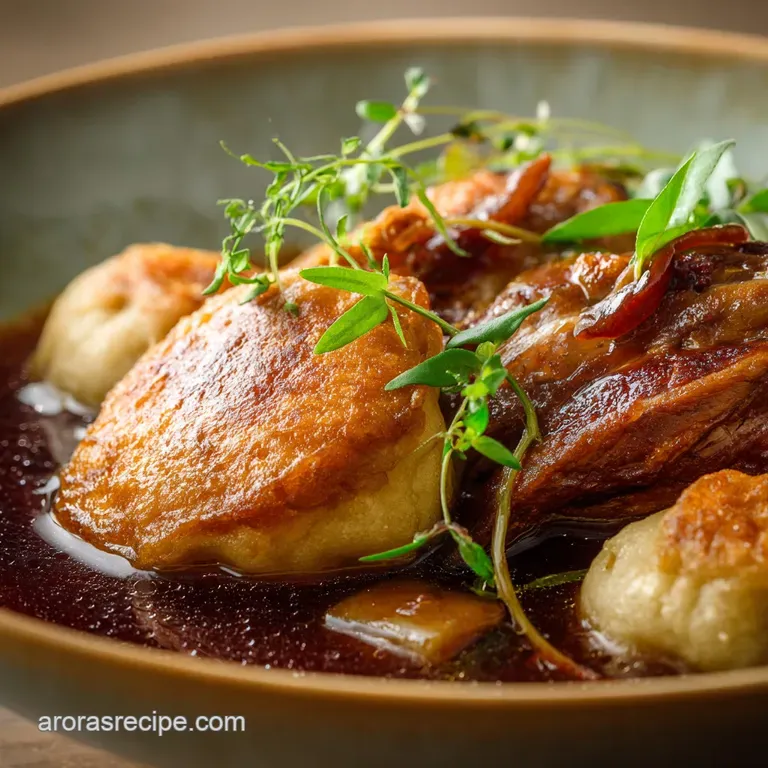
Stage 1: Sear, Build, and Braise the Duck Base
- Prep the Duck: Score the skin of the duck legs deeply in a crosshatch pattern, trying not to cut into the meat. Season those babies aggressively with salt and pepper. Seriously, be generous here.
- Render the Fat Slowly: Place the duck legs skin side down in a cold Dutch oven. Turn the heat to medium low and walk away for 15 minutes. You want the skin to turn deeply golden and crisp, yielding at least a quarter cup of beautiful duck fat.
- Sear and Sauté: Remove the duck and reserve the precious fat, leaving only about 2 tablespoons in the pot. Increase heat to medium high. Add your diced onion, carrots, and celery. Cook until they soften and slightly caramelize, about 8 minutes.
- Flavour Boost: Stir in the minced garlic and the tomato paste. Cook them for 2 minutes until the paste darkens slightly and you can smell the incredible depth a nutty, rich aroma.
- Deglaze and Braise: Pour in the red wine, scraping up all those sticky brown bits (the fond ) from the bottom of the pot. Let the wine bubble and reduce by half. Return the duck legs to the pot, add the stock, thyme, bay leaves, and Worcestershire. Bring to a gentle simmer, cover, and slide the pot into your 325°F (160°C) oven for 2. 5 hours.
Stage 2: Preparing and Resting the Herb Dumpling Dough
- Dry Ingredients: Whisk the flour, baking powder, and salt together in a medium bowl to aerate the mix.
- Cut in the Fat: Add the cold, cubed butter. Use your fingertips or a pastry blender to rub the fat into the flour until the mixture resembles coarse, uneven breadcrumbs. Stir in your fresh, chopped herbs.
- Form the Dough: Gradually pour in the cold milk, mixing with a fork or knife until a slightly shaggy, soft dough forms. Stop mixing immediately! Now, let it sit on the counter for 10 minutes while you finish the stew prep.
Stage 3: Dropping and Steaming the Dumplings to Perfection
- Pre-Dumpling Check: Pull the duck from the oven. The meat should be falling off the bone. Remove and discard the bay leaves and thyme bundle. Check the seasoning of the stew and skim any excess surface fat if desired. Maintain a gentle simmer on the stovetop.
- Drop: Using two spoons dipped in cold water, drop rough, golf ball sized mounds of dough directly onto the simmering stew's surface. Make sure they are sitting on the liquid, not fully submerged, so they can steam properly.
- Steam and Serve: Cover the pot tightly. Steam the dumplings for 15– 20 minutes. The dumplings are ready when they look puffy, doubled in size, and feel light when poked. Serve immediately with a rich ladleful of the duck and sauce.
Final Assembly: Finishing the Stew Consistency
Often, the stew will be perfectly thick after 2. 5 hours thanks to the cooked down vegetables and the duck gelatin. If you find your stew base too thin, remove the duck and skim any fat. Bring the sauce to a vigorous simmer and reduce it uncovered until it reaches your desired consistency.
You can also mix a small slurry of cornstarch and water (1 tbsp each) and stir it in to thicken quickly.
Expert Tips and Troubleshooting Your Braised Duck Dish
Avoiding Gummy Dumplings: The Steam, Don't Boil Rule
This is where most people fail! If you boil the dumplings that is, if they are submerged completely under the liquid they become waterlogged, dense, and gummy. Always ensure the stew is simmering gently, and the dumplings are sitting mostly above the liquid line.
The heat from the simmering liquid generates the necessary steam to cook them through perfectly.
How to Fix an Under Seasoned or Thin Stew Gravy
Taste early and often! If the stew tastes flat, you need salt. If it tastes salty but still flat, you need acid (a splash of red wine vinegar or more Worcestershire sauce). If the gravy is too thin, see my suggestion above for the quick reduction or the cornstarch slurry.
Maximizing Flavour by Deglazing the Pot (Saucier Secrets)
That sticky brown residue (the fond ) left on the bottom of the pot after searing the duck and sautéing the vegetables? That’s pure flavour concentrate. When you add the red wine, use a wooden spoon to vigorously scrape every last bit of that fond off the bottom.
It dissolves into the wine and becomes the deep, savoury base of your sauce. Do not wash or scrape the pot before this step!
Storage, Reheating, and make-ahead Guide
Storing Leftovers: Separate the Stew and Dumplings
This is a critical tip. Once cooked, the dumplings will continue absorbing moisture from the gravy, turning them heavy overnight. Store the leftover stew base and the leftover dumplings in separate airtight containers in the fridge. They will last perfectly for 3 to 4 days.
Best Practices for Freezing the Braised Duck Stew Base
The braised duck stew base freezes beautifully! I often make a double batch of the stew, sans dumplings, and freeze half. Let it cool completely, then transfer it to a freezer safe container. It will keep for up to 3 months.
When ready to serve, thaw it overnight, reheat it gently, and then make a fresh batch of dumplings right on top.
Revitalizing Day-Old Dumplings
If you have leftover dumplings, don't microwave them in the sauce; they'll get mushy. The best way to refresh them is to place them in a small steamer basket over simmering water for about 5 minutes. They’ll steam back up to a lighter texture and then you can reheat the sauce separately.
You can also slice them and sear them gently in a little reserved duck fat until they get a crispy crust, which is honestly divine.
What to Serve with Duck and Dumpling
Because this dish is so rich and hearty, you need something green and slightly tart to cut through that velvety sauce.
We love serving this with simply steamed green beans tossed with a squeeze of lemon juice. A bit of acidity is wonderful. If I am feeling particularly nostalgic, I might make my classic Thanksgiving Stuffing Recipe: Crisp Sourdough, Sausage, and Sage on the side, since the savory herb notes pair so well with the braising liquid.
For drinks, nothing beats a robust, earthy red wine like a Syrah, or if you prefer non-alcoholic drinks, a crisp ginger beer is perfect.
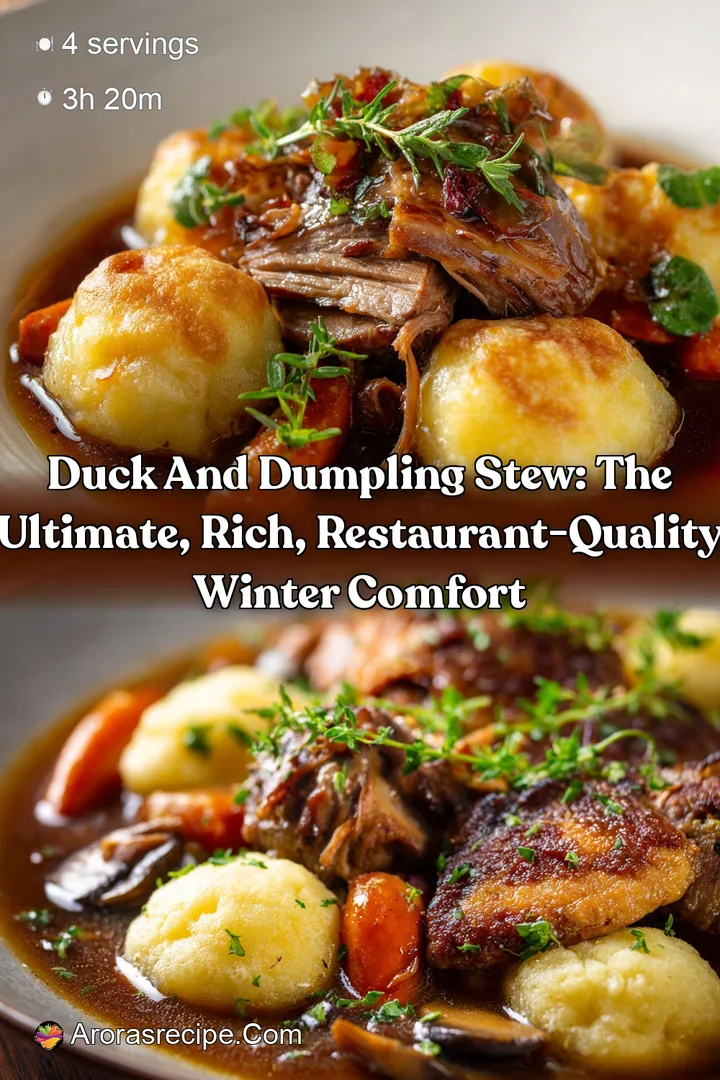
Recipe FAQs
My braised duck meat turned out tough. What went wrong?
Toughness is usually a sign that the braising liquid temperature was too high, or the meat didn't cook long enough to break down the connective tissue. Ensure the stew maintains a bare, gentle simmer (not a boil) and cook for the full 2 to 2.5 hours until the duck is literally falling off the bone.
How do I prevent my drop dumplings from becoming heavy or dense?
The key to fluffy dumplings is handling the dough minimally to avoid developing the gluten. Only stir the ingredients until they are just combined, and ensure the stew is at a rolling boil when you drop them in. Immediately cover the pot tightly so they cook purely via steam trapped inside.
Can I braise the duck legs ahead of time?
Yes, preparing the stew base ahead of time is highly recommended as it allows the flavors to deepen significantly. Braise the duck legs up to two days in advance; cool, refrigerate, then skim the solidified fat before reheating and adding the fresh dumplings right before serving.
Can I use chicken or turkey instead of duck?
Absolutely, bone-in chicken thighs or turkey legs make an excellent substitute, though the final stew will lack the characteristic richness of duck fat. If using chicken, reduce the braising time to about 1.5 hours, checking for tenderness earlier than instructed for the duck.
How should I store leftover duck and dumplings, and does it freeze well?
Store leftovers in an airtight container for up to three days in the refrigerator, but note that the dumplings will absorb much of the stew overnight. The stew base (duck and broth) freezes beautifully for up to three months, but dumplings become mushy upon thawing and should ideally be added fresh.
My stew gravy tastes thin. How can I deepen the flavor without adding more salt?
To deepen the umami and richness, add a small spoonful of tomato paste or anchovy paste during the initial sautéing stage, or deglaze the pot with a splash of dry red wine. If thickening is needed, mix a cornstarch slurry and whisk it into the hot stew at the very end.
Can I make the dumplings gluten-free?
Most commercial gluten-free all-purpose flour blends work well for drop dumplings, especially those containing Xanthan Gum. Ensure your mix is well aerated, stir the dough minimally, and drop it quickly into the vigorously boiling liquid for the best texture.
Duck And Dumpling Comfort Stew
Ingredients:
Instructions:
Nutrition Facts:
| Calories | 680 calories |
|---|---|
| Fat | 45 g |
| Fiber | 4 g |
