Veggie Sandwich: High Protein and Crunchy
- Time: Active 10 minutes, Passive 0 minutes, Total 10 minutes
- Flavor/Texture Hook: A velvety avocado center protected by a shatter crisp sourdough crust.
- Perfect for: A busy weekday lunch or a polished desk side meal.
- Vibrant Green Veggie Sandwich Recipe
- Why This Cold Sandwich Works
- Component Analysis and Ingredient Science
- Essential Kitchen Tools Used
- The Plant Based Ingredient List
- Detailed Layering and Assembly Guide
- Troubleshooting Your Common Sandwich Flaws
- Simple Plant Based Ingredient Substitutes
- Plating for Visual Impact
- Freshness Tips and Waste Reduction
- Debunking Common Sandwich Beliefs
- Selecting the Best Side Dishes
- Very High in Sodium
- Recipe FAQs
- 📝 Recipe Card
Vibrant Green Veggie Sandwich Recipe
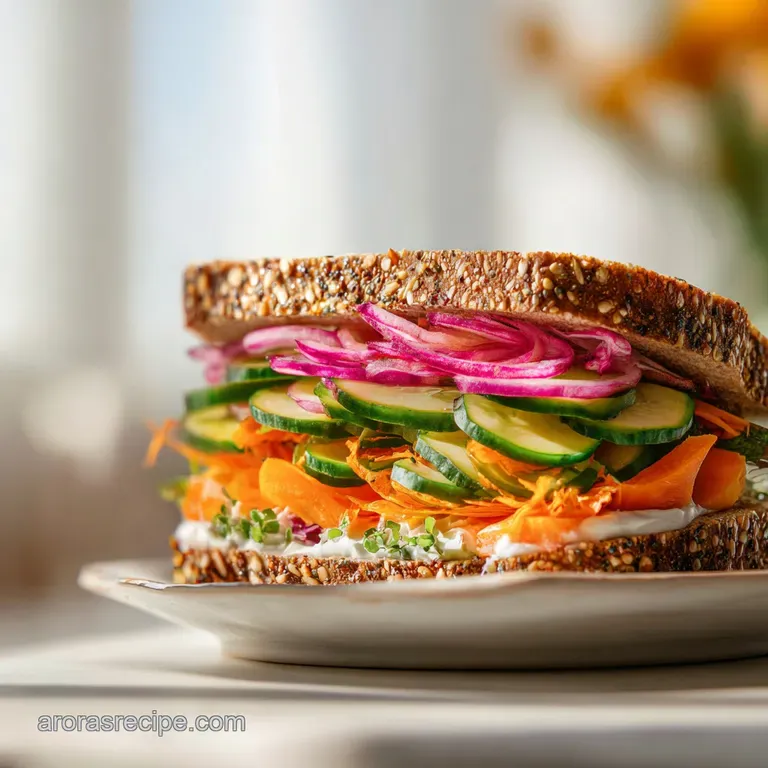
Imagine biting into a thick slice of sourdough and hearing that distinct, hollow crack. Within seconds, your palate meets a velvety layer of whipped feta, followed by the cool, refreshing snap of Persian cucumbers.
This isn't just a handful of garden leftovers shoved between bread; it's a deliberate architecture of color and texture. We've all had those sad, limp sandwiches that turn into a soggy mess by noon, but we're moving past that today.
I remember the first time I tried to pack a loaded vegetable lunch for a hike. By the time I reached the summit, the tomato juice had turned my bread into a sponge. It was a purple stained disaster. That experience taught me that the order of operations matters just as much as the ingredients themselves.
This recipe is the result of learning how to build "walls" within a sandwich to keep the wet stuff away from the dry stuff.
We are focusing on a plant based palette that prioritizes vibrancy. Think of your bread as a canvas. We want the bright orange of shaved carrots to pop against the deep green of the avocado and the neon pink of pickled onions.
It’s about eating with your eyes first and knowing that you're fueling your body with something substantial and thoughtful.
Why This Cold Sandwich Works
- Hydrophobic Shielding: Applying whipped feta or hummus from edge to edge creates a fat based seal that prevents vegetable moisture from migrating into the bread fibers.
- Structural Nesting: Placing the heavier, mashed chickpeas at the base provides a stable foundation that anchors the slippery vegetable layers.
- Tension and Grip: Using alfalfa sprouts or microgreens acts like "Velcro," catching the dressing and seasonings while preventing the cucumber rounds from sliding out when you take a bite.
- Acid Balance: The lemon spiked chickpeas and pickled red onions cut through the density of the avocado, ensuring the flavor profile remains bright rather than heavy.
| Method | Time | Texture | Best For |
|---|---|---|---|
| Fresh Sourdough | 10 minutes | Chewy, tangy, and soft | Authentic deli feel |
| Lightly Toasted | 12 minutes | Shatter crisp exterior | Extra structural support |
| Pan Seared | 14 minutes | Buttery and golden | A warm, indulgent lunch |
The difference between a "good" lunch and a "gourmet" lunch often comes down to how you handle the bread. If you're eating this immediately, fresh sourdough offers a beautiful tang and a flexible crumb. However, if you're traveling, a light toast creates a firmer "skeleton" for the sandwich.
This helps the bread stand up to the weight of the mashed chickpeas without compressing into a dense, unappealing layer.
Component Analysis and Ingredient Science
Understanding the physics of your fillings is the secret to a sandwich that doesn't fall apart. Each element here serves a specific purpose, from providing a creamy mouthfeel to offering a necessary structural crunch.
We aren't just looking for flavor; we are looking for a cohesive unit that stays together from the first bite to the last.
| Ingredient | Science Role | Pro Secret |
|---|---|---|
| Sourdough | Structural Foundation | Use slices at least 1/2 inch thick to prevent sagging. |
| Whipped Feta | Moisture Barrier | Whisk in a drop of olive oil for a silkier, more spreadable shield. |
| Persian Cucumber | Water Control | These have smaller seeds and lower water content than English cucumbers. |
| Alfalfa Sprouts | Aeration & Grip | They create air pockets that keep the sandwich from feeling "heavy." |
When we talk about building a better lunch, we have to talk about the chickpea mash. Simply throwing whole chickpeas into a sandwich is a recipe for a "bean landslide." By coarsely mashing them with a fork and adding a bit of lemon juice, you create a "spreadable protein" that fills the nooks and crannies of the sourdough.
This layer acts as the glue for the rest of your fresh vegetable sandwich ideas.
Essential Kitchen Tools Used
You don't need a professional kitchen to make this, but a few specific tools will help you achieve that "restaurant style" look. A Y shaped vegetable peeler is non negotiable for those thin, elegant carrot ribbons.
If you try to use a knife, the carrots will be too thick and will likely poke through the bread or roll out of the sides. The ribbons, however, fold onto themselves, creating a soft, voluminous texture.
A sharp serrated knife is your best friend when it comes time to slice. A straight edged chef's knife can often squash the delicate sprouts and avocado before it actually breaks through the crust of the sourdough. If you're looking for another way to use these tools, you might enjoy practicing your knife skills on a Greek yogurt dip filled with finely minced herbs.
The Plant Based Ingredient List
- 2 thick slices sourdough or sprouted grain bread (80g): Why this? Provides the structural integrity and tangy flavor needed to balance the creamy fillings.
- Substitute: gluten-free multi seed bread for a nuttier, wheat free base.
- 2 tbsp whipped feta or roasted red pepper hummus (30g): Why this? Acts as the primary moisture barrier and provides a salty, savory punch.
- Substitute: Plain Greek yogurt mixed with garlic powder and lemon.
- 1/4 cup chickpeas (60g): Why this? The primary protein source that adds a satisfying, earthy weight.
- Substitute: Mashed edamame for a brighter green, high protein alternative.
- 1/2 small avocado (60g): Why this? Provides healthy fats and a silky, buttery texture that mimics mayonnaise.
- Substitute: A thick layer of cashew cream or mashed peas.
- 5 thin rounds Persian cucumber (30g): Why this? Delivers a refreshing, watery snap without the bitterness of thick skins.
- Substitute: Sliced radishes for a peppery, crunchier bite.
- 1/4 cup carrots (25g): Why this? Ribboned for volume and a subtle, natural sweetness.
- Substitute: Thinly shaved bell peppers for more juiciness.
- 1/2 cup alfalfa sprouts or microgreens (15g): Why this? Adds "loft" and catches seasonings, preventing the sandwich from feeling flat.
- Substitute: Shredded kale or baby arugula for a more bitter edge.
- 4 pickled red onion rings (15g): Why this? The essential acid component that brightens the entire flavor profile.
- Substitute: Sliced cornichons or a splash of apple cider vinegar.
- 1 pinch flaky sea salt: Why this? Enhances the natural flavors of the raw vegetables.
- Substitute: Celery salt for an extra savory, herbal kick.
- 1 pinch cracked black pepper: Why this? Adds a subtle warmth and visual contrast.
- Substitute: Red pepper flakes if you want a lingering heat.
Detailed Layering and Assembly Guide
- Lay both slices of sourdough flat on a clean cutting board and spread 1 tablespoon of whipped feta or hummus on each slice, ensuring you cover every millimeter to the very edge. Note: This creates the essential waterproof seal against the veggies.
- Place 1/4 cup of chickpeas in a small bowl and mash them coarsely with a fork, mixing in a squeeze of lemon if desired.
- Spread the seasoned chickpea mash onto the bottom slice of bread, pressing it firmly into the feta so it adheres.
- Slice 1/2 an avocado into thin wedges and shingle them across the chickpeas, overlapping them slightly like roof tiles for even distribution.
- Place the 5 cucumber rounds on top of the avocado in a single layer to provide a flat surface for the next ingredients.
- Use a vegetable peeler to shave 1/4 cup of carrot ribbons, then pile them loosely on top of the cucumbers to create height.
- Mound 1/2 cup of alfalfa sprouts over the carrots, using your hand to gently compress them so they don't fly away. until the pile looks fluffy and full.
- Arrange 4 pickled red onion rings on top of the sprouts, ensuring they are evenly spaced for a bit of acid in every bite.
- Sprinkle a pinch of flaky sea salt and cracked black pepper over the onions to season the interior layers.
- Place the second slice of bread (feta side down) on top and press down firmly with the palm of your hand to "lock" the layers together.
Troubleshooting Your Common Sandwich Flaws
Why Your Bread Gets Soggy
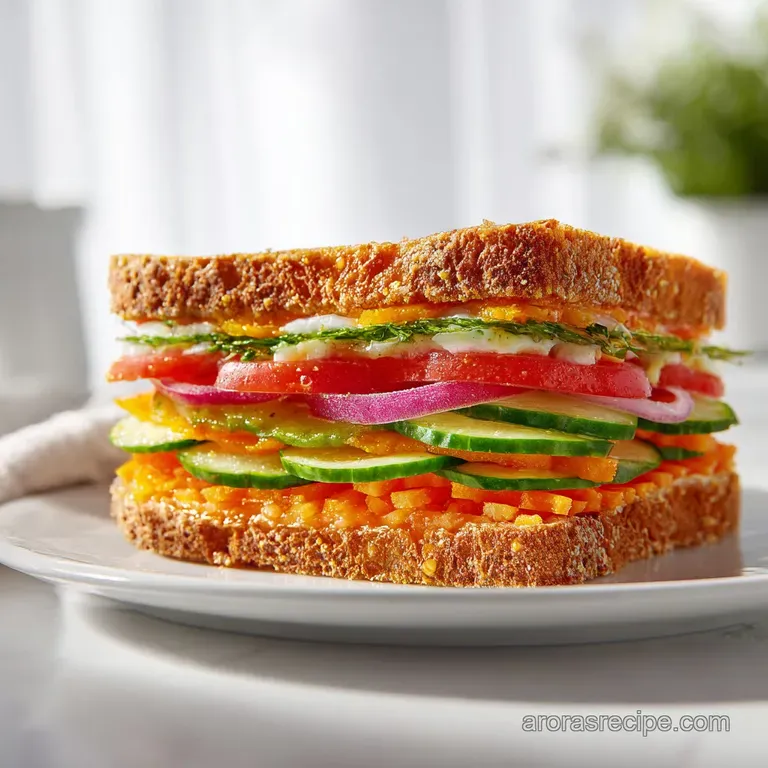
Even with the best ingredients, moisture is the enemy of the sourdough crumb. If your bread feels limp within an hour, the culprit is usually the "wet" vegetables touching the bread directly. We solve this by ensuring the fat based spread (feta or hummus) acts as a literal raincoat for the grain.
| Problem | Root Cause | Solution |
|---|---|---|
| Sliding Fillings | Too many round, slick surfaces | Use sprouts as "friction" layers between cucumbers. |
| Bland Flavor | Lack of internal seasoning | Salt the avocado and cucumbers directly, not just the top. |
| Crushing the Bread | Using a dull knife | Use a serrated blade and a "sawing" motion. |
Another common issue is the "vegetable slide." This happens when you have two slick surfaces, like cucumber and avocado, touching each other. They act like ice skates and will shoot out the side of the sandwich the moment you bite down.
By placing the fibrous sprouts or carrot ribbons between these slick layers, you create friction that holds everything in place.
Common Mistakes Checklist
- ✓ Pat the cucumber rounds dry with a paper towel before adding them to the stack.
- ✓ Don't skip mashing the chickpeas; whole beans will simply roll out of the sandwich.
- ✓ Avoid over mashing the avocado; you want some thin slices for that "shingled" visual appeal.
- ✓ Apply the spread to BOTH slices of bread, not just one, to ensure a complete moisture seal.
- ✓ Let the pickled onions drain for a few seconds before adding them to avoid purple drips.
Simple Plant Based Ingredient Substitutes
Scaling a recipe for a large group requires a bit of logistical planning. If you are making these for a weekend picnic, the "Fresh vs. Toasted" debate becomes very important. For a crowd, I recommend keeping the bread fresh and soft so it's easier to wrap tightly in parchment paper. If you're looking for a hot, sit down meal for a larger group, you might consider my veggie egg casserole as a fantastic alternative for a brunch gathering.
Making It for Many
When doubling or tripling this recipe, do not simply multiply the salt and pepper by two or three. Spices and seasonings often don't scale linearly. Start with 1.5 times the amount and taste as you go.
For the liquids, like lemon juice in the chickpeas, reduce the total by about 10% to prevent the mixture from becoming too runny when prepared in bulk.
Working with Half
If you're making a snack sized version or a "half sandwich" to go with a soup, you can easily use just one slice of bread and fold it over. However, keep the spread consistent. You still want that moisture barrier on both sides of the fold to keep the crust "shatter crisp" while the interior stays velvety.
Plating for Visual Impact
We eat with our eyes, and a veggie sandwich offers one of the best opportunities to play with color. For a simple home lunch, a clean diagonal cut is all you need. But if you're hosting or just want to feel fancy, there are levels to this.
| Level | Plating Tweak | Visual Result |
|---|---|---|
| Simple | Straight cut down the middle | Functional and clean |
| Polished | Diagonal cut with a side of greens | Sophisticated and classic |
| Restaurant | Vertical stack, secured with a pick | Dramatic height and "wow" factor |
To achieve that "restaurant quality" look, focus on the carrot ribbons. Instead of laying them flat, twirl them around your finger before placing them on the sandwich. This creates curls that catch the light and add significant volume.
Finish the plate with a few extra microgreens and a crack of black pepper over the exposed edge of the cut sandwich.
Freshness Tips and Waste Reduction
Storage Guidelines: This sandwich is best enjoyed within 2 hours of assembly. If you must store it longer, wrap it tightly in parchment paper rather than plastic wrap. Parchment allows the bread to "breathe" slightly, which prevents the crust from becoming rubbery.
It will stay fresh in the fridge for up to 24 hours, but the cucumbers may lose some of their snap.
Zero Waste Strategies: Don't toss those carrot peels or the ends of the Persian cucumbers! Keep a "stock bag" in your freezer. Vegetable scraps like these are perfect for making a quick, light vegetable broth later in the week. If you have leftover alfalfa sprouts, they are a fantastic addition to a Greek yogurt dip for extra crunch the next day.
Debunking Common Sandwich Beliefs
One of the biggest misconceptions is that a vegetarian sandwich can't be filling or high in protein. By using a combination of sourdough, whipped feta, and mashed chickpeas, we are hitting 18.6g of protein per serving.
This is comparable to many meat based options but with significantly more fiber (12.3g), which keeps you satiated for much longer.
Another myth is that you should always put the heaviest ingredients on the bottom. While that's generally true for stability, the stickiest ingredients should actually be your foundation. In this case, the feta and chickpea mash "glue" the bread to the rest of the fillings.
This prevents the entire stack from sliding off the base the moment you pick it up.
Selecting the Best Side Dishes
While this sandwich is a powerhouse on its own, the right side dish can turn it into a full gourmet experience. Because the sandwich is cool and crisp, it pairs beautifully with something that has a bit of a salty or earthy kick.
A handful of kettle cooked potato chips provides a louder "crunch" that contrasts with the fresh snap of the carrots and cucumbers.
If you want to keep the meal light and plant based, a simple side of sliced seasonal fruit or a small bowl of olives works wonders. The acidity of the olives complements the pickled red onions, while the sweetness of fruit balances the tang of the sourdough.
This approach ensures your lunch is balanced, colorful, and never boring. Trust me, once you build a sandwich with this much intention, you'll never go back to basic PB&J again.
Very High in Sodium
985 mg 985 mg (43% 43%)
The American Heart Association recommends no more than 2,300mg of sodium per day, with an ideal limit of about 1,500mg for most adults.
Tips to Reduce Sodium
-
Choose Low-Sodium Feta or Hummus-25%
Whipped feta and many store-bought hummus varieties can be high in sodium. Opt for low-sodium versions or make your own using unsalted ingredients. This can significantly reduce sodium from these toppings.
-
Skip Pickled Onions or Use Fresh-15%
Pickled red onions are typically brined in a salty solution. Omitting them entirely or using fresh, thinly sliced red onions will remove a concentrated source of sodium.
-
Eliminate Added Salt-10%
The pinch of flaky sea salt contributes to the overall sodium content. Omitting the added salt is a simple yet effective way to lower sodium without altering the core ingredients.
-
Boost Flavor with Herbs and Spices
Enhance the taste of your sandwich by incorporating fresh herbs like dill or parsley, or spices such as paprika or garlic powder. These add complexity without adding any sodium.
-
Select Unsalted Bread-5%
While sourdough and sprouted grain breads are generally lower in sodium than white bread, some brands can still contribute. Look for unsalted varieties or compare nutrition labels for lower sodium options.
Recipe FAQs
What veggies go well on a sandwich?
Crisp and vibrant vegetables work best. Persian cucumber rounds, ribboned carrots, and alfalfa sprouts provide the ideal structural crunch to contrast the creamy avocado and chickpea mash.
What is the best sandwich for diabetics?
Sprouted grain bread is the optimal choice. Using fiber rich bread combined with healthy fats from avocado and plant based protein from chickpeas helps stabilize blood sugar response compared to white bread.
What can I put in vegetarian sandwiches?
Focus on high protein spreads and diverse textures. Using hummus as a base provides savory depth, while layered chickpeas and fresh greens make the meal filling and satisfying.
How to make a simple veg sandwich?
Lay bread slices flat and apply a generous, edge-to-edge layer of whipped feta or hummus to both slices. This creates a essential moisture barrier that prevents the bread from becoming soggy.
How to keep the bread from getting soggy?
Apply your hummus or whipped feta as a complete seal across the bread surface. If you enjoyed learning how to use these moisture blocking barriers, you can apply similar logic to our sourdough hoagie rolls to keep your fillings contained and crisp.
Is it true I should toast the bread for a veggie sandwich?
No, this is a common misconception. While toasting is an option, using fresh, high-quality sourdough or sprouted grain bread provides a soft, chewy texture that complements the crunchy cucumber and carrot ribbons better than toasted bread.
How to ensure even distribution of ingredients?
Layer the avocado slices using a shingling method. Overlapping the slices thinly ensures every bite has a consistent amount of fat, while pressing the mashed chickpeas firmly into the bread base prevents the filling from shifting when you cut the sandwich.
Gourmet Veggie Sandwich
Ingredients:
Instructions:
Nutrition Facts:
| Calories | 518 kcal |
|---|---|
| Protein | 18.6 g |
| Fat | 17.5 g |
| Carbs | 71.6 g |
| Fiber | 12.3 g |
| Sugar | 3.2 g |
| Sodium | 985 mg |
