Heo Quay Vietnamese Crispy Pork Belly Masterclass Unbeatable Crackling
- The Pursuit of Perfect Crackling: Why Heo Quay Stands Apart
- A Symphony of Texture: Understanding Vietnamese Roast Pork
- Sourcing the Supplies: What You Need for Guaranteed Crispness
- Phase I: The Pre-Roast Rituals for Maximum Crunch
- Phase II: High-Heat Mastery and Finishing the Heo Quay
- Troubleshooting and Mastering Your Crispy Pork Belly
- How to Serve and Store Vietnamese Roast Pork
- Recipe FAQs
- 📝 Recipe Card
The Pursuit of Perfect Crackling: Why Heo Quay Stands Apart
I’m going to be straight with you. Making truly magnificent Heo Quay (Vietnamese Crispy Pork Belly) is less about cooking and more about engineering. It’s a project. It demands attention. But oh my goodness, the payoff. The sound alone is worth the effort.
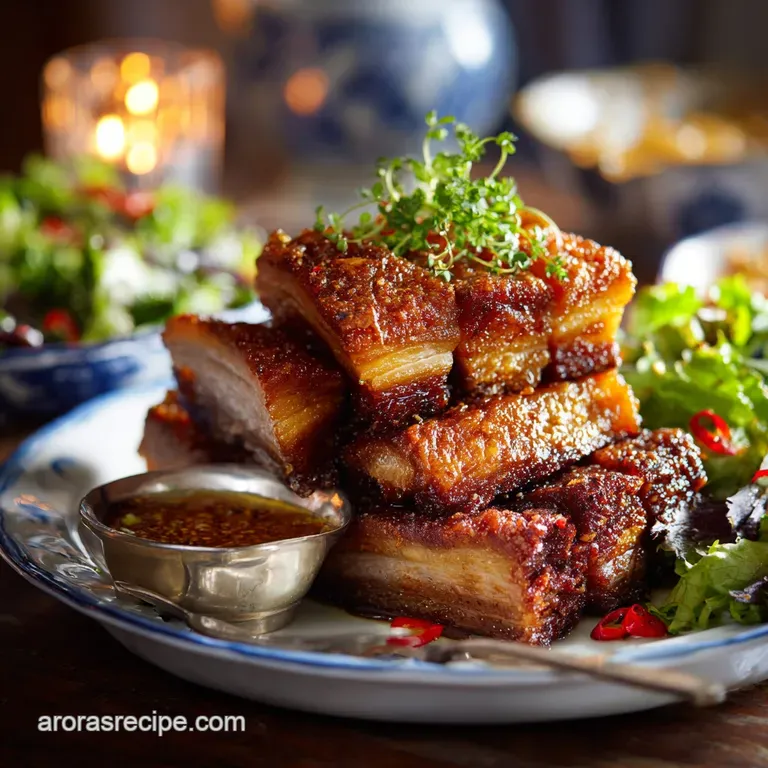
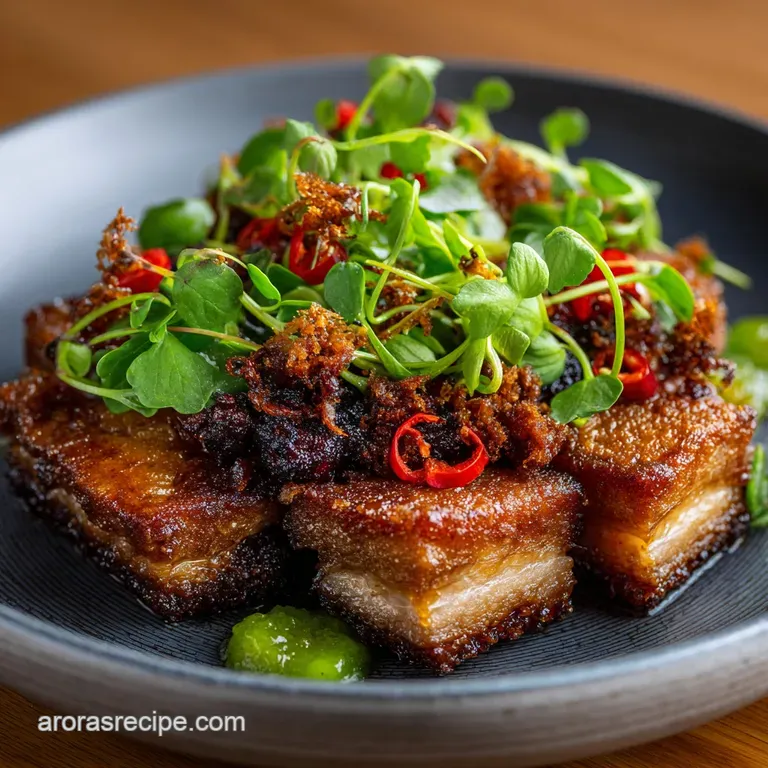
We’re not aiming for that hard, flat, British style crackling here; we’re aiming for the Vietnamese style a light, bubbly, blistered, almost potato chip texture that shatters the moment your knife touches it.
I remember my first attempt years ago. I thought, "How hard can pork belly be?" Turns out, pretty hard if you pull it out of the oven with chewy, leathery skin. Total disaster. I’d rushed the drying process, and moisture is the absolute enemy of crackling. Since then, I’ve refined the method.
I’ve gone to battle with moisture barriers, tested temperatures, and fought the good fight against soggy skin. This recipe is the culmination of those kitchen wars. It’s what works, every single time. Right then, let’s talk texture.
A Symphony of Texture: Understanding Vietnamese Roast Pork
The magic of Heo Quay lies in the drastic contrast. You’ve got the meltingly tender, five spice-infused meat underneath a thick cap of fat, and then that incredibly airy, crispy shell. It's truly a sensory experience.
The Culinary Science Behind the Blistered Skin
Why does this specific Vietnamese preparation deliver blistering where others just dry out? It boils down to extreme moisture extraction and rapid heat. When you prick the skin relentlessly, you create tiny tunnels. During the low-and-slow cooking stage, these tunnels allow fat to render out from the upper fat layer.
Then, during the final, intense heat blast, any remaining tiny pockets of moisture rapidly turn to steam and, since they have escape routes (the prick marks), they force the skin to puff up and blister, turning those tiny tunnels into crispy air bubbles. It’s brilliant.
From Chewy Skin to Crunchy Success: Preparation Philosophy
Our philosophy here is simple: The skin must be bone dry, and the meat must be perfectly seasoned, but never the twain shall meet. If your beautiful, fragrant marinade sneaks onto the skin, you’ve introduced moisture and sugars that will burn before the skin crisps.
This is why we use the foil boat method it’s non-negotiable.
Decoding the Flavors: Marinade Profiles for Heo Quay
The flavor base for the pork belly meat is that classic, earthy, warm Vietnamese/Chinese blend. We rely heavily on Chinese five spice powder (make sure yours is fresh!), pungent shallots, and rice wine.
The combination yields an aromatic, slightly sweet, and savory profile that is the perfect counterbalance to the rich fat. We keep the seasoning strong, knowing that the flavor has to permeate that thick slab of pork belly.
Sourcing the Supplies: What You Need for Guaranteed Crispness
You can’t build a good house without good bricks. Same goes for crispy pork belly.
Selecting the Ideal Slab: Pork Belly Requirements
Look for a cut of pork belly that is roughly rectangular, about 1.5 to 2 inches thick. Critically, the skin must still be attached and uncut. I always ask my butcher for a slab with a good, even layer of fat beneath the skin and decent meat underneath that.
Avoid overly floppy or thinly cut pieces; they tend to dry out too fast.
The Aromatic Agents: Building the Flavor Base
The secret here is using fresh aromatics like shallots and garlic alongside the powdered spices. You want the deep, fresh punch they deliver. If you don't have Shaoxing rice wine (which can sometimes be tricky to find), a dry sherry is a fine substitute.
Don't cheap out on the five spice; a stale packet means a dusty, weak flavor, and that just makes me sad.
Salt, Vinegar, and the Secret to a Dry Surface
This is where the magic really happens on the skin. We use vinegar not just for flavor, but for chemical reaction. The acid in the vinegar helps break down the skin tissue slightly, making it more receptive to drying.
The huge, initial crust of coarse salt we apply acts like a massive moisture magnet, drawing every last drop of water to the surface. We scrape that off, and then we use a touch of baking soda in the final rub a tiny bit of alkali helps the blistering process, making the final crackle airy and light.
Essential Kitchen Gear for Roasting Success
Honestly, the only specialized tool you really need is a pork pricker or a Jaccard tool. I know, you can use a knife or a fork, but trust me, the dedicated pricker delivers dozens of tiny, perfect holes in seconds, and it is a complete game changer for uniform blistering.
It pays for itself in one use.
Phase I: The Pre-Roast Rituals for Maximum Crunch
This is the tedious part, but it determines 90% of your success. Put on some music, settle in, and get meticulous.
- Pat it dry, then pat it dryer. Seriously, use half a roll of paper towels if you have to.
- The internal score: Grab that sharp knife and score the flesh side deeply. This helps the marinade penetrate and prevents the entire slab from curling up like a potato chip in the oven. Stop before you hit the fat layer.
Scoring and Preparing the Skin: The Precision Cut
Remember, we are not scoring the skin with the knife yet. The skin gets the deep pricking treatment only. Be aggressive. You need to look like you’ve peppered the entire surface with tiny, sharp hail. Get into the corners and the middle.
The All-Important Overnight Drying Process
Once the meat is marinated and the skin is pricked, construct your "foil boat." This is critical. Fold heavy duty foil around the sides and base of the pork belly, creating a wall that is higher than the meat. This foil barrier keeps the greasy, moist marinade strictly off the skin during the long dry spell.
Then, you apply the vinegar, the initial thick salt crust, and into the fridge it goes, uncovered, on a wire rack.
Crucial Warning: Do not, under any circumstances, cover the pork belly during the refrigeration phase. It needs air circulation to dry out, not steam. We want it hard, like leather or cardboard, when it comes out.
Applying the Brine and Initial Baking Temperatures
The next day, scrape off that nasty, damp salt crust. Throw it out. Dry the skin again if needed. Now, apply the final rub the small amount of clean, dry salt mixed with that magical hint of baking soda. Brush a tiny bit of neutral oil over the skin.
We start cooking low and slow (160°C / 325°F). This stage renders the fat, cooks the meat beautifully, and further dries out the skin without triggering the blistering.
Phase II: High Heat Mastery and Finishing the Heo Quay
This is the exciting part. This is the moment we demand the crackle.
The Blistering Finish: Broiler Technique and Timing
You’ve cooked the meat through. Now, crank that oven up to a raging 230°C / 450° F . Some people prefer using the broiler (grill function) instead, which is even faster but requires more nerve. If you use the broiler, place the rack slightly lower than you think you should.
You are now on Crisping Duty. Do not walk away. Do not check your phone. Stand there and watch the transformation. The skin should start bubbling and blistering dramatically within 15 to 20 minutes.
If one corner starts blistering faster than the rest, tear off a tiny piece of aluminum foil and lightly cover that section, deflecting the heat. Remove it when the crackling is uniformly puffed up, dark golden brown, and sounds hollow when you tap it.
Troubleshooting and Mastering Your Crispy Pork Belly
Achieving Perfectly Even Crackle: Fixing Soft Spots
Did you pull it out and realize there are two or three sad, pale, chewy patches? This usually means those areas were not pricked enough, or they had hidden moisture. Don't panic.
The Solution:
- Turn your oven off.
- If you have a kitchen blowtorch, this is its moment to shine. Target those soft spots directly until they bubble and blister to match the rest.
- No torch? Put the pork back under the broiler, but place a small piece of foil over the parts that are already perfect. Target only the soft spots for 3– 5 minutes more. Patience and targeted heat are your friends.
How to Serve and Store Vietnamese Roast Pork
Serving Suggestions: The Classic Accompaniments (Sauces and Sides)
We traditionally serve Heo Quay warm or cooled to room temperature. It’s glorious either way.
- The Essential Sauce: You must have hoisin sauce. I like to jazz mine up with a dash of chili oil and a squeeze of lime to make it less cloying.
- For Texture Contrast: Serve with a mountain of Đồ Chua (pickled carrots and daikon). That bright acidity cuts through the richness of the pork and resets your palate.
- The Carb: Serve over steamed rice, or if you’re making a feast, alongside Bánh Hỏi (thin, woven rice vermicelli).
Nutritional Snapshot and Ingredient Substitutions
Yes, this is pork belly. It’s rich, savory, and an absolute treat, definitely not a salad. In terms of substitutions, if you are avoiding alcohol, you can use chicken stock or water instead of the rice wine in the marinade, though you will lose some of that aromatic depth.
For the salt crust, Kosher salt works perfectly fine, but avoid standard table salt, which is too fine and tends to be overly salty.
Storing Leftovers and Reheating Without Losing the Crunch
Never, ever store your leftovers in a sealed container that traps moisture, especially while warm. Let the pork cool completely. Store leftovers in the fridge for up to three days.
When reheating, forget the microwave. The microwave is the enemy of crackling. Your best bet is always the toaster oven or conventional oven . Slice the pork cold, then arrange the slices on a rack.
Reheat at 180°C / 350° F for about 8– 10 minutes, just until the meat is warmed through and the crackling starts to feel brittle again. That loud, satisfying crunch will be back in action.

Recipe FAQs
Why is my Heo Quay skin tough and chewy instead of proper crispy crackling?
This usually boils down to moisture, or lack of aggressive pricking did you ensure the skin was absolutely bone dry before the high heat blast? For a guaranteed 'concert hall' crunch, ensure you prick the skin relentlessly and consider using the optional baking soda in the final salt rub, as it drastically aids in blistering the surface.
Can I skip the whole 24-hour drying time? I haven't got all day, mate!
Rushing the drying time is a false economy leading only to disappointment; it’s the single most critical step for brilliant crackling. If you’re truly short on time, use an electric fan (positioned safely, of course!) to blow air directly over the skin while it rests uncovered in the fridge for a minimum of 6 hours, which speeds up the dehydration process significantly.
I can't find Chinese Five Spice powder is there a suitable substitution I can use for the marinade?
Absolutely. While Five Spice is traditional, you can swap it for a blend of freshly grated ginger and Szechuan peppercorns for a lovely spicy kick, or simply use ground cinnamon and cloves mixed with extra white pepper for an aromatic depth.
Right, I’ve got mountains of leftovers. How do I reheat the pork and keep that glorious crackling from going soggy overnight?
Store the sliced pork belly in an airtight container, ensuring the pieces of crackling aren't touching the moist meat directly. To revive the crunch, place the pieces under a hot grill or broiler for 3-5 minutes immediately before serving watch them like a hawk though, as they burn quickly!
What’s the traditional way to serve this gorgeous, fatty masterpiece?
Heo Quay is traditionally served with steamed white rice or tucked into warm Vietnamese steamed buns (Bánh Bao), and it must be paired with something tangy and acidic, like a side of quick pickled carrots and daikon (Đồ Chua), to properly cut through the richness.
Heo Quay Crispy Pork Masterclass
Ingredients:
Instructions:
Nutrition Facts:
| Calories | 322 kcal |
|---|---|
| Protein | 26.2 g |
| Fat | 24.0 g |
| Carbs | 1.0 g |
| Fiber | 0.0 g |
| Sugar | 0.5 g |
| Sodium | 0 mg |
