Nye Roasted Beef with Garlic-Herb Crust
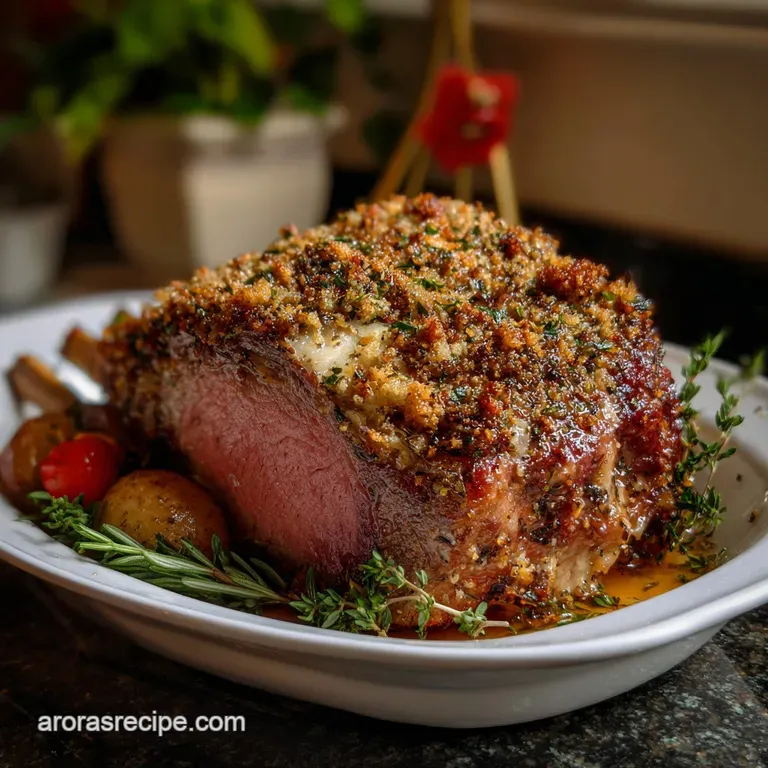
- Effort/Time: 2 hours 45 mins of low-stress, high-precision cooking.
- Flavor Hook: A compound garlic-herb butter crust that creates a shattering, savory bark.
- Perfect for: Grand celebrations where the meat must be the undisputed star of the table.
- The Thermodynamics of a Consistent Holiday Roast
- Time and Yield Logistics for Your Holiday Feast
- The Alchemy of Flavor: Sourcing Your Elements
- Minimalist Hardware for Maximum Results
- Precision Execution: A Step-by-Step Protocol
- Preventing the Gray Ring: Troubleshooting Your Roast
- ⚗️ The Scaling Lab
- Flavor Architecture: Creative Variations and Substitutions
- Storage and Reheating
- Serving Suggestions
- Recipe FAQs
- 📝 Recipe Card
Here's a delicious recipe for a Roasted Beef New Year's Eve dinner. There is nothing more soul crushing than spending nearly $200 on a bone-in prime rib only to pull a gray, rubbery hunk of protein out of the oven.
I've seen it happen at high stakes holiday parties where the host slices into the roast, and the center is bone dry while the edges are charred to carbon. It’s a waste of money, a waste of time, and a massive hit to your kitchen confidence.
I’ll be the first to admit I’ve messed this up too. Years ago, I rushed a roast straight from the fridge into a 450°F oven, thinking high heat was the secret to flavor.
The result was a thick "gray ring" of overcooked meat nearly two inches deep, with a center that was still practically blue. It was a humbling lesson in thermodynamics that taught me why we can't rush the physics of meat.
The secret to this New Year s Eve Dinner Idea with Roasted Beef isn't a fancy gadget; it’s the science of the reverse sear and moisture management. By roasting at a low temperature first, we allow the enzymes in the meat to tenderize the fibers while the surface dries out just enough to trigger a massive Maillard reaction later.
The result is a roast with a shattering crust and a center so tender it practically melts.
The Thermodynamics of a Consistent Holiday Roast
Understanding the physics of heat transfer is the difference between a "good" dinner and a masterclass level New Year s Eve Dinner Idea with Roasted Beef.
- Enzymatic Tenderization: At temperatures between 100°F and 120°F, naturally occurring cathepsins (enzymes) break down connective tissue, essentially aging the meat as it cooks.
- Protein Denaturation Control: By keeping the ambient oven temp low, we prevent the muscle fibers from contracting too violently and squeezing out their internal moisture.
- Surface Dehydration: A dry surface is the prerequisite for a crisp crust; water is the enemy of the sear because it requires massive energy to evaporate before browning can begin.
- The Carryover Effect: Large thermal masses like an 8 lb roast continue to cook after removal from the heat as energy moves from the hot exterior to the cooler core.
Time and Yield Logistics for Your Holiday Feast
Planning a New Year s Eve Dinner Idea with Roasted Beef requires precise scheduling so you aren't stuck in the kitchen when the clock strikes midnight.
| Metric | Specification |
|---|---|
| Total Weight | 8 lb bone-in prime rib roast, tied |
| Active Prep Time | 30 minutes |
| Total Cook Time | 2 hours 15 mins |
| Resting Time | 30 minutes (mandatory) |
| Total Yield | 10 servings |
| Target Pull Temp | 120°F (for Medium Rare) |
Chef's Note: Always buy your roast with the bones still attached. The bones act as an insulator, slowing down the heat transfer to the bottom of the meat and providing a rich base for your jus later.
The Alchemy of Flavor: Sourcing Your Elements
The success of your New Year s Eve Dinner Idea with Roasted Beef depends on the quality of your salt and the fat content of your beef.
| Ingredient | Chemical/Physical Role (Science) | The Pro Secret (Why This Matters) |
|---|---|---|
| 8 lb bone-in prime rib | Thermal mass & collagen source | Bone-in retains shape and adds marrow depth to the drippings. |
| Diamond Crystal Kosher Salt | Osmotic pressure & protein brining | Large flakes dissolve slowly, seasoning the deep muscle fibers without over salting the surface. |
| Unsalted Butter | Fat-soluble flavor carrier | High milk solid content aids in browning and carries the herb aromatics into the crust. |
| Dry Red Wine | Acidic deglazing agent | The acidity cuts through the heavy beef fat, balancing the richness of the jus. |
Essential Ingredients and Substitutions
- 8 lb bone-in prime rib roast, tied: Why this? Provides the optimal fat-to-lean ratio for long roasting.Substitute: Boneless ribeye roast (reduce cook time by 20%).
- 3 tbsp Diamond Crystal Kosher Salt: Why this? Controls moisture and enhances natural beefiness.Substitute: 1.5 tbsp table salt (halve the volume due to density).
- 2 tbsp coarsely cracked black pepper: Provides a pungent contrast to the rich fat.
- 1 cup unsalted butter, softened: Why this? Creates the emulsion base for the herb rub.Substitute: Ghee (for a higher smoke point).
- 8 cloves garlic, minced: Essential for the savory aromatic profile.
- 2 tbsp fresh rosemary, finely chopped: Adds woodsy notes that pair with beef.
- 2 tbsp fresh thyme, finely chopped: Provides a subtle earthy brightness.
- 1 tbsp Worcestershire sauce: Why this? Adds fermented umami depth (glutamates).
- 2 cups beef bone broth: Use a high-quality brand like Kitchen Basics for collagen body.
- 1 cup dry red wine: Use a Cabernet Sauvignon or Syrah.
- 2 tbsp cold butter, cubed: For mounting the sauce (emulsification).
Minimalist Hardware for Maximum Results
You don't need a kitchen full of gadgets for a New Year s Eve Dinner Idea with Roasted Beef, but you do need two non-negotiables.
- Lodge Cast Iron Roasting Pan or Heavy Rimmed Baking Sheet: You need a vessel that can handle 500°F without warping.
- ThermoWorks ChefAlarm (Digital Probe Thermometer): Cooking by time is a guess; cooking by temp is a science.
- Kitchen Twine: Essential if your butcher didn't already tie the roast to ensure even cylindrical cooking.
- Small Stainless Steel Saucepan: For reducing your red wine jus.
Precision Execution: A step-by-step Protocol

Phase 1: Tempering and Seasoning
- Remove the 8 lb prime rib from the fridge 2 hours before cooking until the internal chill dissipates to roughly 50 60°F.
- Pat the entire surface bone dry with paper towels until the meat feels tacky, not slippery.
- Combine 1 cup softened butter, garlic, rosemary, thyme, and Worcestershire in a bowl until a thick, fragrant paste forms.
- Apply the 3 tbsp kosher salt and 2 tbsp pepper liberally to all sides until the roast is visibly encrusted.
- Slather the herb butter over the top and sides of the roast until no meat is visible.
Phase 2: The Low and Slow Roast
- Preheat your oven to 250°F. Note: Low heat prevents the muscle fibers from seizing.
- Place the roast on a rack in your pan and cook for roughly 2 hours until the internal temperature hits exactly 120°F.
- Remove the roast from the oven until the sizzling subsides and transfer it to a carving board.
- Rest the meat for 30 minutes. Note: This allows the juices to redistribute and prevents them from flooding the board when sliced.
Phase 3: The over High heat Finish and Red Wine Jus
- Crank the oven to 500°F while the meat rests.
- Place the roast back in for 6 10 minutes until the butter crust is dark mahogany and the fat is bubbling violently.
- Simmer the bone broth and red wine in a saucepan until the liquid reduces by half and coats the back of a spoon.
- Whisk in the cold butter cubes until the sauce becomes glossy and velvety.
Preventing the Gray Ring: Troubleshooting Your Roast
Why Your Roasted Beef is Tough
If the meat feels like a workout for your jaw, the protein denaturation happened too fast. When beef is exposed to high heat immediately, the fibers contract like a squeezed sponge, pushing out all the moisture before the collagen has a chance to melt into gelatin.
| Problem | Root Cause | The Fix | Pro Protocol |
|---|---|---|---|
| Gray Ring | Oven temp too high | Lower ambient temp to 250°F | Use the reverse sear method exclusively. |
| Soggy Crust | Surface moisture | Pat dry and salt 24h early | Leave uncovered in the fridge overnight. |
| Blood on Plate | Not enough resting | Increase rest to 30 mins | Tent loosely with foil, do not wrap tightly. |
⚗️ The Scaling Lab
When doubling this New Year s Eve Dinner Idea with Roasted Beef for a massive party, the physics of your oven changes.
- The Square Cube Law: Two 8 lb roasts have double the volume but not double the surface area. They will take longer to reach temp because they absorb more energy from the oven cavity.
- Thermal Mass Recovery: When you put 16 lbs of cold meat in the oven, the air temp will drop significantly. Drop the temp by 25°F and plan for an extra 45 minutes of cook time.
- Pan Crowding: Ensure there is at least 3 inches of space between the roasts. If they touch, they will steam instead of roast, leaving you with gray, flabby fat.
For a lighter starter before this heavy meal, you might consider my New Years Eve recipe featuring cranberry brie bites. They provide a tart contrast to the rich ribeye.
Flavor Architecture: Creative Variations and Substitutions
While the classic herb butter is a staple for a New Year s Eve Dinner Idea with Roasted Beef, you can pivot the flavor profile to suit your guests.
| Original Ingredient | Substitute | Why It Works |
|---|---|---|
| Rosemary/Thyme | 3 tbsp Prepared Horseradish | Adds a sharp, sinus clearing heat that cuts through fat. |
| Red Wine Jus | Beef Bone Broth + Espresso | Adds a dark, roasted bitterness that mimics aged beef. |
| Unsalted Butter | Duck Fat | Provides a higher smoke point and a more "gamey" richness. |
Decision Shortcut
- If you want a classic French vibe: Use the red wine and thyme as written.
- If you want a Southern twist: Swap the wine for a splash of bourbon in the jus.
- If you want maximum crust: Add 1 tsp of baking soda to your salt rub; it accelerates the Maillard reaction.
Storage and Reheating
Beef is a delicate thing once cooked. If you have leftovers from your New Year s Eve Dinner Idea with Roasted Beef, you must handle them with care to avoid the "warmed over flavor" caused by lipid oxidation.
- Fridge: Store in an airtight container for up to 4 days.
- Freezing: Not recommended for rare/medium rare roast as the ice crystals destroy the cellular structure, leading to a mushy texture upon thawing.
- Reheating: Avoid the microwave. Place slices in a pan with a splash of beef broth, cover with foil, and warm at 250°F until just heated through (about 10 minutes).
💡 Zero Waste Philosophy
- Beef Bones: Don't discard the ribs. Transform: Simmer them for 12 hours with onion skins and carrot scraps. Science: The collagen hydrolysis creates a gelatin rich stock that's better than anything in a carton.
- Fat Trimmings: Save the rendered fat (tallow). Transform: Use it to roast potatoes for your next meal. Science: Tallow has a high smoke point and provides a flavor depth that vegetable oils cannot match.
Serving Suggestions
The presentation of your New Year s Eve Dinner Idea with Roasted Beef should be as intentional as the cooking.
- Classic Pairings: Serve with a side of creamy horseradish sauce and some Vasilopita bread The recipe for a traditional holiday touch.
- The Perfect Pour: A bold Cabernet Sauvignon is the standard, but a dry New Years Cocktail recipe with champagne also works to cleanse the palate between rich bites.
- The Carve: Always slice against the grain. On a prime rib, the grain runs vertically. Slice into 1/2 inch thick slabs for the best mouthfeel.
Common Myths
- Myth: Searing meat "locks in the juices."
- Truth: Searing creates flavor through the Maillard reaction but actually causes the meat to lose more moisture than roasting alone. We sear for taste, not for juiciness.
- Myth: You must use expensive wine for the jus.
- Truth: The subtle nuances of an expensive bottle are lost during reduction. Use a decent $15 bottle that you would actually enjoy drinking.
This New Year s Eve Dinner Idea with Roasted Beef is a testament to the fact that great cooking is just applied physics. By controlling the temperature and respecting the rest, you guarantee a dinner that your friends will be texting you about well into the new year.
Trust the thermometer, watch for that mahogany crust to shatter, and let's get cooking.
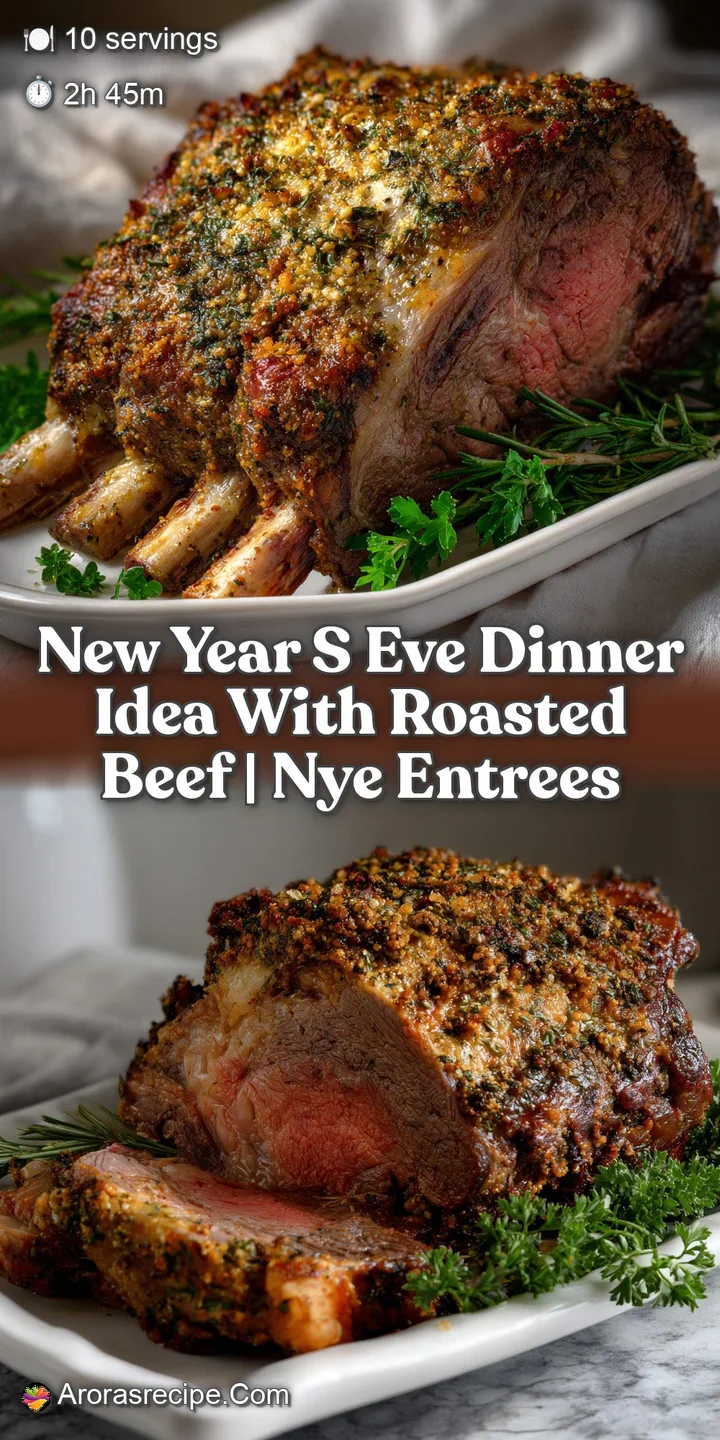
Recipe FAQs
What is the minimum required time for the roast to rest after cooking?
Thirty minutes minimum for juice redistribution. The residual heat continues cooking the core, and the rest period allows the contracted muscle fibers to relax and reabsorb moisture, preventing loss upon slicing.
- Tent loosely with foil
- Avoid direct contact with cold surfaces
- Do not skip this step for medium rare results
Can I skip the 2-hour tempering period before cooking?
No. Cold centers lead to uneven doneness. Putting a cold roast straight into the oven causes the exterior muscle fibers to seize violently before the interior warms up, guaranteeing a thick gray ring. If you need a faster alternative, consider a recipe like the Ground Turkey Sweet Potato Casserole: Healthy Comfort Food for Dinner which utilizes smaller, uniform ingredients cooked at moderate temperatures.
Should I use bone-in or boneless roast for this method?
Bone-in roast provides superior insulation. The bones slow heat transfer to the bottom surface, promoting a more cylindrical cook profile from edge to edge. Boneless roasts cook faster on the bottom, requiring pan adjustments to achieve the same consistent internal temperature.
What temperature should the oven be set to for the initial slow roast?
250°F is the optimal starting temperature. This low heat range facilitates enzymatic tenderization (100°F 120°F) while gently warming the interior without immediately denaturing the exterior proteins, which causes moisture expulsion.
How is Diamond Crystal Kosher Salt different from table salt here?
Diamond Crystal offers superior surface salting control. Its larger, less dense flakes adhere differently and require more volume to achieve the same salinity level as fine table salt. If you use table salt, halve the quantity, as precision is key for the exterior crust application.
Is it safe to use high heat oil like avocado oil instead of butter for the rub?
Myth: Searing meat "locks in the juices."Reality: Searing creates flavor through the Maillard reaction but actually causes the meat to lose more moisture than roasting alone. We sear for taste, not for juiciness.
What is the final internal temperature before the sear finish?
Pull the roast at exactly 120°F before the 500°F blast. This internal temperature ensures the center is just below medium rare, accounting for the carryover cooking that happens during the mandatory 30-minute rest period.
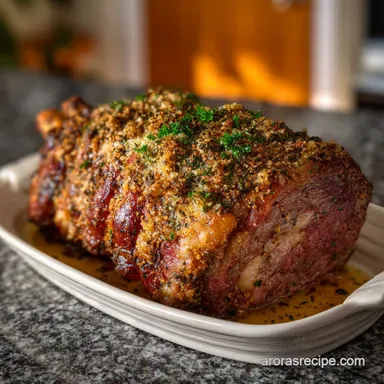
Nye Roasted Beef Masterclass
Ingredients:
Instructions:
Nutrition Facts:
| Calories | 942 kcal |
|---|---|
| Protein | 46g |
| Fat | 78g |
| Carbs | 3.5g |
| Fiber | 0.4g |
| Sugar | 0.8g |
| Sodium | 1180mg |
