Chicken and Sausage Stew: Rich Spanish One-Pot Meal
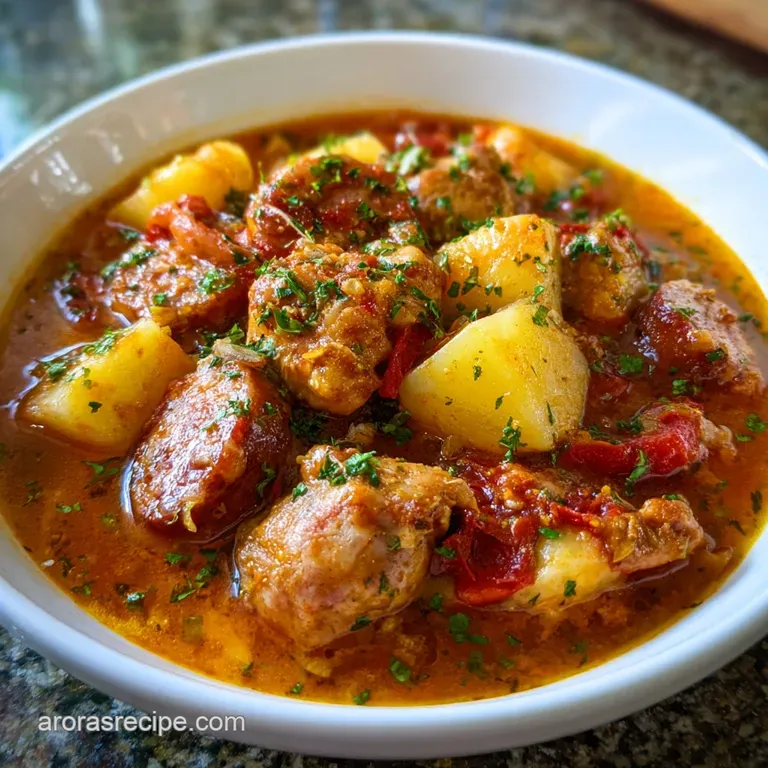
- The Ultimate One-Pot Spanish-Style Chicken & Chorizo Stew
- Gathering Your Essentials: Ingredients and Expert Substitutions
- Mastering the Method: Step-by-Step Guide to the Rustic Stew
- Achieving Culinary Gold: Pro Tips and Common Cooking Mistakes
- Make-Ahead Mastery: Cooling, Storage, and Reheating Guide
- Perfect Pairings: What to Serve Alongside Your Hearty Meal
- Recipe FAQs
- 📝 Recipe Card
The Ultimate One-Pot Spanish Style Chicken & Chorizo Stew
There is absolutely nothing better than walking into a kitchen that smells like rich, smoky promise. When you start with the deep, cured flavour of quality sausage and pair it with succulent poultry, you create pure magic.
This ultimate Chicken and Sausage stew recipe delivers exactly that, smelling incredible long before the spoon even hits the bowl.
I call this my "emergency deliciousness" meal because it’s a total lifesaver. You can prep everything in about 20 minutes, then let the stovetop do all the heavy lifting for an hour. It’s comforting, budget friendly (hello, chicken thighs!), and uses simple pantry staples.
Seriously, ditch the takeout menu tonight.
We’re diving headfirst into Iberian flavors today, leaning heavily on Spanish smoked paprika and pungent garlic. If you’ve ever wondered how to get that restaurant quality depth in a simple weeknight meal, this hearty Chicken and Sausage dish is the answer. Let’s crack on!
The Rustic Appeal of Bone-In Thighs
Using bone-in, skin-on chicken thighs here isn't just a preference, it's a non-negotiable step for flavour. The bone helps insulate the meat, preventing it from drying out, while the skin crisps up beautifully during the initial sear.
That crisp skin is going to turn deliciously tender once it braises in the rich sauce, giving you two amazing textures.
What Defines the Robust Iberian Flavour Base
The real secret weapon in this Chicken and Sausage recipe isn't the poultry it's the chorizo. We are using Spanish, cured chorizo, which is different from fresh Mexican or Italian varieties.
When you slowly render that orange red fat out of the chorizo slices, you are creating the flavour bedrock of the entire stew. That fat carries the highly prized Pimentón de la Vera (smoked paprika) essence, coating every other ingredient with gorgeous flavor.
Minimal Prep for Maximum Comfort
This is truly a 'set it and forget it' dish once the initial searing is done. A little chopping, a little searing, then everything goes into the pot for a long, slow simmer. The ease of this approach is what makes it one of the best and sausage recipes I have in my rotation for chilly evenings.
Gathering Your Essentials: Ingredients and Expert Substitutions
To make a truly phenomenal Chicken and Sausage stew, you need ingredients that sing. Don't skimp on the quality of your smoked paprika; it matters more than you think!
Selecting the Right Cut of Chicken
We stick with the thighs because they hold up best to long cooking times. Bone-in, skin-on thighs provide maximum flavour and moisture, period. If you must use breast meat, make sure it is added much later in the simmer, maybe only for the last 15 minutes, otherwise it will turn into dry leather.
| Ingredient To Substitute | Recommended Substitute | Why? |
|---|---|---|
| Bone-in Chicken Thighs | Boneless, Skinless Chicken Thighs (reduce simmer time to 25 mins) | Still offers great flavour and moisture without the bone. |
Understanding Spanish Chorizo vs. Other Smoked Sausage
Spanish chorizo is dried and cured, meaning it holds its shape and releases that deeply pigmented, smoky fat. If you grab the wrong kind, your stew will be flat. Substitution: If Spanish chorizo is impossible to find, use a good quality smoked kielbasa or Polish sausage. You'll need to compensate by adding an extra teaspoon of smoked paprika directly to the simmering liquid, as the fat won't carry the flavour as well. If you’re looking for a related quick meal, try my Weeknight Recipes: Speedy Lemon Herb Sausage Bake !
Essential Aromatics and Pantry Staples
Onion and bell peppers form the sofrito , the slow cooked base that provides sweetness and texture. Garlic, thyme, and oregano are mandatory for that rustic feel. Substitution: Can't stand bell peppers?
Replace them with carrots, diced small, or add a handful of roasted red peppers from a jar near the end for flavor without the crunch.
Alternative Thickening Agents
This stew should naturally thicken due to the reduction of the liquid and the starch released by the tomatoes. If yours is too thin, don't panic! Substitution: Remove the lid entirely for the last 10 minutes of simmering.
If it’s still too watery, pull out 1 cup of the sauce, stir in 1 tablespoon of cornstarch mixed with 1 tablespoon of cold water (a slurry), then pour it back in and simmer until glossy.
Mastering the Method: step-by-step Guide to the Rustic Stew
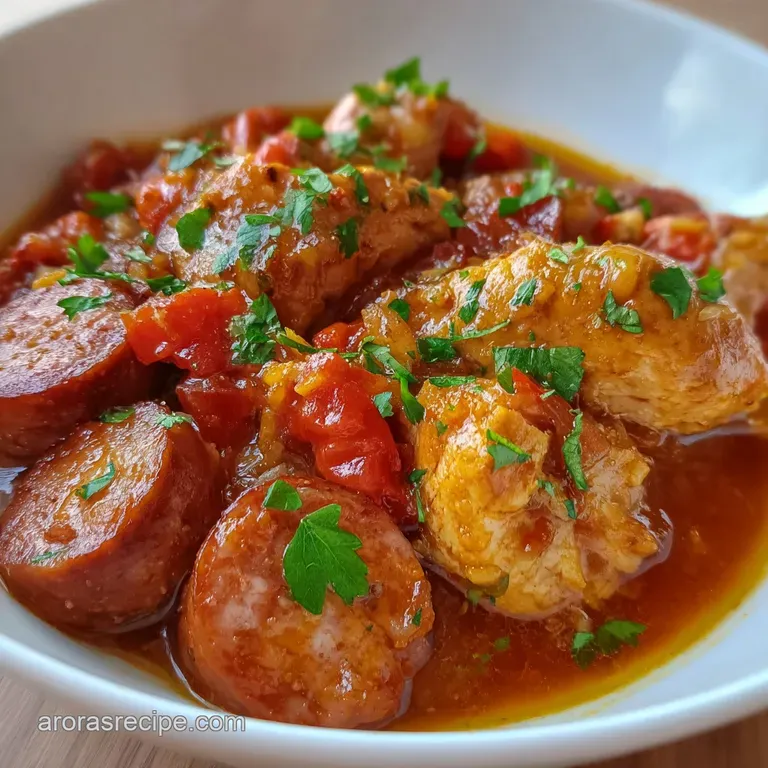
Remember, patience is what turns simple ingredients into rich flavor. Take your time during the searing stages.
Phase 1: Browning the Meats for Flavour Lock
- Dry and Season: Pat those chicken thighs aggressively dry with paper towels. Season them lavishly. This is where most people fail moist skin means steamed, soggy chicken.
- Render the Chorizo: Place your heavy pot over medium heat and add the sliced chorizo. Listen for that gentle sizzle! Cook for about 5 to 7 minutes until the fat melts out, turning the liquid gold orange. Remove the sausage and set it aside, leaving all that beautiful fat in the pot. Crucial: We add the chorizo back in later so it retains its texture.
- Sear the Chicken: Increase the heat slightly and carefully place the chicken, skin side down, into the hot fat. Do NOT move it for 6– 8 minutes. You are looking for a deep, crunchy mahogany crust. Remove the chicken and reserve it.
Chef's Note: If you hear sizzling slow down while searing the Chicken and Sausage, your pot is too crowded. Remove some pieces immediately and sear in batches.
Phase 2: Sautéing the Sofrito Base
- Softening the Vegetables: Add the onions and bell peppers to the residual fat. Turn the heat down to medium and sauté until everything is soft and the onions are translucent. This should take about 10 minutes, making your kitchen smell divine and sweet.
- Blooming the Spices: Add the garlic, smoked paprika, thyme, and oregano. Cook for just 60 seconds, stirring constantly. This wakes up the spices a process called blooming and releases the maximum flavor into the fat.
- Deglaze with Wine: Pour in the white wine. Scrape up every single brown bit stuck to the bottom of the pot. That sticky residue (the fond ) is pure concentrated flavor, and you need it in your sauce! Reduce the wine by half.
Phase 3: The Long Simmer and Reduction
- Add Liquids and Braise: Pour in the diced tomatoes and stock, tuck in the bay leaves, and bring to a simmer. Nestle the seared chicken back into the sauce, skin side up if you want slightly less soggy skin.
- The Wait: Cover the pot partially not completely! You want some steam to escape so the sauce slowly concentrates. Simmer on low for 35– 40 minutes until the chicken is falling apart tender. This gentle simmering process melds the flavour of the poultry with the spices and the Chicken and Sausage broth beautifully.
Final Seasoning and Resting
- Finish Strong: Stir the reserved chorizo and the fresh spinach (if using) back into the pot. Let it wilt. Taste the sauce, add more salt or pepper if needed.
- Resting is Mandatory: Remove from heat, cover the pot completely, and let the stew rest for 10 minutes. This allows the juices in the chicken to redistribute, making it incredibly moist.
Achieving Culinary Gold: Pro Tips and Common Cooking Mistakes
If your Chicken and Sausage dish isn't hitting that perfect flavor mark, one of these common pitfalls is likely the culprit.
Troubleshooting a Watery Sauce
Did you cover the pot completely during simmering? That traps all the moisture, preventing the stock from reducing properly. Next time, use the partial lid method. If it’s too late, simply pull the chicken out, bring the sauce to a rolling boil, and let it reduce rapidly for 5– 10 minutes until it thickens slightly.
Ensuring Even Cooking of the Chicken
Always check the internal temperature near the bone. If your chicken pieces are wildly different sizes, the smaller pieces will overcook. Try to select thighs of similar weight for the best results, ensuring every piece of the Chicken and Sausage is cooked perfectly.
The Importance of Deglazing the Pan
That moment when you pour the wine in and scrape the bottom of the pot? That's not optional. Those caramelized bits, the fond , are packed with savory, meaty compounds. Skipping this step means you leave half your flavour stuck to the bottom of the pan!
I made that mistake early on, and my stews tasted so boring compared to this rich chicken and sausage stew .
make-ahead Mastery: Cooling, Storage, and Reheating Guide
This is truly one of those meals that tastes even better the next day. The flavours of the smoked paprika and garlic deepen overnight.
Freezing the Chicken and Sausage Stew
Yes, it freezes beautifully! Allow the stew to cool completely I usually transfer it to shallow containers to speed this up. Once chilled, spoon the stew into freezer safe containers, leaving about an inch of headspace for expansion. It will last safely for 3 months.
When ready to use, thaw overnight in the fridge.
Best Practices for Reheating Leftovers
Reheating on the stovetop is always superior to the microwave. Transfer the stew to a pot and heat gently over medium low heat, stirring occasionally, until hot all the way through. If it seems too thick after being chilled, stir in a splash of water or extra chicken stock.
Perfect Pairings: What to Serve Alongside Your Hearty Meal
You need something simple to offset the powerful flavours of the smoked Chicken and Sausage base.
Starchy Sides to Soak Up the Sauce
The robust sauce needs a vehicle! I love serving this over creamy polenta, mashed potatoes, or even simple fluffy white rice. If you are feeling ambitious, maybe try this alongside my Shrimp and Rice: Smoky Saffron Tomato Pilaf Ready Fast for a complex pairing. A rustic side of crusty bread is mandatory for soaking up every last bit of that spicy, savory liquid.
This whole chicken and sausage endeavor is proof that the simplest dishes, when built on a rock solid foundation of flavor (hello, chorizo fat!), can be the most impressive. Enjoy this delicious, deeply satisfying meal!

Recipe FAQs
What type of sausage is best for this Spanish style stew?
You must use cured, dry Spanish chorizo, not the raw, fresh Mexican variety, as the flavor profile is completely different. Spanish chorizo comes in both sweet (dulce) and spicy (picante) varieties, so choose based on your preference for heat.
If chorizo is unavailable, a high-quality, fully cooked smoked kielbasa can be used, but you should add extra smoked paprika for the classic Iberian flavor.
Can I use boneless, skinless chicken breast instead of bone-in thighs?
While chicken thighs are preferred for their moisture and ability to withstand longer simmering times, you can use breasts. To prevent them from drying out, consider cutting the breasts into large 2 inch chunks before searing and add them only during the final 30 minutes of the stewing process.
Always ensure the internal temperature reaches 165°F (74°C) before serving.
My stew seems very oily after cooking. How can I fix this?
The delicious richness of chorizo comes from the fat it releases during cooking. If the oil is excessive, gently tilt the pot and use a large spoon or ladle to skim the oil layer off the top before serving.
Alternatively, you can drain some of the rendered chorizo fat from the pot after browning the sausage, before you add the onions and garlic.
Can I freeze leftovers of the Chicken and Chorizo Stew?
Yes, this stew freezes exceptionally well, making it perfect for batch cooking. Ensure the stew is completely cooled before transferring it to freezer safe, airtight containers, leaving a small amount of headspace for expansion.
It will maintain quality for up to three months; thaw overnight in the refrigerator and reheat slowly on the stove.
How can I naturally thicken the sauce if it’s too runny?
The easiest method is to remove the lid during the last 15 to 20 minutes of simmering, allowing excess liquid to evaporate and the sauce to reduce naturally. If you need a quicker fix, you can remove a small amount of the liquid, stir in a teaspoon of cornstarch or flour until smooth (a slurry), and then stir the mixture back into the hot stew until it thickens.
What are good vegetable additions to make this a more complete meal?
This stew is versatile and pairs well with robust vegetables. Try adding diced potatoes (Russet or Yukon Gold) or carrots, ensuring they are cut small enough to soften during the simmering time. Bell peppers and canned chickpeas or butter beans, added in the last 20 minutes, also make excellent, hearty additions.
I want to reduce the overall saltiness of the dish. What should I adjust?
Chorizo is a cured sausage and contributes a significant amount of salt to the recipe, as does the chicken stock. Ensure you use low-sodium or unsalted chicken stock and taste the stew before adding any additional salt.
You can also add a splash of acid, like a squeeze of lemon juice, at the end, which can balance the perception of saltiness.
One Pot Chicken And Chorizo Stew
Ingredients:
Instructions:
Nutrition Facts:
| Calories | 358 kcal |
|---|---|
| Protein | 27.0 g |
| Fat | 16.2 g |
| Carbs | 28.9 g |
