Ramen with Egg Ultimate Shoyu Broth Chefs Jammy Ajitama Recipe
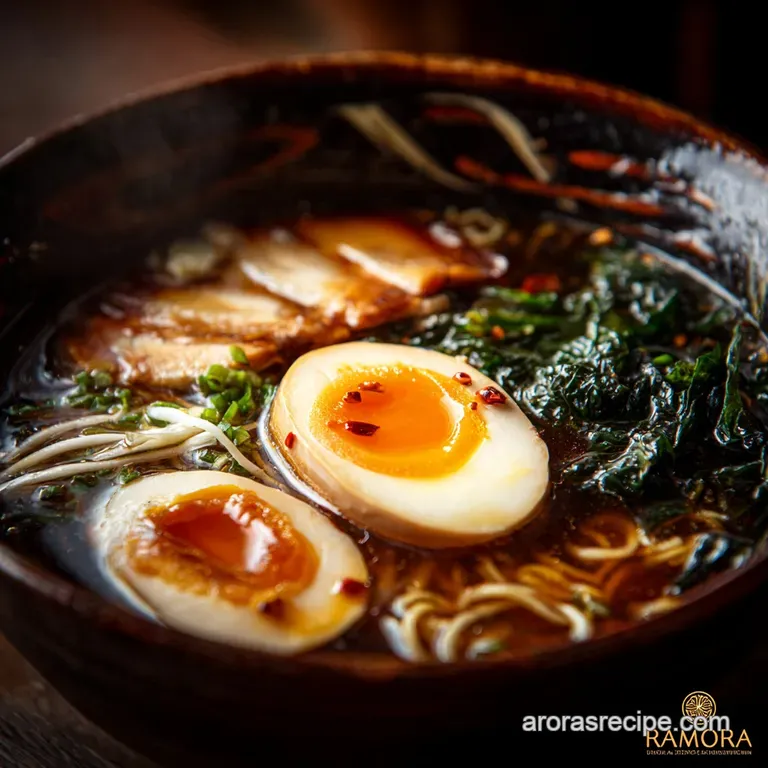
- Moving Beyond Instant: Achieving Restaurant and Quality Ramen at Home
- The Secret Weapon: Why the Ajitama Makes This Ramen with Egg Sublime
- Gathering Your Arsenal: Essential Components for Authentic Shoyu Ramen
- Kitchen Necessities: Tools for Building the Perfect Ramen Bowl
- Phase One: Precision Cooking the Jammy Ajitama Ramen Egg
- Broth Synthesis and Flavor Marriage: Combining the Tare and Stock
- The Final Assembly: Layering Components for Maximum Impact
- Troubleshooting and Expert Tips for Your Next Bowl of Ramen with Egg
- Customizing Your Comfort: Variation Ideas and Garnishes
- Recipe FAQs
- 📝 Recipe Card
Moving Beyond Instant: Achieving Restaurant and Quality Ramen at Home
Right, let’s be honest. Instant ramen served its purpose. We all lived on it in college (mine was a glorious diet of sodium and questionable flavoring packets). But you’re here now because you want the real deal.
You want that silky, deep umami hit that only comes from a slow and simmered broth, layered with flavour. This isn't about complexity, it's about technique. We’re moving past "just add water" and building a truly exceptional Homemade Ramen bowl centered around the perfect Ramen with Egg .
Trust me, once you master this basic Shoyu Ramen Recipe, your Friday night dinner game changes forever.
It’s surprisingly achievable. The biggest mistake people make is thinking they need to simmer bones for 48 hours. We’re skipping the 48 hours, but keeping 90% of the flavour by focusing on the Tare the glorious flavour base and the precise cooking of the eggs.
The Secret Weapon: Why the Ajitama Makes This Ramen with Egg Sublime
Think about the last time you ordered amazing Ramen with Egg at a restaurant. What was the best part? Was it the bouncy noodles? Maybe. But I swear, nine times out of ten, the thing that sticks in your memory is the soft, mahogany and colored, marinated egg (that’s the Ajitama ).
That yolk, that glorious, viscous, flowing gold, coating every noodle strand.
The Ajitama isn't just a boiled egg placed on top. It’s an immersion course in salt, sugar, and umami. It transforms the whole bowl. You can have a basic broth, but if that Ajitama is perfect, you have a five and star Ramen Dinner .
Getting that ideal ramen with egg yolk texture is non and negotiable for success, and I'll walk you through my slightly neurotic, timed method for getting it right every single time.
Deconstructing Shoyu: Understanding the Broth Base (Tare vs. Dashi)
This is the most important concept in ramen: the broth is two things, not one. There’s the Dashi (or just the plain stock, like chicken or vegetable stock) and the Tare (pronounced tah and reh ). The Dashi/Stock provides body and heat.
The Tare provides the salt, the depth, and the identity of the ramen (Shoyu means soy sauce, Shio means salt, Miso means miso paste).
We build the Tare first. It’s concentrated. You put it in the bowl before the hot stock. If you just dump soy sauce into the whole pot of stock, you lose the layered, punchy flavour we're after.
A Study in Texture: The Perfect Noodle Pairing
The noodles are the vehicle, but they must have bounce, or kosshi . Soggy noodles are a tragedy. We want springy, toothsome strands that resist a little bite. That means cooking them separately, quickly, and timing the cook precisely. It also means investing in decent noodles.
Honestly, if you can find fresh refrigerated ramen noodles, use them. If not, dried works, but be religious about the cook time listed on the package. Under and cook them by 30 seconds, honestly. They’ll finish cooking in the hot broth.
The Time Investment vs. Flavor Payoff
Yes, the Ajitama needs time to marinate. We’re looking for a minimum of 1 hour, but ideally 6 to 12 hours. But this is passive time! The active cooking time for this whole bowl of Homemade Ramen —from heating the stock to garnishing is seriously only 30 minutes.
You can start the eggs in the morning, and by dinner, you're 80% of the way to a perfect bowl. This is efficiency, my friend.
Gathering Your Arsenal: Essential Components for Authentic Shoyu Ramen
This isn’t a massive list, but quality matters, especially with soy sauce. Don't grab the generic cooking soy sauce for this; get a good quality Japanese soy sauce (like Kikkoman or Yamasa). The depth of flavour is worth the extra few quid.
Kitchen Necessities: Tools for Building the Perfect Ramen Bowl
You don't need fancy equipment, but you absolutely need one thing:
- A reliable kitchen timer: Non and negotiable for the eggs. A stopwatch function is best.
- A spider strainer or slotted spoon: Crucial for gently lowering eggs into the boil and for quickly transferring noodles.
- Deep serving bowls: Ramen bowls should be warmed before use. Trust me, it makes a huge difference in keeping the broth hot.
The Magic of Tare: Crafting the Concentrated Flavor Base
The basic Shoyu Tare is easy. We are blending soy sauce, toasted sesame oil (it has to be toasted it’s nutty and intense), fresh ginger, and garlic. That’s it. Mix it up in a little jar. Keep it ready.
When you mix this with the steaming broth, the aromatics bloom and release the most incredible smell. That’s when you know you’re doing it right.
Selecting the Right Stock: Chicken, Vegetable, or Cheat's Miso Base
For this Chicken Ramen Recipe , I recommend high and quality, low and sodium liquid chicken stock. It provides the best foundation without overpowering the soy Tare. Avoid stock made purely from bouillon cubes; it often tastes too one and dimensional and aggressively salty.
Crucial Note: If you want a deeper, richer flavour without the meat, use vegetable stock and add a piece of dried kombu (kelp) to the pot while it simmers. Remove the kombu before serving. It’s an umami cheat code.
The Ultimate Marinade: Ingredients for Silky, Jammy Ajitama
For the Ajitama marinade, we use a 1:1 ratio of soy sauce and Mirin (Japanese sweet rice wine), diluted slightly with water. The Mirin adds a necessary sticky sweetness that balances the intense soy. If you don't have Mirin, dry sherry and a teaspoon of sugar works in a pinch, but Mirin is the real deal.
Choosing Noodles: Fresh vs. Dried and Optimal Cooking Times
| Noodle Type | Appearance | Optimal Cook Time | Texture Note |
|---|---|---|---|
| Fresh Ramen | Pale yellow, usually oiled | 2– 3 minutes | Superior kosshi (springiness/chew) |
| Dried Ramen | Straight, brittle | 4– 6 minutes | Good, but more delicate |
Always follow the package directions, but remember: cook until just al dente . We want bounce.
Related Recipes Worth Trying
- Duck Tacos Crispy Rendered Duck with Smoky CherryChipotle Glaze — Duck Tacos are the elevated street food you need Learn how to make duck tacos using our slowrender technique for shatteringly crispy skin This gourmet Duck...
- Vietnamese Breakfast The Ultimate Bánh Mì Ốp La Fried Egg Sandwich — Start your day right with an authentic Vietnamese Breakfast This Banh Mi Sandwich Recipe features perfectly runny fried eggs savory pâté and quick pickled...
- Spicy Tonkotsu Ramen The Ultimate 18Hour Creamy Broth Recipe — Spicy Tonkotsu Ramen requires dedication but the reward is a luxurious creamy pork bone broth Paitan Learn how to master authentic Tonkotsu Ramen...
Phase One: Precision Cooking the Jammy Ajitama Ramen Egg
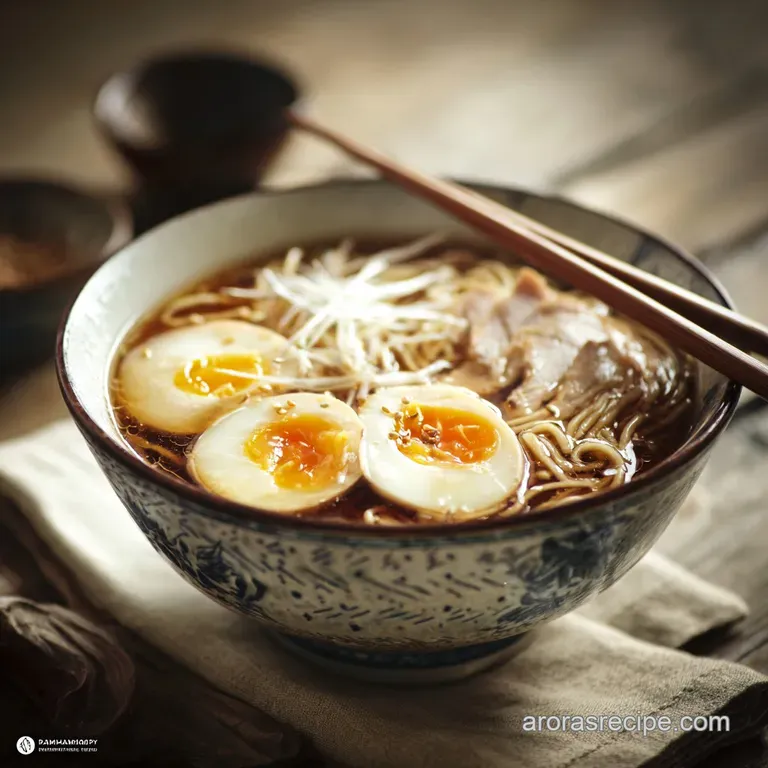
This is where the timer comes in. I used to guess. I’d wander off, answer an email, and come back to chalky, grey yolks. Never again. We need precision for that perfect soft and set ramen with egg on top .
- Bring a small saucepan of water to a vigorous, rolling boil.
- Gently, gently lower your cold, straight and from the and fridge eggs into the boiling water using a slotted spoon. (Using cold eggs helps keep the yolk centered.)
- Set your timer immediately for 6 minutes and 30 seconds . Do not leave the kitchen.
- Once the timer screams, pull those eggs out and drop them straight into an ice bath.
This precise timing for a large, cold egg is what guarantees the sides are set and the center is gorgeously jammy.
Broth Synthesis and Flavor Marriage: Combining the Tare and Stock
While the eggs are chilling, heat up your stock. I like to let it simmer very gently for about 10 minutes, just allowing some water to evaporate and concentrate the flavour. Keep it warm but don't let it boil hard (that can cloud the stock).
The actual marriage happens in the bowl.
- Place the Tare mixture (soy, sesame, ginger, garlic) into the base of your warmed serving bowl.
- Ladle the hot stock directly over the Tare. Stir well until the Tare is fully dissolved into the broth. Taste it. It should be intensely savoury.
The Final Assembly: Layering Components for Maximum Impact
This is where speed counts. You want everything hot and ready.
The 6 Minute Boil: Achieving the Ideal Soft and Set Yolk
I know, I already covered this, but it bears repeating. That 6 minutes and 30 seconds is for a standard large egg. If you're using medium eggs, dial it back to 6 minutes flat. If they're jumbo, maybe stretch it to 7 minutes.
Know your eggs!
Cooling and Peeling: The Icy Water Shock Technique
The ice bath is necessary to immediately halt the cooking process. If you skip this, residual heat will cook your jammy yolk solid. When peeling, I find cracking the shell all over, then peeling under a slow trickle of cool running water, helps the membrane separate beautifully.
Resting Time: Infusing the Ajitama Eggs for 12 Hours or More
Place the peeled eggs into the soy/mirin marinade, ensuring they are submerged. I usually flip them after an hour to get even coverage. If I plan ahead, I’ll leave them overnight in the fridge. They soak up that glorious flavour and turn a stunning bronze color.
When you finally slice them, that contrast between the dark white and the glowing yolk is breathtaking.
Bringing it Together: Warming the Broth and Preparing the Toppings
- Cook and drain your noodles (remember: slightly undercooked!).
- Place the noodles into the waiting bowl of broth and Tare.
- Garnish immediately with thin slices of spring onion (scallions), nori, and your perfectly sliced Ajitama halves.
This order ensures the noodles stay hot and the delicate toppings don't sink.
Troubleshooting and Expert Tips for Your Next Bowl of Ramen with Egg
I’ve made every mistake, so you don’t have to. Here are my top quick fixes:
- Salty Broth: Did you use regular stock and a full amount of Tare? Dilute it slightly with plain hot water, or a small ladle of unsalted stock.
- Cloudy Broth: This usually happens if you let your stock boil too hard. Keep the heat low and gentle just a light simmer.
- Stuck Shells (Egg Peeling Failure): This is the worst. Next time, try adding a pinch of baking soda to the boiling water. It changes the pH and often makes the shells slide right off.
My personal tip for superior texture:
- Cook the noodles in aggressively boiling, unsalted water.
- Drain them quickly and immediately shake off every drop of water.
- Don’t let them wait! Get them into the broth within 30 seconds of draining.
Customizing Your Comfort: Variation Ideas and Garnishes
The beauty of Easy Ramen is how easy it is to change the whole vibe with simple substitutions.
Scaling Up: Batch Cooking and Storage Guidelines for Broth and Ajitama
The Tare and the Ajitama are fantastic batch items.
| Component | Shelf Life (Refrigerated) | Notes |
|---|---|---|
| Ajitama (Marinated Eggs) | 4 days | Keep them fully submerged in marinade. |
| Shoyu Tare Base | 2 weeks | Store in an airtight jar. |
| Broth (Stock) | 5 days | Best to store stock separately, only combining it with Tare right before serving. |
Dietary Swaps: Mastering Vegan and Gluten and Free Ramen Substitutions
Making great vegan ramen is totally possible! Use a good mushroom or vegetable stock. For the Tare, ensure your soy sauce is gluten and free (tamari works great), and swap the Ajitama for seasoned, fried tofu cubes (marinate them the same way!). You can find gluten and free rice and based ramen noodles, too.
Adding Heat: Introducing Chili Crisp or Spicy Peanut Butter Layers
If you need a kick, ditch the plain chili flakes. I swear by quality chili crisp (Lao Gan Ma is my favourite). Add a teaspoon directly into the Tare before ladling the stock on top.
If you’re feeling bold, a small dollop of spicy peanut butter mixed with a little water makes an amazing, nutty, rich base layer for a different kind of broth.
Protein Alternatives: How to Use Pork Shoulder or Brisket Toppings
While this base recipe uses a simple ramen with egg and chicken stock, you can add major protein. If you want chashu (braised pork), use pork belly or shoulder. Cook it low and slow in a mixture of soy sauce, sugar, ginger, and sake for a few hours until fork and tender.
Slice it thin, warm it in a pan, and arrange it right next to the beautiful Ajitama egg. It’s worth the extra time, truly.
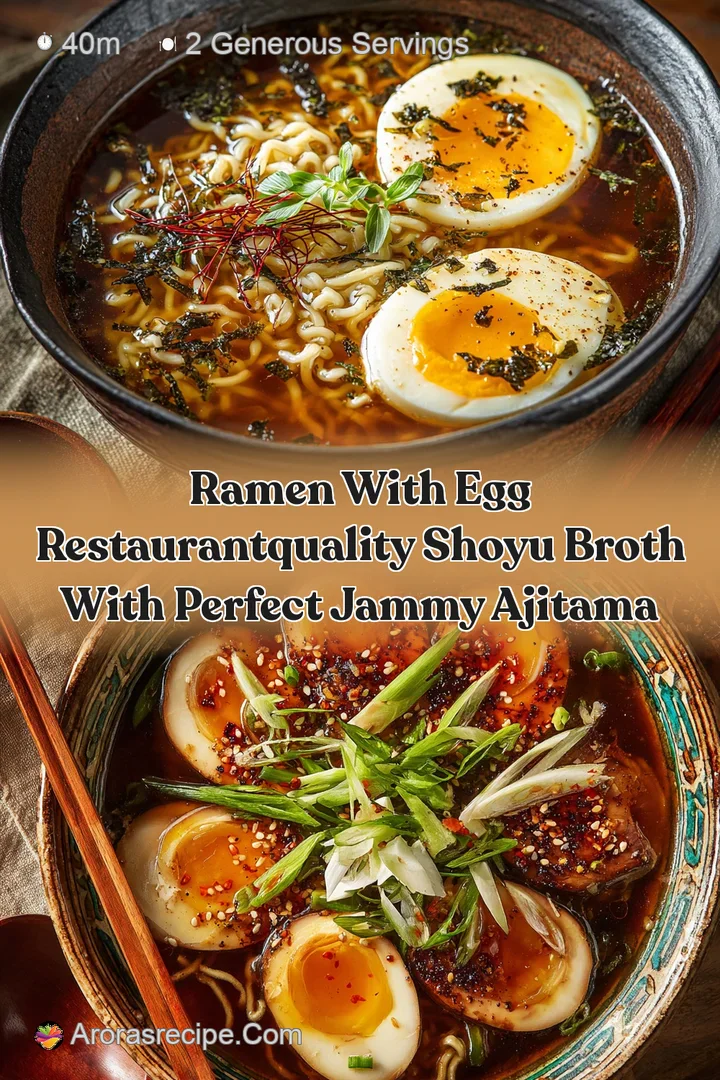
Recipe FAQs
How do I make sure I get that perfect jammy yolk in my Ramen with Egg?
The secret to the Ajitama is precision timing: 6 minutes and 30 seconds for cold, large eggs, followed immediately by an ice bath; this shock treatment halts the cooking instantly, giving you that luxurious, melt-in-the-mouth centre.
This recipe mentions 'Tare' is that the same thing as the broth? What's the difference?
They are different things! The broth is the main liquid body (your chicken stock), while the Tare is the highly concentrated flavour seasoning (soy sauce, sesame oil, aromatics) placed at the bottom of the bowl it’s the foundational flavour bomb that lifts the whole dish, like adding yeast extract to your toast.
I've made a big batch; how do I store leftover ramen without the noodles getting sad and soggy?
Never store the noodles swimming in the broth; they're like sponges! Store the cooked noodles separately from the broth/Tare mixture, and only combine them right before serving, otherwise you’ll end up with a regrettable mush the next day.
Can I easily make this delicious bowl vegetarian or even vegan?
Certainly; replace the chicken stock with a rich vegetable stock and boost the umami by infusing it with a piece of dried kombu seaweed while simmering, ensuring you also substitute the egg for a topping like charred mushrooms or corn.
This tastes brilliant, but I worry about the salt content from all the soy sauce. Is there a way to cut down the sodium?
To keep the flavour profile high while managing the salt, use a high-quality, low-sodium chicken stock as your base liquid, and focus on boosting the natural aromas of ginger, garlic, and toasted sesame oil in the Tare rather than relying purely on soy sauce for depth.
Ramen With Egg Shoyu Broth Ajitama
Ingredients:
Instructions:
Nutrition Facts:
| Calories | 600 calories |
|---|---|
| Fat | 18 g |
| Fiber | 3 g |
