Sausage Herb Stuffing: the Butchers Best Sourdough Sage Recipe
- Why This Sausage Herb Stuffing Will Be the Star of Your Feast
- The Secret to Unforgettable Stuffing: Mastering Moisture and Crisp
- Essential Components for a Cracking Stuffing Mix
- The Butcher's Picks: Selecting the Best Sausage and Herbs
- The Technique: Building Layers of Flavour Before the Bake
- Step and by-Step Guide to Baking Perfect Sausage Herb Stuffing
- Mastering Your Stuffing: Expert Tips and Troubleshooting
- Beyond the Holiday: Storage and Reheating This Savoury Stuffing
- Recipe FAQs
- 📝 Recipe Card
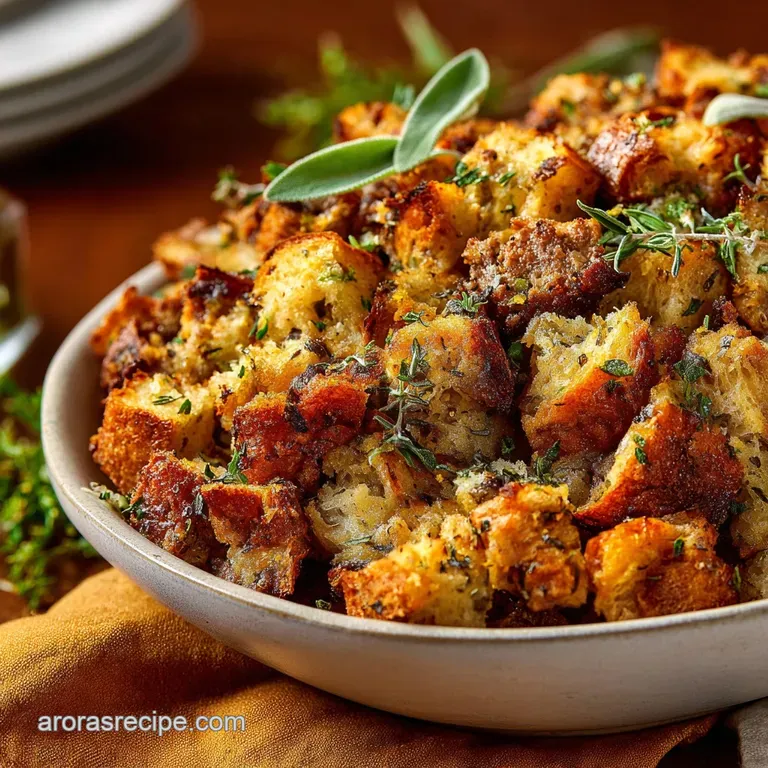
Why This Sausage Herb Stuffing Will Be the Star of Your Feast
Let’s be honest, we all spend way too much time obsessing over the turkey, right? But what does everyone actually elbow each other for? This glorious, savory, crisp and edged Sausage Herb Stuffing.
It is the real anchor of the meal, the thing that ties the gravy and the cranberry sauce together in perfect harmony.
If you’re still using a box mix or a recipe that yields a sticky, dense brick, stop. Just stop. We're aiming for something sophisticated but utterly comforting. Something that tastes like the holidays felt when you were ten.
My goal here is to give you the Best Sausage Herb Stuffing recipe you will ever make, period. It’s built on simple, honest ingredients, but the technique is what separates it from the pack. It has to be moist, but never mushy. It has to be herby, but not like you just ate a potpourri sachet.
This recipe nails that balance.
The Secret to Unforgettable Stuffing: Mastering Moisture and Crisp
Listen, I have failed at stuffing. More times than I care to admit. The worst? A Thanksgiving years ago when I decided to use really soft, fresh bread and ended up with something resembling savory breakfast porridge. It was a disaster.
The fundamental secret to great stuffing is controlling the moisture from the very start. We want the inside of the stuffing to steam and soak up all that incredible, buttery sausage fat and stock, while the top caramelizes into a beautiful, crunchy shield.
Ditching the Dry: The Sourdough Advantage for Superior Texture
Why sourdough? Simple. It's dense, it has a killer crust, and its structure holds up like a champ against heavy liquids. Unlike soft white bread, which collapses into a cloud of starch when wet, the sourdough cubes maintain their integrity. This means they soak up the flavour without falling apart.
CRITICAL NOTE: If you decide to stray from sourdough, use a rustic loaf maybe a French or country loaf but ensure you cut it into nice, chunky 1 inch pieces. Don't go smaller, or you risk the dreaded mush.
The Difference Between Good Stuffing and Great Stuffing
It really comes down to fat and fresh herbs. A good stuffing uses butter and maybe a pinch of dried sage. A great stuffing builds layers of flavour. We start by rendering the fat from the Italian Sausage Herb Stuffing mix, then sautéing the celery and onions in that delicious fat (plus a heap of extra butter) low and slow.
That step alone takes 10 minutes, and every minute is worth it because it releases the natural sugars in the vegetables, setting the stage for deep, savoury sweetness.
A Flavour Profile Built on Savoury Sausage and Fresh Sage
I am unapologetically obsessed with using fresh sage in this recipe. It’s woodsy, slightly peppery, and just screams "holiday." We pair the robust flavour of the sage with fresh thyme and a whisper of rosemary, but the sausage is the real muscle here.
I lean towards a mild or sweet Italian sausage (the one with fennel seeds sometimes) because it brings complexity without needing a ton of extra spices. If you prefer a traditional English pork sausage, make sure it’s high-quality, not overly fatty, and seasoned simply so the herbs can shine.
Essential Components for a Cracking Stuffing Mix
To get that beautiful contrast crispy top, moist middle you need three things perfectly calibrated:
- The Dried Base: Sourdough cubes that are practically rocks.
- The Savoury Filling: Browned sausage, deeply caramelized aromatics (onion, celery, garlic), and tons of fresh herbs.
- The Binder: A slightly warm mix of stock and beaten eggs, poured over just enough to hydrate, not drown.
The Butcher's Picks: Selecting the Best Sausage and Herbs
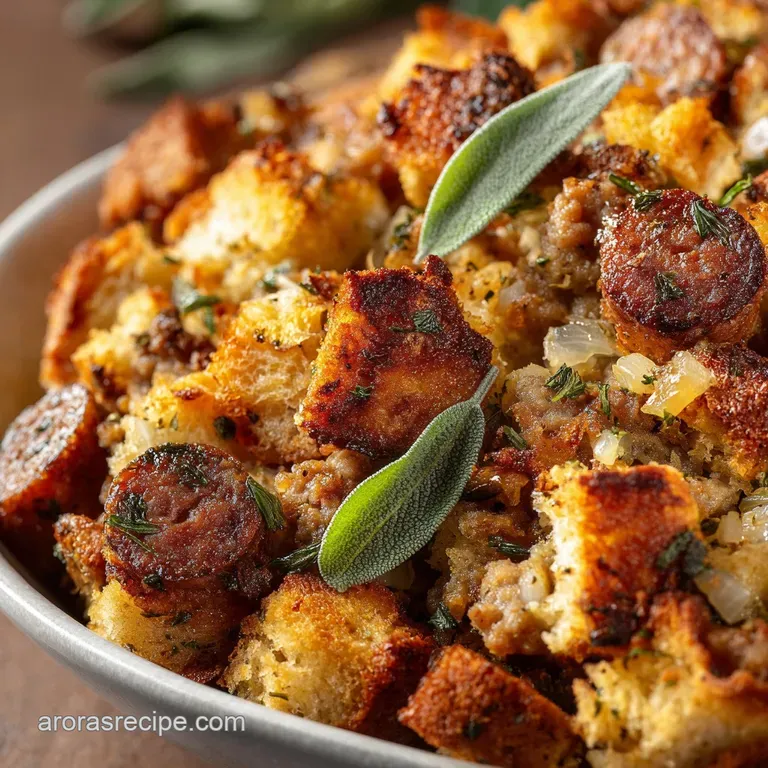
Don't skimp here. This isn't the time to buy the cheapest sausage in the cooler. Because the sausage is responsible for both fat and flavour, spring for a quality butcher and style pork sausage. I usually buy mine without the casing, but if yours has it, just slice it down the side and peel it off before browning.
It makes a huge difference to the texture of the final Sausage Herb Stuffing.
Preparing the Bread Base: Achieving the Perfect Dryness
This is the most crucial step, so pay attention. We are actively trying to make the bread inedible before we add the binder. You want that cube to be rigid.
Are you worried about turning your oven on just to dry bread? Right? Me too. So here is the speed and run technique: Cut the cubes, toss them onto a sheet pan, and bake them at 300°F (150°C) for 15 minutes. They should feel hard and sound hollow when tapped.
If you have the time, leaving them out overnight uncovered is brilliant and saves energy.
Aromatic Foundations: Which Herbs Truly Shine (Sage, Thyme, Marjoram)
We focus on the classics because they work. We need the intense, savory counterpoint to the richness of the pork.
- Sage: The main event. Use more than you think you should.
- Thyme: Earthy and subtle. It plays well in the background.
- Rosemary: Use sparingly! Rosemary is bossy. A little bit adds that woodsy depth, too much and your stuffing tastes like a pine forest.
For Thanksgiving Stuffing Recipes, fresh herbs are non and negotiable. Throw out the dried flakes for this one.
The Liquid Element: Balancing Broth and Egg for Binding
The egg is there to hold things together slightly, giving the final stuffing a cohesive feel that still spoons nicely. The broth provides the necessary moisture and flavor infusion. My rule of thumb is 3 cups of broth for a large loaf of dried bread.
I always warm the stock first. Why? Because adding cold liquid to the mixture means the dried bread soaks it up slowly and unevenly. Warm liquid absorbs faster and ensures the spices and fat blend immediately. It's a small step that pays huge dividends in uniform texture.
Tools of the Trade: Equipment for Stuffing Success
Honestly, you just need a massive bowl. I mean, huge. Stuffing expands, and trying to mix three pounds of dried bread and sausage in a standard mixing bowl is how you end up with half the filling on the floor. Get the biggest one you own.
A sturdy 9x13 dish is essential for a good surface area to volume ratio, ensuring plenty of those crispy edges we love.
Related Recipes Worth Trying
- Sausage Stuffing Classic Recipe with Crispy Sage and Thyme Crust — This deeply savory Sausage Stuffing recipe delivers the perfect golden crisp crust and soft interior Use quality sausage and fresh sage for a truly...
- Sausage Stuffing The Best Moist Crispy Sage Dressing Recipe — Make the only Sausage Stuffing recipe youll ever need This Robust Sage stuffing delivers a perfect moist interior and crispy top ideal for turkey or as a...
- Stove Top Stuffing Meatloaf The Easiest Juiciest Recipe Ever — Our Stove Top Stuffing Meatloaf Recipe guarantees juicy perfection every time This easy Stove Top meatloaf uses the mix to ensure incredible flavor and...
The Technique: Building Layers of Flavour Before the Bake
We are treating this like a proper roast dinner component, not just an afterthought. When you brown the sausage (I prefer Italian Sausage Herb Stuffing for that extra zest), make sure you get some nice caramelization on the meat itself.
Then, crucially, drain off most of the fat, but save about a tablespoon or two. This is liquid gold, full of pork flavour. That’s what we use to soften the celery and onions along with the extra butter.
This guarantees every single cube of bread will eventually be kissed by that rich, savory foundation.
Step and by-Step Guide to Baking Perfect Sausage Herb Stuffing
Sautéing the Aromatics: Softening Without Colouring
We need soft vegetables, not crunchy ones, but we also don't want brown specks in our stuffing. This means medium heat, maybe even medium and low, for a good 8 to 10 minutes. Stir often.
When they are translucent and smell incredibly sweet, then you add the garlic, cooking for only sixty seconds before pulling the skillet off the heat.
Mixing and Binding: Ensuring Uniform Moisture Distribution
When you combine the cooked ingredients (sausage, veg, herbs) with the dried bread, give it a good toss so the seasoning is well and distributed. Then, pour the warm stock and egg mixture over everything. Use a large spatula and gently fold. I am not exaggerating when I say gently .
We aren't making dough. You want the bread to slowly drink the liquid. Let it sit for ten minutes after mixing. That’s your hydration resting period. If it looks dry after the rest, add a splash more stock.
Achieving the Crispy Top: Oven Temperatures and Timing Secrets
We bake covered first to create a moist, steamy environment. That 375°F (190°C) temp is perfect because it’s hot enough to cook quickly but won't burn the top. After 30 minutes, you remove the foil. That’s the magic moment.
The heat now focuses on the surface, allowing the top layer of bread cubes, coated in sausage fat and butter, to caramelize beautifully. It takes about 15 to 20 minutes uncovered to get that beautiful, dark gold crust.
Resting and Serving: Maximising Flavour Post and Bake
Just like meat, stuffing benefits from a rest. Let it sit for ten minutes when it comes out of the oven. This allows the internal heat to redistribute and for the structure to set slightly. If you serve it immediately, it can feel a bit loose. A short rest firms it up just enough.
Mastering Your Stuffing: Expert Tips and Troubleshooting
Here are a few quick and fire tips for tackling this classic side dish, ensuring you get the best Sausage Herb Dressing imaginable:
- Taste the Broth: Before you pour the liquid over the bread, taste the broth and egg mixture. If it tastes slightly over and seasoned now, it will be perfect after the bread absorbs it.
- Don't Pack It Down: When you transfer the stuffing to the casserole dish, resist the urge to compress it. A loose mixture allows for steam circulation and ensures a lighter texture.
- The Apple Trick: If you want a slightly sweeter, crunchier texture (the classic Sausage Apple Herb Stuffing vibe), mix in one finely diced, sautéed Granny Smith apple along with the celery and onions.
- Crispier Edges Hack: Run a knife around the edges of the dish five minutes before it's done baking to promote extra caramelization on the sides.
Beyond the Holiday: Storage and Reheating This Savoury Stuffing
One of the great things about this Easy Sausage & Herb Stuffing is how well it holds up. Honestly, leftovers might be better than the original meal.
How to Prepare Sausage Herb Stuffing Ahead of Time
You can absolutely make this 100% ahead of time. Complete all steps up to the point of baking (Stage 3: Mixing and Assembly). Cover the dish tightly with foil and refrigerate for up to 2 days.
When you’re ready to bake, pull it out 30 minutes before it goes into the oven to lose the chill, then bake as directed. You might need an extra 5– 10 minutes on the covered bake time if it’s coming straight from the fridge.
Adjusting the Recipe: Gluten and Free and Vegetarian Substitutions
For those avoiding gluten, the fix is super easy. Find a good, dense gluten and free bread and dry it out exactly as instructed. The ratios of stock/egg remain the same because the density is similar.
For a vegetarian version, swap the sausage for 1 pound of sautéed mushrooms (cremini and shiitake work well). You will need more fat, so replace the sausage with extra butter or olive oil for the sautéing stage.
You might want to add a tablespoon of nutritional yeast for an extra savory, umami kick to mimic the pork.
The Golden Rule: Stuffing a Bird Versus Baking Separately
Listen to me closely: Bake the stuffing separately. Always.
First, food safety. It's incredibly difficult to get the stuffing inside the bird up to the required 165°F (74°C) without overcooking the turkey. Second, texture. Stuffing baked inside the bird turns mushy because it’s been steamed in turkey juices, and you lose all that coveted crispy topping.
For the Best Sausage Herb Stuffing texture, stick to the casserole dish.
Nutritional Overview and Serving Suggestions
Yes, this is a holiday side dish, so we aren’t pretending it’s a salad. It’s rich, savory, and a lovely indulgence (you saw the fat content in the recipe card, we’re not hiding it!). It pairs perfectly with anything you would serve for a traditional Turkey Dinner Stuffing event.
Serve it with a very generous ladle of rich, dark gravy. The crunch of the top mixed with smooth gravy is just… perfection. I love adding a little bit of chopped parsley over the top just before serving for a vibrant colour pop.
Recipe FAQs
Should I cook this glorious Sausage Herb Stuffing inside the turkey, or stick to the casserole dish?
For food safety and the best crisp texture, always bake your stuffing separately in a casserole dish. Cooking it inside the bird makes it difficult to ensure the internal temperature is safe (165°F/74°C) without overcooking the main meat so let's avoid the faff!
My stuffing always ends up a bit soggy; what’s the trick to getting those perfectly crispy edges?
The secret is the bone dry bread base; if the bread is too fresh, it dissolves into mush upon adding liquid, so make sure you dry it out thoroughly. Also, remember to bake the stuffing uncovered for the last 15 20 minutes to achieve that coveted golden, crisp top crust.
I’m cooking a huge feast, can I prep this Sausage Herb Stuffing the day before?
Absolutely! You can mix the entire filling (sausage, aromatics, herbs, and bread) a day ahead and store it covered in the fridge. On the day of, simply add the stock and eggs, allow it to hydrate, and then bake as instructed.
I prefer a sweeter stuffing. Can I swap the Italian sausage for something else?
You’re spot on to experiment! You can easily swap the sweet Italian sausage for a good quality English pork sausage, or if you want less fat, use ground turkey and add a pinch of fennel seed and red pepper flakes for flavour.
What if I don't have fresh sage or thyme? Can I use dried herbs instead?
Yes, you can, but remember that dried herbs are more potent than fresh; aim for a ratio of 1 teaspoon of dried herbs for every 1 tablespoon of fresh herbs listed in the recipe.
How long will leftovers last, and what’s the best way to reheat them without drying them out?
Leftovers are cracking good for up to four days when stored in an airtight container in the fridge. To reheat, cover the dish with foil and heat in a 350°F (180°C) oven until piping hot, removing the foil briefly at the end to refresh that crisp top.
Sausage Herb Stuffing Classic Sourdough

Ingredients:
Instructions:
Nutrition Facts:
| Calories | 420 kcal |
|---|---|
| Fat | 28 g |
| Fiber | 3 g |
