Savory Vegetable Beef Stew with Tender Beef
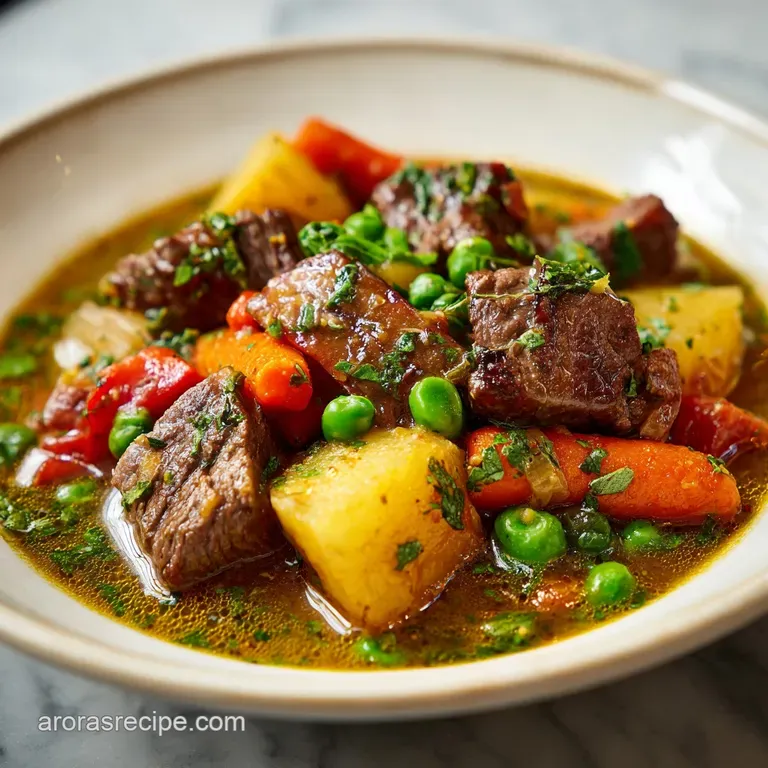
- Time: Active 20 minutes, Passive 1 hours 45 mins, Total 2 hours 5 mins
- Flavor/Texture Hook: Velvety broth and shatter tender beef
- Perfect for: Rainy weeknights or Sunday family gatherings
- Master the Savory Vegetable Beef Stew
- Comparing Fast and Classic Methods
- Essential Components for Rich Flavor
- Minimal Tools for Maximum Results
- Step-by-Step Braising Instructions
- Avoiding Common Cooking Mistakes
- Adjusting Recipe Portions
- Kitchen Tales Debunked
- Storing and Repurposing Leftovers
- Best Serving and Pairing Ideas
- Recipe FAQs
- 📝 Recipe Card
Master the Savory Vegetable Beef Stew
The air in Nashville gets this specific kind of damp chill in late October, the kind that settle right into your marrow. I remember one particular Tuesday when the rain wouldn't quit, and the house felt drafty and hollow.
I pulled a 2 lb Beef Chuck Roast from the fridge, and the second that beef hit the hot oil, the high pitched sizzle filled the kitchen, instantly making the room feel ten degrees warmer and infinitely more inviting.
We are not just throwing meat and water into a pot here; we are building a foundation of comfort. This Savory Vegetable Beef Stew is the recipe I turn to when I need my kitchen to smell like safety and home.
It’s a straightforward process, but the way the flour dusted beef creates a natural, velvety thickness in the broth is something you have to see to believe. Trust me, once you hear that first sear and smell the garlic hitting the pan, you'll know exactly why this dish is a permanent resident on my meal plan.
You don't need a pantry full of gadgets or twenty different spices to make this happen. We're focusing on minimal tools and reliable steps that respect your time while delivering a result that tastes like it spent eight hours on the stove. This is about honest, homemade food that fills your belly and calms your mind.
Let's crack on with the details so you can get that pot bubbling.
Comparing Fast and Classic Methods
The Physics of the Crust: Searing meat at high temperatures triggers the Maillard reaction, which creates hundreds of new flavor compounds through the interaction of amino acids and reducing sugars. This process is responsible for the deep, savory "browned" taste that defines a world class stew.
| Method | Cook Time | Beef Texture | Best For |
|---|---|---|---|
| Traditional Stovetop | 1 hours 45 mins | Fork tender/Cohesive | Weekend family dinners |
| Pressure Cooker | 45 minutes | Very soft/Shreddy | Busy weeknight rush |
| Slow Cooker | 8 hours | Ultra soft/Falling apart | Set it and forget it days |
Choosing the stovetop method allows you to monitor the reduction of the liquid, ensuring the consistency is exactly where you want it. While faster methods exist, the slow simmer on the stove allows the starches from the 1.5 lbs Yukon Gold potatoes to gently slough off and thicken the sauce naturally.
It creates a cohesive flavor profile that high pressure cooking sometimes misses.
Essential Components for Rich Flavor
To get that deep, mahogany color and a sauce that coats the back of a spoon, we have to look at how our ingredients interact. This isn't just a list; it's a chemical roadmap to comfort.
| Ingredient | Science Role | Pro Secret |
|---|---|---|
| 2 lbs Beef Chuck Roast | Connective tissue breakdown | Choose heavy marbling for tenderness |
| 2 tbsp Tomato Paste | Umami & Color | Caramelize in oil until dark red |
| 1/4 cup Dry Red Wine | Acid & Deglazing | Use a Cabernet for deep notes |
| 2 tbsp Worcestershire sauce | Fermented complexity | Adds "meatiness" without extra salt |
Each element serves a specific purpose. For example, the 3 tbsp All purpose flour isn't just for coating; it acts as a roux in-reverse, thickening the 4 cups Low sodium beef bone broth as it simmers. If you’re looking for a similar depth in a different format, you might find my Beef Soup recipe equally satisfying for those lighter lunch cravings.
Minimal Tools for Maximum Results
You won't find any fancy emulsifiers or specialized sous vide gear here. For this Savory Vegetable Beef Stew, a heavy bottomed Dutch oven or a thick stainless steel stockpot is your best friend.
The heavy base prevents the bottom of the stew from scorching during the long simmer, which is crucial when you're working with the natural sugars in the 3 Large carrots and yellow onion.
- Heavy Pot: A 6 quart Dutch oven (like a Lodge) is the gold standard for heat retention.
- Sharp Chef's Knife: Essential for cubing the beef into uniform 1.25 inch pieces.
- Wooden Spoon: Best for scraping the "fond" (brown bits) off the bottom after deglazing with wine.
- Vegetable Peeler: To prep the 3 Large carrots and 1.5 lbs Yukon Gold potatoes quickly.
Chef's Tip: Freeze your tomato paste in tablespoon sized dollops on parchment paper. Once frozen, toss them in a bag. You’ll always have exactly 2 tbsp ready for your next stew without wasting the rest of the can.
Essential Pantry Elements
- 2 lbs Beef Chuck Roast: Trimmed and cut into 1.25 inch cubes. Why this? High collagen content ensures the meat becomes tender, not dry.
- Substitute: Beef Brisket (requires 30 mins more cook time).
- 3 tbsp All purpose flour: Used for dredging the beef. Why this? Provides the starch needed to thicken the broth naturally.
- Substitute: Cornstarch (mix with cold water at the end instead).
- 3 tbsp High smoke point oil: Avocado or Grapeseed oil. Why this? Allows for a hard sear without the oil burning.
- Substitute: Vegetable oil or Ghee.
- 1.5 lbs Yukon Gold potatoes: Cut into 1 inch chunks. Why this? They hold their shape better than Russets in long simmers.
- Substitute: Red Bliss potatoes.
- 4 cups Low sodium beef bone broth: The liquid base. Why this? Bone broth adds more gelatin and body than standard stock.
- Substitute: Beef stock with 1 tsp unflavored gelatin added.
- 1/4 cup Dry Red Wine: For deglazing. Why this? The acidity cuts through the richness of the chuck roast.
- Substitute: 2 tbsp Balsamic vinegar mixed with 2 tbsp water.
step-by-step Braising Instructions
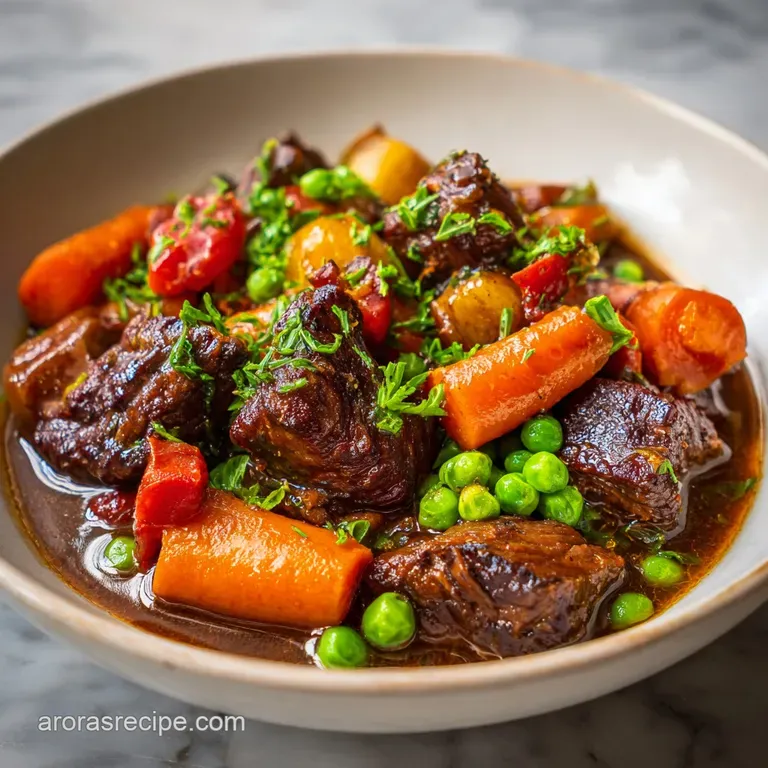
Phase 1: The over High heat Sear
- Dredge the beef. Toss the 2 lbs Beef Chuck Roast cubes with 3 tbsp All purpose flour, 1 tsp Kosher salt, and 1/2 tsp black pepper in a large bowl. Note: Coating the meat while dry ensures a better crust.
- Sear in batches. Heat 3 tbsp oil in your pot over medium high heat. Add beef in a single layer, leaving space between pieces. Cook 3 minutes per side until deeply browned and crusty.
- Remove and rest. Transfer the browned beef to a plate, leaving the fat in the pot. Note: Don't worry about the dark bits on the bottom; that's flavor gold.
Phase 2: Building the Aromatic Base
- Sauté aromatics. Add the diced yellow onion to the pot. Cook 5 minutes until translucent and soft.
- Add garlic and paste. Stir in 3 cloves minced garlic and 2 tbsp tomato paste. Cook 2 minutes until the paste turns a dark brick red color.
- Deglaze the pan. Pour in 1/4 cup dry red wine. Scrape the bottom vigorously with a wooden spoon to release all the browned bits.
Phase 3: The Gentle Braise
- Combine liquids. Return the beef to the pot. Add 4 cups beef bone broth, 2 tbsp Worcestershire sauce, 2 bay leaves, and 1 tsp dried thyme.
- Simmer low. Bring to a boil, then immediately drop to the lowest simmer. Cover and cook for 1 hours 15 mins until the beef starts to feel tender when poked with a fork.
Phase 4: The Texture Finish
- Add hardy vegetables. Stir in 1.5 lbs Yukon Gold potatoes, 3 sliced carrots, and 2 ribs celery. Simmer covered for another 25 minutes until the potatoes are easily pierced.
- The green pop. Stir in 1 cup frozen sweet peas and cook for 2 minutes. Remove from heat and stir in 1 tbsp fresh parsley before serving.
Avoiding Common Cooking Mistakes
Even the most seasoned cooks can run into a few hurdles when making Savory Vegetable Beef Stew. The most frequent issue is usually related to the texture of the beef or the thickness of the sauce.
Why Your Stew Beef Is Tough
If your beef feels like rubber, it hasn't cooked long enough. Unlike a steak, chuck roast needs time for the collagen to melt into gelatin. If it's tough, just put the lid back on and give it another 20 minutes.
On the flip side, if the meat is dry and stringy, it was likely boiled too hard rather than simmered gently.
| Problem | Root Cause | Solution |
|---|---|---|
| Thin, watery broth | Not enough flour or reduction | Whisk 1 tbsp flour with 2 tbsp water; stir in. |
| Mushy vegetables | Added too early in the process | Follow the staged timing: meat first, then root veg. |
| Bitter aftertaste | Burned tomato paste or garlic | Sauté tomato paste only until dark red, not black. |
The key to a velvety finish is patience. If you're looking for a recipe that manages these textures in a fraction of the time, our Instant Pot Beef Bourguignon recipe uses pressure to achieve that same tenderness in half the time.
Common Mistakes Checklist
- ✓ Pat the beef completely dry before flouring (moisture prevents a good sear).
- ✓ Preheat the pot for 3 full minutes before adding the oil and meat.
- ✓ Don't overcrowd the pan; sear the 2 lbs of beef in two or even three batches.
- ✓ Keep the heat at a "lazy bubble" simmer; a rolling boil will toughen the protein.
- ✓ Cut the potatoes and carrots into uniform sizes so they finish cooking at the same time.
Adjusting Recipe Portions
Scaling this recipe is fairly simple, but you have to keep an eye on the liquid ratios. When you double a recipe, you don't always need to double the liquid, or you'll end up with a soup instead of a thick stew.
- Scaling Down (Half Recipe): Use a smaller pot (3-4 quart). Reduce the cook time for the beef by about 15 minutes. Use a whole small onion rather than half a large one for better flavor.
- Scaling Up (Double Recipe): Use a large stockpot. Do not double the salt immediately; start with 1.5x the salt and adjust at the end. You may only need 7 cups of broth instead of 8 to maintain the right thickness.
- Batch Cooking: This stew freezes beautifully. If you're making a double batch for the freezer, consider undercooking the potatoes slightly so they don't turn to mush when reheated.
| Servings | Beef Amount | Potato Amount | Pot Size |
|---|---|---|---|
| 2-3 People | 1 lb | 0.75 lb | 3 Quart |
| 6 People | 2 lbs | 1.5 lbs | 6 Quart |
| 12 People | 4 lbs | 3 lbs | 10+ Quart |
If you are cooking for a crowd and want a slightly more refined version of a beef braise, the Beef Bourguignon recipe is a fantastic alternative that uses similar techniques but adds mushrooms and pearl onions for a fancy touch.
Kitchen Tales Debunked
Myth: Searing meat seals in the juices. This is one of the oldest lies in the kitchen. Searing actually causes the meat to lose a small amount of moisture due to the high heat. However, we do it because the Maillard reaction creates flavor that you simply cannot get any other way.
The "juiciness" in a stew comes from the collagen breaking down into gelatin, not from the initial sear.
Myth: You must use expensive wine for cooking. Absolutely not. You just need a wine that you wouldn't mind drinking a glass of. The subtle nuances of a $50 bottle will be lost after two hours of simmering with onions and Worcestershire sauce.
A decent $10 Cabernet or Merlot works perfectly for this Savory Vegetable Beef Stew.
Myth: Potatos should be peeled for the best texture. While I recommend peeling for this specific recipe to keep the broth silky, it's not a rule. Leaving the skins on Yukon Golds adds a rustic look and extra nutrients. It’s a personal preference just ensure they are scrubbed clean!
Storing and Repurposing Leftovers
- Fridge
- Store in an airtight container for up to 3 days. The flavors actually meld and improve on day two, making this a premier meal prep candidate.
- Freezer
- This stew freezes remarkably well for up to 3 months. Leave about an inch of headspace in your container as the liquid will expand when frozen.
- Reheating
- Thaw overnight in the fridge. Reheat on the stovetop over medium low heat, adding a splash of water or broth if the sauce has thickened too much in the cold.
Zero Waste Tips Don't toss those celery leaves! Chop them up and mix them with the fresh parsley for the garnish; they have a concentrated celery flavor that is brilliant.
If you have leftover gravy but no meat, use it as a base for a shepherd's pie or pour it over a pile of mashed potatoes the next day. The carrot peels and onion ends can be tossed into a freezer bag to make your own vegetable stock later.
Best Serving and Pairing Ideas
This Savory Vegetable Beef Stew is a complete meal in a bowl, but a few sides can take it from "great" to "legendary." In my house, a crusty piece of sourdough bread is mandatory for swiping up every last drop of that velvety mahogany sauce.
- Bread: A warm baguette, Irish soda bread, or even honey butter cornbread.
- Greens: A simple side salad with a sharp vinaigrette helps cut through the richness of the beef fat.
- Toppings: A dollop of sour cream or a sprinkle of freshly grated horseradish adds a zesty kick that wakes up the earthy flavors of the thyme and bay leaves.
If you find yourself with extra beef but want a different vibe for the next night, try a Traditional Chicken Noodle recipe to keep the comfort food train rolling without repeating the same flavor profile. The key is to keep it simple and let the long simmered flavors of the stew be the star of the show. Enjoy that first warm bite!
Recipe FAQs
What vegetables are good in a beef stew?
Carrots, potatoes, celery, and onions are the traditional foundation. They absorb the broth beautifully and hold their shape if added at the correct time. I also like adding frozen peas right at the end for a pop of color and sweetness.
What's the secret ingredient in beef stew?
Tomato paste, caramelized deeply, is the closest thing to a secret ingredient. Cooking the tomato paste until it turns a brick red color unlocks intense umami and deepens the mahogany hue of the final broth, far beyond what the beef alone provides.
What enhances the flavor of beef stew?
Deglazing the pot with dry red wine and using Worcestershire sauce enhances flavor depth. The acidity in the wine cuts through the richness of the beef fat, while Worcestershire provides fermented, complex savory notes. If you master building flavor in this braise, you'll find similar deep flavor techniques in our Brown Gravy Recipe.
What spices enhance vegetable beef stew?
Thyme, bay leaves, and a heavy dose of black pepper are essential aromatics. These dry herbs provide the classic earthy background note for the savory beef. For an optional boost, a pinch of smoked paprika can add complexity.
Is it true that I must sear the beef in batches to prevent steaming?
Yes, searing in batches is crucial for achieving a proper crust. Overcrowding the pot lowers the surface temperature of the oil too much, causing the meat to release moisture and steam rather than brown, which eliminates the Maillard reaction's flavor benefits.
How to ensure my stew thickens properly without using cornstarch?
Dust the beef lightly with flour before searing and rely on the potato starch. The flour coating on the seared beef mixes with the liquid as it simmers, creating a natural roux that thickens the broth. If you struggle with thickening liquids, pay attention to fat ratios; mastering that balance is key when learning our Classic Ground Turkey recipe.
How to tell when the stew is done simmering if the beef is still tough?
Continue simmering on low, covered, until the meat yields easily to a fork. Toughness means the tough collagen hasn't converted to gelatin yet; this process requires time, usually 1.5 to 2 hours total simmering time. If the liquid reduces too much, add half a cup of hot broth.
Savory Vegetable Beef Stew
Ingredients:
Instructions:
Nutrition Facts:
| Calories | 548 kcal |
|---|---|
| Protein | 34.1 g |
| Fat | 29.5 g |
| Carbs | 31.6 g |
| Fiber | 4.2 g |
| Sugar | 5.1 g |
| Sodium | 780 mg |
