Thanksgiving Stuffing with Sourdough, Sausage, and Sage (Crispy Top)
- The Definitive Thanksgiving Stuffing Recipe
- The Science of Perfect Stuffing Texture and Flavor
- Essential Ingredients for Sourdough and Sausage Dressing
- Step-by-Step Guide: How to Make the Crispiest Dressing
- Chef's Secrets: Troubleshooting and Common Thanksgiving Stuffing Mistakes
- Making Ahead and Storing Your Dressing
- What to Serve with Classic Thanksgiving Stuffing
- Recipe FAQs
- 📝 Recipe Card
The Definitive Thanksgiving Stuffing Recipe
When the oven door opens and that first wave of buttery sage and savory pork hits you, honestly, that's when the holiday truly starts. It’s the smell of pure comfort, guaranteed.
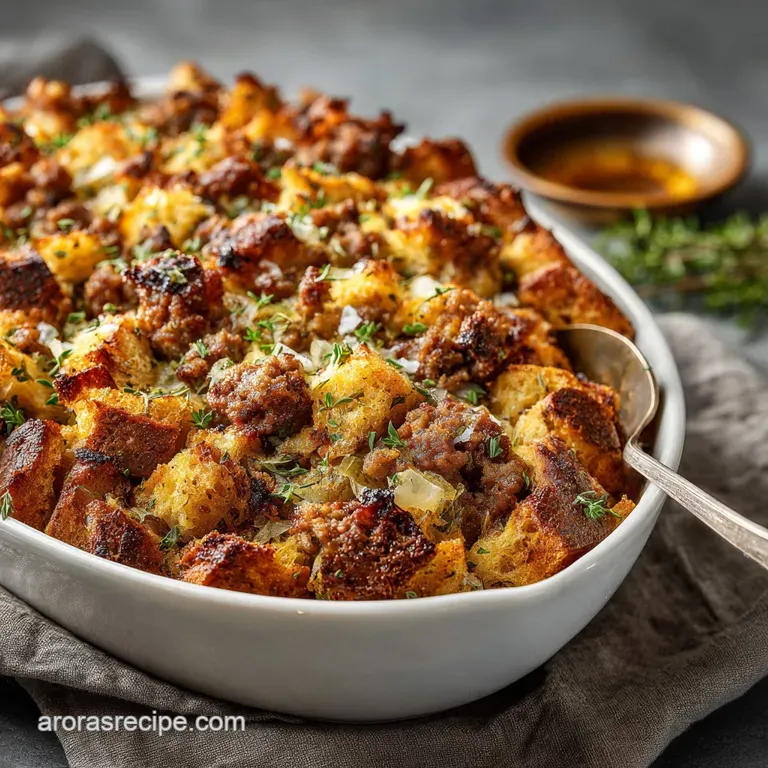
The perfect Thanksgiving stuffing recipe delivers a beautiful duality: crusty, rugged edges juxtaposed with a ridiculously moist, herb packed interior.
Listen, this dish is a total lifesaver, especially during the chaos of a holiday cook. You can prep the entire mixture the day before, letting the flavors marry up perfectly while you focus on the tricky bits like wrestling the turkey into the oven.
It’s also relatively cheap to make, using simple ingredients that somehow transform into liquid gold.
Forget the dry, bland, boxed stuff you used to suffer through. This Sourdough and Sausage Dressing is the gold standard for every Thanksgiving table. Ready to learn the secrets I picked up over years of failures? Let’s crack on and nail this thanksgiving stuffing .
The Science of Perfect Stuffing Texture and Flavor
If you want amazing results, you have to understand the 'why.' Stuffing is simple chemistry, not magic. We are building maximum flavor layers and achieving the perfect crispy texture.
Dressing vs. Stuffing: Understanding the Essential Difference
Okay, let’s clear this up right now: If you bake the mixture inside the bird, it’s stuffing. If you bake it in a pan outside the bird, it’s dressing.
This recipe is technically a dressing, but everyone calls it thanksgiving stuffing , so we will too. Baking it separately is far safer and, critically, it guarantees those crispy edges we all crave.
Why Sourdough is the Ideal Bread Base for Tangy Flavor
We are using sourdough for a reason, my friend. Sourdough brings a subtle tanginess that cuts through the richness of the butter and pork sausage. Unlike soft white bread which turns to mush instantly, sourdough has structure. It holds its shape even after soaking up all that incredible stock and fat. If you want to dive deeper into this flavor profile, check out my full post on Sourdough Stuffing Recipe: Tangy, Crispy Herb Stuffing for Turkey .
Why We Use Fresh Sage and Savory Sausage
Sage and pork are a match made in culinary heaven, truly. Fresh sage is non-negotiable here; its warm, slightly peppery aroma defines the whole Thanksgiving experience. Pairing it with a high-quality pork sausage provides the essential savory, fatty depth that transforms the stuffing from mere bread cubes into a rich, glorious casserole.
Achieving the Perfect Crisp-to-Moist Ratio
This is where most people fail. Too little liquid, and you get dry sawdust. Too much, and you get bread sludge. The secret lies in using just enough liquid so the dry bread cubes are fully saturated, but they aren't swimming. We use eggs and butter, not just stock, to bind the mixture.
The eggs help the structure set, while the melted butter ensures moisture without sogginess.
The Role of Sautéing Aromatics First for Deep Flavor Extraction
You wouldn't just dump raw onions and celery into a bread bowl, would you? The first step is sweating the aromatics (onion and celery) in butter until they are fully softened. Then we "bloom" the fresh herbs and garlic in that fat for exactly one minute.
This process activates the essential oils in the herbs, resulting in a dramatically deeper flavor profile across your thanksgiving stuffing casserole .
Why Day-Old Bread is Non-Negotiable
Day-old, or deliberately dried, bread is the foundation of any great stuffing. Fresh bread contains too much moisture; when you add the stock, it collapses into a gummy paste. Dry bread acts like a perfect, porous sponge, soaking up the liquid while maintaining its structural integrity.
Don't skip the drying step, seriously.
Essential Ingredients for Sourdough and Sausage Dressing
Every ingredient pulls its weight in this thanksgiving stuffing recipe with sausage . Use the best quality you can afford, especially for the sausage and butter.
Choosing the Right Pork Sausage (Spicy vs. Mild)
I recommend using a good quality bulk Italian pork sausage. Whether you choose mild or hot is totally up to you! The mild variety is classic and crowd pleasing, but the hot Italian sausage adds a fantastic little kick that wakes up the fresh sage and balances the rich butter.
| Ingredient | My Recommendation | Viable Substitute |
|---|---|---|
| Sourdough Bread | Day-old, 1 inch cubes | Challah or good French Baguette |
| Pork Sausage | Bulk Hot or Mild Italian | Pancetta or high-quality Bacon Lardons |
| Yellow Onion | Finely diced | Shallots (use twice as many) |
| Chicken Stock | Low-sodium, high-quality | Vegetable Stock or Turkey Stock |
| Butter | Unsalted (divided) | Salted butter (reduce added salt by ½ tsp) |
Preparing the Sourdough Cubes for Maximum Crunch
You need truly dried out bread cubes. If you can't leave them on the counter overnight (the easiest way), toast them gently. Spread the cubes on a sheet pan and bake them at 300°F (150°C) for about 15 to 20 minutes, stirring occasionally. They should feel hard and dry, not soft.
Selecting Fresh Herbs vs. Dried (And When to Add Them)
I’m going to be honest: Fresh herbs are essential for this specific stuffing recipe. Dried herbs just don't offer the same bright, fragrant lift that fresh sage, thyme, and rosemary bring.
We add the hardy herbs (sage, thyme, rosemary) during the sautéing process to bloom them, but we save the tender parsley until the very end for a pop of freshness.
Substitutions for Broth and Other Liquids
If you don't have chicken stock, rich turkey stock is obviously perfect, especially if you're making gravy anyway. Vegetable broth works fine, but it might lack the deep savoriness of chicken stock.
If you run out of stock, you can use water mixed with a tablespoon of butter and a generous pinch of salt and pepper as a backup, but only in an emergency!
step-by-step Guide: How to Make the Crispiest Dressing
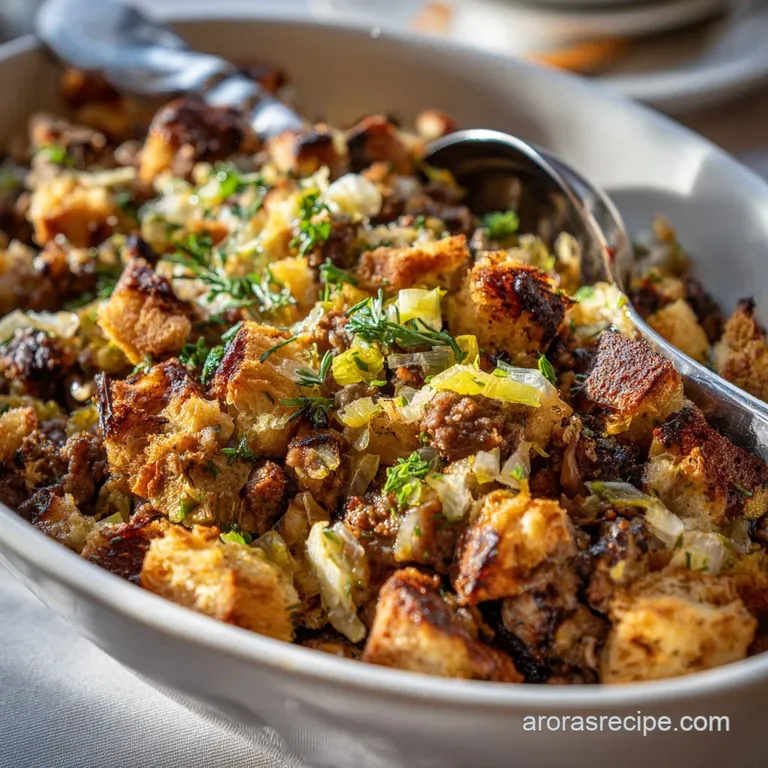
This process focuses on building flavor in layers before the crucial baking stage. Follow these steps for the best stuffing recipes for thanksgiving .
Step 1: Browning the Sausage and Building the Flavor Base
Start by browning your pork sausage in a huge pan over medium high heat, breaking it up as you go. Once fully cooked, transfer the sausage out of the pan, leaving about a tablespoon of fat behind this fat is flavor gold. Add the bulk of the butter to the pan, then toss in the diced onions and celery.
Sauté them until they are fully softened; translucent, but not brown. Now, toss in the minced garlic and the chopped fresh sage, thyme, and rosemary and cook for just 60 seconds until you smell them everywhere. That scent is your signal.
Step 2: Tossing and Saturating the Bread Mixture Evenly
Return the cooked sausage to the pan with the aromatic vegetables and transfer all the solids into a giant mixing bowl. Now, add your dried sourdough cubes. Whisk the melted butter, lightly beaten eggs, and most of the stock together, then pour about three quarters of the liquid over the bread and solids.
Gently fold the mixture until everything is coated.
Chef's Note: Don’t panic if the bread seems dry at first. Wait five minutes. The dry bread needs time to absorb the liquid. After five minutes, add the remaining stock slowly, mixing just until the bread is moist but still retains its shape.
Step 3: Ensuring Proper Coverage in the Baking Dish
Grease your 9x13 baking dish well. Spoon the stuffing mixture into the dish, distributing it evenly. This is crucial: Do not pack it down. A light touch ensures that heat and steam can circulate throughout the dish, giving you that wonderful mix of tender center and crispy top.
Step 4: Baking for the Ultimate Crispy Top
Preheat your oven to 375°F (190°C). Cover the baking dish tightly with aluminum foil first. The foil traps the steam, ensuring the center cooks through and remains incredibly moist bake like this for 30 minutes.
Then, remove the foil completely and bake uncovered for the remaining 15 to 20 minutes. This final exposed bake gives you that gorgeous, deeply golden, crunchy crust that makes this the definitive thanksgiving stuffing .
Chef's Secrets: Troubleshooting and Common Thanksgiving Stuffing Mistakes
I have made every mistake under the sun, from gummy centers to dry crusts. Learn from my struggles!
Preventing Dry Dressing: The Broth Temperature Trick
If your stuffing comes out dry, it usually means the bread absorbed too much liquid before baking or simply dried out in the oven. The fix: Use hot broth when mixing the stuffing. Warm liquid is absorbed more readily and completely by the bread than cold liquid.
If it still looks a little dry before baking, add a splash more warm stock right into the center of the mixture.
How to Correct Soggy Stuffing After Baking
Soggy stuffing happens if you packed it too tightly or used fresh bread. If you pull it out of the oven and the center is still dense and wet, don't despair! Loosen the top with a fork, drizzle a tablespoon of melted butter over the surface, and return it to the oven, setting the temperature higher (400°F/200°C) for another 10 to 15 minutes, or until the liquid has evaporated and the top is fully crisp.
Achieving Deep Golden Brown Edges (The Final Bake Temperature)
That golden brown crust isn't just for looks; it's texture. If your stuffing is cooked through but not brown enough, you have two options. First, check your final uncovered baking time.
Second, for the last five minutes, stick the dish on the very top rack of the oven, close to the heating element, or briefly switch the oven to the broiler setting (watching it very closely we are talking one minute maximum!).
Making Ahead and Storing Your Dressing
Making ahead is the smart cook's move for Thanksgiving!
Preparing the Mixture 24 Hours in Advance
You can absolutely prepare the entire thanksgiving stuffing recipe mixture (Steps 1 through 3) up to 24 hours in advance. Combine everything, transfer it to the baking dish, cover it tightly, and refrigerate.
CRITICAL STEP: Pull the dish out of the fridge at least one hour before baking so it can come up to room temperature. This prevents the baking dish from cracking and ensures the stuffing cooks evenly.
Reheating Baked Stuffing Without Drying It Out
If you’ve fully baked the stuffing and need to reheat it later, cover the dish tightly with foil and place it in a 350°F (175°C) oven for about 20 minutes. The foil traps moisture. For the last five minutes, remove the foil to re-crisp the top.
You can even drizzle a tiny bit more stock or butter around the edges before covering it.
Freezing Instructions for Longer Storage
Baked stuffing freezes surprisingly well. Allow it to cool completely, then cut it into individual servings. Wrap each piece tightly in plastic wrap, then foil, and place the portions in a large freezer bag. It will last for up to three months.
To reheat, thaw overnight in the fridge and follow the reheating instructions above.
What to Serve with Classic Thanksgiving Stuffing
Stuffing is the ultimate supporting player, designed to soak up sauces and complement richness.
Stuffing pairs beautifully with anything acidic or creamy. Always serve it with lashings of homemade gravy; that’s non-negotiable. The rich, savory flavor of this sausage and sage dressing also benefits from the sharpness of a good cranberry sauce.
If you have any leftovers, this stuffing makes a fantastic base for a creamy baked casserole the next day although you’d have to add poultry since this recipe doesn't include it!

Recipe FAQs
Why did my stuffing come out dry and crumbly?
This usually happens if the bread wasn't fully saturated with broth or eggs before baking. Ensure you thoroughly toss the bread cubes with the liquid mixture until they feel heavy and absorbent, which guarantees a tender interior.
If it starts to dry out during baking, cover the dish with foil for the last 15 minutes to trap moisture and steam the mixture slightly.
How do I safely cook this dressing inside the turkey cavity?
If cooking inside the bird, remember that the stuffing must reach an internal temperature of 165°F (74°C) to be safe, as it absorbs raw poultry juices. It is crucial to stuff the turkey loosely right before cooking, and never stuff the bird ahead of time.
Always verify the stuffing's temperature using a probe thermometer before serving.
Can I prepare the stuffing mixture a day ahead of time?
Absolutely, assembling the mixture the day before saves significant time on Thanksgiving morning. Combine all ingredients, cover tightly, and refrigerate overnight, but keep the mixture away from strong smelling foods like onion to prevent flavor cross contamination.
When ready to bake, allow the mixture to sit at room temperature for 30 minutes before placing it in the oven to ensure even cooking.
I need a vegetarian variation; what can I substitute for the sausage?
You can substitute the pork sausage with an equal amount of deeply sautéed mushrooms, such as a mix of cremini and shiitake, for an earthy, umami rich base. Alternatively, plant based ground meat or even toasted nuts like pecans provide a satisfying texture.
If using mushrooms, cook them until their moisture is completely evaporated to concentrate the flavor before mixing with the bread.
Can I use regular white bread or cornbread instead of sourdough?
Yes, most sturdy, day-old breads work well, but you will need to adjust the amount of liquid slightly, as sourdough is very dense. White bread or brioche is softer and will absorb liquid much faster, so add the broth gradually until the texture is properly moist but not mushy.
Always toast or dry out the bread cubes first to prevent the final product from becoming dense and gluey.
What is the best way to reheat leftover stuffing without drying it out?
Place the leftovers in an oven safe dish, add a tablespoon or two of turkey stock or melted butter across the top, and cover tightly with aluminum foil. Reheat slowly in a 325°F (160°C) oven until warmed through, which creates steam under the foil, preventing the crisp edges from becoming overly tough.
Alternatively, use an air fryer for a smaller batch to restore the crisp exterior quickly.
Can I freeze the baked or unbaked stuffing?
Both baked and unbaked dressing can be successfully frozen for up to three months if wrapped tightly in foil and sealed in a freezer bag. If freezing the unbaked mixture, thaw it completely overnight in the refrigerator before baking as usual, adding 5 to 10 minutes to the cook time.
Thaw baked stuffing overnight and reheat with added stock or butter to restore moisture.
Sourdough Sausage Thanksgiving Stuffing
Ingredients:
Instructions:
Nutrition Facts:
| Calories | 375 kcal |
|---|---|
| Fat | 20 g |
| Fiber | 3.5 g |
