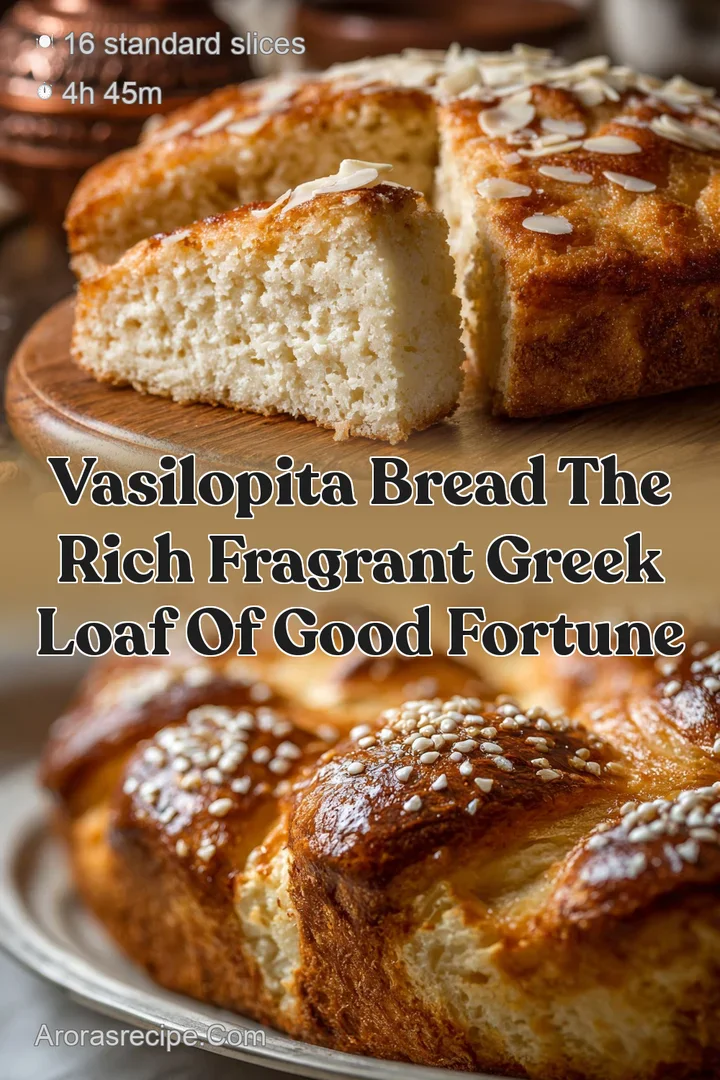
Vasilopita Bread Traditional Greek Sweet Loaf for the New Year
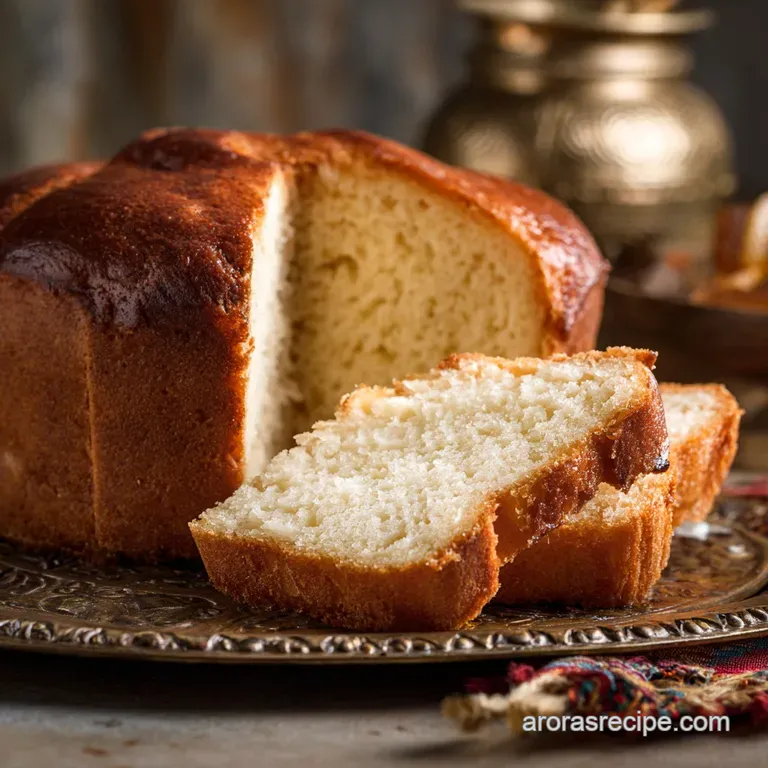
- Welcoming the New Year with Traditional Vasilopita Bread
- Essential Components for Authentic Vasilopita Bread
- Getting Ready: Prepping Your Pan and Ingredients
- Phase One: Mastering the Rich Vasilopita Dough
- Phase Two: Shaping, Coin Placement, and Baking
- Troubleshooting and Enhancing Your Vasilopita Bake
- Recipe FAQs
- 📝 Recipe Card
Welcoming the New Year with Traditional Vasilopita Bread
Right, let's talk January 1st. Forget the resolutions for a moment. If you want the New Year to start properly with maximum flavour and a solid dose of inherited good luck you need to bake Vasilopita bread. This is not just any loaf.
It’s the ultimate Greek New Year’s bread, rich with butter, eggs, and beautiful citrus aroma. It smells incredible while baking, instantly making your kitchen feel festive.
I know what you're thinking. Yeast? On New Year's Eve? But trust me, this process is meditative. It forces you to slow down, and the reward is absolutely worth the effort. There’s nothing better than presenting this golden, beautiful loaf to your family, knowing there’s a secret treasure hidden inside.
The Ancient Story of St. Basil’s Pie
The tradition behind this loaf (sometimes called St. Basil’s Pie) is ancient and deeply lovely. The common story centers on St. Basil the Great. Back in the day, the region was facing some pretty severe tax demands.
Basil gathered up all the villagers’ valuables gold, jewellery, coins to pay off the corrupt officials. When the officials were defeated or changed their minds (the story varies), Basil couldn't figure out who owned what piece of treasure.
So, what did he do? He baked all the valuables into individual loaves of bread and distributed them to everyone. When each person cut into their loaf, they found their rightful item. Isn't that a great story? Ever since then, we bake the Vasilopita bread to honour his kindness.
It’s a literal way of wishing wealth and prosperity for the person who finds the hidden coin.
Why This Vasilopita Recipe Differs From Cake Versions
If you’ve searched for "Vasilopita recipe" before, you’ve probably noticed two very different options pop up: a quick, dense, lemon and vanilla cake, and this, the proper Vasilopita bread.
This is the traditional Greek Vasilopita. It’s an enriched yeast dough. Think of it like a beautiful, fragrant brioche or its sister bread, Tsoureki. We use flour, eggs, and lots of butter, giving it a soft, pull and apart texture that is miles richer than a standard cake.
The cake versions are fine, sure, they get the job done in an hour. But they lack the complexity and the traditional depth of flavour that comes from the slow fermentation and the glorious kneading process.
The slow rise also allows the aromatics (the orange and the specialty spices) to truly penetrate the entire structure of the loaf.
The Hidden Coin: Luck and the New Year Ceremony
This is the fun part. The entire ritual revolves around the hidden coin. Finding it means you get good luck for the whole year. Who doesn't need a bit of good luck, honestly?
A few non and negotiable tips about the coin:
- Sanitise: Scrub that coin until it shines. We are putting this in food, people!
- Insulation: I know some folks just drop it straight in, but I always wrap mine tightly in a small square of food and grade foil. It’s cleaner, easier to spot, and prevents direct metal and to-dough contact.
- Placement: Don’t just plop it in. You need to fully enclose it within the dough ball before the second rise. Otherwise, it might sink to the bottom or pop out during the bake.
CRITICAL WARNING: Make sure you tell your guests before slicing that a coin is inside. You don't want anyone chipping a tooth or, worse, swallowing it during the excitement. Seriously, warn them.
Essential Components for Authentic Vasilopita Bread
For this Traditional Greek Vasilopita, we are building a flavour base that is rich, buttery, and heavily citrus and forward. Every ingredient needs to be right. This is where those room and temperature ingredients come into play. If your eggs and butter are cold, they will seize up the dough and fight the yeast.
Don't fight the yeast.
Here are the key players:
- Full and Fat Milk: It adds richness and is the perfect temperature regulator for the yeast. Skim milk won't give you the same texture.
- Room Temperature Butter: Softened butter creams beautifully with the sugar, incorporating air and giving the final Vasilopita bread that pillowy crumb.
- The Spices: Mahlab or Masticha (or a good substitution). You must include one of these for the loaf to taste truly authentic.
- Fresh Orange Zest: Skip the bottled stuff. It needs to be fresh, fragrant zest from real oranges.
Getting Ready: Prepping Your Pan and Ingredients
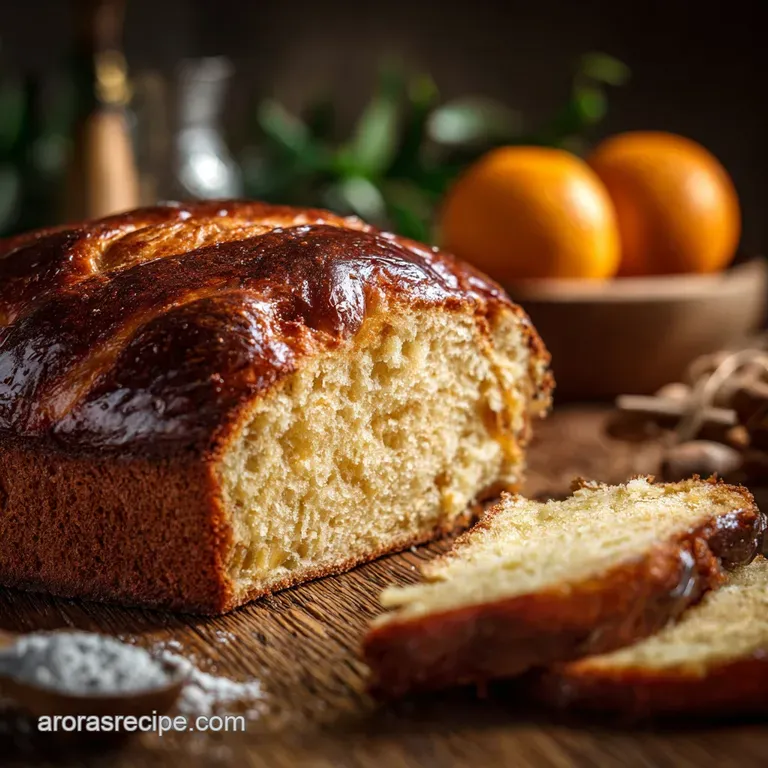
The secret to baking success isn't genius; it's preparedness. Get everything measured and warmed up first.
| Stage | Goal | Why It Matters |
|---|---|---|
| Flour/Spice | Whisked and ready | Ensures even distribution of salt and spices. |
| Yeast/Milk | Foaming Sponge | Confirms the yeast is alive and ready to work hard. |
| Butter/Eggs | Room Temperature | Crucial for emulsification and soft texture. |
Sourcing Traditional Greek Spice: Mahlab and Masticha
Okay, this is where some people bail. Don’t. This recipe works without them, but they give the Vasilopita bread that incredibly unique, nutty, slightly bitter, and aromatic background.
Mahlab is made from the ground kernel of the St. Lucie cherry pit. It tastes vaguely like bitter almond and cherry blossom. It's fantastic. You can find it online or in specialty Middle Eastern markets.
Masticha (Mastic) is a resin that gives off a piney, almost slight licorice flavour. It's often used in ice cream and baked goods in Greece. It’s harder to grind, but worth the effort if you can get it powdered.
If you really can't find either, see the substitution section down below, but make the effort if you can. It’s brilliant.
Preparing Your Yeast and Activating the Rise
This is where I once went wrong I used milk straight from the fridge and killed my yeast dead. My loaf was as flat as a frisbee. Don’t be like Past Me.
You need that milk to be lukewarm. Not hot. If you don't have a thermometer, stick your clean finger in it: it should feel warm, like a comfortable bath, not steaming. Whisk in the sugar and the yeast packet. Now, walk away. Come back in 5 to 10 minutes.
It should be frothy and bubbly, looking like the head on a freshly poured coffee. That’s your activation sign. That’s how you know your yeast is right as rain.
Recommended Tools for Kneading the Perfect Dough
I recommend using a stand mixer with a dough hook for this enriched dough. It has high fat content and needs a good, aggressive knead to develop the gluten properly without tearing the fat structure.
If you don't have a stand mixer, you absolutely can do this by hand. Be prepared to knead for a solid 15 to 20 minutes, working up a sweat. It’s therapeutic, though. Good arm workout.
Measured Volumes for a Fluffy Loaf
Please, please, please weigh your flour. Cup measures are notorious for variance (you can easily scoop 50g too much flour, which results in dry, dense bread). This is especially important for Vasilopita bread, which relies on a moist, soft dough structure.
Zesting the Orange: Maximising the Citrus Fragrance
This little step is where we turbo and charge the flavour. Zest your two large oranges right into the bowl containing the remaining sugar. Use a microplane zester and stop as soon as you see the white pith appear. The pith is bitter, and we don't want that.
Once the zest is in the sugar, use your fingers to rub the zest into the granules. This releases the essential oils directly into the sugar, making the entire dough more fragrant. It’s a trick I learned years ago, and it makes all the difference.
Related Recipes Worth Trying
- Authentic Dhalpuri Roti Recipe Fluffy Trinidadian Flatbread — Master the art of Dhalpuri roti This authentic Trinidadian recipe yields impossibly soft spiced flatbread perfect for scooping up hearty curry chicken...
- Bread Machine Pizza Dough FussFree Recipe for Crisp Chewy Crusts — Achieve perfect trattoriaquality Bread Machine Pizza Dough with zero kneading This easy Pizza Dough Bread Maker recipe guarantees a crispy base and chewy...
Phase One: Mastering the Rich Vasilopita Dough
We start by building the foundation of richness. Cream the softened butter and sugar until the mixture is visibly pale and fluffy. This step is about incorporating air, which helps the final bread rise beautifully.
Then, you gently introduce the eggs one at a time. If you dump them all in, the mixture might look curdled. If that happens, don't panic. Just keep mixing on low speed, scrape down the bowl, and once you add the flour, it will all emulsify perfectly.
Once the creamy mixture is ready, we alternate adding the foamy yeast sponge and the dry ingredients (flour, salt, spice). Start slow. We are forming a cohesive, shaggy dough, ready for the workout.
Phase Two: Shaping, Coin Placement, and Baking
Let's crack on with the dough handling. This takes patience.
The Initial Sponge: Proofing the Yeast Mixture
As mentioned, your yeast mixture must be bubbly and look like a dense foam head. If it hasn't frothed up in 10 minutes, your yeast is dead or your milk was too cold/hot. You need to start this step over. Seriously. A flat sponge means a flat Vasilopita.
Achieving the Right Consistency During Kneading
Once the dough is together (using that dough hook), let the mixer go for 10 to 12 minutes on medium and low. The dough should start slapping against the sides of the bowl. It will look sticky at first, and it should remain slightly soft that’s the butter and eggs doing their thing.
This is the point where you test for the "windowpane." Pull a small piece of dough (about the size of a golf ball) and gently stretch it with your fingers. If you can stretch it thin enough to see light through it without it tearing instantly, the gluten is developed. Stop kneading.
If it tears immediately, knead for another 2 minutes and test again.
The Crucial First Proofing (And Why Time Matters)
The first rise (bulk fermentation) should take about 2 hours, sometimes 2. 5 hours if your kitchen is chilly. Place the dough in a warm spot. I like using my oven with the light turned on (the gentle heat from the bulb is perfect).
You are waiting for the dough to double in size. Don't rush this. Time is flavour, and time is texture. If you rush the first proof, you’ll end up with a denser, less nuanced Greek New Year bread.
Gently Shaping the Dough into a Traditional Round
Once punched down, the dough should feel silky smooth. Place it on a very lightly floured surface. We want to shape this into a beautiful, tight round. To do this, gently pull the edges of the dough up and over the center, pinching them together underneath.
Flip the dough over so the smooth side is up, and use your hands to cup and roll it slightly, creating surface tension.
Safely Inserting the Coin Before the Bake
Remember the sanitised coin (maybe foil and wrapped!). Before placing the dough in the pan, flatten the ball slightly, tuck the coin deep inside one spot, and then reshape the ball, making sure the coin is completely encased. This ensures that the coin stays hidden until the big reveal.
Creating a Brilliant Sugar Glaze and Garnish
The most traditional look for Vasilopita is a simple dusting of icing sugar (powdered sugar) once the loaf is completely cool. You can use stencils cutting the year out of parchment paper and dusting around it is easy or you can just write the year freehand.
For those who want a glossier finish:
- Simple Glaze: Whisk 1 cup of icing sugar with 2 3 tablespoons of fresh orange juice.
- Application: Brush or drizzle this glaze over the completely cooled bread. If you glaze it warm, the sugar will melt and look messy.
Troubleshooting and Enhancing Your Vasilopita Bake
If you’ve handled yeast before, you know things can sometimes go sideways. The Vasilopita bread tradition is about luck, but the bread itself is about technique.
Common Dough Mistakes and How to Fix Them
- Dough is too sticky: If after 12 minutes of kneading the dough is still sloppy and won't pull from the sides, you might need a tiny bit more flour (like, one tablespoon at a time). But remember, enriched dough is sticky. If you add too much flour, the loaf will be dense and dry. Stop once you pass the windowpane test.
- The loaf didn't rise: This is usually a temperature issue. Your milk was too hot and killed the yeast, or your kitchen is too cold. If it barely rises, put it in a warmer spot (try a microwave with a cup of hot water next to it) and give it another 30 minutes. If nothing happens after 3 hours, unfortunately, the yeast is dead, and you have a very large, rich biscuit on your hands.
Storing Leftover Bread and Extending Freshness
Sweet breads like this tend to dry out quickly because of the high sugar and fat content.
- Keep it tightly wrapped in plastic wrap or foil at room temperature for up to 3 days.
- If you won't eat it all right away, slice and freeze portions immediately. Wrap slices individually in plastic wrap and place them in a zip and top bag. They can be frozen for up to 3 months and toasted directly from frozen.
Substituting Specialty Spices When Necessary
I know not everyone can source Mahlab (ground cherry pit kernels) easily. If you want to capture that bitter and almond depth without the specialty trip, here’s what works best:
- Option 1 (Nutty Profile): Use ¼ teaspoon ground cardamom and ¼ teaspoon ground nutmeg.
- Option 2 (Floral Profile): Use 1 teaspoon high and quality vanilla extract and just a whisper of almond extract (be careful, almond extract is potent!).
Don't let the lack of Mahlab stop you from making this easy Vasilopita recipe.
The Meaning Behind the Traditional Cutting Order
This is the most solemn part of the ceremony, but still fun. On New Year’s Day, before serving, the head of the household usually performs the cutting.
First, the sign of the cross is traced on top of the loaf. Then, the first slices are cut, but they are not for the family. They are dedicated to specific entities:
- The first slice is for Christ.
- The second is for the Virgin Mary.
- The third is for St. Basil himself.
- The fourth slice is for the House itself (or the community).
After those slices are placed aside (sometimes kept until the Epiphany), the remaining slices are cut for the family members, oldest to youngest, until someone hits the coin!
Nutritional Snapshot and Serving Suggestions
This is rich. I’m not going to lie. It’s an incredibly rich, buttery, celebratory bread, so treat it as such.
| Nutrient | Estimated Amount (Per Serving - 16 slices) |
|---|---|
| Calories | 380 - 410 kcal |
| Fat | 15 g |
| Carbohydrates | 55 g |
The best way to serve this? Slice it thick and slightly warm. It pairs beautifully with a strong, traditional Greek coffee or a cold glass of milk. If you happen to have any leftover, toasting it the next day and slathering it with a little extra butter and honey is divine. Happy New Year, and may the coin be yours!
Recipe FAQs
Is Vasilopita meant to be like a cake or a proper bread?
It is decidedly a sweet, enriched bread, often compared to a rich brioche or Greek Tsoureki; it’s meant to be wonderfully fragrant, slightly dense due to the butter and eggs, and have a lovely chew, not a light, crumbly cake texture.
How do I safely hide the good luck coin in the Vasilopita bread?
The lucky coin must be thoroughly scrubbed and sterilised, then wrapped tightly in food grade foil to protect the dough during baking; tuck it deep into the loaf just before the second rise, making sure it’s completely concealed so no one accidentally breaks a tooth!
My dough didn't rise properly; what went wrong with my Vasilopita bread?
A failed rise is usually down to temperature control; either your milk was too hot and killed the yeast (a right tragedy!) or your kitchen was too cold, so ensure the dough rests in a warm, draught free spot like an unheated oven with the light on for its full 4-5 hours of rising time.
I can't find Mahlab is there a suitable substitute for that unique flavour?
Mahlab (ground cherry pits) provides a unique, slightly almond/cherry aroma; if you can’t get hold of it, you can substitute with a tiny pinch of ground cardamom mixed with some nutmeg, or for an even more authentic Greek flavour, try sourcing ground Masticha (mastic resin).
Can I bake this celebratory New Year's loaf a day or two in advance?
Absolutely; Vasilopita keeps beautifully; store the completely cooled loaf tightly wrapped in cling film at room temperature for up to three days, or freeze sliced portions for a much longer period a quick blast in the oven before serving will freshen it up nicely.
Traditional Vasilopita Bread Recipe
Ingredients:
Instructions:
Nutrition Facts:
| Calories | 307 kcal |
|---|---|
| Protein | 9.0 g |
| Fat | 5.0 g |
| Carbs | 56.0 g |
