Vegan Stuffing: the Ultimate Autumn Harvest Recipe (Crispy Top, Moist Centre)
- Say Goodbye to Dry Stuffing: Why This Recipe Is Essential
- Achieving the Perfect Stuffing Texture: Crisp Crust, Moist Centre
- The Essential Pantry Checklist for Ultimate Vegan Stuffing
- Baking Brilliance: Step-by-Step Instructions for Flawless Stuffing
- Chef’s Troubleshooting Guide: Mastering Vegan Stuffing Success
- Make-Ahead Strategies: Storing and Reheating Vegan Stuffing
- Perfect Pairings: What to Serve Alongside Your Vegan Stuffing
- Recipe FAQs
- 📝 Recipe Card
Say Goodbye to Dry Stuffing: Why This Recipe Is Essential
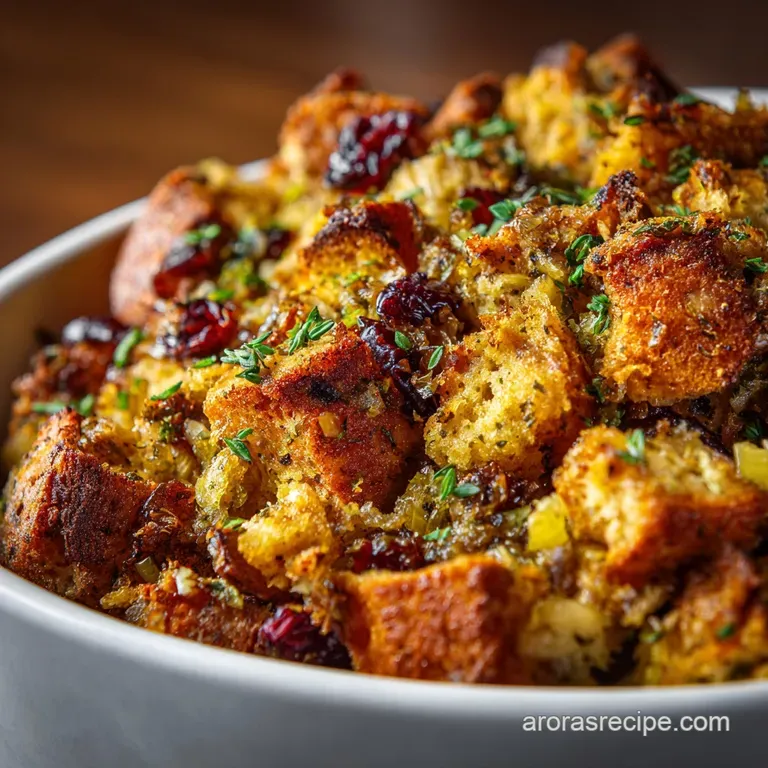
You know that scent, right? That deep, intoxicating smell of sage and toasted bread filling the house, signalling that something truly wonderful is happening in the oven. This Autumn Harvest Vegan Stuffing is the one that delivers that perfect holiday hit, every single time.
It achieves that magical texture we all crave: a shattering, buttery crisp top leading into a luxuriously moist, flavour packed centre.
Forget about those dry, crumbly disasters you’ve suffered through in the past; this recipe is a total lifesaver, especially for big gatherings. It’s naturally dairy-free and egg-free, it costs next to nothing to make, and it feeds a crowd easily.
This easy vegan stuffing recipe is absolutely essential for your festive table or any killer Sunday roast dinner.
I promise you, making your own vegan stuffing for Thanksgiving doesn't have to be complicated, but it does require a few clever tricks. We're not just throwing bread into a dish; we're building layers of complex, savoury flavour that compete with any classic stuffing.
Let's crack on and talk about the simple secrets to crispy top, moist centre success.
Achieving the Perfect Stuffing Texture: Crisp Crust, Moist Centre
Stuffing, or dressing depending on where you live, is fundamentally about bread and moisture management. If you manage those two things, you’ve basically won the game. Our goal here is the ultimate vegan stuffing recipe , one that has body but isn't dense, and flavour that pops.
The Umami Secret of Truly Satisfying Vegan Stuffing
If you're making a vegan dish that relies on deep savoury notes, you often hit a wall because you're missing the fat and natural glutamate found in meat stock. My secret weapon? A powerhouse combination of white miso paste and nutritional yeast.
The miso adds a fermented, salty richness that acts as a profound base note, while nutritional yeast delivers that slightly cheesy, comforting depth. This is how you build a satisfying flavour profile without relying on artificial ingredients or heavy processing.
What Makes Autumn Harvest Stuffing Unique?
The best stuffing uses seasonal flavours, and for me, that means leaning hard into classic aromatics and textural contrasts. We're using fresh sage and thyme, which smells incredible when sautéed, alongside the foundational trio of onion, celery, and garlic.
The addition of dried cranberries and lightly toasted pecans provides that necessary bite and sweetness, transforming this into proper Autumn Harvest Vegan Stuffing . Trust me, the nuts make a huge difference in the mouthfeel!
A Quick Note on Sourdough and Bread Choices
Do not use soft white sandwich bread, please. That will turn into mush the second the stock hits it. We need a sturdy loaf, and sourdough or a good French boule is perfect because the crust and structure hold up beautifully to being soaked.
You must start with completely dry, slightly stale bread cubes, which is non-negotiable for achieving that lovely contrast.
The Role of Plant Butter in Moisture Retention
Fat is flavour, and fat is moisture. We are using a generous amount of vegan block butter, divided into two stages, to achieve a rich texture. The first half is for sautéing the vegetables, which ensures the flavour is locked in from the start. The second half gets dotted over the top before baking.
This is crucial for the crispy crust ; the melting butter bastes the top layer of bread, turning it golden brown and perfectly crisp.
Leveraging Nutritional Yeast and Miso for Deep Savoury Flavour
I like to dissolve both the miso and the nutritional yeast directly into the warm vegetable stock before it ever touches the bread. This ensures even distribution and full activation of the umami agents. If you just sprinkle them in, they won't integrate properly.
The resulting stock mixture needs to taste almost too salty and flavourful on its own because the dry bread is going to dilute its intensity significantly.
The Science of Sturdy Sourdough (Preventing Mush)
The key to preventing a dense, gluey stuffing is to let the liquid soak into sturdy, porous bread, but only for a short time. My mistake, years ago, was pouring all the liquid over the bread and walking away for twenty minutes. The bread disintegrated!
We gently toss the mixture and check the hydration level carefully, stopping before the bread cubes look bloated.
Chef’s Note: You want the bread to feel thoroughly moistened and softened, but still firm enough that you can see the cube's original edges. If it looks like wet cement, you’ve gone too far.
The Essential Pantry Checklist for Ultimate Vegan Stuffing
The beauty of this recipe is that the ingredient list is short and focused, maximising the depth of flavour from simple, high-quality components.
| Ingredient Group | Substitution Strategy |
|---|---|
| Sourdough Bread | Use a sturdy gluten-free loaf or day-old French baguette. |
| Vegan Block Butter | Use olive oil or melted vegan margarine sticks (though blocks yield better flavour). |
| Vegetable Stock | Use water mixed with good quality bouillon paste for deeper flavour intensity. |
| White Miso Paste | Substitute with 1 teaspoon of tomato paste plus a splash of soy sauce (though miso is better). |
| Pecans | Swap for walnuts, or pumpkin seeds for a nut-free approach. |
| Fresh Herbs (Sage/Thyme) | Use dried herbs, but halve the quantity (1.5 tsp dried sage, 1/2 tsp dried thyme). |
Ingredient Deep Dive: Fresh Herbs (Sage & Thyme) vs. Dried
I am a big believer in fresh herbs for stuffing; they just release so much more oil and aroma than the dried stuff. Fresh sage, especially, brings that wonderfully earthy, almost peppery note that defines classic stuffing.
If you absolutely must use dried, make sure they are fresh out of the jar not the dusty stuff that’s been sitting in your cabinet since last Christmas!
How to Easily Make This Vegan Stuffing gluten-free
This is totally simple. Since we rely on the bread’s structure, you just need a sturdy, high-quality gluten-free bread that has been left out to dry properly. Most GF loaves are dense enough, but make sure they are cubed evenly and dried out first.
Toasting the cubes for a few minutes in the oven is your best friend here.
Expert Swaps for Plant Based Milk and Broth
While this recipe uses vegetable stock, some stuffing recipes call for a bit of milk to add creaminess. If you wanted to boost the richness without adding dairy, a splash of full fat unsweetened oat milk or cashew cream mixed into the stock would work beautifully.
Just be sure to reduce the overall stock amount slightly to compensate.
Baking Brilliance: step-by-step Instructions for Flawless Stuffing
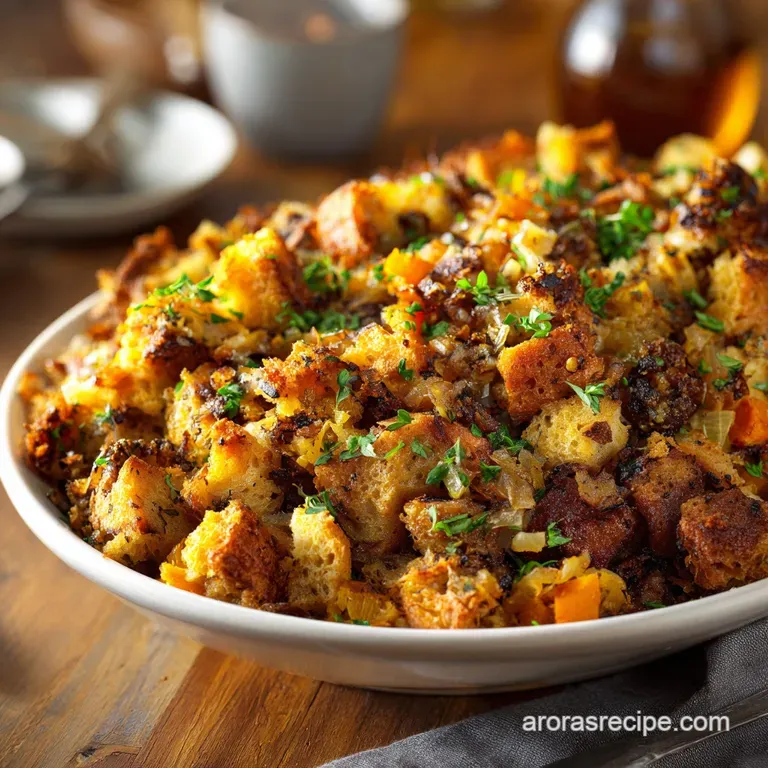
This process ensures your vegan stuffing is packed with flavour and boasts that desired crunchy top.
Phase 1: Preparing and Toasting the Sourdough Cubes
- Dry It Out: Cube your sourdough 1 inch thick. Leave it uncovered on a baking sheet overnight to dry. If you forgot, don't panic! Bake the cubes at 250°F (120°C) for 20 minutes until they feel genuinely dry and slightly brittle.
- Toast the Nuts: In a dry skillet, gently toast your pecans until they smell nutty and fragrant, which takes about three minutes. Set them aside so they don't overcook.
Phase 2: Building the Aromatic Base (Celery and Herbs)
- Sauté: Melt 4 tablespoons of the vegan butter in your largest skillet over medium heat. Add the diced onion and celery. Cook this until the vegetables are soft and translucent, which should take 8 to 10 minutes. Don't rush this step; softening the aromatics builds the flavour foundation.
- Aromatics: Stir in the minced garlic, fresh sage, and thyme. Cook for just one minute until you get that phenomenal, nutty herb aroma. Transfer this entire fragrant mixture into your large mixing bowl.
Phase 3: Combining, Hydrating, and Resting the Mixture
- Flavour Bomb Liquid: Gently warm the vegetable stock in a saucepan. Whisk in the miso paste and nutritional yeast until they are fully dissolved. Taste it! It needs to be punchy.
- Combine Dry: Add the dried bread cubes, toasted pecans, and dried cranberries to the bowl with the aromatics.
- Hydrate Carefully: Pour the warm stock mixture over the bread gradually . Use a rubber spatula to toss gently, ensuring every cube is coated. Stop adding liquid once the mixture is moist but not swimming. Let it rest for 10 minutes; the bread will continue to absorb liquid as it sits.
Phase 4: Achieving the Signature Crispy Top
- Ready the Pan: Preheat your oven to 375°F (190°C). Grease your 9x13-inch baking dish.
- Load the Dish: Transfer the stuffing mixture to the prepared dish. Spread it loosely! Do not press it down, or you will lose the light texture.
- Butter Dots: Take the remaining 4 tablespoons of vegan butter, cut it into small pieces, and dot it evenly across the top surface. This guarantees a golden crust.
- Bake Covered: Cover the dish tightly with foil and bake for 30 minutes. This steaming action ensures the inside stays perfectly moist.
- Uncover and Crisp: Remove the foil and bake for another 15 to 20 minutes. The top should be dark golden brown and beautifully crisp. Let it rest for 10 minutes before garnishing with parsley and serving hot.
Chef’s Troubleshooting Guide: Mastering Vegan Stuffing Success
Stuffing is pretty straightforward, but a few things can turn it from a masterpiece into a brick. Here’s how we fix the common blunders.
Is Your Stuffing Too Wet or Too Dry? (The Liquid Ratio Fix)
This is the number one issue people face, and the fix is simple. If the mixture looks dry after the 10 minute rest, warm up a quarter cup of extra stock and gently fold it in, little by little, until the mixture looks hydrated.
If it looks too wet and gloopy before baking, you can try adding a handful of fresh, untoasted bread cubes to soak up some excess moisture. Always rely on the visual cue —the bread should look softened, not waterlogged.
The Best Temperature and Timing for Maximum Crispness
Baking at 375°F (190°C) is the sweet spot. It's hot enough to cook through quickly but low enough not to burn the top before the centre is heated. The cover/uncover method is crucial here. The first 30 minutes, covered, steams the centre, ensuring the moisture remains trapped.
The final 15– 20 minutes, uncovered, allows that direct heat to crisp up the butter dotted top layer, delivering the contrast you’re after.
make-ahead Strategies: Storing and Reheating Vegan Stuffing
Stuffing is an excellent candidate for making ahead, which dramatically reduces holiday stress. I always prep this the day before.
Preparing the Mixture 24 Hours in Advance
You can fully prepare the stuffing mixture (up to step 10) 24 hours ahead of time. Combine the bread, aromatics, and liquid, then pack it loosely into the baking dish, and cover it tightly with plastic wrap or foil. Keep it refrigerated until you are ready to bake.
Pro Tip: Let the stuffing sit at room temperature for about 30 minutes before baking to ensure even heating.
Safe Cooling and Refrigeration Guidelines
Always cool leftover stuffing quickly, ideally spreading it out in a shallow container to speed up the process. Properly stored in an airtight container, your leftover vegan stuffing will last safely in the fridge for up to 4 days.
Freezing Baked vs. Unbaked Stuffing
Yes, it freezes well! I prefer freezing it after it has been fully baked. Allow the baked dish to cool completely. Wrap the dish tightly in foil and then a layer of plastic wrap, or scoop it into freezer safe containers. It keeps well for up to three months.
To reheat, thaw overnight in the fridge and bake covered at 350°F (175°C) until piping hot all the way through, about 30 minutes.
Perfect Pairings: What to Serve Alongside Your Vegan Stuffing
What is delicious vegan stuffing without its festive companions? It’s only half a meal!
The Ultimate Vegan Holiday Plate Assembly
This moist, savoury stuffing is the perfect anchor for a full holiday spread. Pair it with the silky richness of my Vegan Sweet Potato Casserole with Marshmallows: The Best Silky Recipe and a vibrant green vegetable dish for balance.
Beyond the Roast: Creative Uses for Leftover Stuffing
If you somehow manage to have leftovers, don't just microwave it. Use cold slices of stuffing to replace the bread in a killer post holiday sandwich, layered with cranberry sauce and maybe some smoked seitan.
Alternatively, form the cold stuffing into little patties and pan-fry them until crispy, serving them with breakfast eggs or a salad it’s pure genius!
The Essential Sauce Companion (Gravy Suggestions)
A proper stuffing demands gravy. Since we’re keeping this vegan stuffing easy , pair it with a deeply flavoured vegetable or red wine gravy. The moisture of the gravy beautifully complements the crispy edges and the dense, herb infused centre. If you want a quick shortcut, try making my recipe for Copycat Boxed Stuffing Mix: The Proper Homemade Herb Recipe herbs and add them to a simple gravy roux for maximum flavour impact!
Recipe FAQs
Why did my vegan stuffing turn out dry instead of moist?
Dryness usually stems from not adding enough liquid (vegetable broth/plant based butter) or from overbaking at too high a temperature. Ensure your bread cubes are fully saturated and softened before baking, and if the top crust looks dark but the centre is still cooking, cover the dish tightly with foil to trap steam and finish cooking the interior.
Can I make this Ultimate Vegan Stuffing gluten-free?
Absolutely. Replace the sourdough with a sturdy, dense gluten-free bread loaf, ensuring you let it dry out sufficiently, ideally by cutting and air-drying overnight or toasting lightly in the oven.
Be mindful that gluten-free bread often absorbs liquid faster than traditional sourdough, so you may need to reduce the amount of vegetable broth slightly to avoid sogginess.
How do I ensure the top is crispy while the center remains luxuriously moist?
The key to the perfect contrast is managing the baking temperature and cover. Bake uncovered for the initial 20 minutes at 400°F (200°C) to allow the crust to form and brown, then cover the dish loosely with foil for the remaining bake time.
Additionally, ensure you dot extra plant based butter on the very top of the mixture before it goes into the oven.
What can I use if I don't have white miso paste or nutritional yeast?
Miso and nutritional yeast are added to provide a deep, savory umami richness commonly missing in vegan stuffing recipes. If you need a substitution, try adding two tablespoons of finely minced sun-dried tomatoes (packed in oil) or a tablespoon of good quality mushroom powder combined with a pinch of sea salt.
This should help restore that rich, earthy flavor profile.
Can I prepare this stuffing ahead of time?
Yes, this stuffing recipe is excellent for make-ahead preparation. You can assemble the entire mixture, transfer it to the baking dish, cover it tightly, and refrigerate it up to 24 hours before you plan to bake.
When ready to cook, allow the dish to sit at room temperature for 30 minutes before placing it in the oven to promote even heating and prevent cracking.
How should I store leftovers, and is freezing an option?
Store any leftover stuffing in an airtight container in the refrigerator for up to 3 4 days. Stuffing freezes very well; cool it completely, wrap it tightly in aluminum foil, and then place it in a freezer safe bag for storage up to three months.
Reheat the thawed stuffing, covered, in a 350°F (175°C) oven until piping hot throughout.
Why is a sturdy bread like Sourdough essential for this recipe?
The type of bread is critical to achieving the "crispy top, moist center" texture. Sourdough is preferred because its dense and hearty structure holds up extremely well against the large amount of liquid and fat added, preventing the cubes from dissolving into a mushy paste.
Avoid soft sandwich bread, as it tends to collapse during the soaking and baking process.
Ultimate Vegan Stuffing Recipe
Ingredients:
Instructions:
Nutrition Facts:
| Calories | 243 kcal |
|---|---|
| Protein | 1.5 g |
| Fat | 13.3 g |
| Carbs | 31.9 g |
