Salmon Donburi the Ultimate Umami Glazed Rice Bowl
- The Japanese Art of Comfort: Why Donburi Reigns Supreme
- Ditch the Takeout: Your Speedy Weeknight Salmon Donburi Fix
- Sourcing Excellence: Key Components for Authentic Flavor
- Everything You Need for the Ultimate Salmon Donburi
- Firing Up the Flavor: Step and by-Step Cooking Method
- Achieving the Perfect Glaze and Salmon Texture
- Beyond the Bowl: Expert Tips and Custom Variations
- Recipe FAQs
- 📝 Recipe Card
The Japanese Art of Comfort: Why Donburi Reigns Supreme
Okay, friend, let’s talk about Donburi. If you haven’t fully succumbed to the beauty of the Japanese rice bowl, you are missing out on peak comfort food. Seriously. It’s the ultimate combination of texture and flavour.
Think of it like a beautiful, layered casserole, but somehow lighter, fresher, and served in a deep, satisfying bowl. That’s Donburi.
I used to think it was too fussy, too complicated, relying on secret ancient Japanese techniques. Turns out, nope. It just requires good technique on two things: the rice, and the glaze. Get those right, and you’ve got magic.
This specific Salmon Donburi recipe is my go and to when I’m starving but want something healthy and vibrant. It feels like a splurge, but honestly, it’s a 45 minute sprint from fridge to table.
Ditch the Takeout: Your Speedy Weeknight Salmon Donburi Fix
Why pay twenty quid for a messy, sad takeaway bowl when you can make something jaw and droppingly better at home in under an hour? You can’t tell me you haven’t done the math on that.
This is the definition of flavour without the fuss, and it’s a brilliant way to incorporate more fatty fish into your diet. We're going to use a fast searing method for the salmon, and then baste it with a sticky, dark glaze that makes the whole bowl sing. Get ready for one seriously satisfying Salmon Rice Bowl.
A Deep Dive into the Comforting World of Japanese Bowl Food
Donburi literally translates to "bowl," which is hilariously simple, but the concept is profound. It’s all about balance. You need the warm, slightly sticky, vinegared rice acting as the foundation. Then comes the main protein (in our case, beautifully glazed salmon).
Finally, you hit it with fresh, crisp toppings. That combination of hot, cold, rich, and fresh is what makes it addictive.
My biggest mistake when I first started making Japanese bowls? Using cheap, long and grain rice. It was a disaster. It was dry, it didn't cling to the seasoning, and the whole bowl ended up tasting like the ingredients were having an argument instead of working together. Learn from my errors (and wasted rice).
Short and grain is mandatory.
What Makes This Umami Glaze Truly Irresistible?
The secret to a fantastic Salmon Donburi recipe isn't the fish itself; it’s the sauce, often called Tare. It’s a study in controlled sweetness and deep savouriness. We combine soy sauce for the salt, Mirin for that crucial, unmistakable sweetness and glossy shine, and a little brown sugar for caramel notes.
I also throw in a cheeky knob of fresh grated ginger. That ginger cuts through the richness of the salmon and the sugar beautifully. Trust me on this one, you’ll want to double the batch of glaze for pouring over your rice later.
The 45 Minute Promise: Flavor Without the Fuss
This promise relies entirely on your ability to multitask. We need to get the rice washed and cooking immediately . As soon as the rice is simmering and then steaming, we move onto the glaze and the toppings.
While the rice is having its crucial 10 minute quiet time (no peeking!), the salmon gets seared and glazed. It’s actually more of a 25 minute active cooking time situation, and it feels like a total win. Let’s crack on.
Preparing for Success: Essential Mis and en-place
Mis and en-place (everything in its place) is just French for "don’t panic when the heat is on." Before you even light the burner, you need your rice soaking or cooking, your glaze ingredients measured out, your cucumber and avocado sliced, and your salmon patted bone and dry. Yes, dry.
Crucial Warning: If your salmon fillets are wet when they hit the hot oil, they will steam instead of searing. You get grey, sad fish skin instead of that gorgeous golden crust. Don't skip the paper towel pat and down!
Sourcing Excellence: Key Components for Authentic Flavor
You can’t build a skyscraper on soggy ground, right? The same goes for this Salmon Donburi. The ingredients need to be spot on. We’re talking three main pillars: The Fish, The Rice, and The Sauce Staples. Spend a little more here; the payoff is huge.
Related Recipes Worth Trying
- Salmon Tataki Quick Sear Recipe with Citrus Ponzu Zing — This Salmon Tataki recipe delivers restaurantquality sophistication at home Master the flashsear technique for a perfect crust buttery interior and a...
Everything You Need for the Ultimate Salmon Donburi

Selecting the Perfect Salmon Fillets (Fresh vs. Frozen)
I love wild salmon, but honestly, farmed Atlantic salmon often works better for searing and glazing because it has a slightly higher fat content, which keeps it succulent and moist under the heat of the glaze. Look for fillets around 6 ounces (170g) and about an inch thick.
Consistency in thickness is key so they all cook at the same rate. Frozen salmon is totally fine, provided you thaw it properly slowly in the fridge overnight. Just remember to pat it dry, dry, dry!
Mastering the Sticky Rice Base: Japanese Short Grain Essentials
This is where the magic starts. You absolutely must use Japanese short and grain rice (sushi rice). This grain has the right starch content to be perfectly sticky and slightly tacky when seasoned, but still separate, not mushy. Rinsing the rice until the water runs clear is non and negotiable.
I cannot stress this enough. If you skip rinsing, you’re basically ensuring a gummy mess.
Pantry Staples for the Signature Sweet and Savoury Glaze
You’ll need good soy sauce (low sodium is my choice, otherwise the glaze gets too salty once reduced), Mirin (essential for that sweet rice wine depth and shine), and optionally, a dash of Sake. The Sake brings a roundness to the flavour that separates a homemade glaze from a basic Teriyaki.
Don’t worry if you don’t have Sake; just sub in a little extra Mirin. We also need brown sugar for richness and fresh grated ginger.
Essential Kitchen Gear for Donburi Assembly
If you own a rice cooker, give it a big hug right now, because it will make the rice phase completely stress and free. If not, a heavy and bottomed saucepan with a tight lid works wonders.
You'll also need a decent, non and stick frying pan for the salmon (don't risk sticking!), and a special note on the rice seasoning: use a wooden or glass mixing bowl for the seasoned rice. Vinegar can react with some metals, so keep your rice out of stainless steel until it's ready to serve.
Firing Up the Flavor: Step and by-Step Cooking Method
Right then, time to cook. We are moving quickly now that everything is prepped.
Achieving the Perfect Glaze and Salmon Texture
Preparing the Flawless Sushi Rice Foundation
Assuming your rice is cooked ( 15 minutes simmer, 10 minutes steaming, no peeking!), we need to season it perfectly. This is where the Su (seasoning) comes in.
- Gently heat the rice vinegar, sugar, and salt until dissolved. Don't boil it; just warm it enough to dissolve the granules.
- Transfer the hot rice to your non and metal bowl. Pour the seasoning evenly over the top.
- Using a slicing motion with a spatula not stirring! gently fold the seasoning through the grains. The goal is to separate and coat, not to mash.
- The Fanning Tip: If you can, fan the rice as you mix it. This rapid cooling creates that shiny, slightly tacky finish that keeps the rice grains distinct and gorgeous. Let it cool until it’s warm or room temperature.
Sear and Glaze: Cooking the Salmon to Succulent Perfection
Get your frying pan screaming hot with the neutral oil over medium and high heat. Season the dry salmon generously.
- Place the salmon fillets skin and side down (if using skin). Cook undisturbed for 4 minutes. You want that skin crisp and golden.
- Flip the fillets and cook for another 2– 4 minutes, depending on how you like your salmon cooked. I usually aim for medium and well, where it flakes easily.
- Turn the heat way down to low. Spoon 3 4 tablespoons of the thickened glaze right onto the top surface of the fish. Let it bubble and caramelize for one minute. That’s it.
- Remove the salmon immediately. If you leave it in the pan with the glaze, the glaze will burn and the fish will overcook.
Building the Umami Glaze Reduction
While the salmon is searing, you should have the glaze ingredients simmering away in a small saucepan. This needs constant attention. Keep it simmering gently until it reduces by about a third and thickens enough to lightly coat the back of a spoon. It should look dark, rich, and syrupy, but still pourable.
If it gets too thick, add a tiny splash of water or soy sauce to loosen it.
Layering and Garnishing Your Donburi Bowl
This is the fun part. The grand reveal!
- Scoop the seasoned rice into four deep bowls. Pack it lightly.
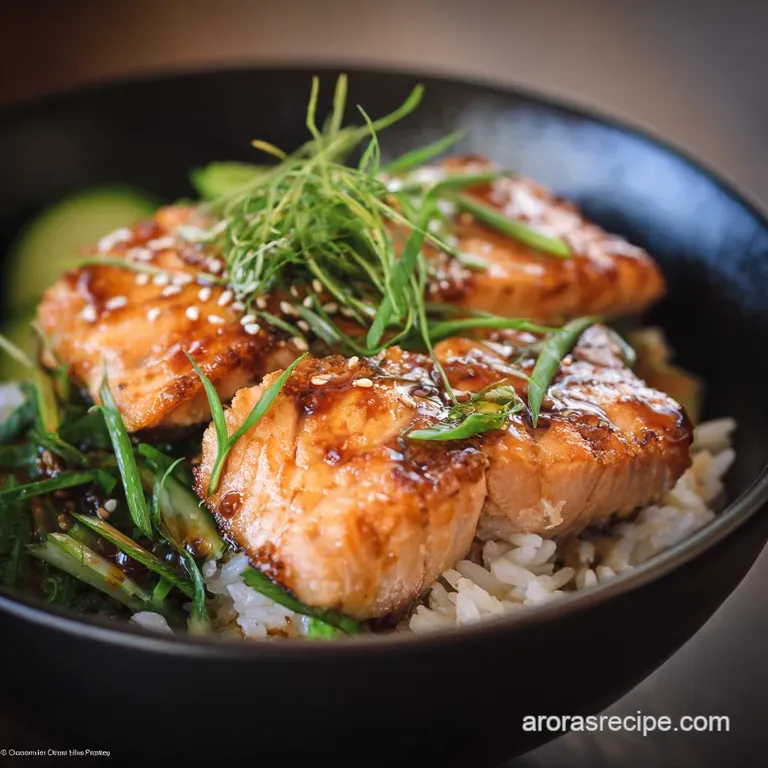
- Place the glazed salmon (either as a full fillet or flaked into rustic, large chunks your choice) right in the center. I prefer flaked for a more casual, authentic Salmon Rice Bowl feel.
- Arrange the fresh cucumber slices and diced avocado around the edges. We need those cool textures next to the warm rice and fish.
- Drizzle a little more of that reserved glaze over the salmon and toppings.
- Finish with a generous sprinkle of sliced spring onions, toasted sesame seeds, and those tiny strips of nori seaweed.
- Serve straight away. Job's a good 'un!
Beyond the Bowl: Expert Tips and Custom Variations
Troubleshooting Common Sticky Rice Mistakes
If your rice is too sticky and mushy, you either didn't rinse it enough, or you added too much water. If it’s too hard in the center, you likely lifted the lid during the steaming phase. That ten and minute steam is sacred time. Don’t touch it! Remember, a rice cooker minimizes these risks significantly.
Serving Suggestions to Complete the Japanese Meal
You've made this incredible bowl, now make it a proper meal. I usually serve Donburi with a very simple side. A quick, hot bowl of Miso Soup is always a winner; it cleans the palate between bites.
If I have time, I’ll steam some Edamame (tossed with sea salt flakes) for a healthy appetizer. Wash it down with a cold Japanese beer Asahi is classic, or even just some good chilled green tea.
Making It Your Own: Protein and Vegetable Swaps
This Salmon Donburi framework is incredibly versatile. If you’re not feeling the fish, or if you’ve got a vegetarian coming round, here are a few simple swaps:
| If you want to change the Protein... | How to substitute it | Note |
|---|---|---|
| Chicken Thigh | Dice and marinate in the glaze mixture for 30 minutes, then pan and fry until charred. | Chicken thighs hold up better than breast meat. |
| Firm Tofu | Press the tofu thoroughly, cube it, and pan and fry until golden before glazing. | Tofu loves absorbing the Umami Glaze! |
| Beef Strips (Gyūdon Style) | Thinly sliced beef sirloin or flank steak. Fry very quickly. | Reduce the glaze further, as beef is oilier. |
Safely Storing Leftover Glazed Salmon Donburi
Leftovers are usually the rice and perhaps some toppings, as the salmon tends to vanish first. You can safely store the components separately in airtight containers in the fridge for up to 3 days. When reheating, do not microwave the seasoned rice. It gets dry and hard.
It’s best to place the rice in a bowl, cover it with clingfilm, and steam it over boiling water for a few minutes until soft again. Reheat the salmon gently in a low oven or a frying pan; microwaving salmon makes it rubbery, and nobody wants rubbery fish. The glaze keeps perfectly in the fridge for a week.
Recipe FAQs
I’ve tried sushi rice before and it turned into a right sticky mess. How do I nail the rice for this Donburi?
The trick is rinsing the rice thoroughly under cold water until it runs clear this gets rid of excess starch and prevents mushiness. After cooking and seasoning, the crucial, expert step is fanning the rice while you gently fold in the seasoning, giving it that lovely, glossy, slightly tacky texture.
The glaze is full of soy sauce and sugar; is Salmon Donburi actually a healthy option?
Absolutely, it’s far better than a takeaway, balancing lean protein from the salmon (packed with Omega-3 fats) and complex carbohydrates from the rice. If you are watching your sodium, swapping to low-sodium soy sauce is a great shout without compromising the flavour.
I don't have Mirin or Sake in the cupboard; can I just skip those bits in the glaze recipe?
You can easily omit the Sake, but Mirin is vital for achieving that traditional sweet depth and gorgeous glossy finish. If you’re truly caught short, try mixing a dry sherry or white wine with a small pinch of sugar to replicate the flavour profile.
Can I prep the salmon ahead of time, and how long do the Salmon Donburi leftovers last?
This dish is best served immediately, but leftovers should be stored in the fridge and eaten within two days for safety. You can gently reheat the salmon or enjoy it cold over fresh, warm rice for a cracking lunch the next day.
This looks like a bit of a marathon; how long does it actually take to cook a perfect Umami Glazed Salmon Donburi?
You’ll be chuffed to hear that the whole job takes only about 45 minutes, assuming you get the rice going first. The active cooking for the glaze and salmon is just a quick 15-minute dash, making it a brilliant weeknight staple.
Umami Glazed Salmon Donburi Rice Bowl

Ingredients:
Instructions:
Nutrition Facts:
| Calories | 620 kcal |
|---|---|
| Fat | 20 g |
| Fiber | 4 g |
