Bavarian Cream Donuts: Golden and Silky

- Time: 45 min active + 6 hours 30 mins chilling/rising = Total 7 hours 15 mins
- Flavor/Texture Hook: Mahogany gold exterior with a silky, cool cream center
- Perfect for: Sunday family brunches or a slow paced weekend baking project
- Bavarian Cream Donuts
- Common Mistakes with These Donuts
- Quick Planning and Specs
- Ingredients You'll Actually Need
- Tools for Stress Free Baking
- Step-by-Step Baking Process
- Fixing Common Donut Problems
- Troubleshooting Common Issues
- Simple Ingredient Swaps
- Adjusting the Batch Size
- Common Baking Myths
- Storage and Reheating Tips
- Perfect Pairings for Donuts
- Recipe FAQs
- 📝 Recipe Card
Bavarian Cream Donuts
The first thing that hits you is that unmistakable sizzle as the dough hits the hot oil, followed quickly by the warm, spicy scent of cinnamon and toasted sugar. It is a smell that practically defines a cozy Saturday morning in a Midwestern kitchen.
I remember the first time I tried to make these for my cousins; I was so convinced that I needed some high end, industrial fryer to get that "bakery look" that I almost didn't start.
But here is the truth: you don't need a professional setup or a culinary degree to pull this off. Forget the idea that filled pastries are too "fancy" for a home cook. These Bavarian Cream Donuts are actually quite hearty and straightforward if you just respect the clock.
The real secret isn't a special tool, it is just giving the custard time to set and the dough time to breathe.
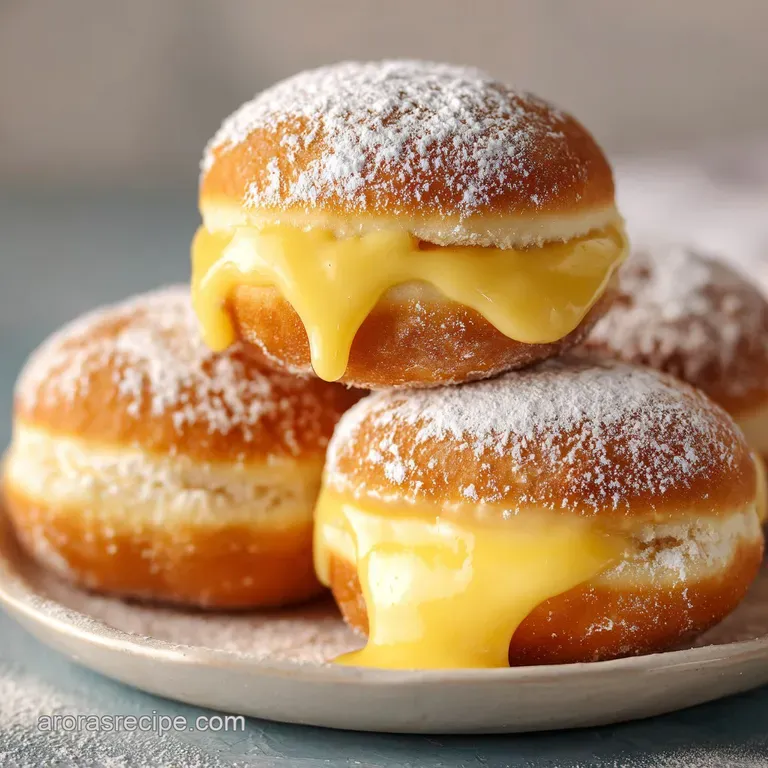
When you finally bite into one, you get that slight shatter of the sugar coating, the soft give of the dough, and then that cool, velvety rush of cream. It is the kind of treat that makes the whole house feel like a neighborhood bakery.
Trust me, once you see how simple the process is, you'll never go back to the store-bought ones.
Common Mistakes with These Donuts
Most people treat the filling as an afterthought, but that is where things usually go sideways. I've seen so many recipes suggest a "quick" filling, but if you don't let that custard chill properly, you'll end up with a runny mess that leaks out of the donut.
The filling needs to be cold and stable to create that distinct contrast with the warm dough.
Another common slip up is rushing the second proof. When you cut your rounds, they need that extra 30 minutes to relax. If you skip this, the donuts will be dense and might spring back or distort when they hit the oil. It is all about patience.
Let the yeast do the heavy lifting, and you'll get that cloud like texture every single time.
And for heaven's sake, don't overheat your oil. If it's too hot, the outside will be mahogany gold before the inside is even cooked. You'll end up with a raw center and a burnt shell. Use a thermometer and keep it steady. It's a stress free process as long as you don't try to cheat the timer.
Quick Planning and Specs
Since this is a time intensive process, I like to approach it in a plan. You can't really rush a yeast dough or a chilled custard, so the flow of your day matters. Here is how I usually break it down to keep things relaxed.
- 1. The Prep Flow
- Start with the cream filling. It needs at least 4 hours in the fridge, so do this first thing in the morning or even the night before.
- 2. The Cooking Flow
- While the cream chills, mix and knead your dough. Let it rise, shape it, and do the final proof.
- 3. The Finish
- Heat your oil, fry in batches, toss in sugar, and pipe in that cold cream.
Right then, let's look at how the homemade version compares to the shortcuts people often take.
| Feature | Fresh Homemade | store-bought/Shortcut | Impact |
|---|---|---|---|
| Filling | Real Egg Yolk Custard | Instant Pudding/Cream | Depth of flavor and stability |
| Dough | Slow Risen Yeast | Pre made Mix/Cake Donut | Texture and "pillowy" feel |
| Coating | Fresh Cinnamon Sugar | Glaze/Powdered Sugar | Crunch and aroma |
Ingredients You'll Actually Need
For the dough, we're using standard all purpose flour. If you want to know more about how different flours affect your bake, King Arthur Baking has some great guides on protein content. We want a dough that is sturdy enough to hold the filling but light enough to melt in your mouth.
The Dough Components:
- 440g all purpose flourWhy this? Provides a reliable structure for home baking
- 50g granulated sugarWhy this? Feeds the yeast and adds a hint of sweetness
- 7g active dry yeastWhy this? Essential for that airy, risen texture
- 3g saltWhy this? Balances the sugar and controls yeast growth
- 180ml whole milk, lukewarmWhy this? Activates yeast and softens the crumb
- 2 large eggs, room temperatureWhy this? Adds richness and helps the dough rise
- 85g unsalted butter, softenedWhy this? Creates a tender, velvety interior
- Vegetable oil for fryingWhy this? High smoke point for clean frying
The Bavarian Cream Filling:
- 480ml whole milkWhy this? Base for a creamy, rich custard
- 100g granulated sugarWhy this? Sweetens the filling
- 30g cornstarchWhy this? Stabilizes the cream so it doesn't run
- 4 large egg yolksWhy this? Gives that signature golden color and richness
- 28g unsalted butterWhy this? Adds a silky finish
- 5ml pure vanilla extractWhy this? Classic aromatic flavor
- Pinch of saltWhy this? Enhances the vanilla and cream
The Coating: - 120g granulated sugar - 8g ground cinnamon
Substitution Guide:
| Original Ingredient | Substitute | Why It Works |
|---|---|---|
| Whole Milk (480ml) | Heavy Cream (400ml) | Richer taste. Note: Makes the filling denser |
| All Purpose Flour | Bread Flour | More gluten. Note: Chewier, more "bread like" donut |
| Unsalted Butter | Coconut Oil (solid) | dairy-free fat. Note: Adds a subtle coconut scent |
| Cornstarch | Arrowroot Powder | Similar thickening. Note: Slightly different set |
Tools for Stress Free Baking
You don't need a fancy kitchen, but a few specific tools make this much easier. I always use a heavy bottomed pot for frying. A cast iron Dutch oven is brilliant because it holds heat much better than a thin stainless steel pan, which means the temperature doesn't drop as much when you drop the dough in.
For the filling, a whisk and a medium saucepan are all you need. If you have a piping bag with a plain round tip, it makes the filling process a breeze. If you don't have one, a sturdy Ziploc bag with a corner snipped off works just as well.
Honestly, don't even bother with fancy pastry tips for this; you just want a clean hole for the cream.
I also highly recommend a digital thermometer. Frying is a game of degrees, and guessing the temperature is the fastest way to get greasy donuts. According to Serious Eats, maintaining a consistent oil temperature is the most critical part of achieving a crisp exterior without absorbing too much fat.
Step-by-step Baking Process
Let's crack on with the actual making. We'll do this in phases so you can manage your time.
Phase 1: Preparing the Velvety Filling
- Whisk the sugar, cornstarch, and salt in a saucepan.
- Slowly whisk in the milk and egg yolks until the mixture is completely smooth.
- Heat over medium, stirring constantly until the mixture thickens and begins to bubble. Note: Stirring prevents the eggs from scrambling
- Remove from heat immediately and stir in the butter and vanilla.
- Transfer the cream to a bowl and cover with plastic wrap, pressing the wrap directly onto the surface of the cream. Note: This prevents a skin from forming
- Refrigerate for at least 4 hours.
Phase 2: Kneading the Pillowy Dough
- Combine lukewarm milk, sugar, and yeast in a bowl; let it sit for 5 minutes until it looks foamy on top.
- Add the eggs, salt, and flour. Mix until a shaggy dough forms.
- Add the softened butter one tablespoon at a time.
- Knead the dough until it is smooth and elastic (about 7-10 minutes by hand, or 5 mins in a mixer).
- Place the dough in a greased bowl, cover it, and let it rise in a warm spot for 1 to 1.5 hours until it has doubled in size.
Phase 3: Frying to Golden Perfection
- Roll the dough out on a lightly floured surface to 1.3cm thickness.
- Cut into rounds using a circular cutter.
- Let the rounds proof for another 30 minutes until they look puffy.
- Heat your vegetable oil to 175°C (350°F).
- Carefully drop the donuts in batches, frying for 2 minutes per side until they reach a mahogany gold color.
- Remove and drain on a wire rack for 2 minutes.
Phase 4: Filling and Finishing
- While the donuts are still warm, toss them in the cinnamon sugar mixture.
- Use a small knife or a chopstick to poke a hole in the side of each donut.
- Fit the chilled Bavarian cream into a piping bag.
- Squeeze the cream into the center until the donut feels heavy and full.
Chef's Tip: If you want a deeper flavor, add a tiny pinch of nutmeg to the cinnamon sugar mixture. It adds a subtle warmth that complements the vanilla cream perfectly.
Fixing Common Donut Problems
Even for experienced cooks, dough can be temperamental. Usually, it comes down to the environment like if your kitchen is too cold or your oil is too old.
Troubleshooting Common Issues
| Issue | Solution |
|---|---|
| Why Your Dough Isn't Rising | If your dough hasn't doubled in size after 90 minutes, your yeast might be inactive or your kitchen is too chilly. I've had this happen in the winter. A quick fix is to put the bowl inside an oven tha |
| Why Your Cream is Too Runny | This usually happens if the custard wasn't boiled long enough for the cornstarch to fully activate. If you notice it's too loose after chilling, don't panic. You can't easily re boil it once it's cold |
| Why Your Donuts Feel Greasy | Greasy donuts are almost always a result of oil temperature. If the oil drops below 175°C, the dough absorbs the fat instead of searing. Only fry 3-4 donuts at a time to keep the heat stable. |
Common Mistakes Checklist:
- ✓ Did you press the plastic wrap directly onto the custard?
- ✓ Is the oil exactly 175°C before the first batch goes in?
- ✓ Did the dough double in size during the first rise?
- ✓ Are you piping the cream while the donuts are cooled/room temp?
- ✓ Did you let the cut rounds proof for 30 minutes?
Simple Ingredient Swaps
Adjusting these Bavarian Cream Donuts for different tastes is easy. Since the base is so rich, you can lean into that or lighten it up.
For a Chocolate Twist: Replace 30g of the flour in the dough with high-quality cocoa powder. For the filling, stir in 50g of melted dark chocolate once the custard is removed from the heat. This turns the treat into something almost like a truffle filled pastry.
For a Zesty Lemon Version: Add the zest of one large lemon to the cream filling. The acidity cuts through the richness of the butter and eggs, making the donut feel a bit lighter and fresher. This is a great option if you're serving these in the spring.
Using Sourdough Discard: You can replace about 100g of the flour and a portion of the milk with active sourdough discard. This adds a slight tang to the dough that pairs beautifully with the sweet cream. Just be aware that the rise might take a bit longer, and you might need a pinch more sugar to feed the wild yeast. If you enjoy this kind of sourdough project, you might also like my Traditional Buttery Shortbread Cookies for a different kind of buttery treat.
Adjusting the Batch Size
Sometimes you don't need 18 donuts, or maybe you're feeding the whole neighborhood. Here is how to handle the numbers.
Cutting the Recipe in Half: When halving, the trickiest part is the egg. Beat one egg in a small bowl and use half of it (about 25g). Use a smaller pot for the custard so it doesn't evaporate too quickly, and reduce your frying time by about 20 seconds per side since smaller batches can sometimes cook faster.
Doubling the Recipe: When doubling, do NOT double the salt or cinnamon increase them by about 1.5x instead. Too much salt can hinder the yeast rise. Most importantly, work in batches.
If you crowd the pot with too many donuts, the oil temperature will plummet, and you'll end up with the "greasy donut" problem we talked about earlier. For large batches, I suggest lowering the oven temp by about 10°C if you're doing any pre baking steps, but for frying, just stick to the batches.
If you love the creamy texture of this filling, you'll probably appreciate the technique used in The Crepes Recipe, which also relies on a smooth, velvety batter.
Common Baking Myths
There are a few things people say about donuts that just aren't true. Let's clear the air.
Myth: You must use a professional deep fryer. As I mentioned, a heavy pot is all you need. A professional fryer just automates the temperature, but a digital thermometer and a steady hand do the exact same thing.
Myth: Adding butter to the dough makes it "heavy." Actually, the opposite is true. The butter interferes with the gluten development, which is what makes the dough "tender" and "pillowy" rather than "chewy" like a bagel.
Myth: You can fill the donuts while they are piping hot. If you do this, the cold Bavarian cream will melt instantly, and you'll end up with a liquid center that soaks into the bread. Let them cool to room temperature or slightly warm before piping.
Storage and Reheating Tips
Because these contain a dairy based custard, you have to be careful with storage. These are not "counter top" donuts.
Fridge Storage: Store your Bavarian Cream Donuts in an airtight container in the fridge for up to 3 days. The sugar coating might dissolve slightly due to the moisture, but the taste remains great.
Freezing: I don't recommend freezing the fully assembled donuts. The cream filling can change texture and become grainy. However, you can freeze the fried (but unfilled) donuts for up to 2 months. Just thaw them, warm them in the oven, and then pipe in fresh cream.
Reheating: If you have a refrigerated donut, don't microwave it that makes the dough rubbery. Instead, pop it in a 180°C oven for about 3-5 minutes. This crisps the outside back up. Just be careful not to overheat it, or you'll melt the filling inside.
Zero Waste Tips: If you have a little leftover Bavarian cream, don't toss it! It's basically a high end pastry cream. You can spoon it over fresh berries, use it as a layer in a cake, or even stir it into a bowl of oatmeal for a decadent breakfast.
If you have leftover cinnamon sugar, keep it in a jar for toast or roasted nuts.
Perfect Pairings for Donuts
These are quite rich, so you want something to balance out the sweetness. A strong, black coffee is the gold standard here the bitterness of the bean cuts right through the velvety cream.
If you're serving these at a brunch, pair them with something salty, like thick cut smoked bacon or a savory breakfast casserole. The contrast between the mahogany gold sugar crust and a salty side is brilliant.
For a drink option, a tart hibiscus tea or a cold glass of orange juice provides a refreshing acidic lift that keeps the meal from feeling too heavy.
Right then, you've got everything you need to make these Bavarian Cream Donuts. Just remember: chill your cream, respect your yeast, and keep that oil steady. Happy baking!
Recipe FAQs
What is in a Bavarian cream donut?
A fried yeast donut filled with vanilla custard and coated in cinnamon sugar. The filling is a thick mixture of milk, egg yolks, cornstarch, and butter, creating a richness similar to creamy fudge.
What is the difference between a Bavarian cream and a Boston cream donut?
The coating and filling style. Boston cream donuts feature a different topping, whereas Bavarian cream donuts are tossed in cinnamon sugar.
What does a Bavarian cream donut taste like?
Rich, creamy, and warmly spiced. You get the sweetness of the cinnamon sugar crust followed by a cool, velvety vanilla custard center.
Can I store these donuts on the kitchen counter?
No, they must be refrigerated. Because they contain a dairy based custard, they need to stay cold to remain safe and fresh.
Why is my filling runny?
The custard likely wasn't chilled long enough. Ensure the cream refrigerates for at least 4 hours to stabilize before piping.
How to fill the donuts without making a mess?
Poke a hole in the side using a small knife or chopstick. Fit the chilled cream into a piping bag and squeeze until the donut feels heavy and full.
Is it true I can freeze the fully assembled donuts?
No, this is a common misconception. Freezing the assembled donuts can make the cream filling grainy; freeze only the fried, unfilled donuts instead.
Bavarian Cream Donuts