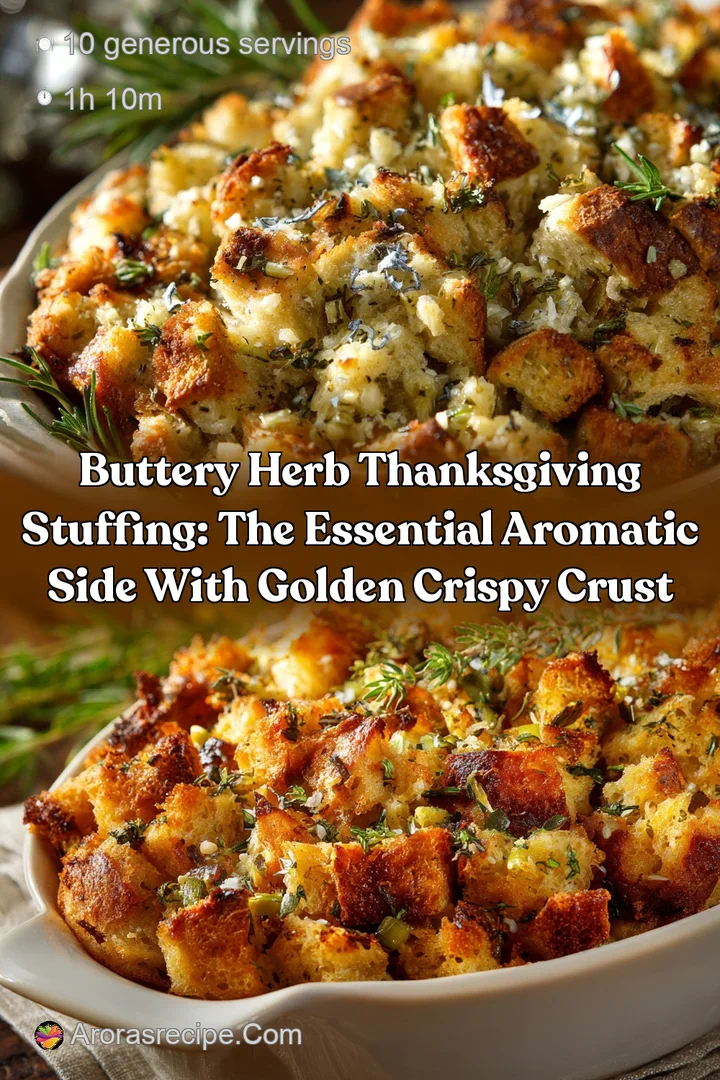
Buttery Herb Thanksgiving Stuffing: the King of Sides with Perfect Crispy Tops
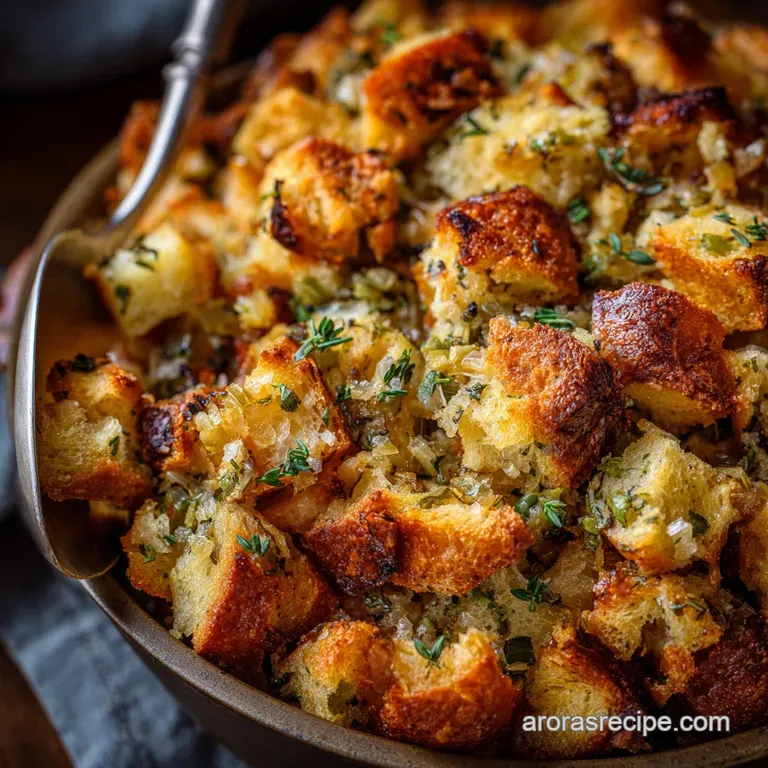
- Why This Buttery Herb Thanksgiving Stuffing Deserves the Center Stage
- Mastering Texture: The Science of Moist Interior and Golden Crunch
- Essential Components for the Ultimate Buttery Herb Stuffing
- Step-by-Step: Constructing Your Classic Buttery Herb Thanksgiving Stuffing
- Professional Stuffing Pro Tips & Avoiding Critical Errors
- Managing Leftovers: Storing, Freezing, and Reimagining Your Stuffing
- Pairing Perfection: What to Serve Alongside Buttery Herb Thanksgiving Stuffing
- Recipe FAQs
- 📝 Recipe Card
Why This Buttery Herb Thanksgiving Stuffing Deserves the Center Stage
That first wave of sage and thyme hitting the heat, mixed with proper butter? It is the absolute definition of holiday aroma, and frankly, it's the best smell you will ever bake into your kitchen.
We are making the classic stuffing here, focusing on that crucial texture: ridiculously crisp, golden crust above a soft, deeply savoury interior that actually holds its shape when you scoop it.
Forget the overly complicated recipes or the box mixes you settle for when you are short on time. This approach is fast, affordable, and, crucially, you can do most of the chopping and drying work days ahead. This recipe is the ultimate definition of stress free success.
It’s a total lifesaver when the big day kitchen starts to feel like a culinary Thunderdome.
I spent years messing up my stuffing it was either brick dense, greasy, or sadly mushy sludge. I finally cracked the code on managing the moisture and fat, and I'm sharing every single secret tip with you now. We are going to ditch the dry disappointments for good.
Mastering Texture: The Science of Moist Interior and Golden Crunch
The Secret to Unbeatable Moistness
The key to preventing dry stuffing is counterintuitive: You must use a ridiculous amount of fat. We use nearly two full sticks of unsalted butter not just for flavor, but for physics. The melted butter coats the dried bread cubes, creating a barrier that slows the absorption of the chicken stock.
This gentle coating prevents the bread from turning instantly into a sponge, allowing it to soften evenly during the initial covered bake.
Baking Separately: Achieving the Ultimate Crispy Crust
Stuffing baked inside the bird is fine if you enjoy mushy texture and potential safety risks, but we are chasing texture perfection. Baking the stuffing separately in a shallow dish allows for maximum surface area to be exposed to the dry heat.
This is how you achieve that incredible, shatteringly crisp top layer that everyone fights over.
A Deep Dive into the Essential Herb Blend (Sage, Thyme, Rosemary)
We need fresh herbs, end of discussion. Dried herbs are fine for quick fixes if you are in a pinch, check out my tips for [Enhanced Stove Top Stuffing: The Ultimate Butter Basted Glow-Up] but for the main event, the trio of sage, thyme, and rosemary is mandatory.
Sage provides the earthiness, thyme gives that lovely aromatic woodsy note, and the rosemary adds a subtle piney complexity. Always chop the sage and rosemary finely since their leaves can be quite tough otherwise.
The Maillard Reaction and Your Stuffing Crust
The beautiful browning on top isn’t just good luck; it’s the Maillard Reaction at work. This is the magical chemical process where amino acids and sugars react under heat.
We encourage this by removing the foil for the last 15 minutes of baking and, crucially, dotting the top with extra cold butter cubes . Those little pats melt over the surface, helping the crust fry into a deep gold colour.
Saturated vs. Unsalted Butter: The Flavor Foundation
Always start with unsalted butter when preparing the aromatic base. Why? Because the salinity of the chicken stock varies wildly, and your bread already has some salt. Using unsalted butter lets you control exactly how much salt goes into the dish. We want savory, not overtly salty.
The Perfect Bread Soak: Hydration Ratios Explained
The ratio of 4 cups of liquid (stock + eggs) to 1 pound of dried bread is almost universally perfect for achieving that moist but-not-soggy texture. If you notice a puddle of stock at the bottom of the bowl after folding, you have used too much liquid or your bread wasn't dry enough.
If you fold it gently and the mixture still looks dusty, you need that extra splash of stock. It’s a visual process, not just a measurement.
Essential Components for the Ultimate Buttery Herb Stuffing
Choosing the Right Stale Bread: Sourdough vs. Baguette
You need sturdy bread. Forget flimsy sandwich loaves they collapse immediately. My favorites are sourdough or French baguette because they have structure, and they create larger, airier pockets of flavour.
Chef’s Note: The bread must be truly stale, meaning dried out completely. If it feels soft at all, you will get mushy stuffing. If you don't have time to bake it, slice it and leave it on your counter overnight!
Maximizing Fresh Herb Potency (Handling and Chopping)
We add the tough herbs sage, thyme, and rosemary to the sautéed onions and celery for the last two minutes of cooking. This quick kiss of heat activates their oils, maximizing their flavor without letting them burn.
The delicate parsley, however, goes in with the final mix, keeping its bright, fresh colour and taste intact.
Broth vs. Stock: Controlling Salinity and Depth
I always prefer using low-sodium stock, whether it's chicken or turkey stock. Broth is often thinner and more heavily seasoned. If you are using homemade, full salt stock, you must pull back on the added salt in the aromatic base until you taste the final mix.
Troubleshooting Dry/Mushy Bread (Ingredient Pro Tip)
If you find your bread is still too soft after drying, toss the cubes with a tablespoon or two of olive oil before toasting them in the oven. The oil helps them achieve crispness without burning. If your bread is already slightly soft when you start, you might need to reduce the amount of stock slightly.
| Ingredient | Viable Substitution | Notes |
|---|---|---|
| Unsalted Butter | high-quality vegan butter or Ghee | Use the same quantity; vegan butter still provides essential fat coating. |
| Yellow Onions | Leeks (white and light green parts) | Wash leeks thoroughly! They offer a slightly milder, sweeter flavour. |
| Fresh Sage | Dried Poultry Seasoning | Use about 1 Tbsp of dried poultry seasoning, but expect less punch. |
| Chicken Stock | Low-Sodium Vegetable Stock | Use this if serving vegetarians, ensuring it’s unflavored to maintain the savoury profile. |
| Eggs | 1/4 cup applesauce or 1 Tbsp ground flax mixed with 3 Tbsp water | The eggs are primarily for binding; substitutes work but texture may be slightly softer. |
step-by-step: Constructing Your Classic Buttery Herb Thanksgiving Stuffing
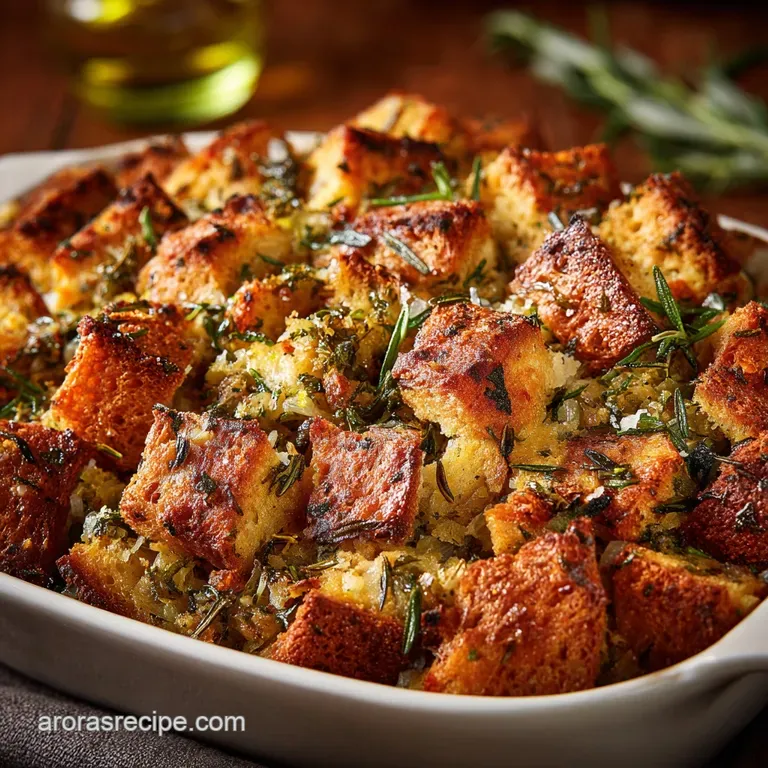
Preparing the Aromatic Base (Sautéing technique)
You must cook the onions and celery low and slow we aren't making quick stir fry here. Melt the butter over medium low heat and let those vegetables soften until they are completely translucent, about 12 to 15 minutes.
This slow process infuses the butter with deep savory flavor that forms the soul of the dish.
The Gentle Fold: Ensuring Even Distribution of Moisture
Once you pour that stock/egg mixture over the bread, it’s time to be delicate. Use a large rubber spatula and fold the mixture over itself, rather than stirring vigorously. Stirring breaks down the bread and releases the starch, leading to that sticky, heavy texture we hate.
A gentle fold keeps the bread cubes intact.
Baking Guidance: Timing, Temperature, and the Aluminum Foil Cap
We start covered at 375°F (190°C) for 30 minutes. The foil cap traps the steam and moisture, ensuring the interior bread cubes fully cook and absorb the liquid. After 30 minutes, removing the foil allows the surface to crisp up beautifully.
The final temperature should hit at least 165°F (74°C) for food safety.
Professional Stuffing Pro Tips & Avoiding Critical Errors
The Cardinal Sin: Why Under Soaking Leads to Dry Stuffing
People often pour the stock in, see the top layer wet, and think they're done. Wrong! If the liquid isn't folded through properly, the bottom and middle sections will remain dry and rock hard after baking.
Don’t be afraid to add a little extra stock if the mixture looks overly firm or dusty after sitting for five minutes.
Achieving Peak Flavor: When to Add Extra Salt and Pepper
You need to season the butter base, but the final, crucial seasoning happens after the mixture is fully combined with the stock and herbs, but before baking. Taste a small corner of the mixture. If it tastes slightly bland now, it will taste terrible after baking.
Salt and pepper should be added until the flavour really pops.
Emergency Fixes for Overly Soggy Stuffing
Mistakes happen, especially when you are multitasking. If you accidentally added too much stock and the mixture is truly soggy, you have two options. Option one: stir in a handful of plain breadcrumbs or crushed croutons to soak up the excess liquid.
Option two (my preferred method): Spread the mixture on a sheet pan and bake it at 350°F (175°C) for 10 minutes to help some of the moisture evaporate before transferring it back to the casserole dish.
Why We Bake Outside the Bird (A safety/texture explanation)
The center of a turkey takes a long time to reach a safe temperature (165°F / 74°C). By the time stuffing inside hits that mark, the turkey breast is likely bone dry and overcooked. Baking separately guarantees both safe temperatures and vastly superior texture.
It’s just smarter cooking.
Managing Leftovers: Storing, Freezing, and Reimagining Your Stuffing
Safe Storage Guidelines for Cooked Holiday Dishes
Stuffing keeps brilliantly! Once cooled, transfer the leftovers to an airtight container and store it in the refrigerator for up to 3 to 4 days. Always cool it rapidly before covering and refrigerating to prevent bacterial growth.
Best Practices for Freezing Unbaked Stuffing Mix
You can easily freeze this stuffing! Mix everything right up until step 9 (before baking), transfer it to your foil lined baking dish, cover it tightly with a double layer of foil, and freeze for up to 3 months.
When ready to use, thaw it overnight in the fridge and then proceed with the baking instructions as written, adding about 10– 15 minutes to the initial covered baking time.
To reheat baked stuffing, preheat your oven to 325°F (160°C). Place the stuffing in an oven safe dish, cover it loosely with foil, and bake for 20 minutes, or until heated through. Removing the foil for the last five minutes helps re-crisp the top layer.
Pairing Perfection: What to Serve Alongside Buttery Herb Thanksgiving Stuffing
This stuffing is rich, savory, and full of aromatic herbs, meaning it needs partners that provide contrast and brightness.
I absolutely love serving this stuffing alongside anything bright and zesty. A light, fresh side like my [Herbed Lemon Garlic Chicken with Zucchini Noodles: Quick, Low-Carb Dinner] provides a wonderful contrast, even if you are serving turkey, because the fresh lemon really cuts the fat.
Similarly, if you are planning to serve seafood as a second course, a quick, elegant option like [Lemon Herb PanSeared Flounder Fillets: Quick, Restaurant Quality Dinner] keeps things light and zesty.
The classic pairing remains essential, though: a bowl of thick, homemade turkey gravy and a sharply tart cranberry sauce are the perfect foils for the buttery texture of the stuffing. You need that acidity to cleanse the palate.
Recipe FAQs
Why did my stuffing come out dry instead of moist and buttery?
Stuffing usually dries out because it was baked uncovered for too long or lacked sufficient liquid before baking. Ensure you generously add the measured broth and melted butter mixture, and cover the dish tightly with foil for the first two-thirds of the baking time to trap moisture.
Can I prepare this Buttery Herb Stuffing ahead of Thanksgiving Day?
Absolutely; this recipe is excellent for make-ahead planning. You can prepare and mix all ingredients (bread, vegetables, herbs) up to 24 hours in advance, but hold off on adding the wet ingredients (broth/butter) until just before you plan to bake.
This prevents the bread from becoming overly saturated and mushy while chilling.
What is the secret to getting a truly crispy top layer?
To achieve the signature crispy top, bake the stuffing covered until it is nearly heated through, then remove the foil for the final 15 20 minutes. For an extra golden crust, brush the exposed surface lightly with additional melted butter before the final uncovered bake.
Is it safe to bake this stuffing inside the turkey cavity?
While traditional, baking stuffing inside the bird is generally not recommended for safety or quality. Stuffing cooked inside the turkey must reach 165°F (74°C) to eliminate harmful bacteria, which often results in the external parts becoming dry and overcooked by the time the center is safe.
How can I make this recipe suitable for guests avoiding meat or dairy?
To make the stuffing vegan or vegetarian, substitute the chicken broth with a rich vegetable broth and swap the dairy butter for a high-quality plant based butter alternative. Ensure your bread choice does not contain any hidden dairy products or eggs.
What type of bread is best for achieving the right stuffing texture?
A sturdy, dense bread like sourdough, French bread, or brioche works best, as it holds its shape when moistened and does not dissolve into mush. Crucially, the bread must be thoroughly dried out either left exposed overnight or cubed and toasted in a low oven before mixing.
Can I freeze leftover stuffing?
Yes, cooked stuffing can be frozen in an airtight container for up to three months. However, be aware that freezing and thawing may slightly change the texture, often making the bread cubes softer and less defined.
Buttery Herb Thanksgiving Stuffing Classic
Ingredients:
Instructions:
Nutrition Facts:
| Calories | 1016 kcal |
|---|---|
| Protein | 18.5 g |
| Fat | 63.7 g |
| Carbs | 70.9 g |
