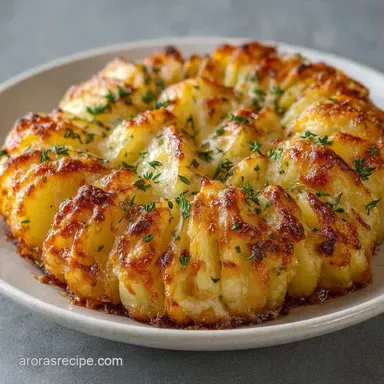
Cheesy Hasselback Potato Gratin: Garlic and Gruyère

- Time: 20 min active + 90 min bake
- Flavor/Texture Hook: Crispy, buttery edges with a creamy, garlic infused center
- Perfect for: Holiday side dishes or a fancy Sunday dinner
Hasselback Potato Gratin
The smell of nutty Gruyère bubbling in the oven always takes me back to my grandmother's kitchen in Nashville. There is something about the sound of that first fork pierce through a crisp potato edge that just feels like home. I used to make a standard gratin, but the texture was always a bit one note.
I wanted that contrast of a soft, creamy interior and a jagged, toasted top.
The real hero here is the Russet potato. I've tried using Yukon Golds, and while they're great for mash, they don't give you that specific, starchy fluffiness that a Russet does. According to the starch profiles documented at Serious Eats, Russets have a higher amylose content, which is exactly why they hold those thin slices without turning into mush.
This Hasselback Potato Gratin isn't about being fancy for the sake of it. It's about getting the most out of a humble potato. You'll get these beautiful, accordion like slices that soak up the garlic cream but stay distinct. It takes a bit of patience with the knife, but the result is a side dish that actually gets people talking at the table.
Why Other Recipes Fail
Most people treat this dish like a standard casserole, which is where they go wrong. They either overcook the potatoes until they're a blur, or they leave them raw in the middle because they were too scared to crank up the heat. The problem is usually the temperature.
If you stay at one heat setting, you either burn the cheese before the potato is soft or you end up with a pale, boiled looking mess.
- Two Stage Heating
- Starting at a lower temp softens the potato cores, then jumping to a high temp crisps the edges.
- Tight Packing
- If the potatoes aren't packed tight, they fall over, and the cream doesn't seep into the gaps properly.
- Starch Management
- Leaving the skins on provides a structural wall that keeps the slices from sliding apart.
| Method | Bake Time | Edge Texture | Best For |
|---|---|---|---|
| Single Temp | 75 mins | Soft/Pale | Quick meals |
| Two Stage | 90 mins | Mahogany/Crisp | Special occasions |
| Par boiled | 45 mins | Chewy | Meal prep |
The Recipe Specs
This dish is a commitment of time, but not much effort. You'll spend about 20 minutes getting the slicing and assembly done, and then you let the oven do the heavy lifting for about 90 minutes.
It's a budget-friendly meal because the bulk of the volume comes from potatoes, though the Gruyère adds a bit of a price bump.
If you're looking for something with a different vibe, my Potatoes au Gratin recipe uses a sliced layer method that's a bit faster but lacks those crispy Hasselback tips. This version is definitely the more impressive of the two.
Picking Your Ingredients
The Russet is non negotiable here. You want that high starch for the fluff. If you use a waxy potato, the slices will stick together and you won't get those separate "leaves" that hold the cheese. I always scrub them well but leave the peel on. It adds an earthy flavor and stops the potato from disintegrating.
For the cream, don't bother with low-fat options. Heavy cream provides the fat needed to emulsify with the cheese and create a sauce that clings to the potato rather than pooling at the bottom. The nutmeg is a small addition, but it's the thing that makes the dish taste like it came from a professional kitchen.
It cuts through the richness of the dairy.
Ingredient Deep Dive
| Ingredient | What It Does | Best Swap |
|---|---|---|
| Russet Potatoes | Provides fluffy structure | Yukon Gold (will be denser) |
| Heavy Cream | Creates a rich, clingy sauce | Half and half (thinner sauce) |
| Gruyère Cheese | Adds nutty, salty depth | Swiss or Comté |
| Fresh Thyme | Adds a woody, herbal note | Dried thyme (use 1/3 amount) |
Gathering Your Essentials
- 2 lbs (900g) Russet potatoes, scrubbed and unpeeled Why this? High starch for maximum fluff
- 3 tbsp (42g) Unsalted butter, melted Why this? Helps brown the potato skins
- 1 tsp (6g) Kosher salt Why this? Enhances the natural potato flavor
- ½ tsp (3g) Cracked black pepper Why this? Adds a mild, woody heat
- 1 ½ cups (355ml) Heavy cream Why this? Necessary for a stable, rich sauce
- 3 cloves (15g) Garlic, minced Why this? Pungent balance to the cream
- 1 tsp (2g) Fresh thyme leaves Why this? Classic pairing with root vegetables
- 1 ½ cups (170g) Gruyère cheese, shredded Why this? Melts smoothly with a nutty taste
- ½ cup (50g) Parmesan cheese, finely grated Why this? Adds a sharp, salty crust
- ¼ tsp (1.5g) Nutmeg, freshly grated Why this? Warmth that balances the dairy
Necessary Kitchen Tools

You don't need a fancy arsenal for this, but two things make it way easier. First, a set of chopsticks or two wooden spoons. These act as guards so you don't slice completely through the potato. Second, a 9x13 inch baking dish.
If you use a dish that's too large, the potatoes will lean, and you'll lose that vertical wall structure.
I usually use a sharp chef's knife, but a serrated knife actually works surprisingly well on the potato skins. Just make sure your baking dish is ceramic or glass, as metal pans can sometimes hotspot and burn the bottom of the cream before the tops are done.
Bringing the Dish Together
The key to a great Hasselback Potato Gratin is the assembly. You want the potatoes standing up straight and packed tight. If there are big gaps, the cream will just flood the bottom of the pan, and the middle slices of the potatoes will stay raw.
Phase 1: The Precision Slice
Place one potato on your cutting board and lay a chopstick on either side of it. Slice thinly across the potato, letting the knife hit the chopsticks. This stops you from cutting all the way through. Repeat this for all 2 lbs of potatoes. You want slices about 1/8 inch thick.
Phase 2: The Vertical Assembly
Brush the sliced potatoes with melted butter and season with salt and pepper. Now, stand them up vertically in your 9x13 inch dish. Pack them in tightly, shoulder to shoulder. They should look like a little potato forest.
Phase 3: The Cream Bath & Bake
Whisk your heavy cream, minced garlic, thyme, and nutmeg in a bowl. Pour this carefully over the potatoes. Make sure the liquid seeps deep into those slices. Top the whole thing with the shredded Gruyère and Parmesan. Cover the dish tightly with aluminum foil.
Bake at 375°F (190°C) for 45 minutes.
Phase 4: The Golden Finish
Take the foil off and bump your oven up to 400°F (200°C). Bake for another 30-45 minutes. You're looking for the tips of the potatoes to turn a deep mahogany and the cheese to be bubbling and brown. It's done when the potato tips are crispy to the touch.
Chef's Note: If the cheese starts browning too fast before the potatoes are soft, just slide a piece of foil loosely over the top for the last 10 minutes.
Fixing Common Problems
The most common issue is the "hard center," where the tips are burnt but the middle of the potato is still raw. This usually happens if you skip the foil phase or if your oven runs cold. The foil traps steam, which is what actually cooks the potato from the inside out.
Another problem is a sauce that feels too thin or "broken." This happens if you use a low-fat milk substitute or if you stir the dish halfway through. Once that cream is in, leave it alone. Let it reduce and thicken naturally in the oven.
Troubleshooting Guide
| Problem | Root Cause | Solution |
|---|---|---|
| Potatoes stay hard | Not enough steam | Ensure foil is sealed tight for the first 45 mins |
| Sauce is too runny | low fat content | Use full fat heavy cream; avoid milk substitutes |
| Cheese is burnt | Oven too hot | Lower temp by 25°F or tent with foil |
If you find the slicing too tedious, you can try my Gratin for 6 Servings recipe, which uses a layering technique that's much faster for weeknight meals.
Flavor Twists to Try
Once you've nailed the basic Hasselback Potato Gratin, you can start playing with the cream infusion. I love adding a tablespoon of Dijon mustard to the cream for a bit of a tang. It cuts through the richness of the Gruyère and makes the dish feel a bit lighter.
For something a bit more earthy, try swapping the thyme for fresh rosemary and adding a pinch of smoked paprika to the butter. If you want a more punchy flavor, you can fold in some sautéed leeks or shallots between the potato rows before pouring in the cream.
If you want it lighter, use a mix of half and half and heavy cream, and swap the Gruyère for a sharp white cheddar. It's not quite as rich, but it still hits the spot.
For a garlic parmesan punch, double the garlic and add a sprinkle of extra Parmesan halfway through the second bake.
Storage and Reheating
This dish keeps surprisingly well in the fridge. Place leftovers in an airtight container and they'll stay good for about 3-4 days. The cream will thicken as it cools, so it might look a bit stiff when you first take it out.
To reheat, avoid the microwave if you can. The microwave will make the potatoes soggy and kill that crispiness we worked so hard for. Instead, put the leftovers in a small baking dish, add a tiny splash of cream or butter on top, and pop them in a 350°F (175°C) oven for 15-20 minutes.
Freezing this isn't recommended. The high water content in potatoes can cause them to become spongy and grainy once thawed. It's better to make just enough for your meal or share the leftovers with a neighbor.
Zero Waste Tip: Don't throw away your potato peels if you decided to peel some. Toss them in oil and salt and roast them at 400°F for 10 minutes for a quick, salty snack.
Great Pairing Ideas
Because this Hasselback Potato Gratin is so rich and creamy, it needs something with acidity or a strong protein to balance it out. A roasted chicken with lemon and garlic is my go to pairing. The brightness of the lemon cuts right through the heavy cream and cheese.
For a holiday feast, this is an absolute winner alongside a honey glazed ham or a prime rib. The mahogany tips of the potatoes look beautiful on a platter next to a carved roast. If you're doing a meatless dinner, pair it with a balsamic glazed roasted cauliflower or a crisp arugula salad with a sharp vinaigrette.
Right then, you've got everything you need. Just remember to take your time with the slices, trust the two stage bake, and don't skimp on the Gruyère. Trust me, your guests will be asking for the recipe before they've even finished their first serving.
Recipe FAQs
What is Hasselback potato gratin?
A hybrid dish combining thinly sliced vertical potatoes with a creamy cheese sauce. It blends the crispy edges of a Hasselback potato with the richness of a traditional gratin.
What exactly is "hasselback"?
A slicing technique where the potato is cut thinly but not all the way through. This creates an accordion effect that allows the cream and cheese to seep into the gaps.
What is the difference between scalloped and hasselback potatoes?
The primary difference is the cut and orientation. Scalloped potatoes are sliced into rounds and layered horizontally, whereas Hasselback potatoes are sliced vertically and kept whole.
How to make Hasselback potato gratin?
Slice potatoes thinly using chopsticks as guides to prevent cutting through. Arrange them vertically in a dish, pour over a mixture of heavy cream, garlic, thyme, and nutmeg, top with cheese, and bake at 375°F covered, then 400°F uncovered.
Is it true that the foil is optional during the first stage of baking?
No, this is a common misconception. The foil must be sealed tight for the first 45 minutes to create the steam necessary to soften the potatoes.
Why is my sauce too runny?
You likely used a low-fat dairy substitute. Use full-fat heavy cream to ensure the sauce thickens properly during baking. If you prefer a different potato texture, you might enjoy cheesy baked potatoes.
How to reheat leftover gratin?
Place leftovers in a small baking dish and add a splash of cream or butter. Bake at 350°F for 15-20 minutes to maintain the crispiness.
Hasselback Potato Gratin with Gruyère