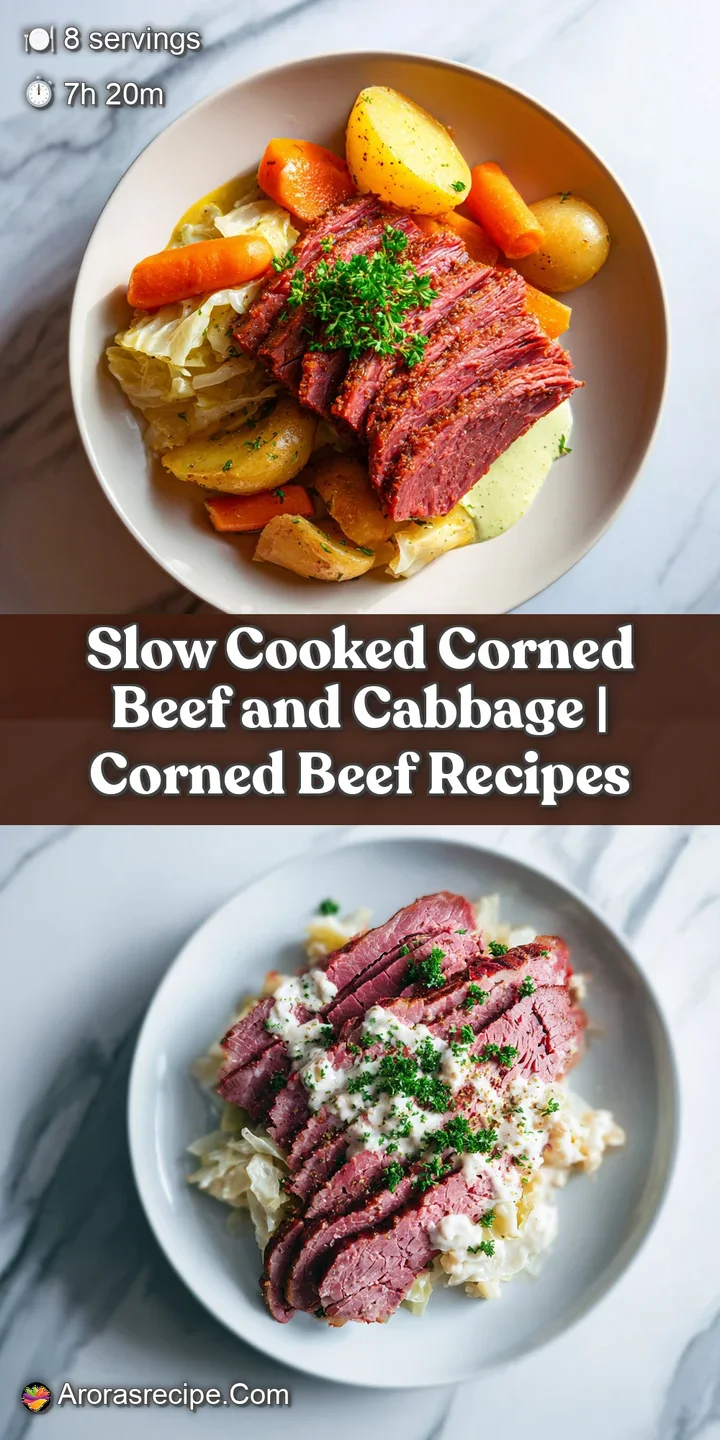
Slow Cooked Corned Beef and Cabbage
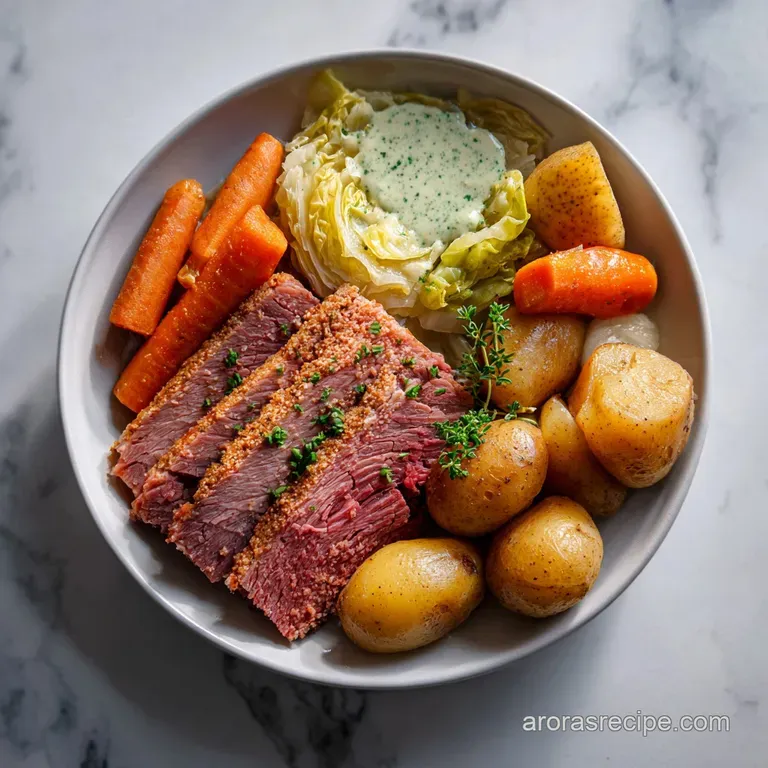
- Time: Active 20 minutes, Passive 8 hours, Total 8 hours 20 minutes
- Flavor/Texture Hook: Fork tender, salty savory beef paired with a zingy, velvety horseradish cream
- Perfect for: Weekend family gatherings, stress free meal prep, or a traditional Midwestern feast
- The Hidden Physics of Tender Slow Cooked Brisket
- Component Analysis of Our Favorite Hearty Midwestern Meal
- Selecting Quality Ingredients for a Flavorful Brisket Pot
- Minimal Kitchen Tools Required for This Reliable Classic
- Precise Cooking Steps for the Ultimate Fork Tender Result
- Troubleshooting Your Slow Cooked Corned Beef and Cabbage
- Simple Flavor Adjustments and Dietary Swaps to Try
- Best Methods for Storing and Reheating Your Leftovers
- Plating and Presentation Tips for a Restaurant Style Look
- CRITICAL Sodium Alert!
- Recipe FAQs
- 📝 Recipe Card
The Hidden Physics of Tender Slow Cooked Brisket
Why does this recipe turn out so much better than the gray, salty versions we've all had at local diners? It comes down to how we handle the temperature and the timing of each component.
Brisket is a muscle that works hard, meaning it is packed with connective tissue that can be as tough as a rubber band if cooked too quickly.
- Connective Tissue Breakdown: The low, steady heat of the slow cooker allows collagen to slowly convert into gelatin without tightening the muscle fibers into a dry knot.
- Acidic Tenderization: The addition of apple cider vinegar and the natural acidity in the stout beer help weaken the protein structures, speeding up the softening process while adding a bright note to the brine.
- Staggered Vegetable Placement: Potatoes and carrots can handle the full 8 hours of heat, but cabbage is delicate. Adding it in the final 60 minutes prevents it from overcooking and losing its vibrant color.
- Osmotic Balance: Rinsing the meat before cooking removes excess exterior salt from the brine, ensuring the final broth is savory rather than mouth puckeringly salty.
| Brisket Thickness | Internal Temp | Rest Time | Visual Cue |
|---|---|---|---|
| 2 cm to 3 cm | 90°C to 95°C | 10 minutes | Fibers separate easily with a fork |
| 4 cm to 5 cm | 90°C to 95°C | 15 minutes | Meat wobbles slightly when pressed |
| 6 cm+ | 90°C to 95°C | 20 minutes | Knife slides through with zero resistance |
The resting period mentioned in the table above is non negotiable. When the meat comes out of that hot liquid, the juices are frantic. If you slice it immediately, all that moisture runs out onto the cutting board, leaving you with dry beef.
Letting it sit for at least 10 minutes allows the fibers to relax and reabsorb that liquid, which is the secret to that velvety mouthfeel we’re after.
Component Analysis of Our Favorite Hearty Midwestern Meal
Selecting the right ingredients is the difference between a "fine" meal and one people ask for every year. I always look for a flat cut brisket because it has a more uniform thickness than the point cut, which means it cooks evenly and is much easier to slice against the grain for beautiful presentation.
| Ingredient | Science Role | Pro Secret |
|---|---|---|
| Flat Cut Brisket | Primary Protein | Rinse it thoroughly to control the sodium levels in your final gravy. |
| Stout Beer | Enzymatic Tenderizer | Use a dry stout like Guinness for a rich, coffee like depth without sweetness. |
| Apple Cider Vinegar | pH Adjuster | This cuts through the heavy fat of the brisket and brightens the root vegetables. |
| Prepared Horseradish | Flavor Pungency | Use "extra hot" if you want that classic sinus clearing Midwestern kick. |
One mistake I once made was skipping the rinse. I thought I was keeping all the flavor in, but instead, the dish was so salty it was nearly inedible. Now, I always give that 1.6 kg brisket a good cold bath under the tap. Trust me on this one, your palate will thank you.
Selecting Quality Ingredients for a Flavorful Brisket Pot
When you head to the grocery store, keep these specifics in mind. We want ingredients that are sturdy enough to survive a long soak but flavorful enough to stand up to the bold spices in the corned beef packet.
- 1.6 kg Corned Beef Brisket (Flat Cut): Look for a piece with a nice, thin fat cap on top. Why this? The fat cap melts down during the 8 hours, basting the meat naturally.
- Substitute: Brisket point cut (more fat, less uniform slices).
- 1 Large Yellow Onion: Cut into thick wedges so they don't disappear into the broth. Why this? Onions provide a foundational sweetness to the cooking liquid.
- Substitute: White onion or 2 large shallots.
- 4 Cloves Garlic: Smashed to release their oils quickly.
- Substitute: 1 teaspoon garlic powder (but fresh is much better).
- 355 ml Stout Beer: A standard bottle provides the perfect volume and maltiness.
- Substitute: Beef broth or non alcoholic malt beverage.
- 475 ml Water: This ensures the meat is at least halfway submerged.
- 2 Tablespoons Apple Cider Vinegar: Essential for balancing the salt.
- Substitute: White wine vinegar or lemon juice.
- 680 g Baby Red Potatoes: Keep them halved to maintain their shape. Why this? Red potatoes are waxy and won't turn into mashed potatoes in the pot.
- Substitute: Yukon Gold potatoes.
- 4 Large Carrots: Cut into chunky 5 cm pieces.
- Substitute: Parsnips for a more peppery, earthy flavor.
- 900 g Green Cabbage: A medium head, cut into 8 thick wedges.
- For the Horseradish Sauce: 120 ml sour cream, 2 tablespoons mayo, 3 tablespoons horseradish, 1 teaspoon Dijon, 1 teaspoon lemon juice, and a pinch of chives.
Minimal Kitchen Tools Required for This Reliable Classic
The beauty of this recipe is that it doesn't require a high end kitchen setup. I’m a huge fan of minimal tools because it means I’m not spending my evening scrubbing gadgets. If you have a slow cooker and a decent knife, you are 90% of the way there.
- 6 Quart Slow Cooker: This is the standard size that fits a 1.6 kg brisket and all those vegetables comfortably. If yours is smaller, you might need to trim the brisket to fit.
- Chef’s Knife: You need something sharp to get through that cabbage and the thick carrots.
- Cutting Board: A large wooden or plastic board with a juice groove is helpful for when you finally slice the meat.
- Small Mixing Bowl: For whisking together the horseradish sauce while the cabbage finishes up.
- Tongs: Vital for lifting the heavy, tender brisket out of the liquid without it breaking apart.
Right then, let's talk about the slow cooker. I use a basic Crock Pot, nothing fancy. You don't need the bells and whistles of a multi cooker, though those work too. The key is the "Low" setting. In my experience, "High" can sometimes boil the meat too aggressively, which can lead to a slightly tougher texture.
If you have the time, stick to the 8 hour low setting.
Precise Cooking Steps for the Ultimate Fork Tender Result
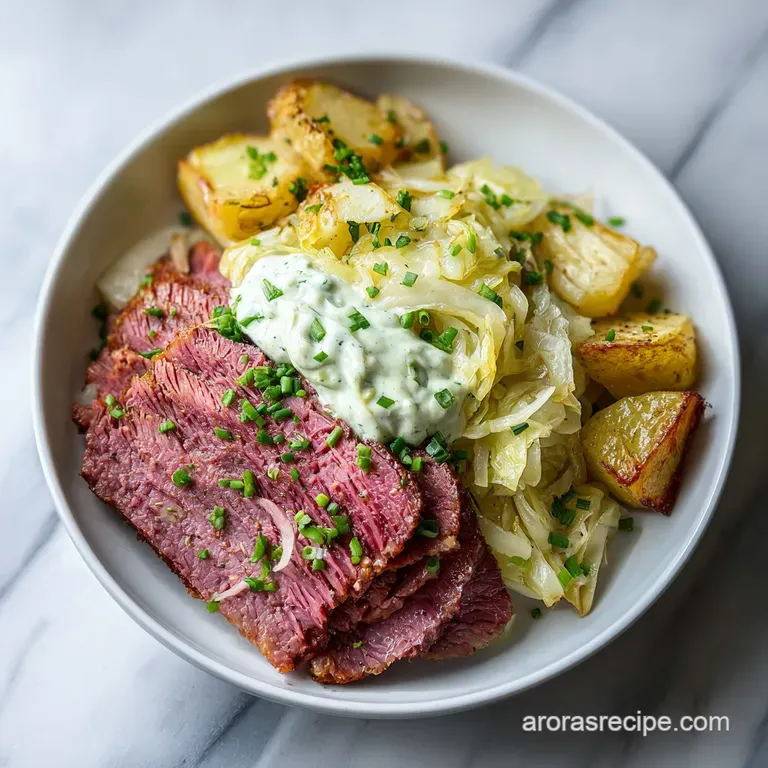
1. Prepping the Brisket for Success
Remove the 1.6 kg corned beef brisket from its packaging. Rinse it thoroughly under cold running water to wash away the intense surface brine. Pat it completely dry with paper towels. Note: Drying the meat helps the spices from the packet stick to the surface rather than washing away.
2. Layering for Flavor
Place the onion wedges, smashed garlic, halved red potatoes, and carrot chunks in the bottom of your slow cooker. This creates a "rack" for the meat to sit on, allowing heat to circulate underneath.
3. Positioning the Meat
Place the brisket on top of the vegetables with the fat cap facing upward. Sprinkle the contents of the spice packet evenly over the meat, pressing it in slightly with your fingers.
4. Adding the Liquids
Pour the 355 ml of stout beer, 475 ml of water, and 2 tablespoons of apple cider vinegar into the slow cooker. Pour them down the side of the pot so you don't wash the spices off the top of the beef.
5. The Low and Slow Braise
Cover the slow cooker with its lid. Set it to cook on low for 7 hours. If you are in a rush, you can use the high setting for 4 hours, but the texture is always superior on low.
6. Timing the Cabbage Perfectly
Once the 7 hours are up, lift the lid and tuck the 900 g of cabbage wedges around and slightly submerged in the liquid. Cover and cook on low for 1 additional hour until the cabbage is tender crisp.
7. Whisking the Creamy Zest
While the cabbage is finishing, combine the sour cream, mayonnaise, horseradish, Dijon mustard, lemon juice, and chives in a small bowl. Whisk until smooth and velvety.
8. Chilling the Sauce
Cover the sauce and place it in the fridge. This allows the flavors to meld and provides a cold, sharp contrast to the steaming hot beef.
9. Resting the Brisket
Use tongs to carefully remove the brisket from the slow cooker and place it on a cutting board. Let it rest for 10 to 15 minutes before touching it. This is the hardest part, but it's essential.
10. The Perfect Slice
Identify the grain of the meat (the direction the muscle fibers are running). Slice the brisket against the grain into 1 cm thick slices. Serve immediately with the vegetables and a generous dollop of the horseradish sauce.
Troubleshooting Your Slow Cooked Corned Beef and Cabbage
Why Your Beef Is Still Tough
If you try to slice the meat and it feels rubbery or resists the knife, it simply hasn't cooked long enough. Brisket doesn't get tough from overcooking in a slow cooker; it gets tough from undercooking. The collagen needs that specific window of time to melt.
Why the Broth Is Too Salty
If the final broth tastes like sea water, it’s usually because the rinse wasn't thorough enough or the liquid evaporated too much. You can fix this by adding a bit more water or a splash of unsalted beef broth to the pot in the last hour.
| Problem | Root Cause | Solution |
|---|---|---|
| Rubbery Meat | Not enough time for collagen breakdown | Cook for an additional 45-60 minutes on low. |
| Mushy Potatoes | Used starchy potatoes (like Russets) | Stick to waxy red or Yukon Gold varieties next time. |
| Gray Cabbage | Overcooked for too long | Always add cabbage in the final 60 minutes of cooking. |
If you find yourself in a flavor bind, don't panic. For another perspective on handling tough cuts of beef, you might find my tips in the Savory Vegetable Beef Stew helpful for understanding liquid ratios.
Common Mistakes Checklist
- ✓ Always rinse the brisket to avoid a salt bomb.
- ✓ Place vegetables on the bottom to act as a heat buffer.
- ✓ Never skip the apple cider vinegar; the acid is vital for balance.
- ✓ Slice against the grain, or the meat will feel "stringy" in your mouth.
- ✓ Keep the lid on! Every time you peek, you lose 15 minutes of heat.
Simple Flavor Adjustments and Dietary Swaps to Try
Sometimes you want to change things up based on what's in your pantry or your dietary needs. While the classic version is hard to beat, these swaps work quite well without ruining the integrity of the dish.
| Original Ingredient | Substitute | Why It Works |
|---|---|---|
| Stout Beer | Beef Bone Broth | Provides richness without the alcohol or fermented malt flavor. |
| Baby Red Potatoes | Large Cauliflower Florets | A great low carb alternative. Note: Add these with the cabbage, not at the start. |
| Horseradish Sauce | Whole Grain Mustard | Offers a similar sharp "bite" but with a different texture. |
If you're looking for more ways to use a slow cooker for beef, you should check out this Beef Chili Verde recipe which uses a similar "low and slow" approach but with a totally different flavor profile.
If you want a deeper flavor:
- Add 2 bay leaves and 5 whole allspice berries to the liquid.
- Sear the brisket in a hot pan for 3 minutes per side before putting it in the slow cooker.
- Use a dark, chocolatey porter instead of a dry stout.
Best Methods for Storing and Reheating Your Leftovers
Leftovers are arguably the best part of this recipe. The flavors continue to develop overnight as the vegetables sit in that seasoned broth.
Storage: Keep the beef and vegetables in an airtight container in the fridge for up to 4 days. I recommend storing them with a little bit of the cooking liquid to keep the meat from drying out.
Freezing: You can freeze the sliced beef in a freezer safe bag for up to 3 months. However, I don't recommend freezing the potatoes or cabbage, as they become unpleasantly grainy and mushy once thawed.
Reheating: The best way to reheat is in a skillet with a splash of the leftover broth over medium heat. This gently warms the meat without turning it into leather. You can also use the microwave, but go in 30 second bursts and keep it covered.
Zero Waste Tip: Don't throw away that leftover broth! It is gold. Strain it and use it as a base for a "leftover soup" the next day. You can also chop up the leftover beef and potatoes to make a world class breakfast hash with a couple of fried eggs on top.
Plating and Presentation Tips for a Restaurant Style Look
We eat with our eyes first, especially with homestyle meals that can sometimes look a bit "brown." To make this look as good as it tastes, I like to use a large, shallow platter rather than serving it straight out of the pot.
Place a bed of the bright green cabbage wedges on one side of the platter and the red skinned potatoes and orange carrots on the other. Arrange the beef slices in a fan shape in the center.
Drizzle just a spoonful of the cooking liquid over the meat to give it a glossy sheen, then top with a sprinkle of fresh chives or parsley.
Myth: Searing is required for flavor
Many people think you must sear the brisket first to lock in juices. In reality, the long braise provides plenty of flavor through the spice packet and stout. Searing adds a nice crust, but it’s not a dealbreaker for a tender result.
Myth: The spice packet is "trash"
Some food snobs say you should toss the included spice packet and make your own. Honestly, for a stress free meal, those packets are perfectly balanced with mustard seed, coriander, and peppercorns. Use it!
Myth: More liquid is always better
You don't need to drown the meat. The vegetables release their own water, and if you use too much liquid, you end up "boiling" the flavor out of the beef rather than braising it. Halfway submerged is the sweet spot.
By following these simple Midwestern principles, you'll end up with a Slow Cooked Corned Beef and Cabbage that feels like a warm hug. It’s hearty, it’s reliable, and it’s the kind of meal that makes everyone at the table reach for seconds.
Enjoy the process and the incredible aroma that will fill your home!
CRITICAL Sodium Alert!
1845 mg 1845 mg (80% 80%)
The American Heart Association recommends no more than 2,300mg of sodium per day, with an ideal limit of 1,500mg for most adults.
Tips to Reduce Sodium in Your Corned Beef Dinner
-
Choose Low-Sodium Corned Beef-30%
The primary sodium source is the corned beef brisket. Look for 'low-sodium' or 'no-salt added' corned beef. If unavailable, you may need to rinse the brisket thoroughly under cold water before cooking to remove surface salt.
-
Rinse and Desalinate-25%
If you cannot find low-sodium corned beef, thoroughly rinsing the brisket under cold running water for several minutes before cooking can significantly reduce its sodium content. Soaking it in fresh water for a few hours, changing the water periodically, can also help.
-
Make Your Own Spice Packet-10%
The provided spice packet with corned beef often contains salt. Create your own blend using peppercorns, mustard seeds, coriander seeds, bay leaves, and cloves, omitting any salt.
-
Control Sauce Sodium-10%
The prepared horseradish and Dijon mustard can contribute sodium. Opt for low-sodium versions of prepared horseradish and Dijon mustard, or make your own by combining fresh horseradish with vinegar and a pinch of black pepper.
-
Enhance Flavor with Acids and Aromatics
Boost flavor without salt by using plenty of garlic, onions, and the apple cider vinegar. Add fresh herbs like parsley or chives towards the end of cooking and in the dipping sauce.
Recipe FAQs
Is it necessary to rinse the corned beef brisket before cooking?
Yes, rinsing is essential. You must rinse the beef thoroughly under cold water to remove the heavy, salty surface brine from the packaging, which prevents the final dish from being overly salty.
How to ensure the beef is tender when slicing?
Slice the beef against the grain after it has finished its 7-hour cook time. Cutting perpendicularly across the meat fibers shortens them, which physically transforms a tougher cut into a much more tender bite.
How to achieve the perfect texture for the cabbage?
Add the cabbage wedges only during the final hour of cooking. If you enjoyed mastering this precise timing to maintain texture, you can apply the same logic of temperature controlled additions to our Instant Pot Beef Bourguignon for perfectly cooked vegetables.
Is it true that slow cooking corned beef will make it dry?
No, this is a common misconception. When cooked on low for 7 hours in a mixture of stout beer, water, and apple cider vinegar, the brisket remains moist and develops a tender, succulent texture.
How to properly cook the vegetables without them turning into mush?
Place the potatoes, carrots, onions, and garlic at the very bottom of the slow cooker. By positioning them under the meat, they braise in the flavorful liquid for the full duration, absorbing seasoning without being exposed to direct heat.
Can the horseradish sauce be made in advance?
Yes, preparing the sauce while the cabbage cooks is recommended. Whisking the sour cream, mayonnaise, horseradish, Dijon mustard, lemon juice, and chives together early allows the flavors to meld in the refrigerator before serving.
Should I use the high or low setting on the slow cooker?
The low setting is preferred for the best texture. Cooking on low for 7 hours allows the connective tissues in the brisket to break down slowly, whereas the 4-hour high setting is a faster alternative if you are short on time.
Slow Cooked Corned Beef
Ingredients:
Instructions:
Nutrition Facts:
| Calories | 694 kcal |
|---|---|
| Protein | 37.5 g |
| Fat | 43.2 g |
| Carbs | 28.6 g |
| Fiber | 6.2 g |
| Sugar | 7.8 g |
| Sodium | 1845 mg |
