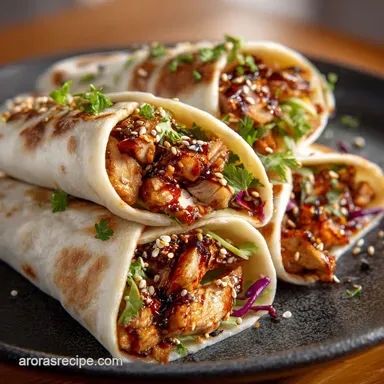
Spicy Jalbite Korean Chicken Wraps with Gochujang

- Time: 20 min prep + 10 min cook
- Flavor & Texture: Spicy, sticky, and crunchy
- Perfect for: Fast weeknight dinners
Spicy Jalbite Korean Chicken Wraps
Seoul street food is all about intensity and speed. It's a culture of bold, fermented flavors and textures that wake up the palate, often served in a way that you can eat while moving. These wraps bring that energy to your kitchen, blending the deep funk of Korean gochujang with the handheld convenience of a flatbread.
Learn how to make the ultimate Spicy JalBite Wrap Korean Fusion Chicken Flatbread. You get a mahogany colored glaze on the chicken that contrasts with a bright, acidic slaw and a cooling yogurt drizzle.
It's a punchy meal that doesn't take hours to prep. You'll get a balance of heat, sweetness, and tang that feels soulful and satisfying without being heavy.
Why These Wraps Work
- Sugar Caramelization: The maple syrup and gochujang sugars brown quickly under high heat. This creates a thick, tacky lacquer that sticks to the chicken instead of pooling in the pan.
- Acidity Contrast: The rice vinegar in the cabbage slaw cuts through the rich, fermented heat of the chicken. It resets your palate between bites so the spice doesn't become overwhelming.
- Temperature Play: Pairing hot, seared chicken with cold Greek yogurt and chilled vegetables creates a sensory contrast that makes the dish feel more complex.
| Chicken Cut | Cook Time | Texture | Best For |
|---|---|---|---|
| Breast | 8-10 mins | Lean & Firm | Quick weeknights |
| Thigh | 12-15 mins | Juicy & Rich | Extra flavor |
Ingredients and Swaps
- 1 lb boneless skinless chicken breast, diced into 1/2 inch cubes Why this? Fast cooking and lean (Substitute: Chicken thighs for more fat)
- 2 tbsp gochujang Why this? Core Korean savory heat (Substitute: Sriracha + 1 tsp miso as approximation)
- 1 tbsp soy sauce Why this? Adds salty umami (Substitute: Tamari for gluten-free)
- 1 tbsp maple syrup Why this? Helps the glaze stick (Substitute: Honey)
- 1 tbsp toasted sesame oil Why this? Nutty aroma (Substitute: Neutral oil + toasted sesame seeds)
- 3 cloves garlic, minced Why this? Sharp aromatic base (Substitute: Garlic powder)
- 1 tsp fresh ginger, grated Why this? Zesty warmth (Substitute: Ground ginger)
- 4 whole grain flatbreads Why this? Hearty, nutty base (Substitute: Flour tortillas)
- 1/2 cup pickled jalapeños, sliced Why this? Acidic heat (Substitute: Pickled serranos)
- 2 cups shredded red cabbage Why this? Color and crunch (Substitute: Napa cabbage)
- 1 large carrot, julienned Why this? Sweetness and texture (Substitute: Daikon radish)
- 1 tbsp rice vinegar Why this? Mild, clean acidity (Substitute: Apple cider vinegar)
- 1 tsp honey Why this? Balances the slaw (Substitute: Maple syrup)
- 1/2 cup plain Greek yogurt Why this? Cooling creamy base (Substitute: Sour cream)
- 1 tbsp lemon juice Why this? Brightens the sauce (Substitute: Lime juice)
- 1 clove garlic, grated Why this? Subtle savory note (Substitute: Garlic powder)
- 1/2 tsp salt Why this? Enhances flavors (Substitute: Sea salt)
Tools You Need
You only need a few basics. A medium bowl for the marinade, a mixing bowl for the slaw, and a heavy skillet. A cast iron or stainless steel pan works best here because they hold heat well, which is necessary for that initial sear.
Cooking step by step
Phase 1: The Flavor Infusion
In a medium bowl, whisk together the gochujang, soy sauce, maple syrup, sesame oil, minced garlic, and ginger. Coat the diced chicken breast thoroughly in the marinade. Let it marinate for 10 minutes. Note: This step allows the salt to penetrate the meat for better seasoning.
Phase 2: The High heat Sear
Set a skillet to medium high heat. Place the chicken in the pan without overlapping. Sear undisturbed for 3-4 minutes until a deep mahogany crust forms.
Stir and continue to cook for 4-5 minutes until the sauce thickens into a sticky glaze and the chicken is cooked through.
Phase 3: The Quick Pickle Slaw
Combine the shredded red cabbage, julienned carrots, rice vinegar, and honey in a mixing bowl. Mix well and set aside. The vinegar breaks down the cabbage fibers, ensuring they are tender yet still crisp.
Phase 4: The Cooling Sauce
Stir together the plain Greek yogurt, lemon juice, grated garlic, and salt. This creates a velvety sauce that offsets the spice of the gochujang.
Phase 5: Toasting and Assembly
Briefly warm the whole grain flatbreads in a dry pan for 30 seconds per side. Top the bread with the glazed chicken, cabbage slaw, and pickled jalapeños. Drizzle the yogurt sauce over everything to finish.
Chef's Tip: For a more intense profile, stir a pinch of smoked paprika into the marinade. This creates a flavor similar to a charcoal grill.
Fixing Common Issues

If the sauce burns, it's usually because the pan was too hot or the syrup scorched. Add a splash of water to loosen it up. If the flatbread is too stiff, a few seconds more on the heat or a damp paper towel in the microwave will soften it.
Sauce Burning in Pan
Gochujang and maple syrup contain high sugar levels that scorch quickly. If the sauce looks black or smells burnt, deglaze the pan immediately.
Bread Tearing During Wrap
Cold flatbreads often crack. Heating them is a must to make the gluten flexible.
Heat Level Too High
Some batches of gochujang are spicier than others. Increase the yogurt sauce to neutralize the capsaicin.
| Problem | Fix |
|---|---|
| Sauce scorches | Add 1 tbsp water to deglaze |
| Flatbread cracks | Toast 30 seconds per side |
| Too spicy | Add extra yogurt sauce |
Great Pairing Ideas
These wraps are a full meal, but they pair well with something light and fresh. I like serving them with a side of chilled cucumber salad with sesame seeds. For an extra kick, you can serve a side of Roasted Green Chile Sauce for dipping the ends of the wraps.
Leftovers and Waste
For optimal results, store the components separately. The glazed chicken, slaw, and yogurt sauce will keep for 3 days when refrigerated in individual containers. Combine everything just before serving and warm the chicken in a pan to bring back its sticky texture.
To minimize waste, repurpose any extra cabbage slaw as a taco topping or a quick salad base. Leftover yogurt sauce also makes a wonderful dip for raw carrots or cucumber slices.
Kitchen Myths
Searing chicken does not "seal in juices." This is a common myth. The moisture loss happens throughout the cooking process. Searing is actually about creating a flavor rich crust through browning, which adds the savory depth to the meat.
Rinsing chicken under the tap does not remove bacteria. In fact, it splashes bacteria around your sink and countertops. It's safer to let the chicken cook through to the proper internal temperature.
Dietary Changes
To make this plant-based, use extra firm tofu instead of chicken. Press the tofu for 20 minutes to remove excess moisture, then cube and sear it exactly as you would the meat. You may need a splash more sesame oil to prevent sticking.
For a low-carb option, swap the flatbread for large romaine lettuce leaves or collard green wraps. This preserves the crunch without the grains. If you're in the mood for a different protein flavor, my Slow Cooker Basil Chicken is a wonderful choice for a mild, aromatic evening meal.
For a honey garlic variation, replace the gochujang with a blend of soy sauce, honey, and extra garlic, keeping in mind that you'll lose that characteristic Korean funk.
High in Sodium
840 mg 840 mg of sodium per serving (37% 37% of daily value)
The American Heart Association recommends a daily limit of 2,300mg of sodium to help manage blood pressure and protect heart health.
Tips to Reduce Sodium
-
Swap the Soy Sauce
Replace the regular soy sauce with low-sodium soy sauce or coconut aminos to decrease the salt content in the marinade.
-
Rinse the Jalapeños
Rinse the pickled jalapeños under cold water before slicing to remove excess brine, or substitute them with fresh jalapeños.
-
Skip Added Salt
Omit the 1/2 tsp of salt in the yogurt sauce; the lemon juice and garlic provide enough brightness and tang.
-
Modify the Gochujang
Reduce the amount of gochujang and add a pinch of red pepper flakes or smoked paprika to maintain the spicy flavor profile.
-
Select Low-Sodium Bread
Choose low-sodium whole-grain flatbreads or make your own to avoid the hidden sodium often found in store-bought processed breads.
-
Enhance with Aromatics
Increase the amount of fresh ginger, minced garlic, and lemon juice to add depth and zest without relying on salt.
Recipe FAQs
What side dish pairs best with these wraps?
Golden cornbread is a perfect pairing. Its sweetness balances the heat of the gochujang; try our golden and crispy version for a complementary side.
How to achieve the thick, sticky glaze on the chicken?
Cook the chicken without stirring for 3-4 minutes. This creates an initial crust, and continuing to cook for another 4-5 minutes allows the sauce to reduce into a sticky coating.
Can I store the fully assembled wraps in the fridge?
No, keep the components separate. Storing the glazed chicken, slaw, and yogurt sauce in different containers prevents the flatbread from becoming soggy.
Is it true that the chicken requires an overnight marinade for flavor?
False. A quick 10-minute soak in the gochujang mixture is enough to deliver a punchy, authentic taste to the diced breast.
Spicy Jalbite Korean Chicken Wraps for 4